Will a Facelift Look Natural? What Top Surgeons Actually Do
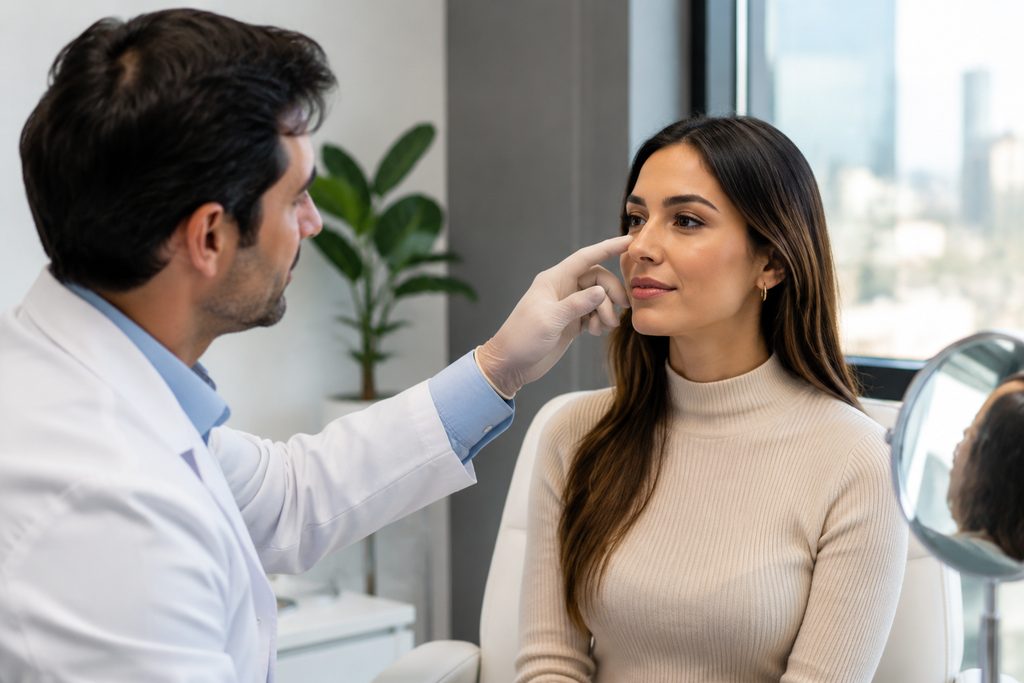
Will a Facelift Look Natural? What Actually Determines Your Result
A facelift, in plain terms, is a surgical procedure that repositions the deeper layers of your face and neck to reverse visible signs of aging. It does not change who you are. It removes the tired, heavy look that gravity and time create. The question patients ask us most often is not about price or pain. It is simpler: will I still look like myself? The honest answer is that a natural-looking facelift depends far more on surgical technique and surgeon judgment than on geography or even facelift cost China versus elsewhere.
The difference between a result that whispers and one that shouts comes down to three things: how the surgeon handles the SMAS layer (the muscular sheet under your skin), how much skin tension they apply, and whether they treat the face as a whole rather than pulling isolated sections. Get those wrong and you get the wind-tunnel look. Get them right and people notice you look rested, not “done.”
Key Takeaways
- A natural facelift result depends on deep-layer repositioning, not skin stretching — technique accounts for most of what patients perceive as “natural.”
- Top Chinese plastic surgery departments perform high volumes of facial procedures, with surgeons completing hundreds of cases annually compared to dozens for many Western counterparts.
- Facelift cost China typically runs 60-75% below US and European pricing for comparable surgical expertise and facility standards.
- Swelling distorts results for 8-12 weeks; judging whether a facelift looks natural before the 3-month mark is premature and misleading.
The Problem: Most People Cannot Tell a Good Facelift From a Bad One Until It Is Too Late
Roughly 234,000 facelift procedures were performed in the United States in 2023 according to the Aesthetic Society’s annual statistics. That number has climbed steadily for a decade. But here is the uncomfortable reality: revision facelift surgery is a growing subspecialty precisely because so many primary procedures produce results patients later regret. The American Society of Plastic Surgeons does not publish exact revision rates, but surgeons who specialize in corrective work report that a meaningful share of their caseload involves fixing over-pulled, distorted, or asymmetric outcomes from elsewhere.
What goes wrong? Usually the surgeon relied on skin-only tightening, which produces a flat, stretched appearance that looks artificial in motion. Or they failed to address volume loss in the midface, leaving a hollow, operated look. Sometimes the incision placement was poor, creating visible scars in front of the ear. The patient discovers these problems months later, when swelling subsides and the true result emerges. By then, the original surgeon is often defensive, and revision surgery costs more than the primary procedure.
This is the quiet anxiety behind the search query “will a facelift look natural?” Patients are not asking about the procedure in the abstract. They are asking whether they can trust a surgeon they have never met, in a system they do not fully understand, to make an irreversible decision on their face.
Why Surgical Volume and Technique Matter More Than Location
China’s top-tier plastic surgery departments operate at a scale that is difficult to comprehend from outside. A senior facial plastic surgeon at a major Shanghai teaching hospital may perform 300-500 facial rejuvenation procedures per year. The average US plastic surgeon performs perhaps 40-60 facelifts annually. Volume does not guarantee artistry, but it does something important: it compresses the learning curve. A surgeon who has seen 3,000 facelift outcomes has an internal database of what works, what fails, and what heals predictably that a lower-volume surgeon simply cannot match.
Deep-Plane Technique Is Standard, Not Premium
The most natural results come from deep-plane or extended SMAS facelifts, where the surgeon releases and repositions the muscular layer rather than pulling skin. In many Western practices, deep-plane work is marketed as a premium upgrade. In top Chinese departments, it is often the default approach for patients over 50. The reason is practical: Chinese surgeons see a high volume of Asian and mixed-ethnicity patients whose skin thickness and facial structure respond poorly to skin-only lifts. Deep-plane work is not a luxury there. It is the baseline.
That matters because deep-plane facelifts produce results that move naturally with facial expression. The lifted tissue is anchored at the muscular level, so when you smile or frown, the face behaves like a younger version of itself rather than a mask stretched over a frame.
Volume Restoration Is Part of the Plan, Not an Afterthought
A facelift that ignores volume loss looks hollow and strange. The face ages in two ways: tissue descends and tissue deflates. Solving only the descent leaves the deflation visible. Leading Chinese facial plastic surgeons routinely combine facelift surgery with fat grafting or targeted filler placement during the same operation. This integrated approach restores the soft contours of youth while lifting the underlying structure. The result reads as “you, but refreshed” rather than “you, but surgically altered.”
Cost Structure: Why Facelift Cost China Is Lower Without Sacrificing Quality
Let us address the obvious question directly. A full deep-plane facelift with neck lift in the United States typically costs $25,000 to $50,000 depending on the surgeon’s reputation and the city. In Shanghai or Beijing, the same procedure at a top-tier public hospital’s international department or a JCI-accredited private hospital generally runs $8,000 to $15,000. That is the facelift cost China reality: 60-75% lower.
Why? Not because of lower standards. Chinese hospital systems operate on massive economies of scale, with lower administrative overhead per procedure and significantly lower labor costs for support staff. The surgical fee reflects local market economics, not diminished expertise. Many of the senior surgeons at Fudan-affiliated or Peking Union-affiliated hospitals trained internationally, publish in peer-reviewed journals, and operate in facilities that meet JCI accreditation standards. The price difference is structural, not qualitative.
What “Natural” Actually Looks Like at Each Recovery Stage
Patients searching for does a facelift look natural after 3 months are asking a timeline question disguised as an outcome question. The truth is that facelift results are not static. They evolve over a full year, and the 3-month mark is a critical checkpoint, not the final destination.
At 2 weeks post-op, you will look strange. Swelling, bruising, and tightness are at their peak. This is normal. At 6 weeks, roughly 70% of swelling has resolved, but the face still looks slightly pulled and the incisions are pink and visible. Most patients feel anxious at this stage because the result does not yet look natural. That anxiety is premature.
At 3 months, the picture changes dramatically. Swelling has largely subsided. The skin has begun to redrape over the repositioned SMAS layer. The pulled look softens. This is when most patients can finally see what the surgeon intended. For many, the answer to “does a facelift look natural after 3 months” is yes — but with the caveat that residual tightness near the ears and slight asymmetry may persist.
At 6-12 months, the final result emerges. Scars fade to near-invisibility. The face settles into its new position. This is the point where a well-executed deep-plane facelift becomes undetectable to everyone except the patient and the surgeon.
Practical tip: If you are planning to travel for surgery, do not book your return flight before day 10-14 post-op. Sutures typically come out at day 7-10, and you will want at least one follow-up visit before flying. For mini facelift recovery time before travel, most patients can fly comfortably at day 10, but full social recovery takes 3-4 weeks.
How to Choose a Facelift Surgeon Abroad Without Regretting It
The question how to choose a facelift surgeon abroad deserves a framework, not a sales pitch. Here is what we tell every patient who contacts us.
First, look at case volume in facial procedures specifically, not cosmetic surgery generally. A surgeon who does 500 breast augmentations and 20 facelifts per year is not a facelift specialist. Ask for their annual facelift count. Top facial plastic surgeons in China’s major cities will state it plainly.
Second, ask about technique. If the surgeon mentions “skin-only lift” or “mini lift” for a patient over 55, that is a red flag. Skin-only lifts produce the stretched, unnatural look patients fear most. A surgeon who recommends deep-plane or SMAS work is thinking about long-term natural results.
Third, review before-and-after photos of patients with similar facial structure to yours. Pay attention to the ear position, the hairline, and the neck angle. Natural results preserve the earlobe shape and avoid visible scars in front of the tragus.
Fourth, consider the hospital’s international infrastructure. Language barriers create real risks in surgical care. You need clear communication about your goals, your medical history, and your recovery plan. Hospitals with dedicated international departments and English-speaking coordinators reduce those risks substantially. Our database of top-ranked Chinese hospitals includes detailed profiles of institutions with strong international patient programs.
Facelift Cost China: A Realistic Breakdown
When patients ask about best facelift surgeon Shanghai price, they are usually trying to understand what the total financial commitment looks like. Here is an honest breakdown based on current market rates we see across our partner hospitals.
| Procedure | China (USD) | United States (USD) | United Kingdom (USD) |
|---|---|---|---|
| Mini facelift (lower face only) | $5,000 – $8,000 | $12,000 – $20,000 | $15,000 – $25,000 |
| Full SMAS facelift + neck lift | $8,000 – $15,000 | $25,000 – $50,000 | $30,000 – $55,000 |
| Deep-plane facelift + fat grafting | $12,000 – $20,000 | $35,000 – $60,000 | $40,000 – $65,000 |
| Revision facelift (corrective) | $10,000 – $18,000 | $30,000 – $55,000 | $35,000 – $60,000 |
These figures include surgeon fees, anesthesia, hospital stay (typically 1-2 nights), and routine follow-up. They vary by hospital tier and case complexity. A book natural facelift package China search often reflects a desire for bundled pricing — and many international departments do offer packages that include airport transfer, interpreter services, and hotel accommodation. But the surgical fee itself is the dominant cost, and that is where the savings are structural.
For patients considering multiple procedures, the savings compound. A facelift combined with upper blepharoplasty or a brow lift can be done in a single operation, reducing anesthesia time and recovery overlap. Discuss combination procedures with your surgeon during the consultation phase.
Practical Considerations: Documentation, Visas, and Follow-Up
If you are traveling to China for a facelift, the logistics matter as much as the surgery itself. Start with your medical records: a complete list of medications, any history of bleeding disorders, prior facial surgeries, and current photos from multiple angles. Send these ahead of time so the surgeon can assess candidacy before you book flights.
For entry, most medical travelers use the S2 visa, which covers short-term private affairs including medical treatment. The hospital’s international department will provide an invitation letter and treatment confirmation to support your application. Processing typically takes 1-4 weeks depending on your home country’s Chinese embassy or consulate. Do not book non-refundable flights until the visa is approved.
Payment is usually required upfront at public hospitals, with international departments accepting major credit cards and wire transfers. Private international hospitals like United Family or Jiahui often bill insurance directly if your policy covers overseas elective procedures. Most Western insurance plans do not cover cosmetic surgery abroad, so plan for out-of-pocket payment.
Language is the single biggest practical barrier. Even in international departments, you will encounter nurses and administrative staff who speak limited English. A bilingual medical companion who handles registration, payment queues, and pre-op consultations reduces stress measurably. Our team provides this service, but patients can also arrange their own interpreter through the hospital.
Follow-up after returning home is essential. You will need a local physician to remove any remaining sutures if you leave before day 10, and you should schedule a video follow-up with your Chinese surgeon at weeks 2, 6, and 12. Most top surgeons offer this remotely at no additional charge. For detailed guidance on navigating Chinese hospitals as a foreign patient, see our patient coordination services and China Medical Services overview.
Frequently Asked Questions
No — if the surgeon uses a deep-plane or SMAS technique, preserves your natural facial proportions, and avoids over-tightening. The goal is to look like a rested version of yourself. Visible signs of surgery (pulled skin, distorted ears, obvious scars) are signs of poor technique, not an inevitable outcome.
Plan for 10-14 days in-country. Sutures come out at day 7-10, and you will want one final in-person check before flying. For a mini facelift, some patients fly at day 7, but 10 days is safer. Long-haul flights increase swelling, so wear your compression garment and move your legs frequently during the flight.
This is the question everyone should ask before surgery. Reputable surgeons in China’s top hospitals will discuss revision policy openly. Most offer surgical revision within the first year at reduced or waived surgeon fees if there is a correctable issue. But revision is rare when the primary procedure is done well. That is why technique and surgeon selection matter more than price.
At accredited hospitals, yes. Look for JCI accreditation or affiliation with a major university teaching hospital. These institutions follow international surgical safety protocols, including anesthesia monitoring, infection control, and emergency response. The risk profile is comparable to any high-volume surgical center in the US or Europe.
A natural-looking facelift is not a matter of luck. It is a matter of technique, volume, and honest communication between patient and surgeon. Whether you pursue surgery at home or abroad, the principles are the same: choose a surgeon who works in the deep plane, ask hard questions about volume and technique, and give your face the full year it needs to settle. The patients who get the results they want are the ones who treat this decision as a serious medical choice — not a beauty product purchase.
If you are weighing your options and want to understand what is realistic for your face, request a free consultation with our coordination team. We will help you sort through the noise.
For more medical information and treatment options in China, visit chinamedservices.com (China Medical Services).
