Proxy Consultation Report: What It Contains and Why It Matters
Proxy Consultation Report: What It Contains and Why It Matters
According to data from China’s National Health Commission, over 300,000 international patients sought medical care in China in 2024 alone. A significant portion of those journeys began not with a flight, but with a document. The proxy consultation report cost China typically ranges from $300 to $500 for a written second opinion—and that single document often determines whether a patient books a trip at all. It is the bridge between your medical records at home and a Chinese specialist’s assessment, delivered without you stepping onto a plane.
But a proxy consultation is not a diagnosis. It is a structured, documented review of your existing materials by a licensed physician at a Chinese hospital. The report you receive reflects what that specialist can conclude from your records, your imaging, and your history—not from a physical examination. That distinction shapes everything about what the report contains and how you should use it.
What Is a Proxy Consultation for Medical Tourism: The Short Answer
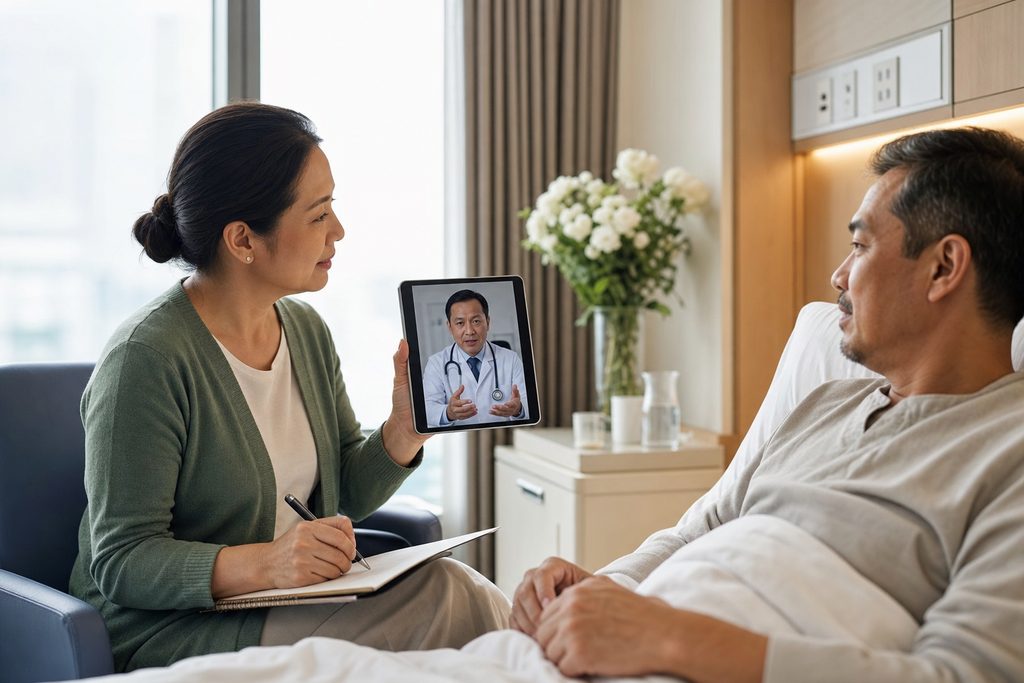
A proxy consultation is a formal medical review conducted on your behalf, without you being physically present. You send your medical records—imaging, lab results, pathology reports, treatment history—to a Chinese hospital’s international department. A specialist in the relevant department reviews those materials and produces a written report. That report typically includes a summary of your case as understood from the documents, an assessment of your current status, treatment recommendations, and an opinion on whether traveling to China for further care is advisable.
Our team handles the logistics: document translation, submission through official hospital channels, coordination with the reviewing physician, and delivery of the final report. The report itself comes from the hospital, not from us.
What the report does not contain is equally important. It does not include a prescription. It does not guarantee admission. It does not replace an in-person consultation. Chinese public hospitals universally require an in-person visit before any surgical procedure can be scheduled. The proxy report is a preliminary step—a way to get expert input before committing to travel.
Who This Is Right For — and Who It Isn’t
A proxy consultation is not a universal solution. It serves a specific type of patient at a specific decision point. Understanding whether you fall into that category will save you time and money.
Who typically benefits most:
- Patients with a confirmed diagnosis who want a second opinion from a Chinese specialist before deciding on treatment abroad
- Patients considering a specific procedure—cardiac surgery, oncology treatment, orthopedic intervention—and wanting expert input on whether China offers a meaningful advantage
- Patients whose condition is stable enough that a remote review is medically appropriate
- Family members acting on behalf of a patient who cannot travel yet
- Patients comparing treatment options across multiple countries and wanting a Chinese perspective without committing to travel
Who should not pursue a proxy consultation:
- Patients with acute or rapidly progressing conditions that require immediate in-person evaluation
- Patients whose records are incomplete, illegible, or in a language that cannot be reliably translated
- Patients seeking a prescription or medication without an in-person consultation—this is not legally possible through a proxy report
- Patients who expect the report to guarantee admission or a specific surgery date
- Patients whose primary concern is cost savings but who have not yet confirmed that their condition is treatable in China
If your situation falls into the second list, a proxy consultation may still be useful later. But it should not be your first step.
The Options, Compared
When international patients consider how to get expert input from Chinese hospitals, they typically weigh three paths: a written proxy consultation, a video consultation, and traveling directly for an in-person visit. Each has a different cost profile, timeline, and depth of interaction. The table below compares them directly.
| Option | Typical Cost | Timeline | Interaction Level | Best For |
|---|---|---|---|---|
| Written Proxy Consultation | $300–500 | 5–10 business days | None—document review only | Second opinion, treatment direction, travel decision |
| Video Consultation | $100–800 (varies by specialist tier) | 3–7 business days to schedule | Live conversation with the physician | Asking specific questions, discussing symptoms directly |
| In-Person Consultation | $800–1,200 coordination + travel costs | 1–4 weeks depending on visa and scheduling | Full physical examination | Definitive diagnosis, pre-surgical evaluation |
The written proxy consultation is the lowest-cost, lowest-commitment option. It answers the question: “Is it worth traveling to China for this?” The video consultation adds a live conversation but costs more and still lacks a physical exam. The in-person visit is the only option that produces a definitive clinical assessment—but it requires the highest commitment before you even know if the trip is justified.
For most patients starting from zero, the written report is the logical first step. It gives you a documented expert opinion at a fraction of the cost of travel. If the report indicates that Chinese hospitals can offer a meaningful treatment advantage, you can then escalate to video or in-person consultation with confidence.
What the Proxy Consultation Report Actually Contains
The medical proxy consultation price Beijing patients pay is generally comparable to Shanghai, ranging from $300 to $500 for a written report from a top-tier public hospital specialist. Beijing hosts 21 of the Fudan Top 100 hospitals—the most of any Chinese city—which means more options but similar pricing. The cost difference between cities is typically negligible; the bigger variable is the specific hospital and specialist tier. Private international hospitals in either city may charge more, often $500–800 for a written second opinion.
Then the report has done its job. A negative recommendation saves you the cost of travel, the disruption of an international medical journey, and the risk of pursuing treatment that is not well-suited to your case. Not every patient is a good candidate for treatment in China, and an honest specialist will say so. If the report advises against travel, you should discuss the reasons with your home physician and consider whether a different hospital or specialist might offer a different perspective. A second proxy consultation with a different institution is sometimes warranted, but not always.
How long does a proxy consultation take from start to finish?
Plan for two to three weeks total. Document collection and translation typically take three to five business days. Submission and specialist review take another five to ten business days. Report delivery and follow-up discussion add a few more days. Expedited options exist at some hospitals but are not guaranteed. If you need a faster answer, a video consultation can sometimes be
Frequently Asked Questions
Yes. The hospitals used for international patients are JCI-accredited and follow the same international safety standards as top hospitals in the US and Europe. Surgical teams perform high volumes of procedures — often more than their Western counterparts — which studies show leads to better outcomes.
Costs vary by procedure and hospital, but international patients typically save 40-80% compared to US prices — even when factoring in travel and accommodation. A consultation with our team will give you an exact, all-inclusive quote with no hidden fees.
Send us your existing medical reports to get started. We handle everything from hospital selection and appointment scheduling to visa assistance and post-operative recovery planning. Your medical records are reviewed by the specialist before you even book a flight.
For more medical information and treatment options in China, visit chinamedservices.com (China Medical Services).
