Xinqiao Hospital Urology for International Patients: Costs, Booking, and What to Expect
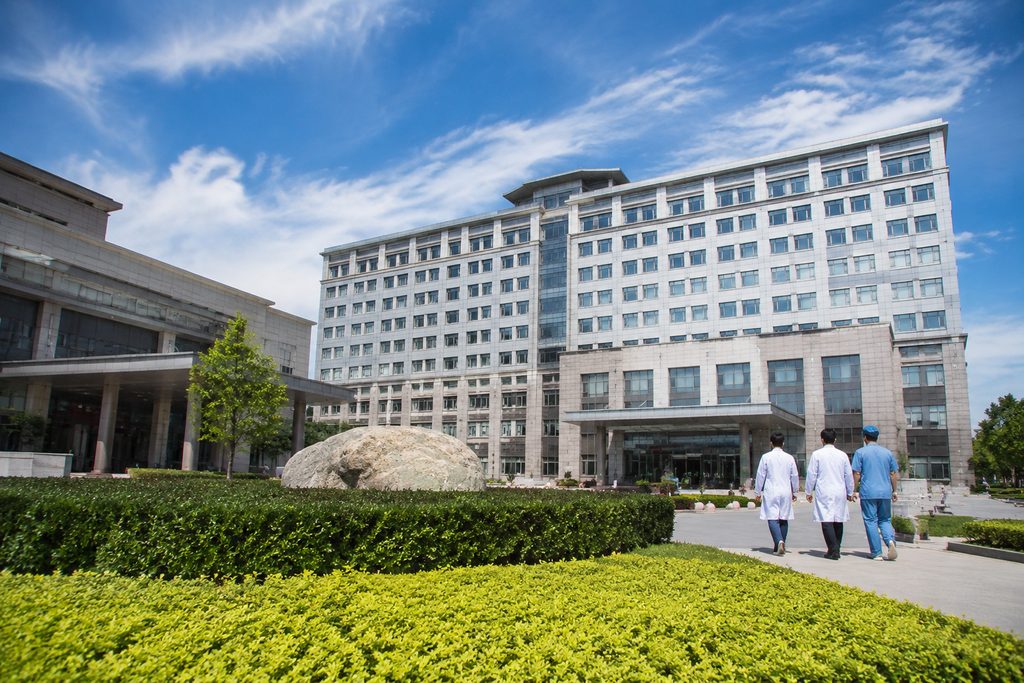
Urology treatment can feel overwhelming when you’re navigating it from another country. You’re dealing with pain, discomfort, or a serious diagnosis — and on top of that, you’re trying to figure out whether a hospital thousands of miles away can actually help you. Xinqiao Hospital in Chongqing is one of China’s major military-affiliated teaching hospitals, and its urology department handles a high volume of procedures every year. But what does that mean for you as a foreign patient? Let’s break down what you’d actually encounter: the real process, the realistic costs, and the honest limitations.
If you’re specifically searching for a Xinqiao Hospital urology price list, you should know upfront: Chinese public hospitals don’t publish fixed international price lists the way private clinics in Thailand or Turkey do. Prices vary by procedure type, surgeon seniority, ward class, and whether you go through the standard public channel or the hospital’s international/VIP department. What we can do is give you realistic ranges based on what international patients typically pay at top-tier Chinese teaching hospitals, including Xinqiao’s tier.
How This Actually Works, Step by Step
You can’t just email Xinqiao Hospital and book a prostate surgery date. That’s not how Chinese public hospitals operate — and anyone telling you otherwise is oversimplifying. Here’s the real sequence:
Step 1: You send us your existing medical records. Ultrasound reports, CT scans, PSA levels, urinalysis, prior surgical notes — whatever you have. We translate these into Chinese for the hospital’s review.
Step 2: The urology department reviews your case. A specialist looks at your records and gives a written assessment: whether your condition is treatable at Xinqiao, what procedure they’d recommend, and whether they need more imaging first.
Step 3: You decide on a consultation format. You can do a video consultation (from $100–300 for a standard international department consult, or $500–800 for a top specialist), or a written second opinion ($300–500). This is where you ask your questions directly and hear the doctor’s reasoning.
Step 4: If surgery is needed, you travel to Chongqing. You’ll need an S2 visa, which is the correct category for medical treatment and private affairs in China. Your accompanying family member also applies for an S2. We help you prepare the hospital invitation letter and supporting documents.
Step 5: In-person consultation, then admission. Chinese law and hospital policy require a face-to-face outpatient visit before any surgery can be scheduled. No exceptions for public hospitals. Your first day or two in Chongqing will be spent on this consultation, additional tests if ordered, and then admission.
Step 6: Surgery, recovery, discharge, and follow-up. Most urology procedures require a hospital stay of 3–10 days depending on complexity. After discharge, you may stay in Chongqing for a short observation period or return home with a written discharge summary and medication plan.
This whole process typically takes 4–8 weeks from first contact to surgery date, depending on how quickly you can get your visa and how urgent your case is.
What Does Urology Treatment at Xinqiao Hospital Actually Cost?
Let’s address the elephant in the room. You searched for a Xinqiao Hospital urology price list because you want numbers. Here’s what we can tell you honestly, based on what international patients pay at comparable top-tier Chinese teaching hospitals. Xinqiao Hospital — officially the Second Affiliated Hospital of Army Medical University — is a Grade A tertiary hospital, which means it sits near the top of China’s 35,000+ hospitals in terms of capability and case volume.
| Procedure | Estimated Cost at Xinqiao (International Channel) | Typical US Cost (for comparison) |
|---|---|---|
| Kidney stone removal (ureteroscopy with laser lithotripsy) | $3,500 – $6,500 | $15,000 – $35,000 |
| Percutaneous nephrolithotomy (PCNL) for large kidney stones | $5,000 – $9,000 | $25,000 – $50,000 |
| Transurethral resection of the prostate (TURP) | $4,000 – $7,500 | $15,000 – $30,000 |
| Laser prostatectomy (HoLEP or similar) | $6,000 – $10,000 | $20,000 – $40,000 |
| Radical prostatectomy (robotic or laparoscopic) | $12,000 – $22,000 | $60,000 – $120,000+ |
| Diagnostic cystoscopy | $500 – $1,200 | $2,500 – $6,000 |
These ranges reflect the international/VIP department channel, which is what foreign patients use to get English-language coordination and senior specialist access. The standard public channel is cheaper — often 40–60% less — but it comes with no English support, long queues, and the requirement that you handle everything in Chinese. For most international patients, the international channel is the practical choice, even though it costs more.
Is Xinqiao Hospital good for kidney stone surgery? The short answer is yes — it handles a high volume of stone cases annually, and Chinese urologists in major teaching hospitals perform ureteroscopy and PCNL at volumes that most Western urologists never reach in a career. Volume matters in urology. A surgeon who does 500 PCNLs a year has seen complications, anatomical variants, and difficult cases that a surgeon doing 50 a year simply hasn’t. That’s the core argument for considering China.
But here’s what you need to know about the urology treatment cost in Chongqing for foreigners: Chongqing is generally 15–25% cheaper than Beijing or Shanghai for equivalent care. The city’s cost of living is lower, hospital fees are lower, and even the international departments price below their coastal counterparts. If you’re weighing options across China, Chongqing is a legitimate value play — not because the medicine is worse, but because the local economy is different.
Can International Patients Get Laser Prostatectomy at Xinqiao?
Yes. Xinqiao Hospital’s urology department performs holmium laser enucleation of the prostate (HoLEP) and other laser-based procedures. But let’s be precise about what “can” means here.
You can book a video consultation to determine whether laser prostatectomy is appropriate for your prostate size, your urinary symptoms, and your overall health. You can then travel to Chongqing, complete the in-person consultation, and be scheduled for surgery. What you cannot do is book a specific surgery date from abroad before any Chinese doctor has examined you. That’s a hard rule across Chinese public hospitals, and it applies to Xinqiao too.
The process for booking prostate surgery at Xinqiao Hospital China therefore looks like this: remote evaluation first, then travel, then in-person assessment, then scheduling. The remote evaluation step is where we help you avoid wasted trips. If your records show that you’re not a candidate for laser prostatectomy — for example, your prostate is too large for the available equipment, or you have untreated bladder stones that need addressing first — you’ll find out before you spend money on flights.
That’s the value of a structured process. Not a guarantee of a date, but a guarantee that you won’t fly 6,000 miles to be told something you could have learned over video.
A Realistic Timeline
People underestimate how long medical travel to China takes. Here’s an honest breakdown, assuming you have all your records ready and your case is not an emergency:
| Stage | What Happens | Realistic Duration |
|---|---|---|
| Days 1–3 | You send medical records; we review for completeness | 2–3 days |
| Days 4–10 | Translation of records into Chinese; submission to Xinqiao urology department | 5–7 days |
| Days 11–20 | Department review; written assessment or video consultation scheduled | 7–10 days |
| Days 21–35 | Video consultation with urologist; treatment plan discussion | 1–2 weeks |
| Days 36–50 | S2 visa application (with hospital invitation letter); flight booking | 2–3 weeks |
| Days 51–55 | Arrival in Chongqing; in-person outpatient consultation; additional tests if ordered | 3–5 days |
| Days 56–70 | Surgery and inpatient recovery; discharge | 5–14 days depending on procedure |
Total: roughly 7–10 weeks from first contact to discharge. Some cases move faster — a straightforward kidney stone with complete imaging might compress to 5–6 weeks. A complex prostate cancer case requiring additional MRI, biopsy, and multidisciplinary review could stretch to 12 weeks. Plan accordingly.
And here’s the part people forget: document translation takes real time. Chinese hospitals will not review English-language records. Every page of your medical history — every lab result, every imaging report — needs to be professionally translated into Chinese before the department will even look at it. This isn’t bureaucracy for its own sake. It’s how Chinese doctors ensure they understand your case completely before they recommend surgery. But it does add days to your timeline.
What Can Go Wrong — and What Happens Then
Let’s be straight about the failure modes, because you deserve to know them before you commit.
Your records are incomplete or too old. You send a PSA result from 18 months ago and an ultrasound from a clinic that didn’t include prostate volume measurements. The Xinqiao urologist reviews it and says: we need current imaging before we can assess anything. What happens: you get new tests done at home (or in Chongqing after arrival), and the timeline extends. This is common. It’s not a rejection — it’s a request for better data.
The in-person consultation changes the plan. You thought you needed a simple TURP. After examining you, the urologist finds a bladder stone and a urethral stricture that weren’t visible on your home imaging. The surgical plan now includes additional procedures. What happens: your cost estimate changes, your hospital stay lengthens, and you have a decision to make. This is why we always advise patients to budget 20–30% above the initial quote for contingency.
Visa delays. Your S2 visa application gets held up because the hospital invitation letter has a formatting issue, or the consulate requests additional documentation. What happens: your surgery date slips. Chinese hospitals don’t hold operating room slots indefinitely. If your visa is delayed by three weeks, your original surgery window may close, and you’ll need to be rescheduled. We’ve seen this happen. It’s one reason we recommend applying for the visa as early as possible after the video consultation confirms surgery is indicated.
The doctor you consulted with isn’t the doctor who operates. In Chinese teaching hospitals, senior professors often supervise while associate professors or senior residents perform parts of the procedure. This is standard practice and not a sign of lower quality — but if you specifically want the department chair to operate on you personally, that needs to be arranged explicitly through the international department, and it costs more. If you don’t ask, you may not get it.
None of these failure modes are catastrophic. But each one costs time, money, or both — and knowing about them in advance is the difference between a smooth process and a stressful one.
How to Evaluate Xinqiao Against Other Chinese Hospitals
You’re not choosing Xinqiao in a vacuum. You’re choosing between Xinqiao, other Chongqing hospitals, and urology departments in Beijing, Shanghai, or Guangzhou. Here’s how to think about it.
First, look at case volume. Xinqiao’s urology department handles thousands of procedures annually across stone disease, prostate surgery, and uro-oncology. High-volume departments have lower complication rates for routine procedures — that’s well-established in the surgical literature. For kidney stones and BPH, volume is your best proxy for quality.
Second, consider the city. Chongqing is a massive metropolis — over 30 million people in the municipality — but it’s not an international medical hub the way Shanghai is. That means fewer English-speaking support staff, fewer international hotels near the hospital, and fewer expat-oriented services. It also means lower prices. If your priority is cost and you’re willing to accept a less polished international experience, Chongqing is a strong choice. If you want maximum English support and a more familiar environment, Shanghai’s urology departments might be worth the premium.
Third, understand what “military-affiliated hospital” means. Xinqiao is part of the Army Medical University system. This doesn’t affect the quality of your care — the urology department serves civilian patients alongside military personnel — but it does mean the hospital operates under different administrative rules than civilian teaching hospitals. International patients are treated through the same international department structure as elsewhere, but the internal processes can feel slightly more bureaucratic.
If you’re comparing options, our guide to China’s top-ranked hospitals is a useful starting point. And if you’re open to other cities, our Shanghai hospital overview covers the international-friendly alternatives. Some patients also explore specialty-specific rankings to see how urology departments compare across the country.
One more thing: don’t get seduced by a medical tourism urology package Shanghai China that promises a fixed price and a fixed date. Packages like that are marketing constructs. Real Chinese public hospitals — including Xinqiao — don’t sell packages. They provide treatment, and the cost is determined by what actually happens during your admission. Anyone selling you a “package” is either a private clinic (which is a different conversation) or an intermediary who’s padding the numbers.
Practical Considerations: Records, Visa, Payment, and Follow-Up
Here’s what you actually need to prepare.
Medical records. Bring everything. Every imaging study on CD or USB, every lab report, every surgical note from previous procedures, your current medication list, and a summary of your symptoms written in your own words. If you have imaging from more than 6 months ago for a stone or prostate condition, get updated imaging before you travel. Old images lead to repeat tests in Chongqing, which adds cost and time.
Visa. S2 is the correct category for medical treatment in China. You’ll need a hospital invitation letter, which Xinqiao’s international department can issue after your remote evaluation confirms that treatment is indicated. Your accompanying family member also applies for an S2. Processing time varies by consulate — plan for 2–3 weeks, and don’t book non-refundable flights until the visa is in hand.
Payment. Chinese public hospitals require prepayment. You’ll deposit an estimated amount when you’re admitted, and the hospital draws down from that deposit as services are provided. If the deposit runs out mid-treatment, you top it up. Any surplus is refunded at discharge. Most international patients pay by international credit card or wire transfer. Insurance is typically on a reimbursement basis — you pay the hospital, then claim from your insurer. Check your policy’s terms for overseas treatment before you commit.
Language. Xinqiao’s international department has some English-speaking coordinators, but the urology ward nurses and junior doctors will likely speak limited English. A bilingual medical companion — someone who handles registration, payment queues, pharmacy pickup, and translation during ward rounds — costs from $300 per day and removes most of the daily friction. It’s not mandatory, but for most foreign patients it’s the difference between a manageable experience and a frustrating one.
Follow-up at home. Chinese hospitals provide a written discharge summary in Chinese, which we translate into English for you. You’ll also receive medication instructions and a recommended follow-up schedule. Your home urologist can take over follow-up care — Chinese hospitals don’t expect you to fly back for routine checkups. If complications arise, you can arrange a video follow-up with the Xinqiao team.
Frequently Asked Questions
Is Xinqiao Hospital good for kidney stone surgery?
Yes. As a Grade A tertiary teaching hospital, Xinqiao’s urology department performs high volumes of ureteroscopy, laser lithotripsy, and PCNL annually. For routine and moderately complex stone cases
For more medical information and treatment options in China, visit chinamedservices.com (China Medical Services).
