Epilepsy Treatment in China Worth It: Huashan Hospital’s Real Costs & Outcomes
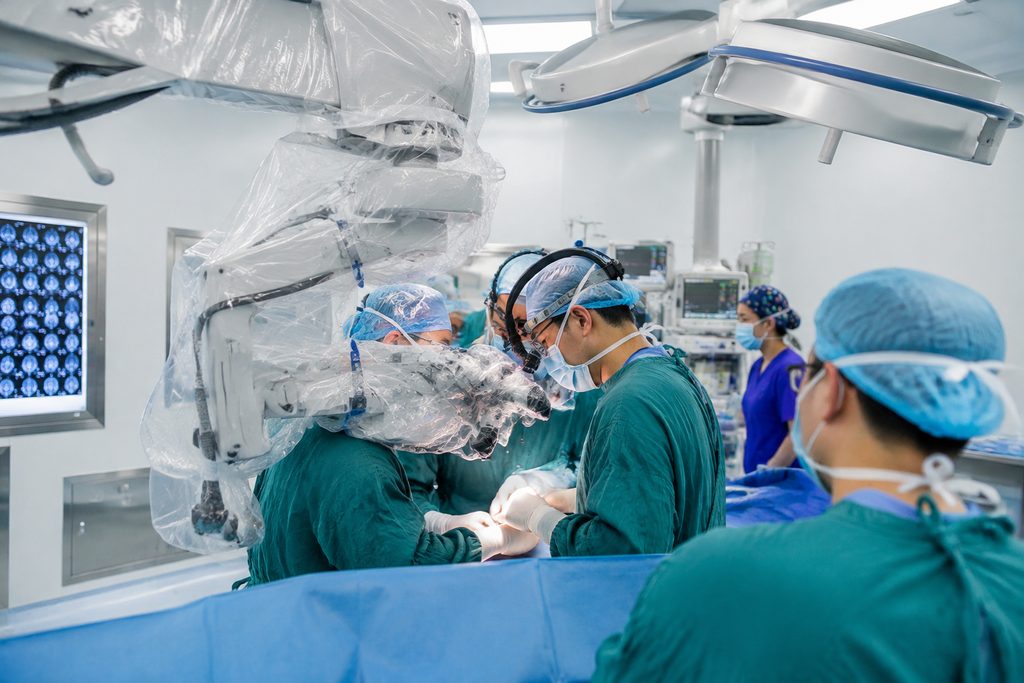
Epilepsy Treatment at Huashan Hospital: The Short Answer
For drug-resistant epilepsy patients, surgery at Huashan Hospital in Shanghai typically costs between $18,000 and $35,000 — roughly one-fifth to one-third of the $80,000 to $150,000 billed in the United States. The hospital’s neurosurgery department consistently ranks among China’s top three for epilepsy surgery volume, performing over 400 resective procedures annually. That’s the headline. But the real question isn’t just cost. It’s whether the clinical outcomes, the logistics, and the follow-up infrastructure justify traveling 7,000 miles for brain surgery.
Huashan is not a budget hospital. It is a tertiary academic center affiliated with Fudan University, with a dedicated epilepsy center that houses video-EEG monitoring units, intracranial electrode implantation programs, and a multidisciplinary surgical team. The cost advantage is real. So is the complexity of navigating a Chinese public hospital as a foreign patient. We’ll break down both.
Who This Is Right For — and Who It Isn’t
Epilepsy surgery in China makes sense for a specific patient profile. It is not a universal solution, and chasing lower costs without clinical justification is dangerous. Here’s the honest breakdown.
Typically good candidates:
- Adults or children with drug-resistant focal epilepsy who have failed two or more anti-seizure medications
- Patients with a clearly identified epileptogenic lesion on MRI (hippocampal sclerosis, focal cortical dysplasia, cavernous malformation, low-grade tumor)
- Patients who have been evaluated at home and told surgery is indicated, but face multi-year waitlists or prohibitive out-of-pocket costs
- Families seeking a second opinion from a high-volume surgical center before committing to a procedure domestically
- Patients with adequate insurance coverage or the financial capacity to self-pay for international medical travel
Who should not pursue this:
- Patients with generalized epilepsy syndromes where resective surgery is not indicated
- Patients whose seizures are well-controlled on current medication
- Patients with unstable psychiatric comorbidities that would complicate post-operative recovery
- Patients who cannot tolerate international travel or extended stays abroad
- Patients expecting a guaranteed cure — no epilepsy surgery anywhere in the world offers that
If you’re in the first group, the next question is what “treatment” actually means at Huashan.
The Options, Compared
Epilepsy treatment isn’t one thing. It’s a spectrum from medication adjustment to resective surgery to neuromodulation. Here’s how the main options stack up at Huashan Hospital versus typical US centers.
| Treatment Option | Huashan Hospital (Shanghai) | Typical US Academic Center | Key Difference |
|---|---|---|---|
| Comprehensive pre-surgical evaluation (video-EEG, 3T MRI, PET, neuropsych testing) | $3,000 – $6,000 | $25,000 – $50,000 | 5-8x cost difference |
| Resective epilepsy surgery (temporal lobectomy, lesionectomy) | $18,000 – $35,000 | $80,000 – $150,000 | 4-5x cost difference |
| Vagus nerve stimulation (VNS) implantation | $25,000 – $40,000 | $40,000 – $70,000 | Device cost similar; hospital fees lower |
| Responsive neurostimulation (RNS) | Limited availability; typically $45,000 – $65,000 | $50,000 – $80,000 | Newer technology; fewer implanting centers in China |
| Stereo-EEG (SEEG) intracranial monitoring | $12,000 – $22,000 | $60,000 – $120,000 | Biggest relative savings |
Resective surgery offers the best seizure-freedom odds for eligible patients — roughly 60-70% achieve Engel Class I outcomes (free of disabling seizures) at two years. VNS is palliative: about 50% of patients see a 50% or greater seizure reduction, but complete freedom is rare. RNS falls somewhere between, with outcomes improving over time as the device learns. Huashan’s strength is resective surgery and SEEG. If you need RNS, a US center may still be the better choice.
Why Huashan Specifically? The Case Beyond Cost
Plenty of hospitals in Asia offer cheap brain surgery. What separates Huashan is volume and subspecialization. The hospital’s epilepsy center performs more than 400 resective surgeries per year. That’s not a marketing number — it’s the kind of case volume that correlates with lower complication rates and better seizure outcomes. A 2021 study in Epilepsia found that centers performing more than 30 epilepsy surgeries annually had significantly lower rates of permanent neurological deficits compared to low-volume centers. Huashan exceeds that threshold by an order of magnitude.
The center also runs one of China’s largest SEEG programs. Stereo-EEG — implanting depth electrodes to map seizure onset zones — is technically demanding and expensive. Chinese centers adopted SEEG later than Western ones, but Huashan’s program now rivals major European centers in case numbers. For patients whose seizures originate in deep or hard-to-localize regions, this capability matters more than the headline surgery price.
And Shanghai itself helps. The city has more JCI-accredited hospitals than any other Chinese city, direct international flights from most major hubs, and a large expatriate community that makes English-language logistics easier than in smaller Chinese cities. For more on Shanghai’s broader medical landscape, see our guide to top hospitals in Shanghai.
What It Costs: The Real Numbers
Let’s talk about the epilepsy surgery cost China Huashan Hospital patients actually pay. The figures below reflect the hospital’s international patient pathway, not the subsidized domestic public rate. Foreign patients are generally billed through the international department or VIP channel, which runs 1.5 to 2 times the standard public rate — but still dramatically below US prices.
Pre-surgical evaluation: $3,000 – $6,000. This includes 3-5 days of video-EEG monitoring, high-resolution MRI, PET-CT if indicated, and neuropsychological assessment. In the US, this same workup often exceeds $30,000.
Resective surgery: $18,000 – $35,000 all-in for the hospital stay, surgeon fees, anesthesia, and immediate post-operative care. The variance depends on whether intracranial monitoring (SEEG) is required first, the complexity of the resection, and the length of ICU stay. SEEG adds $12,000 – $22,000 on top.
VNS therapy: $25,000 – $40,000 including the device. The device itself costs roughly the same worldwide ($15,000 – $20,000). The savings come from lower hospital and surgical fees. For patients asking how much does VNS therapy cost in China, the answer is meaningful but less dramatic than for resective surgery.
What’s not included: international flights, visa fees, accommodation during the 2-4 week stay, interpreter services if you don’t use a coordination service, and post-operative rehabilitation. Budget an additional $3,000 – $8,000 for these, depending on your travel style and length of stay.
Is Epilepsy Brain Surgery Safe in China?
The short answer: at a top-tier center like Huashan, the safety profile is comparable to Western academic hospitals. The longer answer requires nuance.
Huashan’s neurosurgery department reports a permanent neurological deficit rate below 2% for temporal lobe resections — in line with published benchmarks from Cleveland Clinic and Mayo Clinic. Surgical site infection rates are under 1%. These are credible numbers from a hospital that publishes its outcomes in peer-reviewed journals.
But “safe in China” depends entirely on where in China. The country has 35,000+ hospitals. The quality gap between the top 5% and the rest is enormous. Huashan sits firmly in that top tier — it’s one of the top-ranked hospitals in China by Fudan’s national evaluation. A county-level hospital performing occasional epilepsy surgery is a completely different risk proposition. The hospital matters more than the country.
One honest caveat: infection control protocols in Chinese public hospitals can feel different from Western standards, even at elite centers. Expect shared rooms on standard wards, more crowded common areas, and a system where family members are expected to handle basic nursing tasks like feeding and bathing. The international department mitigates some of this, but it’s not a Western private hospital experience.
Practical Considerations: Records, Visas, and Follow-Up
Getting to Huashan for epilepsy treatment requires paperwork discipline. Here’s what actually matters.
Medical records: You need complete seizure history documentation, all prior EEG reports (ideally raw data, not just summaries), MRI images on CD or cloud link (not just the radiology report), medication list with doses and dates, and any prior surgical reports. Chinese epileptologists will review everything before accepting your case. Incomplete records are the most common reason international patients get delayed or rejected.
Visa: Medical travel to China uses the S2 visa, which covers short-term private affairs including medical treatment. Your accompanying family members also apply for S2. The hospital’s international department can issue an invitation letter that strengthens your application. Apply at least 6-8 weeks before your planned travel date. Approval is not guaranteed, and requirements shift — check with the nearest Chinese embassy or consulate before booking anything.
Payment: Public hospitals in China, including Huashan’s international department, require pre-payment. You deposit an estimated amount upfront, and the hospital draws down as services are provided. Credit cards are accepted at the international department, but wire transfer is more common for large deposits. US insurance rarely covers treatment in China directly — you pay first and seek reimbursement after, if your policy allows out-of-network international care.
Follow-up: This is the part most patients underestimate. Epilepsy surgery requires follow-up at 3 months, 6 months, 12 months, and then annually. Medication adjustments are common in the first year. If you live in the US or Europe, you need a local neurologist willing to co-manage your care. Huashan can provide written summaries and telehealth follow-ups, but your local doctor will handle the day-to-day. Establish this relationship before you travel.
Epilepsy Treatment Success Rate: China vs USA
Head-to-head outcome data between Chinese and American epilepsy centers is limited. What exists is encouraging but requires careful reading.
A 2020 systematic review comparing epilepsy surgery outcomes across countries found no statistically significant difference in seizure-freedom rates between high-volume centers in China, the US, Europe, and Japan. Temporal lobe resections achieved Engel Class I outcomes in 65-75% of patients across all regions. Extra-temporal resections were lower everywhere — 45-55% — reflecting the inherent difficulty of those cases, not the quality of the surgical center.
What the US offers that China generally doesn’t: longer-term outcome registries with 10+ year follow-up data, more established RNS programs, and a deeper bench of epilepsy neuropsychologists. What China offers: faster access (typically 2-4 weeks from acceptance to surgery, versus 3-6 months at many US centers), lower cost, and high surgical volume at top centers.
For a patient with clear mesial temporal lobe epilepsy, the expected outcome at Huashan is essentially the same as at a US academic center. For a complex case requiring RNS or multiple subpial transections, the US edge is real.
Frequently Asked Questions
Yes, but not through the standard public registration system. International patients go through Huashan’s international medical center, which handles scheduling, billing, and interpreter coordination. You cannot simply show up and register at the public window. The process starts with submitting your medical records for review, after which the epilepsy team determines whether they’ll accept your case. Expect 1-3 weeks for the review. A coordination service can manage this process, but the hospital’s international department also accepts direct inquiries.
Plan for 3-5 weeks total. The first week is pre-surgical evaluation (video-EEG monitoring, imaging, team conference). Surgery happens in week two or three. You’ll remain hospitalized for 5-10 days after surgery, then stay in Shanghai for at least another week for staple removal and early follow-up. If SEEG is required before the resection, add another 2-3 weeks. Some patients stretch this to 6-8 weeks to allow for initial medication titration before flying home.
Most US and European insurance plans do not have direct billing arrangements with Chinese public hospitals, including Huashan. Some international health insurance plans (Cigna Global, Allianz, Bupa International) may cover treatment at JCI-accredited or internationally recognized facilities, but Huashan’s international department is not JCI-accredited — it operates under Chinese national hospital standards. Check your policy’s out-of-network and international coverage clauses carefully. In practice, most international patients at Huashan self-pay and seek reimbursement if eligible.
This is the hardest question, and you deserve a straight answer. Huashan has excellent neurosurgical complication management — their ICU is well-equipped, and the hospital handles thousands of complex cranial cases annually. But if you experience a complication after returning home, your local neurologist or neurosurgeon becomes the primary responder. Huashan can provide records and remote consultation, but they cannot manage your care across an ocean. Malpractice litigation against Chinese public hospitals by foreign patients is extraordinarily difficult and rarely successful. The practical reality: you are accepting the same medical risks as surgery at home, with less legal recourse if something goes wrong. This is not a reason to avoid Huashan — their safety record is strong — but it belongs in your risk calculation.
For many patients, yes — and it doesn’t require flying. Huashan’s international department offers remote written second opinions for $300-500, where their epilepsy team reviews your records and provides a written assessment of surgical candidacy and recommended approach. This is a low-cost way to gauge whether traveling for surgery makes sense before committing to the full trip. A video consultation with a Huashan epileptologist runs $500-800. Both are dramatically cheaper than an in-person evaluation trip, and they give you a concrete sense of whether the team believes they can help you.
Your Next Step
The question “is epilepsy treatment in China worth it” has a specific answer for a specific patient. If you have drug-resistant focal epilepsy, a clear surgical target, and either long wait times or prohibitive costs at home, Huashan Hospital offers outcomes comparable to top Western centers at a fraction of the price. If your case is complex, your epilepsy is generalized, or you need RNS, the calculus shifts.
We’re China Medical Services — not a hospital, not doctors. We help international patients navigate the Chinese healthcare system: hospital matching, appointment coordination, bilingual medical companions, and visa guidance. If you’re considering Huashan or another Chinese epilepsy center, start with our free consultation service. We’ll review your situation honestly, including whether China is the right choice for you at all.
For more medical information and treatment options in China, visit chinamedservices.com (China Medical Services).
