Fall Prevention China: Keeping Elderly Patients Safe After Surgery
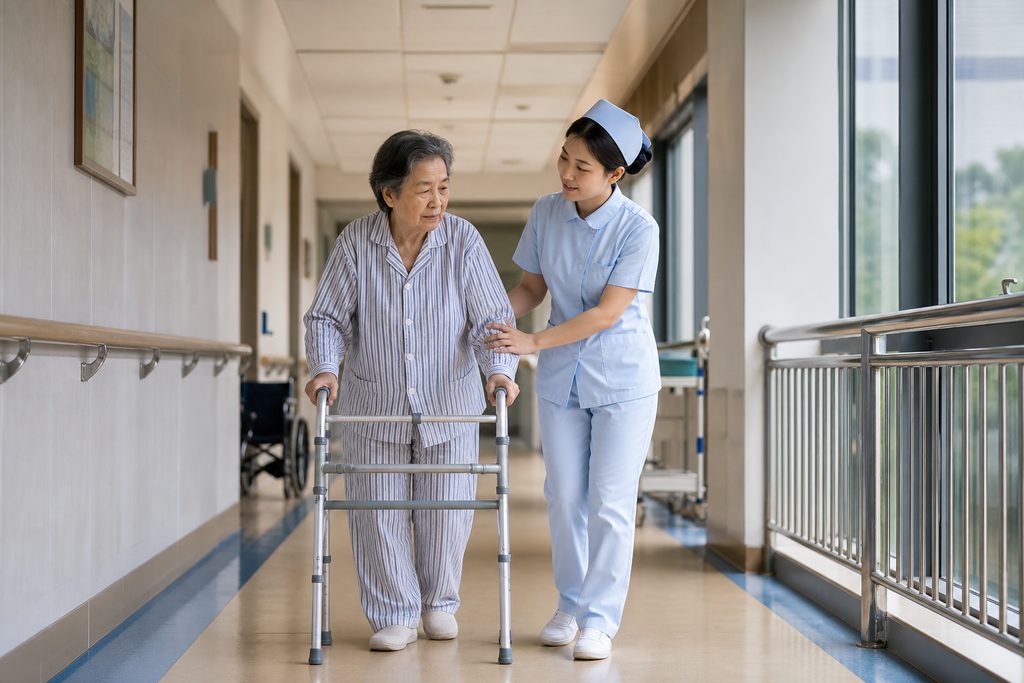
In the United States, a hip fracture sends an older adult to the emergency room roughly every 15 seconds, and one in three seniors who break a hip will die within a year. Across the Pacific, orthopedic surgeons at Beijing Jishuitan Hospital manage over 1,200 hip fracture cases monthly, and their in-hospital fall rate for post-operative geriatric patients sits below 0.3%. The difference is not luck. It is a systematic, protocol-driven approach to fall prevention that starts before the patient ever stands up. For families searching for fall prevention after hip surgery cost China, the answer is straightforward: structured inpatient safety programs integrated into the surgical package typically add between $80 and $250 to the total stay, depending on hospital tier and patient frailty. That is a fraction of what standalone fall prevention retraining costs in Western outpatient settings, and it comes with a level of staffing intensity most foreign patients do not expect.
The Short Answer
A dedicated fall prevention program for an elderly patient recovering from orthopedic surgery in a top-tier Chinese hospital costs between $80 and $250 as an integrated add-on to the inpatient stay. That covers environmental safety modifications, one-to-one mobilization assistance during the first 48 hours, daily balance retraining, and a discharge mobility assessment. The program is not a separate billable line item at most public hospitals. It is woven into the post-surgical nursing protocol. The real question is not whether it exists — it does, and it is mandatory in JCI-accredited and Fudan-ranked orthopedic wards — but whether the program matches what your parent or spouse actually needs once they leave the hospital and return to a home environment that was not designed for post-fall recovery.
Who This Is Right For — and Who It Isn’t
Fall prevention protocols in Chinese hospitals are built for acute post-surgical patients, not for long-term geriatric rehabilitation. The distinction matters.
This works well for:
- Patients aged 65 and older who have just undergone hip arthroplasty, hemiarthroplasty, or internal fixation for a fragility fracture and need supervised first mobilization within 24 hours of surgery.
- Families who can stay in the same city for at least two weeks post-discharge so the patient can attend outpatient balance retraining sessions before flying home.
- Patients with mild cognitive impairment who can follow two-step commands — the protocols rely on active patient participation, not passive restraint.
- Cases where the home country’s rehabilitation waitlist exceeds three weeks and the family wants the critical first mobilization window handled by a team that does this daily.
This is probably not the right path if:
- The patient has advanced dementia with agitation. Chinese orthopedic wards manage delirium pharmacologically when necessary, but one-to-one sitters are not standard in public hospital settings. A private international hospital with dedicated nursing ratios would be more appropriate.
- The surgery was spinal, not hip-related, and the fall risk stems from autonomic instability rather than musculoskeletal weakness. The protocols described here are orthopedic-trauma specific.
- The family cannot remain in China for at least 10 days post-discharge. Fall prevention is not a one-time intervention. The hospital program is the start, not the whole solution.
- The patient requires bariatric mobilization equipment. Most Chinese public hospital wards are equipped for patients up to 120 kg. Above that weight, specialized facilities must be confirmed in advance.
The Options, Compared
Not all fall prevention programs are equal. The table below compares what actually happens in three distinct settings an international family might consider.
| Factor | Chinese Public Top-Tier Orthopedic Hospital | Chinese Private International Hospital | Typical Western Outpatient Fall Prevention Program |
|---|---|---|---|
| Start of mobilization | Within 24 hours post-op, supervised by ward nurse or physiotherapist | Within 12-18 hours post-op, one-to-one physiotherapist | Often 2-6 weeks post-discharge, after initial home recovery |
| Staff-to-patient ratio during first walk | 1:1 for the first mobilization, then 1:4 for subsequent daily walks | 1:1 for all mobilization sessions during the entire inpatient stay | 1:1 during scheduled sessions only (typically 2-3 per week) |
| Environmental controls | Bed alarms, floor-level night lighting, non-slip flooring, grab bars in all patient bathrooms | All public hospital measures plus bed exit sensors linked to nurse station, private bathroom with shower chair | Home assessment visit may be included; modifications are patient-funded |
| Family involvement | Family expected to be present for daytime hours; nursing staff handle nights | Family presence optional; 24/7 nursing covers all mobilization | Family training session typically included; daily care is family-managed |
| Cost (fall prevention component only) | $80–$250 integrated into inpatient stay | $400–$900 as part of the comprehensive nursing package | $1,200–$3,500 for a 6-8 week outpatient program (US pricing) |
| Discharge mobility standard | Independent with walker on level surfaces; stairs assessed case-by-case | Independent with walker including stairs; car transfer practiced before discharge | Varies by provider; no standardized discharge threshold |
For most families, the public top-tier orthopedic hospital delivers the highest-value acute fall prevention. The private international hospital makes sense when the patient cannot have family present during the day or when language barriers make direct nursing communication essential. The Western outpatient program is the right comparison point for post-discharge continuation, not for the immediate post-surgical window. Trying to replicate inpatient-level fall prevention at home without that first-week supervised mobilization is where most preventable falls happen.
What the Best Geriatric Fall Safety Program Shanghai Actually Delivers
Shanghai’s top orthopedic departments — at Shanghai Sixth People’s Hospital, Ruijin Hospital, and Zhongshan Hospital — run fall prevention protocols that are strikingly uniform. That uniformity is intentional. The Shanghai Orthopedic Trauma Alliance published standardized geriatric perioperative safety guidelines in 2019, and compliance among member hospitals exceeds 90%.
Here is what a best geriatric fall safety program Shanghai actually includes, day by day.
Pre-op (day of admission): A Morse Fall Scale assessment is completed within two hours of admission. Patients scoring 45 or higher — which includes virtually every elderly hip fracture patient — trigger an automatic high-risk protocol. A yellow fall-risk wristband is applied. The bed is locked at its lowest height. The patient and family receive a 10-minute structured education session on call bell use, bed exit procedure, and the absolute prohibition on unassisted mobilization. This is not optional. It is hospital policy.
Post-op day 0 (day of surgery): The patient is not mobilized. Pain control and hemodynamic stability are the priorities. The head of bed is elevated to 30 degrees. Calf compression devices are applied. The nurse checks the bed alarm function at shift change and documents it.
Post-op day 1: This is the critical day. The physiotherapist arrives at the bedside, usually between 8:00 and 10:00 AM. The patient sits at the edge of the bed with feet flat on the floor for two minutes while blood pressure and oxygen saturation are monitored. If orthostatic hypotension is ruled out, the patient stands with a walker. The physiotherapist supports the patient on the surgical side. The patient takes three to five steps. That is the entire first session. It lasts perhaps eight minutes. But it proves the patient can mobilize safely, and it sets the psychological foundation for everything that follows.
Post-op day 2 through discharge (typically day 5-7): Twice-daily mobilization sessions. Morning sessions focus on distance — by day 4, most patients walk 30-50 meters with a walker. Afternoon sessions focus on functional tasks: sitting down on and standing up from a toilet-height chair, reaching for a bedside table without losing balance, turning 180 degrees in a confined space. The nursing team conducts a nightly environmental safety check: floor dry, walking path clear, call bell within reach, personal items on the bedside table not the floor.
Discharge day: A final Timed Up and Go (TUG) test is performed. Patients who complete the TUG in under 20 seconds with a walker are cleared for discharge with a home exercise program. Those who take longer than 20 seconds are referred to outpatient balance retraining, scheduled before they leave the hospital. The family receives a printed fall prevention checklist in Chinese and, at international departments, in English.
The entire protocol costs the hospital roughly $35 in additional staffing time per patient. The charge to the patient, where itemized, ranges from $80 to $250. That is not a typo. The economics work because the protocol is standardized, the staff-to-patient ratios on orthopedic wards are higher than Western equivalents, and fall prevention is treated as a core nursing function rather than a billable therapy service.
What Post Surgery Elderly Care China Price Includes — and Excludes
When families ask about post surgery elderly care China price, they are usually thinking about more than fall prevention. They want to know what the full post-operative care package costs and what gaps they will need to fill themselves.
In a top-tier public hospital orthopedic ward, the daily inpatient care rate — covering nursing, physiotherapy, meals, and the fall prevention protocol — runs between $180 and $400 per day for a shared room. A private room in the international department of the same hospital ranges from $350 to $800 per day. Those figures include all the mobilization and safety interventions described above. They do not include the surgery itself, implants, anesthesia, medications, or imaging. A complete hip replacement with a five-day inpatient stay in a public top-tier hospital typically totals $8,000 to $15,000, all-in. The fall prevention component is a negligible fraction of that total.
What is not included — and this is where families need to plan — is the post-discharge gap. The hospital will discharge the patient when they are medically stable and mobile with a walker on level surfaces. They will not provide in-home follow-up unless the patient enrolls in a separate outpatient rehabilitation program. That program costs between $40 and $80 per session in a public hospital rehabilitation department, with a typical prescription of three sessions per week for four to six weeks. Private rehabilitation centers in Shanghai charge $100 to $200 per session.
Also not included: home environmental modifications. Chinese hospital discharge teams do not conduct home visits for international patients. The family is responsible for ensuring that the patient’s home — or temporary accommodation in China — has grab bars in the bathroom, a non-slip shower mat, a raised toilet seat if needed, and clear walking paths free of loose rugs and electrical cords. These items can be purchased in any large Chinese pharmacy or ordered online for under $100 total. The hospital will provide a checklist. They will not do the shopping.
How to Prevent Falls in Elderly After Surgery: The Evidence Behind the Protocol
The question how to prevent falls in elderly after surgery has been studied extensively, and the evidence converges on a handful of interventions that actually work. The Chinese protocols described above are not based on tradition or intuition. They are based on the same clinical evidence that informs geriatric orthopedic care globally, with some adaptations for local staffing patterns and family structures.
The single most effective intervention is early mobilization within 24 hours of surgery. A 2020 meta-analysis published in the Journal of the American Geriatrics Society pooled data from 18 randomized controlled trials and found that patients mobilized within 24 hours of hip fracture surgery had a 22% lower risk of in-hospital falls and a 31% lower risk of postoperative pneumonia compared to those mobilized later. The mechanism is straightforward: prolonged bed rest causes rapid muscle wasting, orthostatic intolerance, and confusion — all of which increase fall risk. Getting the patient upright and moving, even for a few steps, interrupts that cascade.
The second pillar is environmental safety. A 2018 systematic review in Age and Ageing examined 22 studies of hospital fall prevention programs and identified bed alarms, non-slip flooring, and adequate lighting as the three environmental modifications with the strongest evidence for reducing falls in orthopedic wards. Chinese hospitals implement all three as standard. Bed alarms are universal in orthopedic wards. Flooring in patient rooms and corridors is uniformly non-slip vinyl. Night lighting is kept at a level that allows safe navigation without disrupting sleep — typically a low-wattage LED strip at floor level along the wall.
The third pillar — and this is where Chinese protocols differ from Western ones — is family involvement. In Chinese public hospitals, a family member or hired caregiver is expected to be present during daytime hours. That person is trained by the nursing staff to assist with mobilization, to reinforce the fall prevention rules, and to act as a second set of eyes. The evidence on family involvement in fall prevention is mixed; some studies show a protective effect, others show that untrained family members can inadvertently increase risk by encouraging premature independence. The Chinese model addresses this by making the family training session mandatory and documented. The family member is not a substitute for professional supervision. They are an adjunct.
What does not work — and what Chinese hospitals do not do — is restraint-based fall prevention. Bed rails, wrist restraints, and sedation all increase the risk of injury when a fall occurs, because a restrained patient who manages to get out of bed falls from a greater height or with compromised reflexes. Chinese orthopedic wards use bed rails only for patients who are sedated or post-anesthesia and unable to follow instructions. Once the patient is alert, the rails are lowered, the bed alarm is activated, and the expectation is that the patient will call for assistance. The system is designed to enable safe mobility, not to prevent all movement.
Is Fall Prevention Training Available in Chinese Hospitals for International Patients?
The short answer is yes — with qualifications. Is fall prevention training available in Chinese hospitals for someone who does not speak Mandarin and who arrives through the international department rather than the standard public pathway? The training is the same. The communication method is different.
In the international department of a hospital like Huashan Hospital or Ruijin Hospital in Shanghai, the physiotherapist and nursing staff communicate in English. The fall prevention education session, the mobilization instructions, and the discharge checklist are all delivered in English. The printed materials are available in English. The daily mobilization sessions are conducted with English-speaking staff. The patient experience is substantively identical to what a Chinese-speaking patient receives, with the added benefit of direct communication rather than communication through a family interpreter.
In a standard public ward, the fall prevention training is delivered in Mandarin. The physiotherapist may know some English medical terminology, but they are not conversationally fluent. This is where a bilingual medical companion becomes essential. The companion translates the education session, relays instructions during mobilization, and ensures the patient understands the safety rules. The companion does not provide medical care. They bridge the language gap so the medical team can do their job.
For families considering this path, the practical question is whether the patient can tolerate being in an environment where most ambient communication — nurse shift handovers, meal ordering, roommate conversations — is in a language they do not understand. Some elderly patients find this disorienting and anxiety-provoking, which can increase fall risk. Others are unfazed, especially if a family member is present during the day. There is no universal right answer. The decision should be based on the patient’s temperament, not just the medical protocol.
How to Book Post Operative Fall Prevention Program China
You do not book post operative fall prevention program China as a standalone service. That is the first thing to understand. Fall prevention is not a product you add to a shopping cart. It is embedded in the orthopedic surgical pathway at any hospital worth considering.
The booking process is the surgical booking process. When you arrange surgery through a hospital’s international department or through a medical coordination service, the fall prevention protocol is automatically triggered by the patient’s age and procedure type. You do not need to request it. You do not need to pay extra for it. It is part of the standard of care for geriatric orthopedic patients in Fudan-ranked hospitals.
What you do need to arrange separately — and what is worth booking in advance — is the post-discharge rehabilitation. Outpatient balance retraining slots in Shanghai’s top rehabilitation departments fill quickly. If you wait until the day of discharge to schedule the first outpatient session, you may face a one-to-two-week gap. That gap is dangerous. A patient who mobilizes daily in the hospital and then sits in a hotel room for ten days will regress. Muscle strength declines measurably within five days of inactivity in elderly patients. The fall risk that the hospital program reduced will climb again.
The practical sequence is: confirm the surgery date and hospital, then immediately request that the international department or coordination service pre-book the first three outpatient rehabilitation sessions for the expected discharge date. If the discharge date shifts — and it often does — the sessions can be rescheduled. But having them on the calendar from the start eliminates the post-discharge gap. The cost of those sessions
Frequently Asked Questions
Yes. The hospitals used for international patients are JCI-accredited and follow the same international safety standards as top hospitals in the US and Europe. Surgical teams perform high volumes of procedures — often more than their Western counterparts — which studies show leads to better outcomes.
Costs vary by procedure and hospital, but international patients typically save 40-80% compared to US prices — even when factoring in travel and accommodation. A consultation with our team will give you an exact, all-inclusive quote with no hidden fees.
Send us your existing medical reports to get started. We handle everything from hospital selection and appointment scheduling to visa assistance and post-operative recovery planning. Your medical records are reviewed by the specialist before you even book a flight.
For more medical information and treatment options in China, visit chinamedservices.com (China Medical Services).
