Why Fertility Treatment Costs Less in China: A Patient Guide
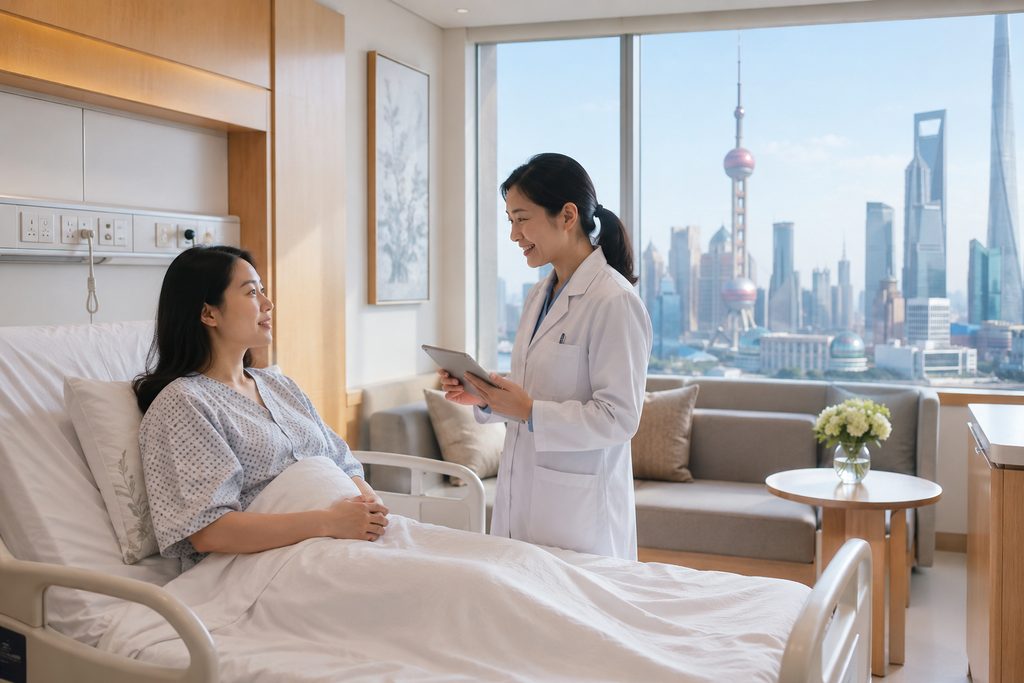
When 38-year-old Sarah from Manchester sat down with her husband to review their third failed IVF cycle, the numbers stopped making sense. They had drained £21,000 from savings. The clinic recommended one more attempt. Her AMH levels were dropping. The math was brutal, and the emotional toll was worse.
Then a colleague mentioned something that sounded almost too good to be true. A full IVF cycle at a reputable hospital in Shanghai for roughly one-fifth of what they had already paid. Sarah’s first reaction was skepticism. Her second was a Google search that led her to questions like “is IVF safe in China” and “how much does IVF cost in Beijing.”
If you are reading this, you have probably run the same search. The short answer: yes, IVF in China is significantly cheaper than in the US or UK, and at top-tier hospitals the clinical standards are high. But the real answer requires understanding why the price gap exists, what you actually get for your money, and where the hidden costs and risks live. That is what this guide covers.
Key Takeaways
- A single IVF cycle at a top Chinese public hospital typically costs $4,000–$8,000, compared to $15,000–$30,000 in the United States.
- China’s top reproductive medicine centers perform thousands of cycles annually, giving clinicians deep experience with complex cases.
- Language barriers and hospital navigation are real challenges; the S2 visa category applies for medical travel, not the M visa.
- Success rates vary by clinic and patient age — request audited data, not marketing brochures, before committing.
The Problem: IVF Costs in the West Have Become Unsustainable
In the United States, the average cost of a single conventional IVF cycle is approximately $21,600, according to data compiled by FertilityIQ. That figure excludes medication, which often adds $3,000–$6,000. Genetic testing of embryos adds another $2,000–$5,000. For many patients, the true total lands between $25,000 and $35,000 per attempt. In the UK, a private cycle typically runs £5,000–£8,000, with medication pushing the total closer to £10,000.
Most patients need more than one cycle. The American Society for Reproductive Medicine reports that cumulative live birth rates improve with repeated transfers, but each attempt resets the financial clock. Insurance coverage remains patchy. Only 19 US states mandate any fertility coverage, and the benefits are often capped. That leaves millions of patients self-funding a process that can easily consume $50,000 before a positive pregnancy test.
The emotional weight compounds the financial one. Patients delay treatment to save money. Age advances. Ovarian reserve declines. It is a punishing cycle with no good options — unless you look beyond your home market.
Why the IVF Cost China vs USA Gap Exists
The price difference between IVF in China and the United States is not a reflection of quality. It is a reflection of structural economics. Understanding these mechanics helps you evaluate whether treatment abroad makes sense for your situation.
Volume Creates Efficiency and Clinical Experience
China’s top reproductive medicine departments operate at a scale that is difficult to comprehend from a Western perspective. Peking University Third Hospital in Beijing — one of the country’s most respected fertility centers — performs tens of thousands of IVF cycles annually. Shanghai’s leading centers, including the reproductive medicine departments at Renji Hospital and Shanghai First Maternity and Infant Hospital, each handle thousands of cycles per year. You can explore specific centers through our department rankings for reproductive medicine.
That volume matters for two reasons. First, it drives down per-cycle costs through operational efficiency. Second, it gives embryologists and clinicians exposure to a wider range of cases — including difficult ones. A lab that handles 10,000 cycles per year has seen almost every scenario. That experience translates into refined protocols and better troubleshooting when things do not go as planned.
Labor Economics Are Fundamentally Different
Salaries for physicians, nurses, embryologists, and administrative staff in China are significantly lower than in the United States or Western Europe. That is the single largest driver of the cost gap. A senior embryologist in Shanghai earns a fraction of what a comparable professional earns in Boston or London. The same applies to clinic space, equipment maintenance, and support staff.
None of this means lower quality. The embryologists at top Chinese centers train in the same techniques, use the same equipment platforms, and follow the same international protocols as their Western counterparts. The cost of doing business is simply lower.
Public Hospital Pricing Structures
Many of China’s best fertility programs operate within public hospitals, where pricing is influenced by government fee schedules rather than free-market dynamics. A public hospital in Beijing or Shanghai cannot charge $25,000 for an IVF cycle the way a private US clinic can. The fee structure is designed to keep care accessible, even at internationally recognized centers.
This creates an unusual situation: you can receive treatment at a hospital that ranks among the top 5% of China’s 35,000+ hospitals, as cataloged on our top hospitals page, for a price that would be considered a bargain in the West.
What IVF Actually Costs in China: A Realistic Breakdown
If you are searching “how much does IVF cost in Beijing” or “best fertility clinic Shanghai prices,” you need concrete numbers. The table below provides reference ranges based on publicly available pricing information from Chinese hospital international departments and patient-reported data. These figures reflect standard IVF without donor eggs, surrogacy, or complex genetic testing. Actual quotes vary by hospital and case complexity.
| Treatment Component | China (Public Hospital, International Dept.) | United States (Average) |
|---|---|---|
| Initial consultation and diagnostic workup | $300–$800 | $1,500–$3,000 |
| Standard IVF cycle (monitoring, retrieval, transfer) | $4,000–$8,000 | $15,000–$25,000 |
| Medications (gonadotropins, etc.) | $1,000–$2,500 | $3,000–$6,000 |
| ICSI (intracytoplasmic sperm injection) | $500–$1,000 | $1,500–$2,500 |
| Embryo freezing and first year of storage | $300–$800 | $1,000–$2,000 |
| Frozen embryo transfer cycle | $1,000–$2,000 | $3,000–$5,000 |
| PGT-A genetic testing (per embryo, approx.) | $500–$800 | $1,500–$3,000 |
These are reference ranges, not quotes. A private international hospital in Shanghai such as United Family or Jiahui will charge more — often $10,000–$15,000 per cycle — because those facilities offer Western-style amenities, English-speaking staff throughout, and direct insurance billing. You can compare public and private options on our private international hospitals page.
For a patient from the US, the total cost of a standard IVF cycle in China — including medications, ICSI, and one frozen transfer — typically lands between $6,000 and $12,000. The same package in the United States would run $20,000 to $35,000. Even after adding international flights and accommodation, most patients save 50–70%.
Is IVF Safe in China? What the Evidence Shows
The question appears in nearly every patient inquiry we receive: “is IVF safe in China?” The honest answer is that safety depends on the clinic, not the country.
China’s top reproductive medicine centers operate under the same regulatory frameworks as any developed healthcare system. The National Health Commission licenses and inspects ART (assisted reproductive technology) facilities. Leading centers participate in international accreditation programs and publish peer-reviewed research. The embryology labs at hospitals like Peking Union Medical College Hospital and West China Hospital use the same incubators, culture media, and micromanipulation equipment found in top American and European clinics.
What differs is the range of quality across the market. China has hundreds of clinics offering fertility services. The gap between the best and the average is wide. A patient who chooses a top-tier public hospital or an accredited private clinic receives care comparable to any Western center. A patient who chooses an unaccredited, low-volume clinic based on price alone takes on real risk.
Your job is to verify the clinic’s credentials, ask for audited success rates, and confirm that the embryology lab follows international quality standards. If a clinic cannot or will not provide this information, walk away.
Choosing Between Beijing, Shanghai, and Other Cities
Geography shapes both price and experience. Beijing and Shanghai dominate the conversation because they host the highest concentration of top-ranked reproductive medicine departments. But they are not the only options, and they are not always the best fit for every patient.
Beijing offers the deepest pool of academic medical expertise. Peking University Third Hospital is widely regarded as one of the strongest fertility centers in Asia. The city’s public hospitals are efficient but busy; expect less hand-holding and more throughput. If you are searching “how much does IVF cost in Beijing,” expect to pay slightly more than in smaller cities, but still far less than in the US.
Shanghai provides a more international environment. The city has a large expatriate community, more English-speaking medical staff, and a broader range of private clinics. If you are comparing “best fertility clinic Shanghai prices,” you will find options ranging from $5,000 at a public hospital to $15,000+ at a premium private facility. Our Shanghai city guide offers more context on the local medical landscape.
Other cities — Guangzhou, Chengdu, Hangzhou — offer lower costs and excellent clinical quality, often with shorter waiting times for initial consultations. The trade-off is a smaller English-speaking support infrastructure and fewer direct international flights.
What the Process Looks Like: A Realistic Timeline
Understanding the actual workflow helps you plan realistically. IVF is not a one-week trip. The process spans several weeks, and you need to plan your visa, accommodation, and work leave accordingly.
Weeks 1–2: Remote preparation. Before you travel, you will need to send your medical records — previous cycle summaries, hormone panels, semen analysis, any genetic testing. The clinic reviews these and confirms whether you are a suitable candidate. A written second opinion from a top specialist typically costs $300–$500 and can save you from traveling unnecessarily.
Week 3: Arrival and initial consultation. You fly to China on an S2 visa, which is the correct category for short-term medical treatment and private affairs. The M visa is for commercial and trade activities only — it is not appropriate for medical travel. Your first in-person visit includes blood work, ultrasound, and a review of your protocol.
Weeks 4–6: Ovarian stimulation and monitoring. You will visit the clinic every 2–3 days for ultrasound and blood tests. This is the most logistically intensive phase. You need to stay near the clinic during this period.
Week 6: Egg retrieval and fertilization. The retrieval is a minor surgical procedure done under sedation. Fertilization occurs in the lab. If you are doing a fresh transfer, it happens 3–5 days later.
Week 7: Transfer and early recovery. After transfer, you rest for a few days before flying home. Pregnancy testing happens 10–14 days after transfer, usually after you have returned home.
Total time in China: 3–4 weeks for a fresh cycle. If you plan a frozen transfer later, the second trip is shorter — often 5–7 days.
Practical Considerations: Visas, Payment, and Follow-Up
These logistics matter more than most patients expect. Plan them carefully.
Visa. For medical treatment in China, you apply for an S2 visa with documentation from the hospital confirming your treatment plan. Family members accompanying you also apply for S2 visas. For stays longer than 180 days, an S1 visa applies. Requirements vary by embassy and consulate, so check with the Chinese diplomatic mission in your country before booking flights. The hospital’s international department will provide the necessary supporting letters.
Payment. Public hospitals in China operate on a pre-payment model. You deposit funds upfront, and costs are deducted as services are rendered. Credit cards are accepted at international departments, but large deposits may require a bank transfer. Private international hospitals often accept direct insurance billing; public hospitals generally do not. Check with your insurer before you travel. Most international patients pay out of pocket and seek reimbursement afterward.
Language. Top public hospitals have international departments with some English-speaking staff, but the level of fluency varies. Outside those departments, English is rare. If you do not speak Mandarin, you will need help navigating registration, pharmacy, and follow-up visits. This is a practical reality, not a reflection on the hospital’s clinical quality.
Follow-up after returning home. Your home clinic can manage early pregnancy monitoring after a positive test. Coordinate this before you leave. Request complete medical records — in English — from the Chinese clinic before departure. Most international departments provide translated discharge summaries, but confirm this in advance.
Practical tip: Before committing to any clinic, request a video consultation with the actual physician who would oversee your cycle. A $100–$300 consultation is a small price to verify that you can communicate effectively with the person responsible for your care.
Frequently Asked Questions
At top-tier centers, yes. Leading Chinese fertility clinics publish success rates comparable to good Western programs. But success rates vary significantly by clinic and by patient age. Always request the clinic’s audited live birth rate for your age group, not their overall marketing figure.
You can arrange a remote consultation and confirm a treatment plan before traveling, but public hospitals require an in-person consultation before starting a cycle. Some private international clinics offer more structured packages for overseas patients. Either way, budget for at least one pre-treatment visit. Searching “book IVF treatment China package” will surface options, but verify what the package actually includes — medications and genetic testing are often excluded.
Complications from IVF are rare but real — ovarian hyperstimulation syndrome, infection, or failed cycles. Top Chinese hospitals are fully equipped to manage these complications. The more practical concern is communication during a stressful moment. If you do not speak Mandarin, having a bilingual companion or coordinator can make a significant difference in how smoothly issues are resolved.
Yes, but “affordable” and “high quality” overlap only at the top end of the public hospital system and at select private clinics. The cheapest option is rarely the best option. Target hospitals that appear on the Fudan University hospital rankings or hold JCI accreditation. Expect to pay $5,000–$10,000 for a full cycle at a reputable center — still far below US prices, but not bargain-basement cheap.
China does not issue a specific “medical visa.” For short-term medical treatment, the S2 visa is the applicable category. It covers private affairs including medical treatment. Your accompanying partner applies for the same category. The hospital provides a treatment confirmation letter to support your application. Approval is at the discretion of the Chinese embassy or consulate.
Your Next Step
The decision to pursue IVF abroad is never purely financial. It is about access, timing, and trust. Understanding the ivf cost China vs USA difference gives you options, but the right choice depends on your specific medical history and comfort level.
We help international patients evaluate Chinese fertility clinics, coordinate remote consultations, and navigate the logistics of treatment in China. We are not a hospital and we do not provide medical advice or diagnoses. If you are weighing your options, start with a conversation about your situation. Visit our consultation page to learn how we work. The information is free, and it may help you decide whether this path is right for you.
Sarah, the patient from Manchester, did eventually travel to Shanghai. Her fourth cycle cost less than her second one had in the UK — including flights and a month of accommodation. She is not alone. Patients from the US, UK, Australia, and across Europe are discovering that China’s top fertility centers offer something their home markets increasingly cannot: world-class care at a price that does not destroy a family’s finances. Whether that path is right for you is a decision only you and your doctor can make. But the option exists, and it is worth understanding.
For more medical information and treatment options in China, visit chinamedservices.com (China Medical Services).
