Why IVF Costs Less in China: A Fertility Cost Guide
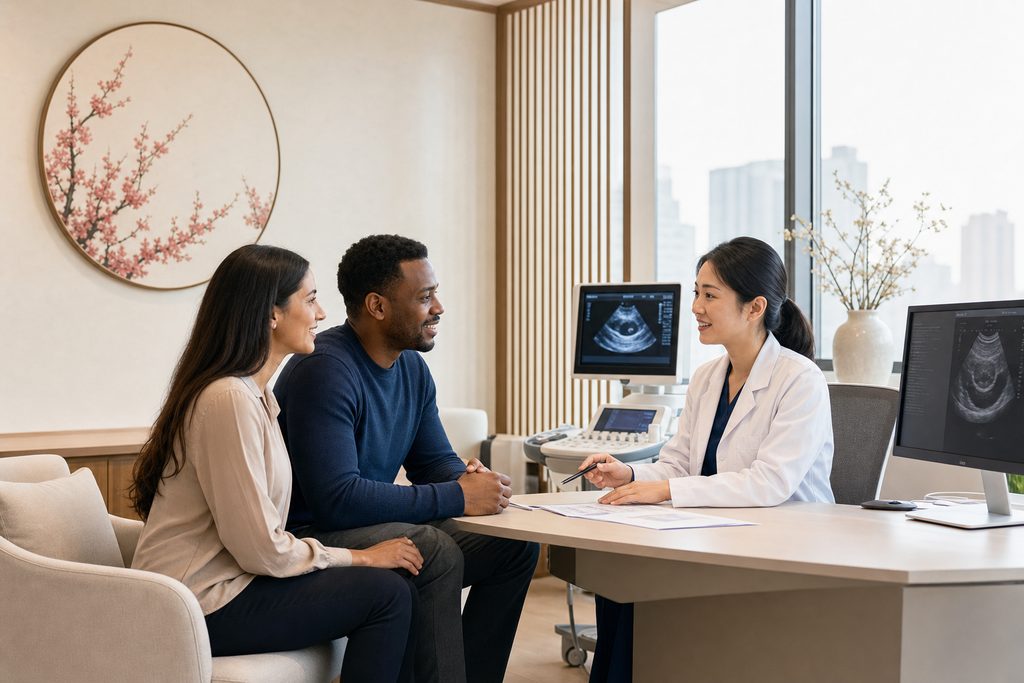
In vitro fertilization (IVF) is a medical procedure where eggs are retrieved from the ovaries and fertilized with sperm in a laboratory. The resulting embryo is then transferred to the uterus. For many couples, it is the most direct path to pregnancy when other methods have failed. The cost of this path, however, varies dramatically depending on where in the world you stand. The ivf cost China vs USA comparison is stark: a single cycle in the United States often exceeds $20,000, while comparable treatment at a top-tier Chinese hospital typically falls between $4,000 and $8,000. That is a difference of 60% to 80%.
Why the gap? It is not because the equipment is older or the doctors less trained. China’s leading reproductive medicine centers run the same embryology labs, the same genetic screening platforms, and the same hormonal protocols you would find in Boston or London. The gap exists because of structural economics: lower operating costs, state-subsidized infrastructure at public hospitals, and a high patient volume that drives efficiency. For international patients, this means access to quality care at a price that often makes multiple cycles feasible when one cycle at home would strain the budget.
Our team at China Medical Services works with patients every week who are weighing this decision. They ask the same questions: Is it safe? Which clinic? How do I coordinate it from overseas? This guide answers those questions directly, with real numbers and honest timelines.
How This Actually Works, Step by Step
You are not booking a hotel room. You are entering a medical process that spans weeks and involves legal, biological, and logistical steps. Here is the sequence, from where you are now to embryo transfer.
First, you gather your records. This means recent blood work (AMH, FSH, estradiol), a semen analysis if applicable, any prior IVF cycle summaries, and imaging reports. Your age and diagnosis matter enormously. A 32-year-old with tubal factor infertility has a very different protocol than a 41-year-old with diminished ovarian reserve.
Second, you choose a clinic and initiate remote consultation. Most top Chinese fertility centers accept international patients through their international departments. You send your records, they review them, and a reproductive endocrinologist gives you a preliminary assessment. Some clinics offer video consultations. This step costs between $100 and $300 at most public hospital international departments. At private international hospitals in Shanghai or Beijing, expect $200 to $500.
Third, you travel to China. Your first visit typically lasts 10 to 14 days. During this visit, the clinic repeats key tests, confirms your protocol, and begins ovarian stimulation. You will have blood draws and ultrasounds every 2 to 3 days. The clinic monitors your response and adjusts medication dosages.
Fourth, egg retrieval happens around day 12 to 14 of stimulation. This is a minor surgical procedure under light anesthesia. Sperm is collected the same day. Fertilization occurs in the lab. If you are doing preimplantation genetic testing (PGT), embryos are biopsied on day 5 or 6 and then frozen while results come back, which takes 2 to 3 weeks.
Fifth, embryo transfer. If you are doing a fresh transfer, it happens 3 to 5 days after retrieval. If you are doing a frozen transfer with PGT, you return to China for a second, shorter visit (5 to 7 days) or coordinate a transfer cycle with your home physician if the clinic permits. Many patients do the entire process in one 3-week stay when no genetic testing is needed.
Why IVF Is Cheaper in China: The Real Cost Breakdown
The headline number — $4,000 to $8,000 per cycle — tells only part of the story. What does that actually include? At a reputable public hospital in Shanghai or Beijing, a standard IVF cycle with fresh embryo transfer typically includes: all monitoring ultrasounds, blood tests, egg retrieval, laboratory fertilization, embryo culture, and the transfer procedure. Medication is usually a separate line item, ranging from $1,000 to $3,000 depending on your age and protocol. Genetic testing, if chosen, adds another $1,500 to $3,000.
Compare this to the United States. The Society for Assisted Reproductive Technology (SART) reports that the average cost of a single IVF cycle in the U.S. is approximately $12,000 for the procedure alone. Medication adds $3,000 to $6,000. PGT adds $3,000 to $7,000. A realistic all-in U.S. cycle lands between $20,000 and $25,000. In cities like New York or San Francisco, it can reach $30,000.
| Cost Component | China (USD) | USA (USD) |
|---|---|---|
| Standard IVF cycle (procedure + monitoring) | $4,000 – $8,000 | $12,000 – $18,000 |
| Fertility medications | $1,000 – $3,000 | $3,000 – $6,000 |
| Preimplantation genetic testing (PGT) | $1,500 – $3,000 | $3,000 – $7,000 |
| Embryo freezing + 1 year storage | $500 – $1,000 | $1,000 – $2,000 |
| Total estimated range | $7,000 – $15,000 | $19,000 – $33,000 |
These are ranges, not quotes. Final pricing depends on the specific hospital, the doctor’s protocol, your ovarian response, and whether you need additional procedures like ICSI (intracytoplasmic sperm injection) or assisted hatching. But the structural gap holds: how much cheaper is IVF in China? Roughly 50% to 70% cheaper than the United States, even before accounting for travel.
Best Fertility Clinics in Shanghai: Prices and What They Offer
Shanghai is the most common entry point for international IVF patients. The city has several centers with strong international programs and English-speaking coordinators.
Public hospital options include the reproductive medicine departments at major teaching hospitals. These are part of China’s top-tier system — institutions that appear on the Fudan University hospital rankings and handle thousands of IVF cycles annually. Prices at these public hospital international departments typically start around $4,000 for a standard cycle. The international department handles your registration, translation, and scheduling. You get the same embryology lab and the same senior physicians as Chinese patients, but with English coordination and shorter waits for appointments.
Private international hospitals in Shanghai — including JCI-accredited facilities — offer a more Western-style experience. English-speaking staff throughout, direct insurance billing, and private consultation rooms. Best fertility clinics Shanghai prices at these private facilities run higher: $7,000 to $12,000 per cycle. You are paying for the environment and the convenience, not necessarily for better laboratory outcomes. The embryology labs at Shanghai’s top public centers are world-class and in some cases handle more cycles per year than any single U.S. clinic.
For a deeper look at hospital rankings by specialty, see our department pages covering reproductive medicine. You can also browse Shanghai hospital profiles for specific institutional details.
A Realistic Timeline
People underestimate the calendar. Here is what a typical international IVF journey in China looks like, from first inquiry to pregnancy test.
| Stage | Duration | What Happens |
|---|---|---|
| Initial inquiry to clinic selection | 1 – 2 weeks | You send records, compare clinics, schedule remote consultation. |
| Remote consultation and protocol planning | 1 – 3 weeks | Doctor reviews your case, recommends protocol, gives cost estimate. Some clinics require document translation. |
| Visa application (S2) | 1 – 4 weeks | You apply for an S2 visa with a letter from the hospital confirming your treatment appointment. Processing time varies by country. |
| Travel to China and baseline testing | 3 – 5 days | Clinic repeats blood work and ultrasound, confirms protocol, begins stimulation. |
| Ovarian stimulation and monitoring | 10 – 14 days | Daily injections, blood tests every 2-3 days, ultrasound monitoring. |
| Egg retrieval | 1 day | Minor procedure under anesthesia. Sperm collected same day. |
| Embryo culture and transfer (fresh cycle) | 3 – 5 days | Embryo transfer if doing fresh cycle. You can fly home 1-2 days after transfer. |
| Pregnancy test | 10 – 14 days after transfer | Blood test done at home or at the clinic if you stayed. |
For a frozen cycle with genetic testing, add 3 to 4 weeks for PGT results and a second trip for transfer. Total time from first email to pregnancy test: 8 to 12 weeks for a fresh cycle, 12 to 16 weeks for a frozen cycle with PGT. The steps people forget are document translation and visa processing. Neither is complicated, but both take calendar time.
What Can Go Wrong — and What Happens Then
IVF fails. That is the reality. Even at the best clinics, the live birth rate per cycle for women under 35 is around 40% to 50%. For women over 40, it drops below 20%. Anyone who tells you otherwise is not being honest.
What happens if your cycle is cancelled mid-stimulation because of poor ovarian response? The clinic stops the cycle, you pay for the medications used and the monitoring done, and the doctor adjusts the protocol for a future attempt. Some clinics offer partial refunds on unused procedure fees. You should ask about this policy before you start.
What if the clinic loses your records or a translation error causes a protocol mistake? This is rare at top-tier centers but not impossible. The recourse is to work with a coordinator who reviews every document before it reaches the doctor. Our team translates and double-checks all medical records before submission. If a mistake happens, the hospital’s international department is responsible for correcting it — but you need someone on the ground who can escalate quickly.
What if you arrive and the doctor recommends a different treatment than you discussed remotely? This happens more often than patients expect. The remote consultation is based on records alone. The in-person baseline testing sometimes reveals new information — a cyst, a fibroid, a different ovarian reserve than expected. The doctor may recommend a different protocol, additional testing, or even delaying the cycle. You have the right to ask questions and take time to decide. No reputable clinic will pressure you into a same-day decision.
What if the embryo transfer fails? That is the hardest outcome. The clinic will review the cycle, suggest adjustments, and discuss whether additional testing is warranted. Many patients do a second cycle. The cost advantage of China means a second attempt is financially possible in a way it might not be at home.
Is IVF Safe in China for Foreigners? Evaluating Quality Honestly
Yes. The process is remote consultation first. You send your medical records to the clinic’s international department, speak with a reproductive endocrinologist by video, and receive a preliminary protocol and cost estimate. You cannot, however, schedule a specific surgery or embryo transfer date before an in-person baseline evaluation. The first visit always includes repeat testing. This is standard medical practice, not a bureaucratic hurdle.
Some private international hospitals and medical tourism agencies sell all-inclusive packages that bundle the IVF cycle, hotel, airport transfers, and translation. These can be convenient, but they often cost 30% to 50% more than arranging the same care directly through a public hospital international department. Packages make sense if you want a single point of contact and fixed pricing. They make less sense if you are budget-conscious and willing to coordinate a few logistics yourself.
What are the success rates at Chinese IVF clinics?
Top-tier Chinese centers report live birth rates per embryo transfer of approximately 40% to 50% for women under 35, 30% to 40% for women 35 to 39, and 10% to 20%
Frequently Asked Questions
Yes. The hospitals used for international patients are JCI-accredited and follow the same international safety standards as top hospitals in the US and Europe. Surgical teams perform high volumes of procedures — often more than their Western counterparts — which studies show leads to better outcomes.
Costs vary by procedure and hospital, but international patients typically save 40-80% compared to US prices — even when factoring in travel and accommodation. A consultation with our team will give you an exact, all-inclusive quote with no hidden fees.
Send us your existing medical reports to get started. We handle everything from hospital selection and appointment scheduling to visa assistance and post-operative recovery planning. Your medical records are reviewed by the specialist before you even book a flight.
For more medical information and treatment options in China, visit chinamedservices.com (China Medical Services).
