Filler Injection Cost in China: Real Prices, Top Clinics, Safety Guide
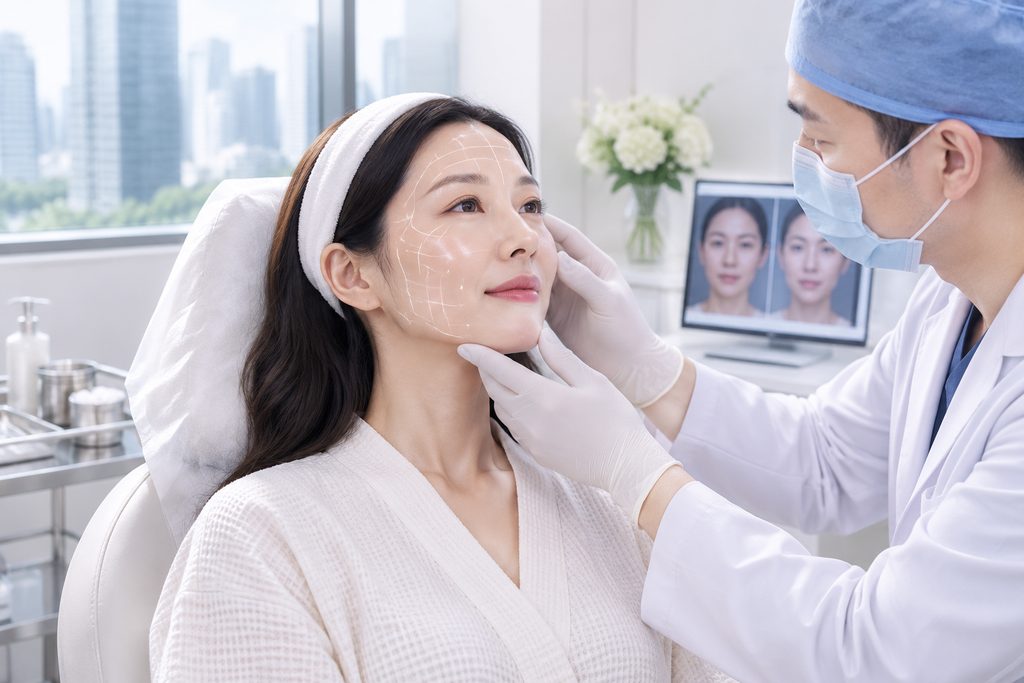
According to the International Society of Aesthetic Plastic Surgery, China performs more than 10 million minimally invasive aesthetic procedures each year — and dermal filler injections account for a growing share of that total. For international patients, the appeal is straightforward: filler injection cost in China typically ranges from $300 to $1,500 per syringe, compared with $600 to $2,500 in the United States for the same branded products. Same hyaluronic acid. Same manufacturers. A very different price tag.
But price alone should never drive a medical decision. What matters is whether the clinic is licensed, whether the product is authentic, and whether the person holding the needle is actually a physician. This guide walks through all of it — real cost ranges, safety standards, how to book, and what to watch out for.
How This Actually Works, Step by Step
Most international patients assume they can simply book a filler appointment online, fly in, and walk into a clinic. That is not how China’s system works — especially at public hospitals, which handle the majority of aesthetic procedures.
Here is the real sequence:
- Step 1 — Send your information. You share photos of the treatment area, your aesthetic goals, any prior filler or botulinum toxin history, allergies, and relevant medical conditions. A clinic coordinator reviews this before anything else happens.
- Step 2 — Remote consultation. A physician or the international department reviews your case. For straightforward cases, this may be a video call of 15–30 minutes. For revision cases or patients with prior complications, a more detailed assessment is needed.
- Step 3 — Product and plan confirmation. You agree on the filler brand (Juvederm, Restylane, and domestic brands like Yvoire are all available), the number of syringes, and the total cost. This is confirmed in writing before you travel.
- Step 4 — Appointment scheduling. Public hospitals require an in-person consultation before any injection. Private international clinics can often combine consultation and treatment in a single visit.
- Step 5 — In-person visit and injection. The physician examines you, confirms the plan, and performs the injection. Most filler sessions take 20–45 minutes.
- Step 6 — Follow-up. A review at 2 weeks is standard. If you have returned home, this can happen via video or with a local practitioner.
That is the honest version. No clinic in China will inject a patient they have never assessed, and no legitimate provider will skip the consultation step.
What Determines Filler Injection Cost in China
Prices vary widely — and understanding why helps you evaluate any quote you receive.
| Factor | Typical Range (USD) | Notes |
|---|---|---|
| Domestic HA filler (per syringe) | $300 – $600 | Yvoire, Haohai, and similar brands; widely used and approved by China’s NMPA |
| Imported HA filler (per syringe) | $600 – $1,500 | Juvederm, Restylane, Teosyal; price varies by clinic tier and city |
| Collagen stimulators (per vial) | $800 – $2,000 | Sculptra and similar; fewer clinics offer these |
| Consultation fee | $0 – $150 | Often waived at private clinics if you proceed with treatment |
| Public hospital international department | 1.5× – 2× standard rate | English-speaking staff, senior physicians, faster scheduling |
| Private international clinic | 2× – 3× public rate | JCI-accredited, direct insurance billing, Western-style service |
City matters, too. Beijing and Shanghai command the highest prices. Chengdu, Hangzhou, and Guangzhou are typically 15–30% lower for identical products. If you are flexible on location, that difference can be significant — especially for multi-syringe treatments.
One more thing: the number of syringes needed is a medical judgment, not a sales decision. A clinic that quotes you six syringes for lip enhancement without examining you is not giving you a medical recommendation. They are giving you a sales pitch.
Is It Safe to Get Filler Injections in China?
This is the question every patient asks, and it deserves a direct answer.
China’s National Medical Products Administration (NMPA) regulates dermal fillers with the same rigor as the FDA regulates them in the United States. Any filler legally sold in China must carry NMPA approval. The products are the same — often manufactured in the same facilities — as those used in Europe and North America.
The safety variable is not the country. It is the provider.
Three things separate a safe experience from a risky one:
- Who performs the injection. In China, filler injections must be administered by a licensed physician. At top-tier hospitals and JCI-accredited international clinics, this is standard. At unlicensed beauty salons or “medical beauty” studios, it is not. The difference matters enormously — vascular occlusion, the most serious filler complication, requires immediate medical intervention.
- Product authenticity. Counterfeit fillers exist in every market, including China. Legitimate clinics will show you the sealed packaging and let you verify the batch number. If a clinic resists this, leave.
- Emergency preparedness. Every clinic that injects filler should have hyaluronidase on hand — the enzyme that dissolves HA fillers in an emergency. Ask. A clinic that does not stock it is not prepared for complications.
For patients who want the highest safety margin, China’s top-ranked hospitals and their international departments offer the strongest combination of credentialed physicians, authentic products, and emergency infrastructure. The trade-off is a higher price point and a more clinical atmosphere than a private aesthetic clinic.
A Realistic Timeline
How long does the whole process take, from first inquiry to follow-up? Here is a realistic breakdown.
| Stage | Timeframe | What Happens |
|---|---|---|
| Initial inquiry and record submission | Day 1–3 | You send photos, goals, and medical history |
| Remote consultation | Day 3–7 | Video or written assessment with a physician |
| Plan and cost confirmation | Day 5–10 | Product, syringe count, and total price agreed in writing |
| Appointment scheduling | 1–3 weeks lead time | Public hospitals need more lead time; private clinics less |
| Visa processing (if needed) | 4–10 business days | S2 visa for medical treatment; supporting hospital documents required |
| Travel and in-person visit | 1–3 days in country | Consultation, injection, and initial follow-up |
| Post-treatment review | 2 weeks after injection | In person or via video |
Total time from first contact to injection: 3 to 6 weeks for most patients. If you are already in China or the region, it can be compressed to under two weeks.
The step people forget is visa processing. If you are traveling specifically for treatment, you need an S2 visa with a medical treatment annotation — not a tourist visa, and certainly not an M visa, which is for commercial and trade activities only. The hospital’s international department provides the supporting documentation you need for the application. Requirements vary by embassy, so confirm the latest details with your nearest Chinese consulate.
Best Dermal Filler Clinic Shanghai Price: What to Expect
Shanghai has the densest concentration of aesthetic clinics in China — from hospital dermatology departments to standalone private clinics in Jing’an and Pudong. Pricing reflects that competition.
At a top public hospital’s international department in Shanghai, imported HA filler typically runs $700 to $1,200 per syringe, including the consultation. At a JCI-accredited private clinic, expect $900 to $1,800. Domestic brands bring those numbers down by 30–50%.
Beijing tracks slightly higher — 5 to 15% above Shanghai for equivalent products, largely because demand outstrips supply at the most reputable clinics. Patients asking how much fillers cost in Beijing often find that the top hospital dermatology departments book out two to three weeks in advance.
What should you look for beyond price? Three things:
- Physician credentials. The injector should be a dermatologist or plastic surgeon with hospital privileges, not a technician trained in a weekend course.
- Consultation quality. A good physician will tell you what you do not need. If every patient gets the same recommendation, that is a production line, not a medical practice.
- Aftercare protocol. Ask what happens if you have a complication at 10 p.m. on a Saturday. The answer tells you everything.
What Can Go Wrong — and What Happens Then
Filler injections are low-risk when performed correctly. They are not zero-risk. Here is what can go wrong and what the recourse looks like.
Bruising and swelling. The most common issue. Usually resolves in 3–7 days. Not a complication — a normal response.
Asymmetry or overcorrection. Happens in roughly 5–10% of cases, often due to swelling rather than the injection itself. Most clinics offer a complimentary review at two weeks and will adjust if needed. Get the revision policy in writing before you pay.
Vascular occlusion. The serious one. Filler enters a blood vessel and blocks it. If untreated within hours, it can cause skin necrosis or, in rare cases, vision loss. This is why hyaluronidase availability matters. At a properly equipped clinic, the physician dissolves the filler immediately. At a clinic without it, you are transferred to an emergency room — and time is not on your side.
Infection. Rare with proper sterile technique. If it occurs, it is treatable with antibiotics, but the filler may need to be dissolved.
Delayed-onset nodules. Can appear weeks to months later. Treatable with hyaluronidase or steroid injection, but inconvenient if you have already left the country. This is one reason we recommend planning a follow-up window before you book your return flight.
Practical Considerations: Records, Payment, and Follow-Up
What to bring. Photos of your face at rest and in animation, a list of any prior aesthetic procedures with dates and products used, your allergy history, and any relevant medical conditions. If you have had filler before, knowing the exact brand and volume helps the physician plan.
Payment. Public hospitals require prepayment; insurance reimbursement happens afterward, and most international policies do not cover elective aesthetic procedures. Private international clinics often bill insurance directly for medically necessary treatments, but filler injections are typically classified as cosmetic and paid out of pocket.
Language. At hospital international departments and JCI-accredited private clinics, English-speaking staff are standard. At standard public hospital dermatology departments, they are not. If your Mandarin is limited, a bilingual medical companion can handle registration, payment, and communication on your behalf.
Follow-up at home. If you return home within two weeks, arrange a review with a local practitioner who can assess the result and, if necessary, dissolve the filler. Hyaluronidase is available worldwide. Bring your treatment records with you — the product name, batch number, and volume injected.
Frequently Asked Questions
Imported HA filler in China typically costs $600–$1,500 per syringe, versus $600–$2,500 in the US. Domestic brands run $300–$600. The savings are real, but they vary by city, clinic tier, and product. A multi-syringe treatment in Shanghai may cost 40–60% less than the same treatment in New York.
Yes, at licensed hospitals and accredited clinics. China’s NMPA regulates fillers to standards comparable with the FDA. The risk is not the country — it is unlicensed providers using counterfeit products. Stick to hospital international departments, JCI-accredited clinics, and physicians who will show you the sealed packaging and the hyaluronidase vial.
You can initiate the process remotely — send records, have a video consultation, and confirm a plan. But public hospitals require an in-person consultation before injection. Private international clinics can often combine both in one visit. Plan for a 1–3 week scheduling lead time.
If you are traveling specifically for medical treatment, you need an S2 visa with a medical annotation. The hospital provides supporting documents. A standard tourist visa may work for very short aesthetic trips, but S2 is the correct category for medical purposes. Requirements vary by consulate — confirm before applying.
Contact the treating clinic immediately — they can advise by video. For serious complications like vascular occlusion, go to an emergency room and tell them you had hyaluronic acid filler. Hyaluronidase is available in most countries. Always carry your treatment records with the product name and batch number.
Your Next Step
Filler injection cost in China is genuinely lower than in Western markets — often by half or more — without compromising product quality or physician credentials. The key is choosing the right provider, confirming the plan in writing, and understanding the timeline before you book flights.
China Medical Services connects international patients with 340+ top-ranked hospitals across 37 cities. We handle hospital matching, appointment coordination, bilingual accompaniment, and visa guidance. We are not a clinic and we do not perform procedures — we make sure you reach the right physicians and understand exactly what you are paying for.
If you would like a cost estimate for your specific treatment, or help identifying a licensed clinic in Shanghai, Beijing, or another city, start with a free consultation. No pressure, no obligation — just clear information so you can decide what is right for you.
This article is for informational purposes only and does not constitute medical advice. Filler injections carry risks and should be performed by a licensed physician after an in-person assessment. Always consult a qualified medical professional before undergoing any aesthetic procedure.
For more medical information and treatment options in China, visit chinamedservices.com (China Medical Services).
