Flying Home After Surgery in China: Safety and Clearance Explained
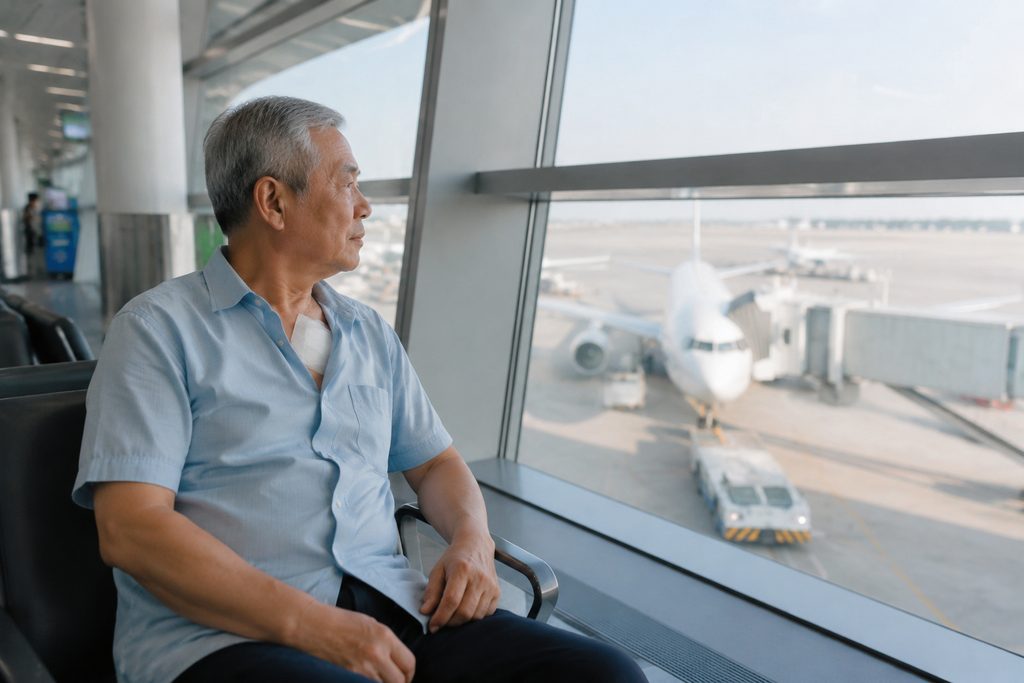
Flying Home After Surgery in China: Is It Safe? Our Clearance Service Explained
Every year, hundreds of thousands of international patients travel to China for medical care, drawn by top-tier hospitals and costs that often run 70–80% lower than in the United States or Europe. But once the procedure is done, a new question takes over: how soon can you get on a plane? Flying after surgery clearance service China is not a formality—it is a structured medical evaluation that determines whether you are fit to sit in a pressurized cabin for hours, far from the operating room. Done properly, it makes the difference between a safe journey home and a mid-flight emergency.
Our team coordinates this process for patients at 340+ top-ranked hospitals across 37 cities. We work with surgical teams to secure written clearance, arrange ground transport, and connect you with medical escorts when needed. But before any of that, you need to understand what clearance actually requires—and what can go wrong if you skip it.
Key Takeaways
- Flying too soon after major surgery raises the risk of deep vein thrombosis (DVT) and pulmonary embolism—studies show the window of highest risk lasts 7–10 days post-operation.
- Most Chinese surgical teams require an in-person discharge evaluation before issuing a fit-to-fly certificate; this is not something you can get by email alone.
- Clearance timing varies sharply by procedure: 24–48 hours for minor laparoscopic work, 7–14 days for abdominal or orthopedic surgery, and longer for cardiac or neurosurgical cases.
- Medical escort services in cities like Shanghai typically cost from $300 per day and can bridge the gap between hospital discharge and a safe flight home.
The Problem: Flying Too Soon After Surgery Can Kill You
The numbers are sobering. Venous thromboembolism—blood clots in the legs that can travel to the lungs—affects roughly 1 in 1,000 long-haul passengers overall. But for patients who fly within two weeks of major surgery, that risk multiplies several times over. A 2021 review in Cochrane Database of Systematic Reviews found that post-surgical patients who flew long-haul without proper clearance had a DVT rate of up to 5% on flights over four hours. That is one in twenty people.
Why does this happen? Surgery triggers a hypercoagulable state—your blood clots more easily as part of the healing response. Combine that with cabin pressure at 8,000 feet equivalent altitude, reduced oxygen saturation, and hours of immobility in a narrow seat, and you have a perfect environment for clot formation. The danger is not theoretical. Airlines divert flights for mid-air medical emergencies involving post-surgical patients every week. Some of those patients never make it home.
And the risk is not just about blood clots. Wound dehiscence—surgical incisions reopening—can occur from the pressure changes during ascent and descent. Gas expansion in the abdomen after laparoscopic or bowel surgery can cause severe pain and, in rare cases, compartment syndrome. For patients who had eye surgery, intraocular gas bubbles can expand dangerously at altitude.
Why a Structured Clearance Process Delivers Results
A proper medical flight clearance after surgery abroad is not a rubber stamp. It is a clinical assessment that looks at your procedure type, your individual risk factors, and the specific flight you plan to take. Chinese hospitals with large international departments run this process daily during peak medical tourism seasons. That volume translates into practical expertise.
Clinical Volume Means Surgeons See More Post-Op Travel Cases
Top Chinese surgical centers handle enormous case volumes. Fuwai Hospital in Beijing performs over 14,000 cardiac surgeries annually—more than any other hospital in the world. Orthopedic departments at major public hospitals routinely complete 200–500 joint replacements per surgeon per year, compared to roughly 65 for the average US surgeon. This matters for your clearance because these teams have seen thousands of patients through the post-operative travel window. They know which patients can fly on day three and which need to wait ten days. That experience is hard to find elsewhere.
Clearance Is a Documented Process, Not a Verbal Assurance
In Chinese public hospitals, the discharge process includes a written summary and, when requested, a fit-to-fly certificate. The certificate typically states the procedure performed, the date of surgery, the patient’s current clinical status, and the recommended earliest safe travel date. Airlines may ask to see this document at check-in or boarding, especially if you are traveling with visible dressings, mobility aids, or medical equipment. Without it, the gate agent has the authority to deny boarding. We have seen this happen. It is avoidable.
Cost of Clearance Is Low Compared to the Cost of a Medical Emergency
A written post-operative clearance evaluation at a top Chinese hospital international department typically costs between $100 and $300. A medical escort for the flight home runs from $300 per day. Compare that to the cost of an in-flight medical emergency: an unplanned diversion can exceed $100,000 in airline operating costs alone, not counting emergency medical care at the diversion airport. The math is not complicated. Spending a few hundred dollars on proper clearance is cheap insurance.
How Soon Can You Fly After Surgery in China? Procedure-Specific Timelines
There is no single answer to how soon can I fly after surgery in China—the timeline depends almost entirely on what was done. But here are the general windows most Chinese surgical teams use, based on international guidelines and local practice.
| Surgery Type | Typical Earliest Safe Flight | Key Risks During Flight | Clearance Requirements |
|---|---|---|---|
| Minor laparoscopic (gallbladder, appendix) | 24–48 hours | Residual CO₂ gas pain, wound discomfort | Discharge summary, pain controlled, no signs of infection |
| Orthopedic joint replacement | 7–10 days | DVT, wound dehiscence, stiffness from immobility | Doppler ultrasound to rule out DVT, anticoagulation plan |
| Abdominal surgery (bowel, gastric, hernia) | 10–14 days | Gas expansion, anastomotic leak risk, ileus | Surgeon evaluation, imaging if indicated, diet tolerated |
| Cardiac surgery (bypass, valve) | 14–21 days | Arrhythmia, pleural effusion, hemodynamic instability | Cardiology clearance, ECG, chest X-ray, oxygen saturation at rest |
| Neurosurgery (brain, spine) | 14–21 days | Intracranial pressure changes, CSF leak, seizure | Neurology clearance, imaging, no new deficits |
| Ophthalmic surgery (retinal, glaucoma) | 7–14 days (longer if gas bubble used) | Intraocular gas expansion, pressure spikes | Ophthalmology clearance, specific gas-bubble protocol |
These are starting points, not guarantees. Your surgeon may extend the timeline based on your age, comorbidities, complication history, and flight duration. A 14-hour flight to Frankfurt is not the same as a 3-hour hop to Bangkok. The clearance evaluation accounts for all of this.
What a Post-Surgery Travel Clearance in China Actually Costs
Let us be direct about post surgery travel clearance China price. The numbers below reflect what we see across our partner hospitals in Beijing, Shanghai, and Guangzhou as of 2025. They are ranges because every case is different.
| Service | Typical Cost (USD) | What You Get |
|---|---|---|
| Written fit-to-fly evaluation (hospital international department) | $100–$300 | Clinical assessment, vital signs, wound check, written certificate |
| Doppler ultrasound for DVT screening | $50–$120 | Bilateral leg vein ultrasound, radiologist report |
| Bilingual medical companion (half-day) | from $300 | Translation, hospital navigation, document collection, discharge coordination |
| Medical escort for flight home | from $300/day plus flight costs | Clinical professional accompanies you on the flight, manages medications, monitors vitals |
| Airport transfer with medical support | $200 round-trip | Ground transport arranged with medical awareness, wheelchair if needed |
These figures vary by hospital and case complexity. A straightforward laparoscopic cholecystectomy clearance will cost less than a post-cardiac-surgery evaluation requiring multiple imaging studies. What does not change is the principle: the money spent on clearance is a fraction of the cost of a medical emergency at 35,000 feet.
Medical Escort Service After Surgery in Shanghai: When You Need One
Shanghai is China’s busiest medical tourism hub, with Fudan-ranked hospitals like Zhongshan Hospital and Huashan Hospital handling thousands of international patients annually. A medical escort service after surgery Shanghai is not a luxury for everyone—but for some patients, it is the difference between flying home and staying stuck in a hotel room for an extra week.
Who needs a medical escort? Patients who had major abdominal or cardiac surgery and are flying within the first two weeks. Patients with limited mobility who cannot manage luggage, boarding queues, or in-flight bathroom trips alone. Patients traveling with surgical drains, catheters, or oxygen. Patients who do not speak English or Chinese fluently and need a clinical professional to communicate with airline staff and airport medical teams.
A medical escort is typically a registered nurse or physician with flight medicine experience. They carry your medical records, manage your medications on schedule, monitor your vital signs during the flight, and intervene if something goes wrong. They also handle the logistics: wheelchair assistance, priority boarding, seat selection with extra legroom, and communication with the cabin crew. For a 12-hour flight from Shanghai to London or Los Angeles, that support can be the reason you arrive home without incident.
But not every patient needs an escort. If your surgeon clears you to fly independently, you are mobile, your pain is controlled with oral medication, and you have no drains or special equipment, you can fly alone. The clearance evaluation will tell you which category you fall into.
Practical Considerations: Documentation, Insurance, and What to Bring
Before you board any flight after surgery in China, there are practical details that can derail your departure if you ignore them. Here is what actually matters.
Documents you must carry. Your discharge summary from the hospital, in English if possible. Your fit-to-fly certificate. A list of all medications with generic names and dosages. Your surgical pathology report if applicable. Copies of imaging reports. If your hospital provides documents only in Chinese, arrange translation before you leave—airport medical teams and your home physician will need to read them.
Visa status. This is critical. If you came to China on an S2 visa for medical treatment and your recovery extends beyond the visa validity, you must apply for an extension before it expires. Overstaying is not a minor issue—it can result in fines, detention, and a ban on future entry. The S2 visa is the correct category for short-term medical treatment and private affairs; do not let anyone tell you an M visa applies to medical travel. It does not. M visas are for commercial and trade activities.
Insurance and payment. Chinese public hospitals require prepayment for services, including clearance evaluations and any post-operative imaging. You pay first, then claim reimbursement from your international insurer. Private international hospitals in China—like United Family or Jiahui—often bill insurers directly. Check your policy before you arrive for the clearance appointment. If your insurer requires pre-authorization for post-operative care, start that process while you are still in the hospital.
Medications for the flight. Your surgeon will give you a medication schedule. Carry all medications in your hand luggage, never in checked bags. Bring enough for the flight plus 48 hours in case of delays. If you are on injectable anticoagulants like enoxaparin, carry a doctor’s letter explaining why you need syringes in your carry-on. Airport security in China and at your destination will ask.
Compression stockings. If your surgeon recommends them, wear them. Properly fitted graduated compression stockings reduce DVT risk on long flights. They are cheap, available at any Chinese hospital pharmacy, and they work.
Do not fly against medical advice. If your surgeon says you need another five days before flying, stay another five days. No airline deadline, no work obligation, no family event is worth a pulmonary embolism at 35,000 feet. We have seen patients push to leave early against advice. It never ends well.
Frequently Asked Questions
Yes, if the clearance is based on a proper clinical evaluation and you follow the recommendations—compression stockings, mobility during the flight, anticoagulation if prescribed, and adequate hydration. The clearance process exists precisely because flying after surgery can be safe when done correctly and dangerous when done hastily. Trust the evaluation, not your impatience to get home.
This is a legitimate worry. The answer depends on the complication. For wound infections, DVT, or other common post-operative issues, your home physician can usually manage them—but they need your Chinese medical records. That is why we emphasize getting English translations of everything before you leave. For complications directly related to the surgery, many Chinese hospital international departments offer follow-up video consultations. The medical coordination team can arrange these remote reviews with your original surgical team.
No. A meaningful fit-to-fly evaluation requires a physical examination—vital signs, wound inspection, sometimes imaging or blood work. No reputable Chinese hospital will issue a clearance certificate based on a phone call or email. If you are already in a hotel near the hospital, you will need to return for the evaluation. Plan for this before you are discharged.
A medical escort typically costs from $300 per day, plus the cost of their flight ticket and accommodation at your destination if they return separately. For a Shanghai-to-London flight with an escort who returns the next day, expect to pay $1,500–$2,500 total. It is not cheap. But for high-risk patients, it is far less expensive than an in-flight emergency or a week of unplanned hospitalization in a foreign country.
Airlines have the final say on who boards. A fit-to-fly certificate is strong evidence, but the gate agent can still refuse boarding if you appear medically unstable, cannot sit upright, or require oxygen the airline cannot provide. If this happens, do not argue with the agent. Contact your medical coordination team. They can liaise with the airline’s medical desk, provide additional documentation, or arrange alternative transport—including a medical repatriation flight if necessary.
Your Next Step
Flying home after surgery in China is safe when the process is respected: get evaluated, get documented, and follow the clinical advice you are given. The clearance service exists to protect you from the very real risks of post-operative air travel—risks that are well-documented and entirely avoidable. Our team at China Medical Services coordinates fit-to-fly evaluations, medical escorts, and all the logistics between hospital discharge and your front door. We are not a hospital and we do not provide medical advice—we connect you with the surgical teams who do. When you are ready to plan your return home safely, start with a free consultation. We will help you understand what your specific procedure requires and build a departure plan that gets you home without unnecessary risk.
For more medical information and treatment options in China, visit chinamedservices.com (China Medical Services).
