Gastric Bypass in China: Roux-en-Y Surgery Costs, Safety & Full Support
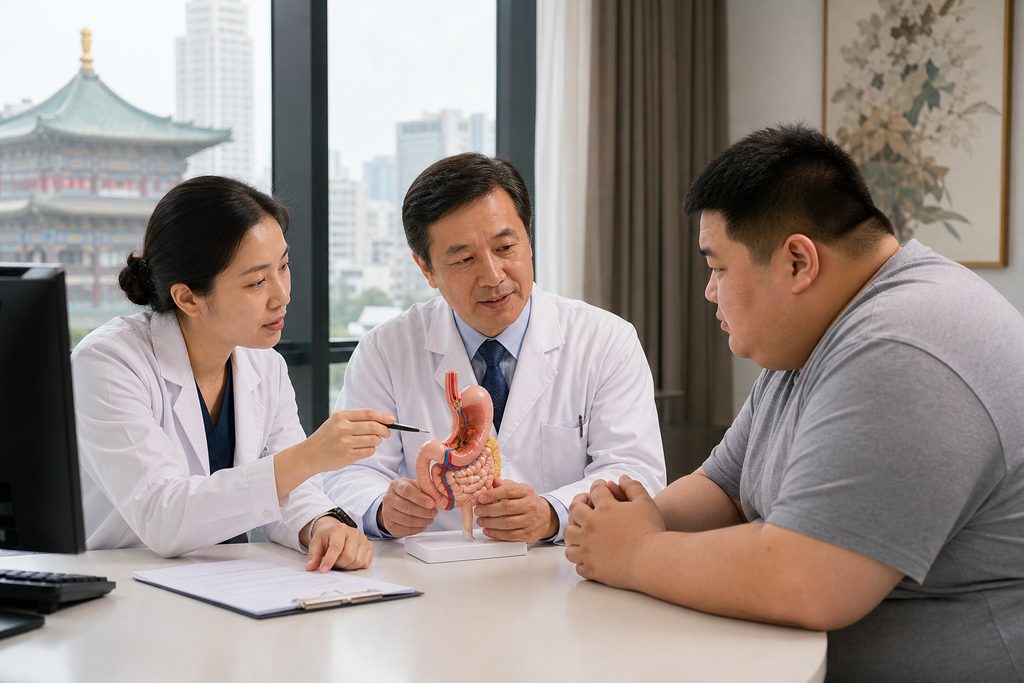
You have probably heard that traveling abroad for major surgery means rolling the dice on quality. The assumption is that lower cost equals lower standards. That mental math falls apart when you look at the data. China’s top-tier hospitals now perform bariatric procedures at volumes that surpass most Western centers—and the gastric bypass price China offers sits at roughly one-fifth to one-tenth of what patients face in the United States or Australia.
That number gets attention. But price alone is never the whole story when someone is considering Roux-en-Y gastric bypass surgery thousands of miles from home. The real question is whether the clinical infrastructure, safety protocols, and recovery support exist to make the journey worth taking.
They do. And understanding how the system actually works is the difference between a stressful gamble and a carefully planned medical trip.
Key Takeaways
- Roux-en-Y gastric bypass in China’s top-ranked hospitals costs approximately $8,000 to $18,000 USD—compared to $25,000 to $40,000+ in the United States, with no waiting lists for international patients using VIP channels.
- China’s high-volume bariatric centers perform several hundred procedures annually per senior surgeon, a caseload that research consistently links to fewer complications and shorter operative times.
- Language barriers, visa requirements, and hospital payment systems make independent navigation extremely difficult—bilingual coordination is not a luxury but a practical necessity for foreign patients.
- International patients cannot simply book surgery online; the process requires an in-person consultation first, followed by pre-operative evaluation, and only then a scheduled procedure date.
The Problem: When Weight Loss Surgery Is Out of Reach at Home
Obesity rates have tripled globally since 1975. The World Health Organization now classifies roughly 1 in 8 adults as obese. For many, bariatric surgery is not a cosmetic choice—it is a medically indicated intervention that resolves or significantly improves type 2 diabetes, hypertension, and obstructive sleep apnea. The problem is access.
In Canada, the publicly funded wait time for bariatric surgery stretches to two years or longer in some provinces. In the United Kingdom, NHS waiting lists for weight loss surgery can exceed 18 months. In the United States, even patients with solid insurance often face six to twelve months of pre-authorization hurdles, mandatory nutrition counseling, and out-of-pocket costs that still run $5,000 to $15,000 after coverage kicks in. For uninsured or underinsured Americans, the full price of Roux-en-Y surgery—often $30,000 to $45,000 at major academic centers—puts the procedure permanently out of reach.
That is a hard reality. People live with progressive joint damage, worsening metabolic disease, and diminished quality of life while waiting for a surgery they know they need. Some give up entirely.
There is another path. It requires looking beyond familiar borders and understanding how a different healthcare system delivers the same procedure with comparable outcomes at a fraction of the cost.
Who We Are
We are not a hospital. We do not perform surgery, make clinical diagnoses, or offer medical advice. Our team functions as your logistical architects—we bridge the gap between you and China’s top-tier bariatric surgery centers. That means we handle hospital matching based on your specific clinical history, appointment coordination through official international departments, bilingual accompaniment during every hospital visit, visa guidance, and recovery logistics. We work exclusively with hospitals ranked in the top 5% of China’s 35,000+ medical institutions, as evaluated by the Fudan University hospital rankings and Joint Commission International accreditation standards. Our role is to make a complex cross-border medical journey navigable.
Why China Delivers Results for Roux-en-Y Gastric Bypass
Clinical Volume Drives Better Outcomes
This is not speculation. A 2019 analysis published in The Lancet Diabetes & Endocrinology examined bariatric surgery outcomes across multiple countries and found a clear inverse relationship between center volume and complication rates. Surgeons who perform a high number of procedures annually simply have fewer adverse events. China’s top metabolic surgery centers operate at volumes that are difficult to match elsewhere. A senior bariatric surgeon at a major Shanghai or Beijing hospital may complete 200 to 400 Roux-en-Y procedures per year. Compare that to the average US general surgeon performing bariatric surgery, whose annual volume often sits between 50 and 100 cases. The difference matters. Higher volume means more refined technique, better intraoperative judgment when anatomy presents unexpected variations, and surgical teams that function as tight, coordinated units.
Zhongshan Hospital affiliated with Fudan University and Peking Union Medical College Hospital are two examples of institutions where bariatric surgery volumes rank among the highest nationally. Their metabolic surgery departments handle complex cases—revisions of failed prior bariatric procedures, patients with BMIs exceeding 50, and those with multiple comorbidities—that smaller centers might decline.
Technology and Efficiency at Scale
Most Roux-en-Y procedures at China’s leading hospitals are performed laparoscopically. That is standard. What surprises many international patients is the operational speed of the pre-operative workup. A full cardiac clearance, pulmonary function testing, upper endoscopy, abdominal ultrasound, and nutritional panel can be completed within two to three days at a major Chinese hospital. The same battery of tests might take three to six weeks spread across multiple facilities in the United States or Europe. This is not because corners are cut. It is because these hospitals are designed for throughput. Radiology, endoscopy, laboratory services, and specialist consultations are co-located within the same campus. Patients move from one station to the next in a single day rather than scheduling appointments weeks apart.
For international patients traveling on a limited timeline, this compressed diagnostic phase is a genuine advantage. It reduces the total stay required before surgery can be scheduled.
Cost Advantage Without Quality Compromise
Let us address the elephant in the room directly. The gastric bypass price China hospitals charge is dramatically lower than Western price tags. A full Roux-en-Y package at a top-tier Chinese public hospital’s international department typically ranges from $8,000 to $18,000 USD. That includes surgeon fees, anesthesia, operating room costs, a private room for three to five inpatient nights, and standard post-operative medications. At a private international hospital like Jiahui or United Family, the same procedure may run $20,000 to $30,000—still well below US cash-pay rates.
Why the gap? Structural economics, not quality shortcuts. Chinese surgeon salaries, nursing labor costs, and hospital administrative overhead are all lower than their Western counterparts. The laparoscopic equipment, surgical staplers, and anesthesia drugs are the same international brands used in operating rooms everywhere. JCI-accredited hospitals in China follow the same sterilization protocols and surgical safety checklists required in Singapore, Germany, or the United States. The cost difference reflects labor economics and system efficiency, not compromised standards.
| Country | Roux-en-Y Cost (USD) | Typical Wait Time (Private) |
|---|---|---|
| United States (cash pay) | $30,000 – $45,000 | 2–6 months (insurance-dependent) |
| United Kingdom (private) | $15,000 – $22,000 | 4–8 weeks |
| Australia (private, uninsured) | $20,000 – $28,000 | 3–6 months |
| China (top public hospital, international dept.) | $8,000 – $18,000 | 2–4 weeks (after in-person consultation) |
| China (private international hospital) | $20,000 – $30,000 | 1–3 weeks |
These are reference ranges. The final price varies by hospital, surgeon seniority, case complexity, and length of stay. A revision surgery or a patient with a BMI above 55 will fall toward the higher end.
What You Need to Know Before Going Alone
Some patients try to arrange everything independently. A few succeed. Most hit walls they did not expect. Here is what those walls look like.
- Visa Requirements Are Specific: Medical treatment in China requires an S2 visa with a notation specifying the purpose of medical care. The accompanying family member needs their own S2 visa. An M visa—issued for commercial and trade activities—does not cover medical treatment and will be rejected if presented at a hospital’s international department for admission. Invitation letters from the treating hospital are mandatory for the visa application. Obtaining those letters without a local contact inside the hospital’s international patient office is slow and sometimes impossible.
- Payment Happens Upfront: Chinese public hospitals require a deposit before admission. The full estimated surgical fee is typically paid at registration. International insurance is rarely accepted for direct billing at public hospitals—patients pay first and seek reimbursement from their insurer afterward. Private international hospitals like those in our network do offer direct insurance billing, but the base surgical fee is higher. Without local knowledge of which hospitals accept which payment methods, patients risk arriving with unusable insurance cards or insufficient cash.
- No Online Surgery Booking Exists: You cannot email a Chinese public hospital, pay a deposit, and receive a surgery date. The system does not work that way. Every surgical candidate must present in person for an outpatient consultation first. The surgeon evaluates the case, orders pre-operative testing, and only then schedules the procedure. This means the first trip involves an uncertain timeline—you arrive, you consult, you test, and then you wait for a slot. Without someone on the ground managing each step, days turn into weeks of hotel bills with no clear end date.
How We Help You Navigate This
These barriers are not signs of a broken system. They are features of how Chinese healthcare is organized—high-volume, in-person, and built for domestic patients first. International patients need a bridge. We are that bridge.
Before you travel, we collect your full medical history, translate relevant records into Chinese, and submit them to the international departments of hospitals that match your clinical profile. We confirm which surgeons are accepting international patients and what their current consultation availability looks like. We arrange the invitation letter required for your S2 visa. We do not promise a specific surgery date before you arrive—no honest service can—but we ensure that when you land, your consultation is already scheduled, your translator is assigned, and your pre-operative testing pathway is mapped out.
During your stay, a bilingual medical companion accompanies you to every appointment. This person handles registration, queues for lab slips, pays deposits at the correct windows, translates the surgeon’s explanation in real time, and makes sure you understand every instruction. After surgery, the companion remains available during your hospital stay and through the initial recovery period. For patients who book our coordination services, any prior remote consultation fees are credited in full toward the on-the-ground package—a policy designed so you can start with a lower-commitment step and build toward the full journey.
We also handle the practicalities that hospital staff cannot assist with: recommending nearby accommodations for family members, arranging airport transfers, and advising on dietary logistics during the post-operative liquid and puree phases. Recovery abroad requires more planning than recovery at home. We make sure those plans are in place before you are discharged.
Is Gastric Bypass Safe in China for Foreigners?
Safety depends on hospital selection. That statement is true everywhere. The question is not “is surgery in China safe” but “which hospitals in China meet international safety benchmarks.” The answer is straightforward: hospitals with JCI accreditation or those ranked in the Fudan University hospital top 100 list operate under protocols that are audited and externally reviewed. Their surgical infection rates, anesthesia safety records, and complication management systems are measured and reported. A patient choosing a hospital from the top tier is choosing a facility where outcomes are tracked and standards are enforced.
For foreign patients specifically, the international department pathway adds a layer of protection. These departments assign English-speaking coordinators. They are accustomed to managing cross-cultural communication, dietary restrictions, and discharge planning for patients who will fly home shortly after surgery. The surgeons in these departments are typically senior attending physicians—the same doctors who operate on domestic VIP patients—not residents or fellows in training.
There is also a structural safety factor in volume. A bariatric program performing several hundred cases per year has encountered and managed every foreseeable complication. Anastomotic leak, the most feared early complication of Roux-en-Y gastric bypass, occurs in roughly 0.5% to 1% of cases at high-volume centers. When it happens, the surgical team recognizes it quickly and intervenes. Lower-volume centers may see leaks so infrequently that diagnosis is delayed. Choosing a high-volume Chinese program is, in itself, a risk-reduction strategy.
Roux-en-Y Gastric Bypass Recovery Time Abroad
Recovery unfolds in phases. The initial hospital stay after an uncomplicated laparoscopic Roux-en-Y is typically three to five nights. During this period, the surgical team monitors for leaks, manages pain, and advances the diet from clear liquids to full liquids. Most patients are walking the hallways within 24 hours of surgery—early mobilization is standard practice to reduce thromboembolic risk.
The next phase is the trickiest for international patients: the first two weeks after discharge. You are still in China. You are on a liquid diet. You are adjusting to a stomach pouch that holds roughly 30 milliliters. Our team arranges follow-up visits during this window to check incisions, review diet tolerance, and address any concerns before you board a long-haul flight. Flying is generally safe by post-operative day 10 to 14, provided there are no complications. Your surgeon makes the final clearance decision.
Full recovery—return to normal activity, tolerance of solid foods, and stabilization of weight loss—takes six to eight weeks. That part happens at home. The Chinese surgical team provides a detailed discharge summary and dietary progression guide in English. Follow-up with your local primary care physician or a bariatric-aware provider is essential once you return. No overseas surgical program can replace long-term nutritional monitoring, and we make that clear to every patient before they commit to traveling.
How Much Is Roux-en-Y Surgery in China? A Realistic Breakdown
Let us put numbers on paper. The surgical package at a top public hospital’s international department includes the procedure, anesthesia, operating room, surgical consumables like staplers, a private room, standard nursing care, and basic post-op medications. That bundle runs $8,000 to $18,000. Pre-operative testing—labs, endoscopy, imaging, cardiology clearance—adds $1,500 to $3,000 depending on your age and comorbidities. Our coordination and bilingual companion services start from $300 for appointment management and $200 per day for in-person accompaniment. Airfare, visa fees, accommodation, and meals are separate and vary widely by origin country and personal preference.
All in, a patient traveling from North America or Europe should budget $15,000 to $25,000 for the full medical trip. That is still half to two-thirds less than the cash price of surgery at home. But it is not pocket change, and it requires liquid funds—Chinese hospitals do not offer payment plans to international patients.
Book Weight Loss Surgery Shanghai Package: What That Actually Means
Shanghai has emerged as a hub for international bariatric patients. The city hosts multiple Fudan-ranked hospitals with dedicated metabolic surgery programs, including Zhongshan Hospital, Ruijin Hospital, and Huashan Hospital. Its private international hospitals—Jiahui and United Family Shanghai—offer English-speaking environments and direct insurance billing for those who prioritize familiarity over cost savings.
A “package” in the Shanghai context does not mean a tourist bundle with a surgery thrown in. It means a coordinated sequence: airport pickup, initial consultation, pre-op testing blitz, surgery, inpatient recovery, post-discharge follow-up, and clearance for travel. The package is the timeline and the logistics, not a discounted all-inclusive deal. Patients who want a Shanghai-based experience should plan for a total stay of three to four weeks from arrival to departure.
Our team has coordinated bariatric care in Shanghai for patients from over a dozen countries. The city’s international airport, wide availability of Western-accommodation, and concentration of top-ranked hospitals make it a logical entry point. But Shanghai is not the only option. Beijing, Guangzhou, and Chengdu all host excellent bariatric programs. Hospital choice should follow clinical fit, not city preference alone. We help patients weigh the trade-offs based on their specific surgical history and comorbidity profile.
Frequently Asked Questions
No. Chinese public hospitals require an in-person outpatient consultation before any surgery is scheduled. The surgeon must examine you, review your imaging and labs, and confirm that you are a suitable candidate. Only then does a surgical date get assigned. Anyone offering a guaranteed surgery date before you have set foot in the hospital is not operating through official channels. What we can do is secure your consultation slot, arrange pre-approval of your translated records, and compress the interval between consultation and surgery as much as the hospital’s schedule allows.
What happens if
For more medical information and treatment options in China, visit chinamedservices.com (China Medical Services).
