Gastric Sleeve Reversal Cost in China: What Revision Patients Pay in 2026
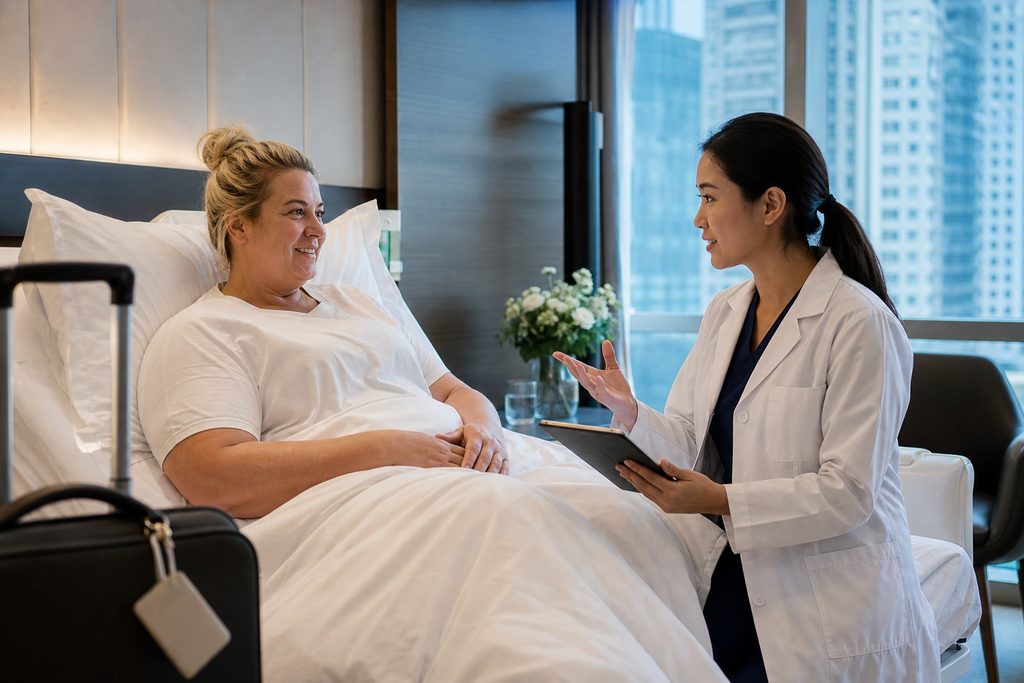
When 44-year-old Daniel from Texas started researching a reversal of his sleeve gastrectomy, he assumed the price tag would be the easy part. It wasn’t. His surgeon in Dallas quoted $32,000 for a conversion to gastric bypass, his insurance called the procedure “not medically necessary,” and every clinic he called in Mexico or Turkey gave him a different number with no explanation. Then he looked at China. The gastric sleeve reversal cost in China, he found, was a fraction of the American quote — but the real question was whether the number meant anything without knowing the hospital behind it.
That’s the question this article answers.
Gastric Sleeve Reversal Cost in China: The Short Answer
At a top-tier Chinese public hospital, a gastric sleeve reversal or revision typically runs $8,000 to $18,000 in total surgical costs, depending on the procedure type, the hospital’s tier, and the complexity of your case. At a private international hospital in Shanghai or Beijing, expect $20,000 to $35,000. For comparison, the same operation in the United States commonly lands between $25,000 and $45,000, and in the UK private sector between £18,000 and £28,000.
But here’s the caveat that matters more than the number itself: “gastric sleeve reversal” is not one procedure. It’s an umbrella term covering at least three distinct operations, and the price gap between them can be more than double. Anyone quoting you a single figure without asking which one you need is guessing.
Who This Is Right For — and Who It Isn’t
Not everyone who regrets a sleeve should pursue surgery again. A second operation on a stomach that has already been stapled and reshaped carries real risk, and the best bariatric surgeons are the first to say so.
Patients who are typically reasonable candidates:
- Severe, persistent acid reflux or GERD that developed after the sleeve and hasn’t responded to medication — this is the single most common reason for conversion, usually to gastric bypass
- A confirmed staple-line leak, stricture, or fistula that requires surgical repair
- Inadequate weight loss or significant weight regain, where the sleeve has dilated and a conversion to bypass or duodenal switch is medically appropriate
- Chronic malnutrition or intolerance to food that has not improved with dietitian support over 12+ months
Patients who should think very carefully before proceeding:
- Anyone whose primary complaint is cosmetic — a revision is not a cosmetic procedure, and the risks are higher than the first surgery
- Patients with uncontrolled psychiatric conditions, active substance use, or an eating disorder that hasn’t been treated
- Those who haven’t completed a proper diagnostic workup. Reflux, for example, can sometimes be managed with medication or a hiatal hernia repair rather than a full conversion
- Anyone hoping a revision will “undo” the sleeve and return them to their pre-surgery anatomy. It won’t, and no honest surgeon will claim otherwise
The Options, Compared
What you pay depends heavily on which operation you actually need. Here’s how the main pathways stack up across China, the US, and other common medical tourism destinations.
| Procedure / Destination | Typical Cost (USD) | Hospital Stay | Notes |
|---|---|---|---|
| Sleeve to gastric bypass conversion — China, top public hospital | $10,000–$16,000 | 4–7 days | Most common revision; addresses reflux and weight regain |
| Sleeve to gastric bypass conversion — US | $28,000–$45,000 | 3–5 days | Insurance coverage varies widely; often denied |
| Staple-line leak or fistula repair — China, top public hospital | $8,000–$14,000 | 5–10 days | Complexity drives price significantly upward |
| Sleeve to duodenal switch / SADI-S — China | $14,000–$18,000 | 5–8 days | Higher malabsorption risk; fewer centers offer it |
| Private international hospital, Shanghai or Beijing | $20,000–$35,000 | 3–6 days | English-speaking staff, direct insurance billing, JCI accreditation |
| Turkey (common medical tourism route) | $6,000–$12,000 | 3–5 days | Lower cost, but revision surgery expertise varies sharply by clinic |
| Mexico (common medical tourism route) | $7,000–$13,000 | 3–5 days | Wide quality range; verify surgeon credentials carefully |
If your priority is the lowest possible number, Turkey and Mexico will usually beat China. If your priority is a high-volume academic medical center with the diagnostic depth to handle a complicated revision — and you want that at roughly one-third of US pricing — China’s top public hospitals are the stronger fit. The private international hospitals sit in between: you pay more, but you get Western-style service and English-speaking staff from the moment you arrive.
Gastric Sleeve Reversal Surgery Price in Shanghai vs. Other Chinese Cities
Geography matters less than you’d think in China, but it does matter at the margins. Shanghai and Beijing carry a modest premium — perhaps 10 to 20 percent — over cities like Chengdu, Wuhan, or Xi’an for the same procedure at a comparable hospital tier. That premium buys you a deeper bench of bariatric revision experience and easier access to international departments.
Shanghai’s advantage is concentration. The city hosts several of China’s highest-ranked hospitals for gastrointestinal and bariatric surgery, and its international medical infrastructure is the most developed in the country. A gastric sleeve reversal surgery price in Shanghai at a top public hospital typically falls in the $11,000 to $17,000 range for a straightforward conversion, with complex revisions running higher. Beijing is comparable. Guangzhou and Shenzhen are often slightly cheaper and increasingly popular with patients from Southeast Asia.
What you should not do is choose a city purely on price. The difference between a $10,000 and a $13,000 quote is trivial next to the difference between a surgeon who performs 200 revisions a year and one who performs five.
What the Price Includes — and What It Doesn’t
Chinese public hospitals quote surgical packages that generally cover the surgeon’s fee, anesthesia, the operating room, standard hospital stay, and routine post-operative medications. What’s frequently not included: pre-operative diagnostic testing (endoscopy, contrast imaging, bloodwork, sometimes a cardiac workup), treatment of complications, extended ICU time, and any follow-up after you fly home.
For a revision patient, those exclusions can add $1,500 to $4,000. Budget for them from the start rather than being surprised at the admissions desk.
Private international hospitals tend to quote more inclusive packages and offer direct insurance billing, which matters if your insurer will reimburse a foreign procedure. Public hospitals generally require prepayment, with you filing for reimbursement afterward. Neither route is better — they suit different financial situations.
Is Gastric Sleeve Reversal Safe in China?
This is the question patients ask us most, and it deserves a direct answer. China’s leading public hospitals perform bariatric surgery at enormous volume — some centers exceed a thousand bariatric procedures a year — and revision surgery is a recognized subspecialty at the top tier. Outcomes at these institutions are broadly comparable to Western academic centers. That’s the honest answer.
The honest caveat is that “China” is not a single standard. There are more than 35,000 hospitals in the country, and quality varies enormously. The top 5 percent — the institutions ranked by the Fudan University hospital index and accredited by JCI — are where international patients should be treated. A hospital outside that group may be cheaper and may still be perfectly competent, but you have no reliable way to verify that from abroad.
So when someone asks whether gastric sleeve reversal is safe in China, the accurate response is: at a top-ranked hospital with a dedicated bariatric revision team, yes, the risk profile resembles that of a good Western center. Anywhere else, you’re taking a chance you don’t need to take. You can browse the hospitals that meet that bar on our ranked list of China’s top hospitals by city.
Practical Considerations: Records, Visas, and Follow-Up
Your records. A Chinese bariatric surgeon cannot evaluate you without your original operative report from the sleeve surgery, recent endoscopy results, a barium swallow study if you have one, and current bloodwork including nutritional markers. Sending these ahead is what makes a remote evaluation possible — and it’s often what reveals that you don’t need surgery at all.
Your visa. Foreign patients coming to China for treatment apply for the S2 visa, the short-stay category used for medical treatment and private affairs, with supporting documents from the receiving hospital. Stays beyond 180 days fall under S1. Accompanying family members apply for S2 as well. Note that the M visa is for commercial and trade activities only — it is not a medical visa, despite what you may read elsewhere. Requirements shift, so confirm current details with the nearest Chinese embassy or consulate before you apply.
Booking the surgery itself. Here’s a rule that surprises most Western patients: at Chinese public hospitals, you cannot book an operation from overseas. Registration happens on the day, and surgery is scheduled only after an in-person consultation. If you want a confirmed appointment with a senior specialist before you fly, that runs through the hospital’s international or VIP department, which typically costs 1.5 to 2 times the standard channel. This is the single biggest logistical difference from the US system, and it’s worth planning around rather than fighting.
After you go home. Arrange a local surgeon or primary care physician to handle your follow-up before you leave China. Your Chinese team can send records and imaging, but they cannot manage a leak or a nutritional deficiency from 7,000 miles away.
If you’d like help understanding which hospitals handle revision cases and what a realistic plan looks like, our team at China Medical Services coordinates written second opinions and video consultations with Chinese specialty teams — you send your records, they review them, and you get a written assessment before committing to anything.
Frequently Asked Questions
For a top public hospital in Shanghai, budget $11,000 to $17,000 for the surgery plus $1,500 to $4,000 for pre-operative testing and contingencies. Add round-trip airfare, roughly $1,200 to $2,500 from North America or Europe, plus accommodation for two to three weeks. A realistic all-in figure lands between $16,000 and $25,000. Private international hospitals push that to $28,000 and up. Prices vary by hospital and case complexity, so treat these as planning ranges, not quotes.
Not directly at a public hospital. You can send records for a remote evaluation and you can coordinate an international-department appointment, but the actual surgery is scheduled only after an in-person consultation in China. This is standard practice at Chinese public hospitals and not something that can be waived. Planning for an initial consultation trip, or accepting a short-notice scheduling window, is part of the process.
Rarely as direct payment, occasionally as reimbursement. Most Western insurers classify bariatric revision as elective and exclude it, or require pre-authorization that’s difficult to obtain for overseas care. Private international hospitals in China often bill insurers directly, which simplifies things if your policy does cover foreign treatment. Check your specific policy language before assuming anything.
This is a genuine risk and worth planning for explicitly. Complications from revision surgery — leaks, strictures, nutritional deficiencies — can appear weeks later. Before you travel, identify a local physician willing to take over your follow-up care and confirm they’ll accept records from a Chinese hospital. Your surgical team in China can provide documentation and remote guidance, but emergency management has to happen where you are.
Plan for two to three weeks minimum: a few days for consultation and pre-operative testing, four to seven days in hospital, then a follow-up visit before you fly. Complex revisions or complications may extend this. Do not book a return flight for fewer than 14 days after surgery.
Your Next Step
The cost of a gastric sleeve reversal in China is genuinely lower than in the US or Western Europe — often by 60 to 70 percent at a top-ranked hospital. But the number only means something when it’s attached to a specific hospital, a specific surgeon, and a specific procedure that matches your actual anatomy and history. Chasing the cheapest quote is how patients end up needing a third operation.
We are not a hospital and we don’t diagnose. We’re a coordination service that helps international patients get written second opinions from Chinese specialty teams, arrange video consultations, and navigate hospital registration, visas, and bilingual support on the ground. If you’d like to start with a records review and a clear picture of what your case would involve, you can request a free consultation here — no pressure, no obligation, just a straight answer about whether China is the right fit for you.
This article is for general information only and is not medical advice. Bariatric revision surgery carries significant risks, and every treatment decision should be made with a qualified physician who has reviewed your individual medical history.
For more medical information and treatment options in China, visit chinamedservices.com (China Medical Services).
