Gastroscopy Cost in China: What Foreign Patients Actually Pay in 2026
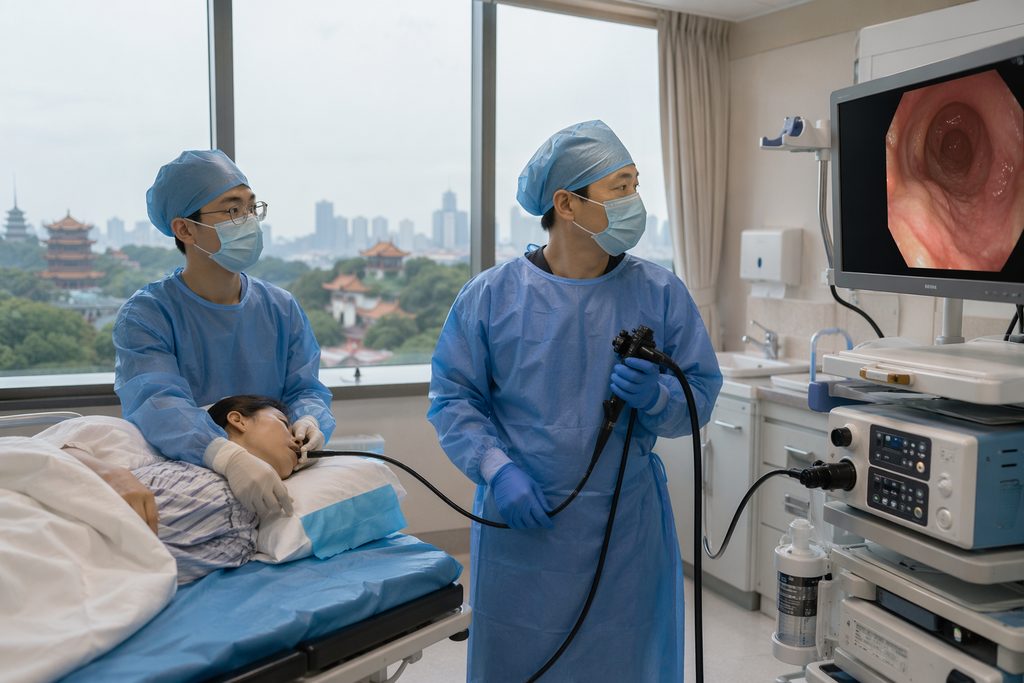
Key Takeaways
- A standard diagnostic gastroscopy in China typically runs $150–$400 at a top public hospital, and $500–$1,200 at a private international facility — roughly one-fifth of US pricing.
- Sedated (painless) endoscopy is the default at most tier-one hospitals, not an expensive add-on.
- You cannot book a public hospital endoscopy slot from overseas in advance. You arrive, register in person, and get scheduled — that is the rule, not a service failure.
- Bring your existing reports. A Chinese gastroenterologist can often review them remotely before you ever board a plane.
While a diagnostic gastroscopy in the United States averages $1,500–$3,500 before insurance, a foreign patient at a top-tier Chinese hospital in Shanghai or Beijing commonly pays $150–$400 for the same procedure — with sedation included. Same camera. Same biopsy forceps. Same pathology report. The gastroscopy cost China hospitals charge reflects a completely different cost structure, not a lower standard of care.
That gap is why searches for endoscopy pricing in China have climbed steadily among Western patients. But price is only half the story. The other half is logistics — and that is where most people get stuck.
The Problem: You Need Answers, Not a Six-Month Wait
In Canada, the median wait from referral to a gastroenterology consultation runs several months in many provinces, and the endoscopy itself adds more time on top. In the UK, the NHS target is a two-week wait for suspected cancer referrals — but routine diagnostic endoscopy for non-urgent symptoms frequently stretches well beyond that.
Meanwhile, a patient with persistent reflux, difficulty swallowing, or unexplained upper abdominal pain sits at home Googling symptoms at midnight. The anxiety is real, and it compounds. Every week without a diagnosis is a week of not knowing.
Cost adds a second layer. In the US, even insured patients frequently face $500–$1,500 in out-of-pocket responsibility for an endoscopy once deductibles and coinsurance are applied. Uninsured patients see the full bill.
So the question becomes practical: is it worth flying to China for a procedure that takes twenty minutes?
Sometimes yes. Sometimes no. It depends on what else you need done — and whether you can combine the endoscopy with a broader diagnostic workup, a second opinion, or treatment you have been waiting months for at home.
Why China Delivers on Endoscopy: Volume, Speed, and Price
Clinical volume that most Western centers cannot match
China’s top hospitals operate at a scale that reshapes what “routine” means. A single tier-one gastroenterology department may perform hundreds of endoscopies per week. That volume produces technical fluency — the kind that comes from repetition.
China also carries a heavy burden of gastric and esophageal disease, which means its endoscopists are trained to spot early lesions that lower-volume settings might miss. Gastric cancer screening is a national priority, and Chinese endoscopists perform far more diagnostic upper GI procedures per capita than their Western counterparts.
Sedation is standard, not premium
In the US and parts of Europe, “conscious sedation” during gastroscopy is often billed separately and can add hundreds of dollars. At most Chinese tier-one hospitals, painless endoscopy under sedation is the default offering. The patient sleeps through it. The price difference between sedated and unsedated is usually modest.
The structural reason prices are lower
This is not a mystery. Chinese hospital pricing reflects lower labor costs, high procedure throughput, and government price guidance on diagnostic services. The equipment — Olympus and Fujifilm endoscopes, the same brands used in Western hospitals — is identical. The pathology labs are accredited and produce reports in English on request at most international departments.
Lower cost here is an accounting outcome, not a quality shortcut.
What a Gastroscopy Actually Costs in China: Real Numbers
Prices vary by hospital tier, city, and whether you use the standard or international/VIP channel. Here is the realistic range for foreign patients in 2026.
| Service | Public Tier-One Hospital (Standard) | Public Hospital International Dept. | Private International Hospital | US Average |
|---|---|---|---|---|
| Diagnostic gastroscopy (sedated) | $150–$300 | $350–$600 | $500–$1,200 | $1,500–$3,500 |
| Gastroscopy + colonoscopy | $300–$550 | $600–$1,000 | $900–$2,000 | $2,500–$6,000 |
| Biopsy (per site) | $30–$80 | $60–$120 | $100–$250 | $200–$500 |
| Pathology report | $40–$100 | $80–$150 | $150–$300 | $300–$800 |
| H. pylori testing (breath/rapid urease) | $20–$50 | $40–$80 | $80–$150 | $100–$300 |
| Pre-procedure consultation | $15–$40 | $100–$250 | $200–$400 | $150–$400 |
All figures are in USD and vary by hospital and case complexity. A straightforward diagnostic scope with one biopsy at a Shanghai tier-one hospital might total $250 all-in. The same procedure at a private international hospital in the same city could reach $1,200 — but you get English-speaking staff, direct insurance billing, and a hotel-like environment.
Neither is “better.” They serve different needs.
How Much Does Gastroscopy Cost in Beijing vs. Shanghai?
City matters less than channel. A standard-channel gastroscopy at a Beijing tier-one hospital and a Shanghai tier-one hospital land in nearly the same range — typically $150–$350. The difference shows up in wait times and convenience.
Beijing concentrates the largest number of top-ranked hospitals in the country. Shanghai offers a slightly more internationalized patient experience at its private facilities. Guangzhou and Shenzhen sit closer to Southeast Asian patients and often have shorter registration queues.
For a gastroscopy price Shanghai hospital comparison, the practical takeaway is this: at the standard channel, Shanghai public hospitals are not meaningfully more expensive than Beijing. At the international channel, Shanghai’s private hospitals (United Family, Jiahui, Parkway) cluster around $800–$1,200 for a sedated scope with pathology.
If you are weighing cities, our Shanghai city guide and Beijing city guide break down hospital options, accommodation, and logistics for each.
Is Gastroscopy Safe in China? What the Standards Actually Look Like
The honest answer: at accredited tier-one and international hospitals, yes. Endoscopy suites follow international disinfection protocols, and single-use accessories (biopsy forceps, syringes, mouth guards) are standard at reputable facilities.
Where patients should exercise judgment is at small, unaccredited clinics advertising unusually low prices. A $50 gastroscopy is a red flag, not a bargain. Legitimate hospitals do not need to compete on price at that level.
Three things to verify before booking:
- The hospital appears on a recognized ranking (Fudan University Hospital Rankings, or JCI accreditation for private facilities)
- The endoscopy unit has a dedicated anesthesia team for sedated procedures
- The pathology lab can issue a report in English
Complication rates for diagnostic gastroscopy are low worldwide — perforation occurs in roughly 1 in 10,000 to 1 in 20,000 procedures. The risk profile does not change because the hospital is in China. It changes based on the facility’s standards.
Booking a Gastroscopy Appointment in China: What Actually Happens
This is where expectations need calibrating. Public tier-one hospitals in China generally do not allow overseas patients to book a specific endoscopy slot in advance. The process works like this:
Step 1 — Registration. You arrive at the hospital, register with your passport, and obtain a medical card. Queues start early. Most hospitals open registration around 7:00–7:30 AM.
Step 2 — Gastroenterology consultation. You see a gastroenterologist the same day or within a day or two. They review your symptoms, your existing reports, and decide whether endoscopy is indicated.
Step 3 — Scheduling. If endoscopy is ordered, the procedure is typically scheduled within days, sometimes the next day. Pre-procedure requirements (fasting, medication adjustments, blood tests for sedation) are explained on the spot.
Step 4 — The procedure. Sedated gastroscopy takes 15–30 minutes. You recover for 1–2 hours and receive preliminary findings before you leave. Biopsy results follow in 3–7 days.
The catch: none of this can be locked in from your home country through the standard channel. You show up and go through the system. That is the rule at public hospitals, full stop.
Medical Tourism Endoscopy Packages in China: What to Expect
Some hospitals and facilitators offer bundled endoscopy packages that combine consultation, the procedure, pathology, and a follow-up review. These are most common at private international hospitals and at the international departments of large public hospitals.
A typical package covers:
- Pre-procedure gastroenterology consultation
- Sedated gastroscopy (and optionally colonoscopy)
- Biopsies and pathology
- English-language report
- Post-procedure follow-up consultation
What packages rarely include: flights, accommodation, airport transfers, or interpretation during the hospital visit itself. Those are separate line items, and they are where the real logistical friction lives for a patient who does not speak Mandarin.
If your goal is a broader health screen — gastroscopy plus bloodwork, imaging, and a specialist review — our overview of top-ranked Chinese hospitals can help you see which cities and facilities offer the most complete diagnostic infrastructure.
Practical Considerations Before You Book
Visa. Medical travel to China uses the S2 visa, which covers short-stay visits for medical treatment and private affairs. Accompanying family members apply under the same category. Requirements and supporting documents are set by the nearest Chinese embassy or consulate and change periodically — confirm current rules before applying. Note that the M visa is for commercial and trade activities only and is not the correct category for medical treatment.
Payment. Public hospitals require prepayment for procedures. International credit cards are accepted at international departments and private hospitals; standard public hospital counters often prefer cash or local payment apps. Budget for a deposit at registration.
Insurance. Most international insurers reimburse after the fact for public hospital care. Private international hospitals frequently offer direct billing — confirm with your insurer before arrival.
Records. Bring your existing endoscopy reports, pathology slides, medication list, and allergy history. Chinese specialists can work from English-language reports, but translated summaries speed things up considerably.
Follow-up. If biopsies are taken, results take 3–7 days. Plan your trip length accordingly, or arrange for the report to be sent to you digitally after you return home.
Frequently Asked Questions
At public tier-one hospitals, no — not through the standard channel. You register and consult in person, and the procedure is scheduled from there, usually within days. If you need a confirmed date in advance, the international or VIP department at a tier-one hospital, or a private international hospital, can often accommodate pre-scheduling at a higher price point.
At accredited tier-one and international hospitals, yes. Equipment brands are the same, disinfection protocols follow international standards, and Chinese endoscopists perform high volumes of upper GI procedures — often more per year than Western counterparts. The variable is the facility, not the country. Verify accreditation and avoid unusually cheap unaccredited clinics.
This is the question worth asking before you fly. If a biopsy returns a significant finding, you will want a clear plan for what happens next — whether that is treatment in China, transfer of records to your home physician, or a decision to return home for care. Discuss this scenario with the hospital’s international department in advance, and confirm they can provide English-language pathology reports and imaging on request.
No. You can register directly with the gastroenterology department at most public hospitals. A prior consultation is required before endoscopy, but that consultation happens at the same hospital and is usually available the same day or within a day or two.
The procedure itself at a public hospital typically runs $150–$400. Add consultation, pathology, and any additional tests. Flights, accommodation, and interpretation are separate. A realistic all-in figure for a short medical trip centered on a gastroscopy — depending on where you fly from — usually lands between $1,500 and $3,500, still below the US procedure price alone in many cases.
Your Next Step
If you are considering endoscopy in China, the smartest first move is not booking a flight — it is getting your existing reports reviewed. A Chinese gastroenterologist can often tell you whether the procedure is even necessary, and what the realistic cost and timeline would look like for your specific case.
China Medical Services is not a hospital and does not provide diagnoses. We connect international patients with 340+ top-ranked hospitals across 37 cities, coordinate appointments through official international departments, and provide bilingual medical companions who handle registration, queuing, payment, and interpretation on the ground. If you would like to understand your options before committing to travel, you can start with a free consultation — no pressure, no obligation.
This article is for general information only and does not constitute medical advice. Procedure suitability, risks, and pricing depend on individual clinical circumstances. Consult a qualified physician before making any treatment decision.
For more medical information and treatment options in China, visit chinamedservices.com (China Medical Services).
