Glioma Second Opinion in China: Huashan Hospital Costs and Process
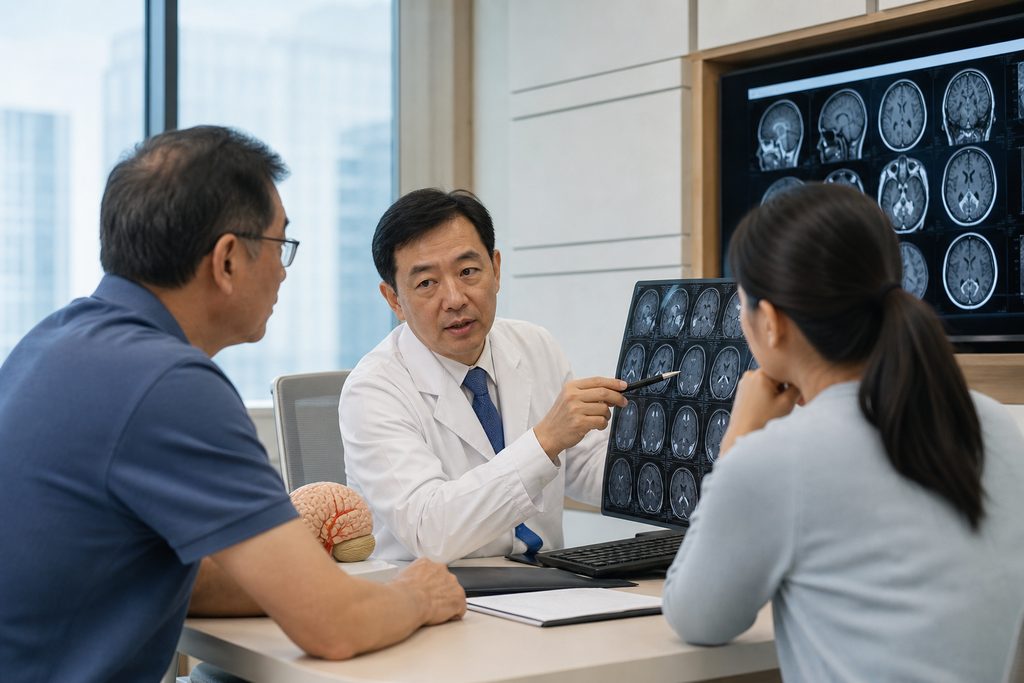
A glioma diagnosis lands like a weight you cannot put down. The word itself — a tumor arising from glial cells in the brain or spinal cord — carries enough fear without adding confusion about where to turn next. A second opinion is not an act of distrust toward your current doctor. It is a rational step when facing a disease where pathology interpretation, surgical strategy, and treatment sequencing genuinely change outcomes. And when patients ask us about getting that second opinion in China, one hospital name comes up more than any other: Huashan Hospital in Shanghai.
Before we go further, let us be clear about what this article covers. We are going to walk through what Huashan Hospital actually is, why its neurosurgery department carries the reputation it does, what a glioma second opinion Huashan Hospital price realistically looks like, how the process works for international patients, and what you should prepare before reaching out. This is educational information, not medical advice. Your treating physician remains your primary decision-maker.
Key Takeaways
- Huashan Hospital’s neurosurgery department is ranked among China’s top 10 for neurosurgery on the Fudan specialty reputation list, with one of the highest brain tumor surgical volumes in Asia.
- A written second opinion from a Huashan-affiliated specialist typically ranges from $300–500, while a video consultation runs $500–800, depending on the expert’s seniority.
- Public hospital outpatient clinics in China generally cannot be pre-booked from overseas without going through the hospital’s international department or a coordination service.
- You will need your complete medical records — imaging files on CD or via cloud link, pathology slides if available, and a translated summary — before any second opinion can proceed.
The Problem: A Glioma Diagnosis Is Not One Disease
Gliomas are not a single entity. The World Health Organization classifies them across four grades, from pilocytic astrocytoma (grade 1, often curable with surgery alone) to glioblastoma (grade 4, with a median survival of roughly 14 to 16 months even with aggressive treatment). Between those poles sit diffuse astrocytomas, oligodendrogliomas, and a growing list of molecular subtypes defined by markers like IDH mutation status, 1p/19q codeletion, and MGMT promoter methylation. A 2021 study in Neuro-Oncology found that treatment decisions based on molecular profiling changed the initial diagnosis in up to 30% of glioma cases reviewed at major centers.
That statistic matters. If nearly one in three glioma diagnoses shifts when a high-volume neuro-oncology center re-examines the pathology and imaging, then a second opinion is not a luxury. It is a diagnostic intervention in its own right. And the stakes are highest for patients whose initial diagnosis came from a general hospital without a dedicated neuropathology team.
But here is the barrier most Western patients face. Getting a genuinely independent second opinion at a top-tier US or European center can take weeks to months. Wait times for new patient appointments at leading US neuro-oncology programs routinely stretch past four to six weeks. Billing for an out-of-network consultation can exceed $2,000 before a single test is ordered. And if you live outside a major metropolitan area, the logistics of gathering records, shipping slides, and coordinating with a new institution can feel overwhelming.
Why Huashan Hospital for a Glioma Second Opinion?
Volume Creates Pattern Recognition
Huashan Hospital, officially Fudan University Huashan Hospital, operates one of the busiest neurosurgery departments in China. The department performs over 15,000 neurosurgical procedures annually, a substantial portion of which are brain tumor resections. To put that in perspective, a large US academic neurosurgery department might perform 3,000 to 4,000 procedures per year. The clinical volume at Huashan means its neurosurgeons and neuropathologists see rare glioma variants with a frequency that smaller centers simply cannot match.
Does volume guarantee better outcomes? Not automatically. But for glioma surgery, the relationship between surgeon volume and patient outcomes is well documented. A 2019 analysis in JAMA Surgery covering over 20,000 glioma resections found that patients treated at high-volume centers had significantly lower rates of postoperative complications and higher rates of gross total resection — a key predictor of progression-free survival. Huashan’s neurosurgery department sits firmly in that high-volume category.
The Neuropathology Advantage
What many patients do not realize is that the most valuable part of a glioma second opinion often comes not from the surgeon, but from the neuropathologist. Glioma classification has become molecular. Two tumors that look identical under a standard microscope can be entirely different diseases depending on IDH mutation and 1p/19q status. Huashan’s pathology department reviews brain tumor specimens at a scale that supports genuine subspecialty expertise. When you seek a second opinion there, your pathology slides — not just your radiology report — get re-examined by a team that sees thousands of glioma cases each year.
Cost Reality Check: Glioma Second Opinion Huashan Hospital Price
Now for the number you searched for. A written second opinion from a Huashan-affiliated specialist, coordinated through the hospital’s international department or a medical coordination service, typically costs between $300 and $500. That covers the specialist’s review time, the written report, and administrative handling. A video consultation with a senior neurosurgeon or neuro-oncologist ranges from $500 to $800. These figures vary by hospital and case complexity — a complex case requiring multidisciplinary input will naturally cost more.
Compare that to the US. An out-of-network second opinion at a major academic brain tumor center often starts at $1,500 for consultation alone. Add pathology re-review, imaging re-reads, and administrative fees, and the total can reach $3,000 to $5,000 before treatment even begins. The structural reasons for China’s lower costs are straightforward: lower physician labor costs, hospital-owned infrastructure, and a healthcare system built around volume rather than per-service billing. Lower cost here does not reflect lower expertise. It reflects a different economic model.
Is Huashan Hospital Good for Brain Tumor Second Opinion? What the Rankings Say
The Fudan University China Hospital Specialty Reputation Rankings — the most widely referenced hospital ranking system in China — places Huashan Hospital’s neurosurgery department among the top 10 in the country. That is not a vague claim. The Fudan specialty reputation list is compiled from peer nominations by thousands of practicing specialists across China, combined with research output metrics. Huashan has held a top-tier neurosurgery position on that list for years. Its neurology department, closely linked to neurosurgery for glioma care, also ranks among China’s best.
For international patients wondering “is Huashan Hospital good for brain tumor second opinion,” the answer has three parts. First, the clinical volume is genuinely exceptional. Second, the neuropathology and molecular diagnostics infrastructure is current and comprehensive. Third, the hospital’s international patient pathway — while not as polished as private international hospitals — is functional and improving. You will not find the same English-language fluency as at a Western hospital. That is a real limitation. But the medical expertise is not in question.
How to Get a Second Opinion from Huashan Hospital China: The Actual Process
Let us walk through what actually happens when an international patient seeks a glioma second opinion at Huashan. This is where expectations need to be set honestly.
Step 1: Gather Your Complete Records
You cannot proceed without your full medical file. That means the original radiology images — not just the written report. Huashan’s radiologists will want to review your MRI and CT scans directly, ideally in DICOM format on a CD or via a secure cloud link. You also need your pathology report, and if possible, the actual pathology slides or blocks. Surgical notes, treatment summaries, and a chronological medical history complete the package. If your records are not in English or Chinese, translation will be required. This step alone can take one to two weeks if your home hospital is slow to release materials.
Step 2: Choose Your Consultation Format
There are three realistic options for an international patient:
- Written second opinion ($300–500): You submit records. A Huashan specialist reviews them and provides a written analysis with treatment recommendations. No live conversation. This works well for patients who want an expert’s perspective on diagnosis and treatment direction without needing to travel or coordinate time zones.
- Video consultation ($500–800): You submit records, then speak directly with the specialist online. You can ask questions, clarify concerns, and hear the reasoning behind recommendations. This format is more expensive but far more useful for patients weighing surgery versus observation versus radiation.
- In-person consultation: You travel to Shanghai for a face-to-face appointment. This is the most involved option and requires a visa, travel logistics, and typically a longer stay. The consultation fee itself is modest — often $100 to $300 for the appointment — but you will need to budget for travel, accommodation, and interpretation.
Practical tip: Start with a written second opinion. It is the lowest-cost way to learn whether a deeper engagement with Huashan makes sense for your specific case. If the written review raises questions or suggests a surgical approach you had not considered, then upgrade to a video consultation.
Step 3: Navigate the Booking Reality
Here is the hard truth about booking a glioma consultation at Huashan Hospital as an international patient. The hospital’s public outpatient clinics do not accept overseas pre-booking through a simple online form. Walk-in registration on the day of the appointment is the norm for domestic patients. For international patients, the practical route is through the hospital’s international medical department or through a coordination service that handles registration, document preparation, and scheduling. This is not a “pay to skip the line” arrangement — it is the standard pathway for foreign patients who cannot navigate the Chinese-language registration system in person.
If you want to book a glioma consultation at Huashan Hospital as an international patient, expect the coordination process to take one to three weeks from record submission to confirmed appointment. Rush requests are sometimes possible but cannot be guaranteed.
Glioma Surgery Cost Comparison: China vs USA
You need your imaging in DICOM format, not JPEG screenshots. Ask your home hospital’s radiology department for a CD or a secure download link. You need your pathology report, and ideally the pathology slides or paraffin blocks. If slides are required for re-review, they can be shipped internationally — but coordinate this carefully, as some couriers restrict biological material. A translated summary of your case, in English or Chinese, saves significant time. If your records are in a language other than English or Chinese, professional medical translation is essential.
If you decide to travel to Shanghai for an in-person consultation, the applicable visa category is the S2 visa, which covers short-term private affairs including medical treatment. Your accompanying family members also apply for S2 visas. You will need supporting documents from the hospital — typically an invitation letter or appointment confirmation — to include with your visa application. The M visa is for commercial and trade activities and is not appropriate for medical travel. Requirements vary by embassy and consulate, so check the latest guidance from the Chinese diplomatic mission in your country before applying.
Chinese public hospitals operate on a prepayment model. You pay for consultations, tests, and procedures before or at the time of service. International credit cards are accepted at the international medical department, but not always at every payment window. Wire transfer is common for larger amounts. If you use a coordination service, their fees are typically invoiced separately from hospital charges. Keep all receipts — you will need them for insurance reimbursement if your policy covers international care.
Most US and European health insurance plans do not directly reimburse Chinese public hospitals. You will likely pay out of pocket and then submit claims to your insurer. Check your policy’s out-of-network and international care provisions before committing. Some international health insurance plans — particularly those used by expatriates — do have direct billing arrangements with certain Chinese hospitals, but Huashan’s international department is not always on those lists. Verify before you travel.
Huashan’s international medical department has English-speaking staff, but fluency varies. In the neurosurgery wards and imaging departments, English capability is limited. If you are traveling for an in-person visit, arrange for a bilingual medical companion or interpreter. This is not a luxury — it is the difference between understanding your diagnosis and nodding politely while feeling lost.
Frequently Asked Questions
How long does a written second opinion from Huashan take?
Once your complete records are received and translated, a written second opinion typically takes 5 to 10 business days. Complex cases requiring multidisciplinary review may take up to two weeks. The timeline depends on the specialist’s schedule and the completeness of your submitted materials.
Will my home doctor accept a second opinion from a Chinese hospital?
Most oncologists and neurosurgeons respect second opinions from high-volume centers regardless of country. Huashan’s reputation in neurosurgery is internationally recognized, and its reports are written to international standards. That said, some Western physicians may be unfamiliar with the hospital. Sharing the Fudan ranking information and the specialist’s credentials can help bridge that gap. The goal is not to replace your home doctor but to give them additional data points for decision-making.
What if the second opinion disagrees with my current treatment plan?
Disagreement is not a failure — it is information. If Huashan’s specialists recommend a different surgical approach or a different chemotherapy regimen, you take that back to your treating physician and discuss it. In some cases, the disagreement comes down to treatment philosophy rather than objective error. In other cases, the second opinion identifies a genuine diagnostic or strategic gap. Either way, you are better informed than you were before. No one at Huashan will pressure you to transfer your care to Shanghai.
Can I get surgery at Huashan if the second opinion recommends it?
Yes, but surgery requires an in-person evaluation first. No reputable hospital will schedule a craniotomy based solely on remote records. You would travel to Shanghai for a preoperative assessment, additional imaging if needed, and surgical planning. The process from arrival to surgery typically takes one to three weeks, depending on the urgency of your case and the surgeon’s schedule. This is not a fast-track arrangement — it is the same pathway domestic patients follow, with added coordination for international logistics.
Is a Chinese second opinion worth it if I cannot afford to travel for treatment?
Often, yes. The primary value of a second opinion is diagnostic clarity and treatment direction, not necessarily treatment location. A written opinion from a high-volume glioma center can confirm or challenge your current plan, suggest molecular testing you have not had, or identify a clinical trial pathway you did not know existed. At $300 to $500, that is a modest investment relative to the cost of pursuing the wrong treatment for months.
Your Next Step
A glioma diagnosis
For more medical information and treatment options in China, visit chinamedservices.com (China Medical Services).
