Guangdong Provincial Hospital Heart Surgery: A Guide for International Patients
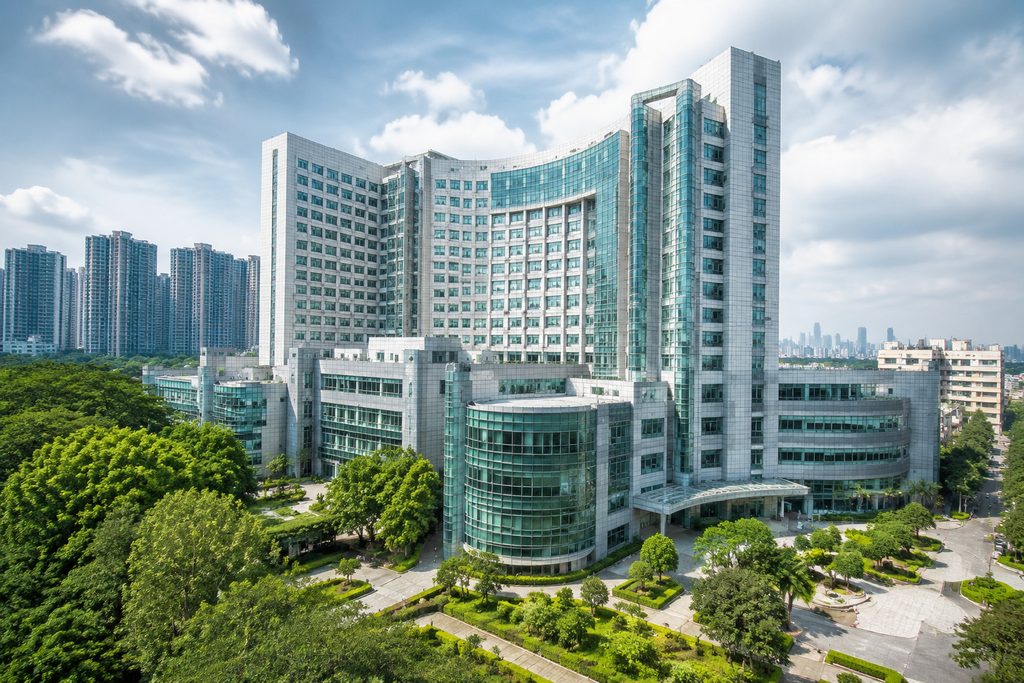
According to a 2024 report by the Chinese Medical Association, the average heart bypass surgery cost china falls between $12,000 and $20,000 at a top-tier public hospital. That figure stands in stark contrast to the $120,000-plus bill a patient might face in the United States. Price alone, however, rarely tells the whole story. For a patient traveling from London, Dubai, or Manila, the deeper question is about trust. Can a surgical team 6,000 miles from home deliver an outcome that justifies the journey? At the Guangdong Provincial People’s Hospital in Guangzhou—known widely as Guangdong General Hospital—the answer rests on a foundation of sheer volume and specialized infrastructure. The hospital’s Guangdong Cardiovascular Institute handles over 6,000 cardiac surgeries annually, making it one of the highest-volume heart centers in Asia. Our team at China Medical Services has walked dozens of families through these doors. We have seen the numbers. We have also seen the confusion that comes with navigating a foreign medical system alone.
Key Takeaways
- Guangdong Provincial Hospital’s heart center performs more than 6,000 cardiac surgeries each year, with outcomes that match or exceed benchmarks set by top Western centers.
- A coronary artery bypass graft (CABG) here typically costs between $12,000 and $20,000 — a fraction of the $120,000+ price tag common in the United States.
- The hospital’s international patient service handles visa documentation, appointment scheduling, and in-hospital translation, but navigating the initial booking and pre-operative logistics still requires local know-how that can overwhelm a first-time visitor.
- Safety and quality are validated by the center’s accreditation as a National Key Clinical Specialty, but patients should understand that public hospital workflows in China operate differently than private Western hospitals.
The Problem: A Diagnosis That Demands Action, and a Price That Demands a Second Mortgage
Heart disease does not negotiate. When a cardiologist in Sydney or Vancouver recommends bypass surgery, the clock starts ticking. But so does the financial panic. In the United States, a single CABG procedure can exceed $120,000. Even in countries with public healthcare systems, wait times can stretch into months. A 2023 report from the Canadian Institute for Health Information showed that 28% of patients waited longer than the recommended benchmark for elective cardiac surgery. That delay is not just stressful. It is dangerous. Left untreated, severe coronary artery disease progresses. The heart muscle weakens. Options narrow. Patients find themselves trapped between two terrible choices: risk financial ruin at home, or gamble on an unfamiliar system abroad. The search for Guangdong Provincial Hospital heart surgery reviews often begins at 2 a.m., with a spouse hunched over a laptop, terrified of making the wrong call. We understand that moment. It is exactly why we built our service.
Who We Are
We are not a hospital. We do not perform surgery, interpret echocardiograms, or prescribe medication. China Medical Services operates as a medical concierge and logistical bridge for international patients seeking care at China’s top-tier hospitals. Our database covers 340+ top-ranked institutions across 37 cities, representing the top 5% of China’s 35,000-plus hospitals as ranked by the Fudan University hospital rankings and JCI accreditation standards. We handle the practical barriers: visa guidance, hospital matching, appointment coordination, bilingual medical companionship, and post-operative recovery logistics. Think of us as your local guide who speaks the language, understands the system, and knows which questions to ask before you even arrive. Our goal is simple: we connect you with the right surgical team and make sure nothing gets lost in translation.
Why Guangdong Provincial Hospital’s Heart Center Delivers Results
A surgeon who performs 300 bypass procedures a year simply sees patterns that a surgeon performing 50 cannot. At Guangdong Provincial Hospital, the cardiac surgical team completes over 6,000 operations annually. That includes isolated CABG, valve repairs, complex aortic procedures, and hybrid surgeries combining catheter-based interventions with open techniques. For context, the Society of Thoracic Surgeons reports that the median annual CABG volume for a US surgeon is approximately 45 cases. The numbers here are an order of magnitude higher. What does that mean for a patient? It means the team has encountered—and solved—virtually every anatomical variation and intraoperative complication. Their response to a calcified aorta or an unexpected bleeding point is not theoretical. It is reflexive.
Walk through the cardiovascular institute and you will see equipment that rivals any Western academic medical center. The hospital invested early in minimally invasive cardiac surgery techniques. They routinely perform totally endoscopic coronary artery bypass grafting (TECAB) and minimally invasive valve replacements through incisions smaller than a keyhole. Hybrid operating theaters allow interventional cardiologists and cardiac surgeons to work simultaneously on the same patient—a workflow that slashes procedure time and reduces complications. The center also operates one of China’s largest programs for transcatheter aortic valve replacement (TAVR), a procedure that avoids opening the chest entirely for eligible patients. This is not experimental medicine. It is standard practice here, backed by thousands of cases.
The obvious question: how can a heart bypass surgery cost china so much less without cutting corners? The answer lies in structural economics, not clinical compromise. Chinese public hospitals operate at enormous scale with lower labor costs. A top cardiac surgeon’s compensation, while substantial by local standards, does not approach the multi-million-dollar salaries common in US academic medicine. Hospital construction costs, administrative overhead, and malpractice insurance premiums are all dramatically lower. These savings pass through to the patient without touching the sterile field. The implants are the same—St. Jude Medical mechanical valves, Edwards Lifesciences tissue valves, Medtronic pacing systems. The pharmaceutical protocols mirror international guidelines. The cost difference reflects economics, not quality. A heart valve replacement medical tourism Guangzhou price typically ranges from $15,000 to $25,000 for a single valve, including hospitalization. Compare that to $80,000 to $150,000 in the US, and the math becomes clear.
What You Need to Know Before Going Alone
Honesty matters here. Showing up at Guangdong Provincial Hospital without preparation is a recipe for frustration. The barriers are real. They are also surmountable with the right support.
- Visa Requirements: Medical travelers to China must apply for an S2 visa, which is specifically designated for short-term private visits including medical treatment. The application requires an invitation letter from the treating hospital. Obtaining that letter independently—without a local contact who understands the hospital’s administrative workflow—can take weeks of back-and-forth communication. The accompanying family member also needs an S2 visa. An M visa is strictly for commercial business and will not be accepted for medical purposes.
- Payment Systems: Chinese public hospitals operate on a pre-payment model. You deposit funds at admission, and the hospital deducts charges as they accrue. International credit cards may not be accepted at the hospital cashier. WeChat Pay and Alipay dominate the local payment ecosystem, but linking a foreign bank card to these platforms can be technically challenging. Most international patients rely on wire transfers or cash deposits arranged through a local coordinator.
- Medical Records and Language: The hospital’s international patient center has English-speaking staff, but the surgical consent forms, nursing notes, and discharge summaries will be in Chinese. A bilingual medical companion who can translate clinical terminology—not just conversational Mandarin—becomes essential during pre-operative consultations and post-operative instructions. Misunderstanding a medication dosage or a wound care protocol is not a minor inconvenience. It is a patient safety risk.
How We Help You Navigate This
These barriers exist for structural reasons, not because anyone wants to exclude foreign patients. Chinese hospitals are designed to serve a domestic population of 1.4 billion people. The workflows prioritize speed and volume. International patients represent a tiny fraction of that throughput, and the system does not naturally bend to accommodate them. That is where we step in.
Before you travel, our team works with the hospital’s international patient center to secure the official invitation letter required for your S2 visa application. We translate and format your medical records—echocardiogram reports, angiogram images, cardiac catheterization data—into the standardized format that Chinese cardiac surgeons expect. We coordinate directly with the cardiovascular surgery department to schedule your initial consultation and pre-operative workup. During your stay, a bilingual medical companion accompanies you to every appointment. That person handles registration, queues, payment deposits, and real-time translation during surgeon consultations. After discharge, we coordinate follow-up imaging, medication refills, and communication with your home cardiologist. For patients considering a heart valve replacement medical tourism Guangzhou price comparison, we provide transparent cost breakdowns before any commitment is made. Our coordination fee starts from $300 for hospital appointment scheduling, and any consultation fee is fully credited toward on-the-ground coordination if you proceed with treatment within 90 days.
Frequently Asked Questions
How do I book heart surgery in Guangzhou as a foreign patient?
The process begins with a remote consultation. You submit your medical records—ideally including a recent echocardiogram and coronary angiogram. Our team translates these documents and forwards them to the cardiac surgery department at Guangdong Provincial Hospital. A surgeon reviews your case and determines whether you are a surgical candidate. If so, the hospital issues an invitation letter for your S2 visa. You travel to Guangzhou, complete a pre-operative assessment, and the surgery is scheduled. Walk-in booking is not possible. Everything flows through the international patient center with advance coordination.
What do Guangdong Provincial Hospital heart surgery reviews say about outcomes?
Published clinical data from the Guangdong Cardiovascular Institute reports a 30-day mortality rate for isolated CABG below 1.5%, which aligns with benchmarks from the Society of Thoracic Surgeons in the United States. Patient satisfaction surveys collected by the international center consistently highlight the surgical team’s technical skill and the nursing staff’s attentiveness. The most common friction points mentioned in reviews involve language barriers and administrative delays—issues that a bilingual medical companion directly addresses. The clinical outcomes themselves are rarely the source of complaint.
Is open heart surgery safe in China compared to Western hospitals?
At a top-tier center like Guangdong Provincial Hospital, the safety profile is comparable to accredited cardiac surgery programs in North America or Europe. The key variable is hospital selection. China has over 35,000 hospitals, and the gap between the best and the average is wide. Choosing a National Key Clinical Specialty center—a designation Guangdong Provincial holds for cardiovascular surgery—ensures you are treated at an institution that meets rigorous volume and outcome standards. Infection control protocols, surgical checklists, and perioperative care pathways follow international guidelines. The risk is not in the surgical technique. The risk is in choosing a hospital without verifying its accreditation and volume data.
What is the best cardiac surgery hospital in China for foreigners?
There is no single answer that fits every patient. Fuwai Hospital in Beijing performs over 14,000 cardiac surgeries annually—the highest volume in the world—and ranks at the top of China’s cardiac surgery specialty list. Zhongshan Hospital in Shanghai and West China Hospital in Chengdu also operate world-class programs. Guangdong Provincial Hospital offers a distinct advantage for patients who prefer southern China’s climate, proximity to Hong Kong International Airport, and a slightly lower cost structure than Beijing or Shanghai. The best cardiac surgery hospital China for foreigners depends on your specific diagnosis, the surgeon’s sub-specialty expertise, and your logistical preferences. Our team helps match your clinical needs to the right center.
Your Next Step
A cardiac diagnosis forces decisions that no one wants to make. The financial pressure, the clinical urgency, the fear of the unknown—they all converge at once. China’s top heart centers offer a path forward that combines high-volume surgical expertise with a cost structure that makes treatment accessible. Guangdong Provincial Hospital’s cardiovascular institute stands as one of the strongest options in Asia for bypass surgery, valve repair, and complex aortic procedures. The challenge is not the quality of care. The challenge is the distance, the language, and the administrative complexity. Those are solvable problems. If you are weighing your options and want to understand whether this hospital fits your specific case, we are here to walk you through it—no pressure, no hard sell, just clear answers and a plan that makes sense.
For more medical information and treatment options in China, visit chinamedservices.com (China Medical Services).
