Treatment at Guangxi Medical University Nanning: Our Full Coordination Guide
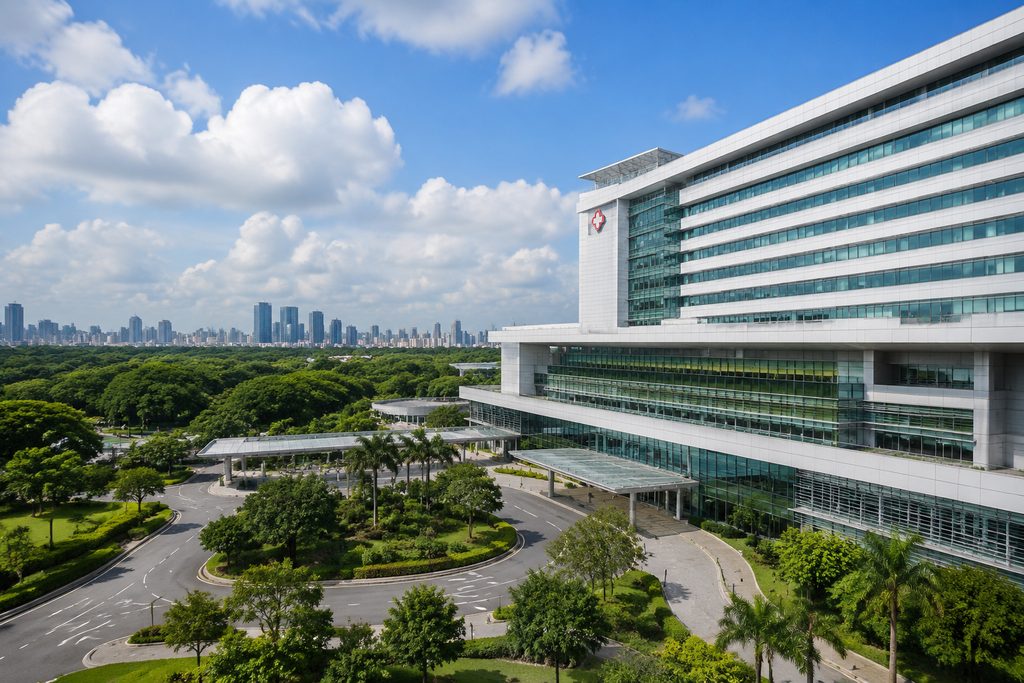
You have probably heard that getting medical treatment in a Chinese public hospital means navigating endless queues, language barriers, and administrative chaos on your own. For a local patient walking into a general outpatient hall, that is not entirely wrong. But for international patients who come through the right channel, the experience is fundamentally different. Our team coordinates treatment at the First Affiliated Hospital of Guangxi Medical University through its official international pathway, which means pre-scheduled specialist consultations, bilingual support on the ground, and a defined process that starts weeks before you ever board a flight to Nanning.
The cost of treatment at First Affiliated Hospital Guangxi Medical University is a question we address early, because it shapes decisions. But the number alone means nothing without understanding what you are paying for, how the coordination actually functions, and where things can stall if you skip steps. This guide walks through the real sequence, the honest timeline, and the practical questions most people only think to ask after something has already gone wrong.
How This Actually Works, Step by Step
The process is not a black box. It follows a logical sequence that we have refined across hundreds of cases. Here is what happens from the moment you reach out.
Step 1: You send us your existing medical records. These are the reports, scans, and test results you already have. MRIs, CT scans, pathology reports, blood work, discharge summaries from your home hospital. We need them in English or your native language. Our team handles translation into clinical Chinese—this is not Google Translate. Medical terminology requires precision, and a mistranslated lab value can derail a consultation.
Step 2: The relevant department reviews your case. We forward your translated records to the specific specialty at the First Affiliated Hospital. This is not a generic intake. A hepatobiliary surgeon reviews liver cases. An interventional cardiologist reviews complex coronary cases. The department assesses whether your condition falls within their expertise and whether remote evaluation is feasible or if an in-person visit is mandatory from the start.
Step 3: You receive a written assessment and a proposed path forward. This typically takes 5 to 10 business days. The assessment outlines whether the hospital can treat your condition, what additional tests you would need upon arrival, and a preliminary treatment direction. This is a clinical document, not a binding contract. It gives you enough information to decide whether to proceed.
Step 4: You choose your service level. Some patients only need a written second opinion at this stage. Others want a video consultation with the specialist who reviewed their file. And some are ready to commit to traveling for surgery or a complex treatment course. We explain the options and the associated coordination fees. Any remote consultation fee you pay now gets credited in full toward on-the-ground coordination if you travel within 90 days.
Step 5: We lock in the schedule and you prepare for travel. Once you confirm, we coordinate the appointment date with the hospital’s international department. You apply for your S2 visa with the invitation and supporting documents we provide. We arrange airport pickup and a bilingual medical companion who will be with you from the moment you arrive at the hospital campus.
What the First Affiliated Hospital of Guangxi Medical University Actually Offers International Patients
This is a large, high-volume university hospital. It is not a boutique private clinic. That distinction matters because it shapes what the experience feels like and what the hospital does well versus where it has limits.
The First Affiliated Hospital is a Class A tertiary hospital—the highest designation in China’s hospital grading system. It serves as the primary teaching hospital for Guangxi Medical University and handles a patient volume that would overwhelm most Western facilities. The hospital runs over 2,700 beds and its outpatient volume exceeds several million visits annually. For certain specialties, particularly oncology, liver disease, and cardiovascular interventions, the case volume alone means the clinical teams have seen presentations that a smaller center might encounter once a year.
International patients access the hospital through its international medical department, which operates separately from the general outpatient crush. This is the channel that makes treatment feasible for someone who does not speak Chinese. Through this pathway, appointments are pre-scheduled rather than queued for on the day. Consultations are longer. A bilingual coordinator is present. The trade-off is cost: international department pricing runs roughly 1.5 to 2 times the standard public rate. That still places the cost of treatment at First Affiliated Hospital Guangxi Medical University substantially below equivalent care in North America or Western Europe.
The question many people search—is Guangxi Medical University hospital good for foreign patients—depends entirely on what you are comparing it to. If your benchmark is a private international hospital in Shanghai with English-speaking Western-trained physicians and direct insurance billing, this is a different model. The First Affiliated Hospital is a Chinese public hospital with a dedicated international coordination layer. The clinical expertise is real. The infrastructure is modern in the international ward. But the operating culture is Chinese, and expectations around communication style, family involvement, and post-operative recovery norms will differ from what you are used to. Our role is to bridge that gap, not pretend it does not exist.
A Realistic Timeline
Patients want certainty. We give ranges because real coordination involves multiple parties and unpredictable variables. Here is what a typical treatment journey looks like from first contact to discharge.
| Stage | What Happens | Typical Duration |
|---|---|---|
| Initial inquiry to record submission | You contact us, we explain the process, you gather and send your medical files | 3 to 10 days |
| Translation and department routing | Our team translates records into clinical Chinese and submits to the correct specialty | 3 to 5 business days |
| Specialist review and written assessment | The department evaluates your case and produces a preliminary treatment opinion | 5 to 10 business days |
| Decision and scheduling | You review the assessment, decide on next steps, we coordinate the appointment date | 2 to 14 days (varies by patient) |
| Visa processing | You apply for the S2 visa at your local Chinese embassy or consulate with our supporting documents | 5 to 15 business days (embassy-dependent) |
| Travel and arrival | You fly to Nanning Wuxu International Airport, our driver meets you | 1 to 2 days |
| In-person consultation and pre-treatment tests | You meet the specialist, undergo any required additional testing at the hospital | 1 to 3 days |
| Treatment or surgery | The procedure itself, plus in-hospital recovery | Varies widely by procedure |
| Post-treatment observation and discharge | Final checks, discharge summary, medication instructions | 2 to 7 days post-procedure |
The total timeline from first message to walking into the hospital is rarely less than four weeks and more commonly six to eight. Anyone promising a faster turnaround is cutting corners—usually on the specialist review step, which is the part you least want rushed.
Visa processing is the biggest variable we cannot control. Some embassies process S2 applications in five business days. Others take three weeks. We provide the invitation letter and supporting hospital documentation, but the timeline sits with the consular office in your country. Plan for the longer end of the range.
What Can Go Wrong—and What Happens Then
No honest coordination guide skips the failure modes. Here are the ones that actually occur and how we handle each.
The specialist reviews your records and determines that treatment in Nanning is not appropriate for your case. This happens. Sometimes the condition is too advanced for the interventions the department can offer. Sometimes a different specialty or a different hospital entirely would serve you better. When this occurs, we tell you directly and explain why. If another hospital in our network—we cover 340+ top-ranked hospitals across 37 cities—is a better match, we route your records there at no additional coordination charge.
You arrive and the pre-treatment tests reveal something the remote records did not show. Remote evaluation works from the data you provide. If your last MRI was six months ago and the disease has progressed, the in-person assessment will reflect that reality. The treatment plan may change. In rare cases, the specialist may determine that the originally planned procedure is no longer viable. This is not a bait-and-switch. It is medicine. We prepare patients for this possibility upfront so it does not come as a shock.
Your visa application is delayed or denied. We have seen this most often when the applicant’s supporting documents are incomplete or when the stated purpose of travel does not clearly match the visa category. We provide a detailed invitation package specifically formatted for S2 visa applications, but approval is never guaranteed. If your visa is denied, we reschedule your hospital appointment at no penalty and work with you on strengthening the application. Coordination fees already paid remain credited to your case.
The specialist you were scheduled to see is called away on an emergency. Top specialists at major teaching hospitals handle complex cases. An emergency surgery can displace a scheduled consultation. When this happens, the international department either reschedules you with the same specialist at the earliest available slot or offers a same-day consultation with a senior colleague in the same department. You choose which path to take.
What a Medical Tourism Package Actually Includes—and What It Does Not
People searching for a First Affiliated Hospital Guangxi Medical University medical tourism package often imagine an all-inclusive bundle with a fixed price tag. That model works for health checkups. It does not work for complex disease treatment, where the required interventions, length of stay, and post-operative needs vary enormously from patient to patient.
What we coordinate is better understood as a modular service stack. You pay the hospital directly for medical treatment at their published international department rates. You pay us separately for the coordination, logistics, and bilingual support services that make the treatment accessible. Here is how that breaks down.
Medical costs go to the hospital: consultation fees, diagnostic tests, surgical procedure charges, anesthesia, medications, and inpatient bed charges. These are charged according to the hospital’s international department price schedule. A major surgical procedure that would cost $120,000 or more in the United States typically falls in the $15,000 to $30,000 range here, though the exact figure depends entirely on the specific procedure and complexity.
Coordination and support services go to us: record translation, specialist routing, appointment scheduling, visa support documentation, airport transfer, and the bilingual medical companion who stays with you throughout your hospital visits. Bilingual companion service starts from $300 per day. Video consultations with specialists range from $500 to $800. Full end-to-end coordination for complex surgical cases typically runs between $5,000 and $8,000.
The distinction matters because it means you are not buying a black box. You see exactly what the hospital charges and exactly what we charge. There is no markup on the medical bill. And any remote consultation fee you pay is credited in full toward coordination if you proceed to in-person treatment within 90 days.
This model also answers the question of how does international patient coordination work in Nanning hospital at a practical level. We are not a travel agency bundling hospital beds with hotel rooms. We are a case management team that handles the administrative, linguistic, and logistical layer so you can focus on treatment. The hospital provides the medicine. We provide the access infrastructure.
Practical Considerations: Records, Visa, Payment, and Follow-Up
These are the details that determine whether the trip actually happens or collapses under friction.
Medical records. Send everything. Imaging should be in DICOM format on a CD or USB if possible, not just printed films. Pathology slides may need to be physically shipped if the hospital requests a second read. Lab reports should include reference ranges—normal values differ between labs, and a number without context is useless. The more complete your file, the more useful the specialist’s assessment will be.
Visa. You need an S2 visa for short-term private affairs, which covers medical treatment. Your accompanying family member applies for the same category. The application requires a passport valid for at least six months beyond your planned stay, a completed visa application form, a recent passport photo, and the invitation letter and hospital documentation we provide. Processing times and fees vary by country. Do not book flights until the visa is in your passport.
Payment. The hospital requires payment upfront for estimated treatment costs. International bank transfers, UnionPay, and major credit cards are typically accepted at the international department, but confirm with us before relying on a specific payment method. Your home insurance may reimburse you after the fact—Chinese public hospitals generally do not bill foreign insurers directly. The international department will provide the detailed invoices and medical reports you need for your insurance claim.
Language. The international department has English-speaking staff, but their availability is not 24/7. Outside of scheduled consultations, you will encounter nurses, technicians, and administrative staff who speak only Chinese. This is where the bilingual companion becomes essential—not just for translation during key moments, but for navigating the dozens of small interactions that fill a hospital day.
Follow-up at home. Before you leave Nanning, the specialist will provide a discharge summary, medication instructions, and a recommended follow-up schedule. You take these to your local physician. If questions arise after you return home, we can facilitate a follow-up video consultation with the same specialist. This is not a one-and-done relationship if your condition requires ongoing monitoring.
Frequently Asked Questions
The international department charges roughly 1.5 to 2 times standard public rates, which still places most major procedures well below private international hospital pricing in Shanghai or Beijing. A complex surgery that costs $25,000 here might run $40,000 to $60,000 at a JCI-accredited private hospital. The trade-off is that the operating environment is a Chinese public hospital with international coordination layered on top, not a fully Western-style facility. For many patients, the clinical expertise justifies the experience difference.
In almost all cases, no. The specialist must examine you in person and review any additional tests before scheduling surgery. This is hospital policy, not a preference. The remote written assessment gives you a preliminary treatment direction, but the final surgical plan requires an in-person consultation. You should plan for at least a few days between your first hospital visit and any scheduled procedure.
The hospital’s international department provides a cost estimate before you travel, based on the specialist’s review of your records. This estimate can change if pre-treatment tests reveal a different clinical picture requiring a more extensive procedure. The price of the procedure itself follows the published international department schedule, which does not change arbitrarily. What can shift is the scope of treatment needed. We flag this possibility early so patients budget for a range rather than a single number.
We can request a specific specialist, and the international department will accommodate the request when the specialist’s schedule allows. However, top specialists at the First Affiliated Hospital have heavy clinical and teaching loads. If your requested specialist is unavailable within your timeframe, the department will propose a senior colleague with equivalent qualifications. You make the final call on whether to proceed. We never guarantee a specific doctor, only that we will route your case to the appropriate specialty and push for your preference.
This is one of the reasons international patients seek out the First Affiliated Hospital. The case volume in certain specialties—particularly liver cancer, nasopharyngeal carcinoma, and complex cardiovascular disease—means the clinical teams have managed presentations that smaller centers rarely see. That said, no hospital can treat everything. The specialist review step exists precisely to determine whether your specific case falls within their capabilities. If it does not, we tell you honestly and help identify alternatives within our broader hospital network.
Your Next Step
You now have a realistic picture of what treatment
For more medical information and treatment options in China, visit chinamedservices.com (China Medical Services).
