Halal Meal Service in Chinese Hospitals: Which Facilities Actually Deliver?
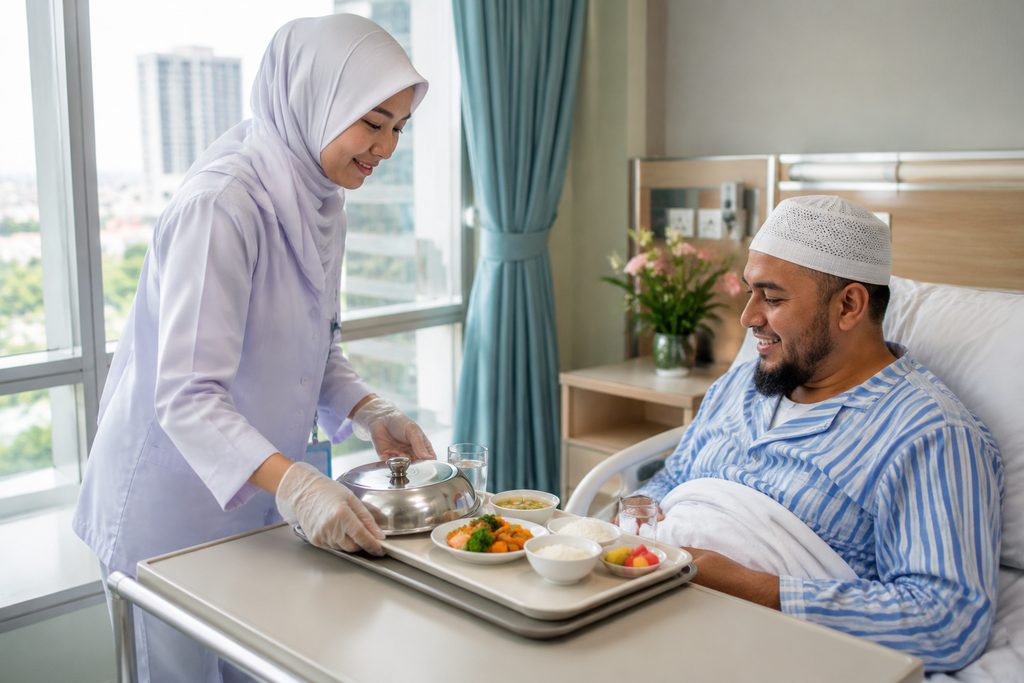
You’ve probably heard that arranging halal meals in a foreign hospital means endless phone calls, vague promises, and cold rice at 6 a.m. The reality in China’s top-tier medical centers is more nuanced — and in several cities, considerably better than that. Some hospitals run dedicated halal kitchens. Others partner with certified local suppliers. A few still expect patients to arrange meals independently. The gap between what’s advertised and what actually arrives on the tray is where our team spends a lot of time clarifying things for patients from the Gulf states, Southeast Asia, and Europe.
This guide covers which Chinese hospitals offer halal meal service, how the logistics actually work, what to verify before you travel, and where the system still falls short. We coordinate medical care for international patients across 340+ top-ranked hospitals in 37 cities, and dietary requirements are one of the most common concerns families raise before booking a consultation.
How This Actually Works, Step by Step
You don’t simply show up and request halal meals at the ward desk. The process starts weeks before you land in China. Here’s the sequence we walk patients through.
First, you identify the hospital and department you need. This matters because halal meal availability is not uniform across an entire hospital system. A hospital’s international ward may offer halal catering while its standard inpatient floors do not. So the first step is confirming which specific ward or building your treatment will take place in.
Second, you submit a dietary requirement notice. This goes to the hospital’s international patient office or the nursing coordinator for your ward. The notice should state “halal” explicitly, note any additional restrictions (no alcohol in sauces, no pork-derived gelatin, etc.), and specify whether family members staying in the room also require halal meals.
Third, the hospital confirms capacity. Some facilities can accommodate halal requests with 48 hours’ notice. Others need a week because they order from an external certified halal caterer. A small number will tell you honestly that they cannot guarantee halal food and suggest bringing meals from outside or using a nearby halal restaurant with delivery.
Fourth, meals begin on your admission day. In hospitals with dedicated halal kitchens — more on those below — meals are prepared separately, labeled, and delivered on designated trays. In hospitals using external suppliers, meals arrive in sealed containers with certification labels.
Fifth, you verify on arrival. Ask to see the halal certification for the kitchen or supplier. Reputable hospitals keep this documentation on file. If a hospital hesitates to show it, that’s a signal worth taking seriously.
And here’s the part that surprises most patients: the halal meal service itself is usually inexpensive, sometimes included in the room rate at international wards. The real cost is coordination — making sure the request reaches the right person before you’re admitted, not after.
Which Chinese Hospitals Offer Halal Meals: The City-by-City Reality
No national regulation requires Chinese hospitals to provide halal food. What exists instead is a patchwork of hospital-level policies, city-level demand, and private-sector catering partnerships. That means the answer to “which Chinese hospitals offer halal meals” depends heavily on where you’re going.
Shanghai has the most developed infrastructure. Several major teaching hospitals in the city maintain dedicated halal kitchens or long-standing contracts with halal-certified catering companies. The demand comes from both international patients and China’s domestic Muslim population, particularly from the Ningxia and Xinjiang regions. A hospital with halal kitchen Shanghai arrangements typically prepares meals in a separate area with dedicated cookware, and these meals are often available to both inpatients and family members staying in adjacent rooms.
Beijing follows closely. The capital’s top-tier hospitals serve a steady stream of patients from the Middle East, Central Asia, and Southeast Asia. Some hospitals in the Haidian and Chaoyang districts work with certified halal caterers. Others direct patients to the numerous halal restaurants surrounding major medical campuses. The distinction matters: a hospital that “permits outside halal food” is not the same as a hospital that “provides halal meal service for patients.”
Guangzhou and Shenzhen have growing capacity, driven by trade links with Southeast Asia and the Middle East. Several private international hospitals in these cities offer halal options as a standard menu item, not a special request. Public hospitals are more variable.
In cities like Chengdu, Hangzhou, and Nanjing, halal meal service exists but requires more lead time and clearer documentation. Our team typically contacts the hospital’s international department two to three weeks before admission to lock in dietary arrangements.
What about the rest of the country? In smaller cities, the honest answer is that halal food options for medical tourism in China are limited. Patients traveling to a second-tier city for a specific specialist should plan to arrange meals independently, often through a local halal restaurant with delivery to the hospital.
A Realistic Timeline
Here’s what the coordination process looks like from first inquiry to first meal on the ward. Ranges reflect our experience across different hospitals and cities.
| Stage | What Happens | Typical Duration |
|---|---|---|
| Day 1–3 | Initial inquiry: you contact us or the hospital directly with your medical records and dietary requirements | 1–3 days for response |
| Week 1–2 | Hospital review: the international patient office confirms your case, the ward, and whether halal catering is available for that specific floor | 5–10 working days |
| Week 2–4 | Dietary confirmation: hospital provides written confirmation of halal meal service or refers you to an approved external caterer | 3–7 days after case review |
| Week 3–6 | Visa processing: you apply for an S2 visa with the hospital’s invitation letter and medical documentation | 2–4 weeks depending on your home country |
| Week 4–8 | Travel and admission: you arrive, check in, and meals begin according to the confirmed arrangement | Meals start on admission day if pre-arranged |
People forget the documentation step. Your medical records need translation, your dietary requirements need to reach the right department, and the hospital needs time to coordinate with its kitchen or caterer. Showing up without prior notice usually means starting with standard meals and sorting out halal options over the following days — a stressful way to begin treatment.
What Can Go Wrong — and What Happens Then
We’ve seen the failure modes. Here they are, without sugarcoating.
The most common problem is a breakdown between the international patient office and the ward kitchen. The international office confirms halal meals. The ward kitchen never receives the request. You arrive and get standard meals. This happens more often in large public hospitals where the international department and the inpatient floors operate in separate administrative silos. The fix is a bilingual coordinator who verifies the request with the ward directly, not just the central office.
Another issue: cross-contamination. A hospital may offer “halal-style” meals — no pork, no obvious alcohol — but prepare them in the same kitchen as standard meals using shared cookware. For patients who follow strict halal dietary law, this is not acceptable. The remedy is asking for the halal certification and, where available, requesting meals from the hospital’s dedicated halal kitchen or an external certified caterer.
Language barriers compound everything. A dietary restriction communicated in English to a nurse who speaks limited English and passed to a kitchen staff member who speaks none is a recipe for mistakes. Bilingual coordination isn’t a luxury in this context; it’s the difference between eating confidently and inspecting every tray.
And sometimes the hospital simply cannot accommodate. In that case, you need a backup plan: a nearby halal restaurant that delivers, a family member who can bring meals, or a serviced apartment with a kitchen where you can prepare food during outpatient treatment. We always ask hospitals for their honest capacity, and some are more forthcoming than others.
Muslim Friendly Hospital China: What to Look For Beyond the Menu
Halal food is one piece of a larger question: is this hospital genuinely set up to serve Muslim patients? A Muslim friendly hospital in China typically offers several things beyond dietary accommodation.
Prayer space is the second most common request. Some international hospital wards include a quiet room that can be used for prayer. Others do not, and patients pray in their rooms. A few hospitals near large mosques — in cities like Xi’an, Guangzhou, and Beijing — make it logistically easy for family members to attend Friday prayers.
Gender-sensitive care matters too. Female patients often ask whether they can request female medical staff for examinations and procedures. Chinese hospitals vary in their flexibility here. Private international hospitals are generally more accommodating. Public hospitals will try to honor the request but may not always be able to staff accordingly, especially in surgical departments.
Family accommodation is another factor. Muslim patients frequently travel with multiple family members. Hospitals with family-friendly inpatient rooms or nearby serviced apartments make a significant difference to the overall experience.
And then there’s the question of halal food options for medical tourism in China beyond the hospital walls. Cities with large Muslim populations — Xi’an, Lanzhou, Kunming, Guangzhou — have extensive halal restaurant scenes. Shanghai and Beijing have hundreds of certified halal restaurants, many of which deliver. A patient in Shanghai can eat well outside the hospital even if the hospital’s own halal service is limited.
So when you evaluate a hospital, look at the full picture: meals, prayer space, staff flexibility, family accommodation, and the surrounding neighborhood. A hospital that scores well on all five is genuinely Muslim-friendly, not just halal-aware.
Practical Considerations: Records, Visa, Payment, and Follow-Up
Dietary requirements are one thread in a larger coordination effort. Here’s what else you need to have in order.
Medical records. Hospitals need your complete history: imaging, lab results, pathology reports, current medications. Translation into Chinese is required at most public hospitals. Our team handles this as part of case preparation.
Visa. Medical treatment in China uses the S2 visa, which covers short stays for private affairs including medical care. Family members accompanying you also apply for S2 visas. The hospital provides an invitation letter and supporting documents. Processing times vary by country, so start this early.
Payment. Public hospitals in China generally require prepayment for inpatient care. International wards accept foreign credit cards and bank transfers. Private international hospitals often bill insurance directly. Confirm payment methods before you travel, and carry a backup payment option.
Language. Even in international wards, not every staff member speaks fluent English. A bilingual medical companion — someone who handles registration, queueing, payment, and translation — removes a significant layer of stress. This is especially relevant when you’re trying to communicate dietary restrictions accurately.
Follow-up at home. Before you leave China, get written discharge instructions, medication lists with generic drug names, and contact information for the treating department. If you need ongoing halal meal guidance during recovery at home, that’s a separate conversation with your local providers.
Frequently Asked Questions
Some do, particularly in Shanghai, Beijing, Guangzhou, and Xi’an. But availability varies by ward, not just by hospital. The international ward may offer halal catering while the standard inpatient floors do not. Always confirm the specific ward before admission.
Submit a written dietary requirement notice through the hospital’s international patient office or your coordination service. Include the word “halal” explicitly, note any additional restrictions, and specify whether family members also require halal meals. Submit this at least two to three weeks before admission.
When meals come from a dedicated halal kitchen or certified external caterer, yes — the certification should be available for inspection. If a hospital offers “halal-style” meals without certification and without separate preparation, that’s a different standard. Ask to see documentation.
You have options: arrange delivery from a nearby certified halal restaurant, have family members bring meals, or book accommodation with a kitchen for outpatient treatment. In cities with large Muslim populations, halal restaurants are plentiful and many deliver to hospitals.
Often, yes. Private hospitals like those run by Parkway, Raffles, and United Family are more accustomed to international patient needs and more likely to offer halal options as a standard menu item rather than a special request. But they’re also more expensive. The right choice depends on your medical needs and budget.
Finding halal food hospital China options takes research, clear communication, and lead time. The hospitals exist. The infrastructure exists in major cities. What’s often missing is a reliable channel to confirm arrangements before you travel. That’s the gap we fill — and it’s a bigger part of a smooth medical trip than most patients expect.
Your Next Step
If you’re planning treatment in China and halal meals are a requirement, start the conversation early. Our team at China Medical Services coordinates dietary arrangements, hospital selection, visa documentation, and on-the-ground bilingual support for patients across 37 Chinese cities. We don’t provide medical advice or guarantee clinical outcomes — we handle the logistics so you can focus on treatment. Tell us your requirements and we’ll confirm which hospitals can actually meet them before you commit to anything.
For more medical information and treatment options in China, visit chinamedservices.com (China Medical Services).
