Health Checkup: Dental Screening Add-On Costs in China
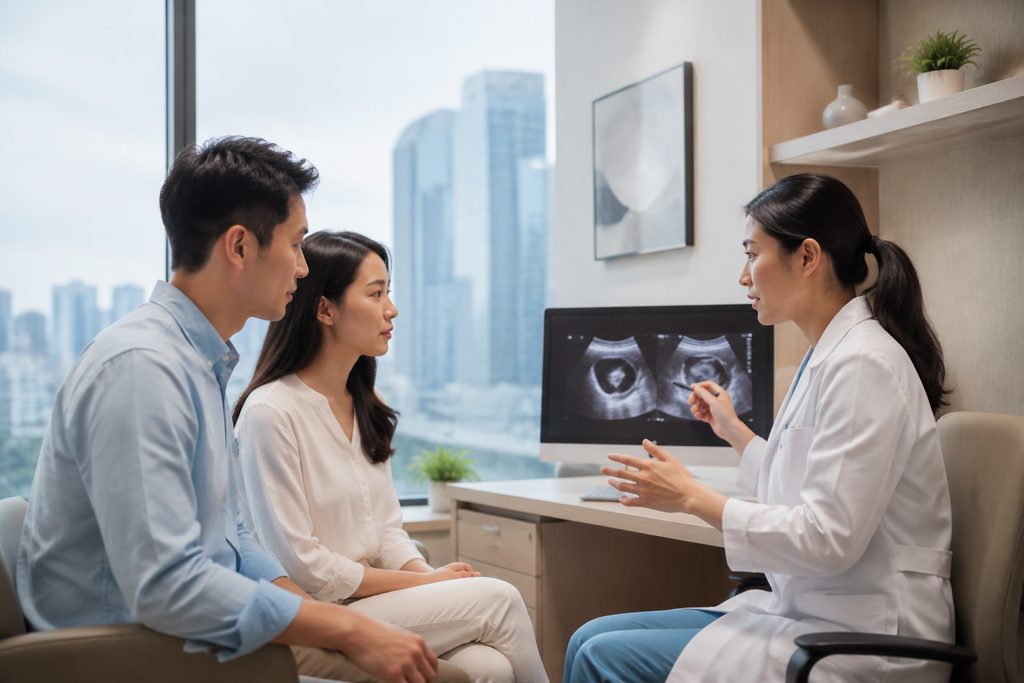
When 34-year-old Daniel from Manchester started planning a two-week business trip to Shanghai, his wife asked one question: “Why not get your teeth checked while you’re there?” He’d been putting off a dental visit for nearly two years. A quick search left him confused — some sites quoted $15 for a cleaning, others $400 for a “comprehensive oral evaluation.” The gap made no sense. What he actually needed was a clear breakdown of dental checkup cost China, especially as an add-on to a broader health screening.
The short version: a standalone dental screening in China typically runs $20 to $80 at a public hospital, while a private international clinic charges $80 to $250. Adding dental screening to a full health checkup package usually costs an extra $30 to $120. But the real answer depends on what “dental screening” means at each facility — and that’s where most price quotes fall apart.
Dental Checkup Cost China: The Short Answer
A basic dental checkup cost China ranges from roughly $15 to $250 depending on where you go. Public hospital stomatology departments sit at the low end. International private clinics sit at the high end. A full health checkup with dental add-on — the kind many foreigners book — typically lands between $150 and $600 total, with the dental portion representing $30 to $120 of that.
But here’s the catch. “Dental screening” is not a standardized term in China. At one hospital it means a 10-minute visual exam by a general dentist. At another, it includes full-mouth X-rays, periodontal probing, and a written report in English. The price difference reflects the scope, not just the location. Knowing what’s included matters more than the headline number.
And one more thing. Dental screening is not dental treatment. If the exam finds a cavity, a root canal, or gum disease, those procedures are billed separately. Many travelers misunderstand this and assume the screening fee covers everything.
Who This Is Right For — and Who It Isn’t
Adding a dental screening to a health checkup makes sense for a specific type of traveler. You’re already in China for business or leisure. You’ve been meaning to get a dental exam but keep postponing it at home. You want baseline data before committing to expensive treatment. Or you’re comparing costs between countries and want to see a Chinese dentist’s assessment before deciding where to get work done.
Good candidates typically include:
- Travelers staying in China for at least 3–5 days, since results and any follow-up discussion take time
- People with existing dental concerns who want a second opinion on a treatment plan
- Expats living in China who haven’t yet established a regular dentist
- Medical tourists already booking a full health checkup who want oral health included
Who should skip it? If you have an active dental emergency — severe pain, swelling, trauma — a screening is the wrong tool. You need urgent treatment, not a checkup. Also, if you’re only in China for 48 hours, squeezing in a dental exam alongside a full health checkup creates unnecessary stress. And if you have a complex dental history with ongoing treatment at home, a one-off screening in China may not give your home dentist the continuity they need.
Pregnant travelers should also think carefully. Routine dental exams are generally safe during pregnancy, but X-rays are typically avoided. If you’re pregnant, request a screening without radiographs or postpone the visit.
The Options, Compared
Not all dental screenings in China are created equal. The table below compares the three main pathways available to foreign patients.
| Option | Typical Cost | What’s Included | English Support | Wait Time |
|---|---|---|---|---|
| Public Hospital Stomatology Dept | $15–$80 | Visual exam, basic probing, sometimes bitewing X-rays | Limited; bring a translator | Same-day queue, 1–3 hours |
| Private International Clinic | $80–$250 | Exam, full-mouth X-rays, periodontal charting, written report | Full English service | Booked appointment, minimal wait |
| Health Checkup Package Add-On | $30–$120 (dental portion) | Varies: basic exam to panoramic X-ray + report | Varies by center | Integrated into checkup flow |
Which one suits you? If you’re on a tight budget and have time to navigate a Chinese-language environment, the public hospital route works. If you want a smooth, English-speaking experience with a written report you can take home, a private international clinic is worth the premium. And if you’re already booking a full health checkup, the add-on is the most convenient option — you’re already at the facility, already in the system.
But convenience isn’t the same as comprehensiveness. Some health checkup add-ons are surprisingly thorough. Others are little more than a dentist glancing at your teeth for two minutes. Always ask what the dental portion includes before paying.
What a Dental Screening Add-On Actually Covers
This is the section most articles skip. When you add dental screening to a health checkup package in China, the scope can vary wildly between hospitals. Here’s what you might encounter.
At the basic end, a screening includes a visual examination of teeth and gums, a check for obvious cavities, and maybe a basic periodontal probe. The dentist looks for visible problems. That’s it. Cost: $30 to $50. Time: 10 to 15 minutes.
At the comprehensive end, the add-on includes a panoramic X-ray (orthopantomogram), full periodontal charting with pocket depth measurements, an oral cancer screening, a TMJ assessment, and a written report — sometimes in English, sometimes requiring translation. Cost: $80 to $120. Time: 30 to 45 minutes.
Some centers offer a middle tier. Visual exam, bitewing X-rays, and a verbal summary. Cost: $50 to $80. Time: 20 minutes.
The problem? Many health checkup packages simply list “dental screening” without specifying which tier you’re getting. That’s why the price range for the add-on is so broad. Before booking, ask three questions: Does the dental screening include X-rays? Will I receive a written report in English? How long does the dental portion take? The answers tell you whether you’re paying for a real evaluation or a box-ticking exercise.
Practical tip: If you’re booking a health checkup package through a coordinator, request the dental add-on description in writing before paying. A vague “oral examination” line item is a red flag. A detailed list — “panoramic X-ray, periodontal probing, oral cancer screening” — tells you exactly what you’re buying.
Dental Screening Price Shanghai: A Closer Look
Shanghai deserves its own section because it’s where most international travelers land. Dental screening price Shanghai varies more than almost any other Chinese city, simply because the market includes everything from public hospital stomatology departments to high-end private clinics catering to expats.
At a public hospital like Shanghai Ninth People’s Hospital — one of the country’s top stomatology centers — a basic dental exam costs roughly $10 to $30, with panoramic X-rays adding another $20 to $40. But the registration process can be confusing for foreigners. You’ll need a hospital card, you’ll queue with hundreds of local patients, and most staff won’t speak English. A bilingual companion changes that experience entirely.
At private clinics like Jiahui, Parkway, or United Family, dental screening price Shanghai runs $100 to $250. You get English-speaking dentists, appointment-based scheduling, modern equipment, and a written report. Many of these clinics also offer direct insurance billing, which matters if you have international health insurance.
So why does the same city produce a 10x price difference for essentially the same service? Because you’re paying for access, language, and convenience — not just clinical time. The clinical quality at top public hospitals is excellent. The experience is not designed for non-Chinese speakers. Private clinics solve that problem, and they charge accordingly.
How Much Is a Full Health Checkup With Dental in China?
If you’re asking how much is a full health checkup with dental in China, the honest answer is: it depends on the base package. A standard executive health checkup at a public hospital international department runs $200 to $500. A premium package with cardiac imaging, cancer markers, and endoscopy can reach $800 to $1,500. The dental add-on sits on top of that, usually $30 to $120.
So a realistic total for a full health checkup with dental screening is $230 to $620 at the budget-conscious end, and $830 to $1,620 at the premium end. Compare that to a comprehensive health screening in the US, which often runs $2,000 to $5,000 without dental. The savings are real, even before you factor in the cost of dental care itself.
But here’s what many people don’t realize. Some health checkup packages in China already include a basic dental exam. It’s listed as “oral examination” or “stomatology consultation” in the package details. If you’re paying extra for a dental add-on, make sure you’re not double-paying for something already included.
Also, the dental screening add-on is not a substitute for a full dental workup. If the screening finds issues — and it often does, especially if you haven’t seen a dentist in a while — you’ll need separate appointments for fillings, root canals, or extractions. Those procedures have their own pricing, and they’re generally not discounted because you did a screening first.
Is Dental Care in China Safe for Tourists?
This is the question that keeps many travelers from booking. Is dental care in China safe for tourists? The short answer: yes, at accredited hospitals and reputable private clinics. The longer answer requires some nuance.
China’s top stomatology departments — places like Peking University School of Stomatology, West China School of Stomatology in Chengdu, and Shanghai Ninth People’s Hospital — train dentists to international standards. Many of their specialists have studied abroad. Infection control protocols at these institutions are rigorous. Single-use instruments, autoclaved tools, and barrier protection are standard practice.
Private international clinics follow the same protocols, often with JCI accreditation. JCI is the same accreditation body used by hospitals in the US, Europe, and the Middle East. A JCI-accredited clinic in Shanghai or Beijing follows the same safety standards as a JCI-accredited hospital in London or Dubai.
The risk isn’t clinical quality. It’s communication. A tourist who speaks no Chinese and visits a mid-tier local clinic may struggle to understand the dentist’s findings, the proposed treatment, or the aftercare instructions. That communication gap can lead to poor decisions. It’s not that the care is unsafe. It’s that you can’t evaluate what you don’t understand.
And one more honest point. Not every dental clinic in China meets the standards described above. Small, unaccredited clinics exist in every city in the world, and China is no exception. Stick to university-affiliated stomatology departments, large public hospitals, or internationally accredited private clinics. If a clinic’s price seems too good to be true, it probably is.
Medical Tourism Dental Package China: What’s Typically Offered
The phrase medical tourism dental package China gets searched a lot, but the reality is less packaged than the term suggests. Most Chinese hospitals don’t sell pre-bundled “dental tourism” products the way some Thai or Hungarian clinics do. What you’ll find instead is a mix of health checkup packages that include dental screening, and standalone dental services at private clinics.
Some private clinics in Shanghai and Beijing do market to international patients. They offer English-language websites, appointment booking, and sometimes package deals that bundle a cleaning, exam, and X-rays. Prices for these bundles typically run $150 to $400. That’s not a “medical tourism package” in the formal sense — it’s just a clinic offering a fixed-price bundle.
What you won’t find is a hospital offering “dental implants + hotel + airport transfer” as a single product. China’s medical tourism infrastructure is less developed than Thailand’s or South Korea’s. The hospitals are excellent. The tourism packaging is not. If you want a seamless experience, you’ll need a coordinator to assemble the pieces — hospital booking, translation, accommodation advice, and follow-up.
That’s actually an advantage. It means you’re not locked into a rigid package. You choose the hospital, the scope of the screening, and the level of support you need. The downside? You have to do more legwork — or pay someone to do it for you.
Book Dental Screening China Health Checkup: The Practical Path
If you want to book dental screening China health checkup, the process is straightforward but requires planning. You can’t just walk into a top hospital’s international department and expect same-day service. Here’s what the path looks like.
First, decide on the facility. Public hospital international department, or private clinic? This choice determines everything else — price, language support, wait time, and how you’ll receive results. If you’re unsure which hospitals in your destination city have strong stomatology departments, start with a hospital database that ranks institutions by specialty. The specialty rankings for stomatology and oral medicine show which hospitals consistently perform well.
Second, prepare your documents. You’ll need your passport for registration. If you have recent dental X-rays or records from home, bring them — they provide a baseline and may reduce the need for repeat imaging. If you have specific concerns — a sensitive tooth, bleeding gums, a clicking jaw — write them down in advance so nothing gets lost in translation.
Third, arrange the booking. Public hospital international departments often accept bookings through coordinators or by phone. Private clinics usually have online booking. If you’re already booking a health checkup, ask whether the dental add-on can be scheduled for the same day. Most centers can accommodate this, but it’s worth confirming.
Fourth, plan for payment. Public hospitals in China require upfront payment — cash, Chinese debit cards, or sometimes international credit cards. Private clinics are more flexible and often accept international credit cards or direct insurance billing. If you have international health insurance, check whether dental screening is covered before you book.
And the visa question. If you’re traveling to China specifically for medical treatment — including a health checkup with dental screening — the applicable visa category is S2, which covers short-term private affairs including medical treatment. The M visa is for commercial and trade activities, not medical care. Applying for the wrong visa category can cause delays or denial. Always confirm the latest requirements with the Chinese embassy or consulate in your country before applying.
Important: Never assume your visa will be approved. Chinese consulates assess each application individually. A confirmed hospital booking helps your case, but it does not guarantee approval. Apply early and provide complete documentation.
What Happens After the Screening
You’ve done the screening. The dentist found two cavities and early-stage gum disease. Now what?
This is where many travelers get stuck. The screening identified problems, but treatment requires additional appointments. If you’re leaving China in three days, you can’t get fillings and a deep cleaning done before you fly. You have two options: return to China for treatment, or take the written report home and see a local dentist.
The written report matters enormously here. If it’s in Chinese, you’ll need it translated — preferably by a medical translator who understands dental terminology. A bilingual companion can help with this at the hospital, but if you’ve already left, you’ll need to arrange translation remotely. Some hospitals provide English reports for international patients, especially at private clinics and international departments. Ask about this before the exam, not after.
If the screening finds something serious — oral cancer, a deep infection, a cyst — the dentist will recommend immediate follow-up. Don’t ignore that recommendation. Some conditions worsen quickly, and delaying treatment by months can turn a minor procedure into a major one. If you need treatment in China, your coordinator can help arrange it. If you prefer to return home, get the report translated and see a specialist within weeks, not months.
And keep the X-rays. Digital copies are usually available on request. Your home dentist will want to see them, and having them saves you from paying for repeat imaging.
Frequently Asked Questions
No. A screening is an examination — the dentist looks at your teeth, gums, and oral tissues to identify problems. A cleaning (prophylaxis or scaling) is a treatment that removes plaque and tartar. In China, these are billed separately. A screening typically costs $15 to $120 depending on the facility. A cleaning adds $30 to $100 on top. If you want both, ask for “examination plus scaling” when booking.
Will my international health insurance cover a dental screening in China?
It depends entirely on your policy. Some international health insurance plans cover dental exams as part of preventive
For more medical information and treatment options in China, visit chinamedservices.com (China Medical Services).
