Health Checkup: Results You Can Trust in China’s Top Hospitals
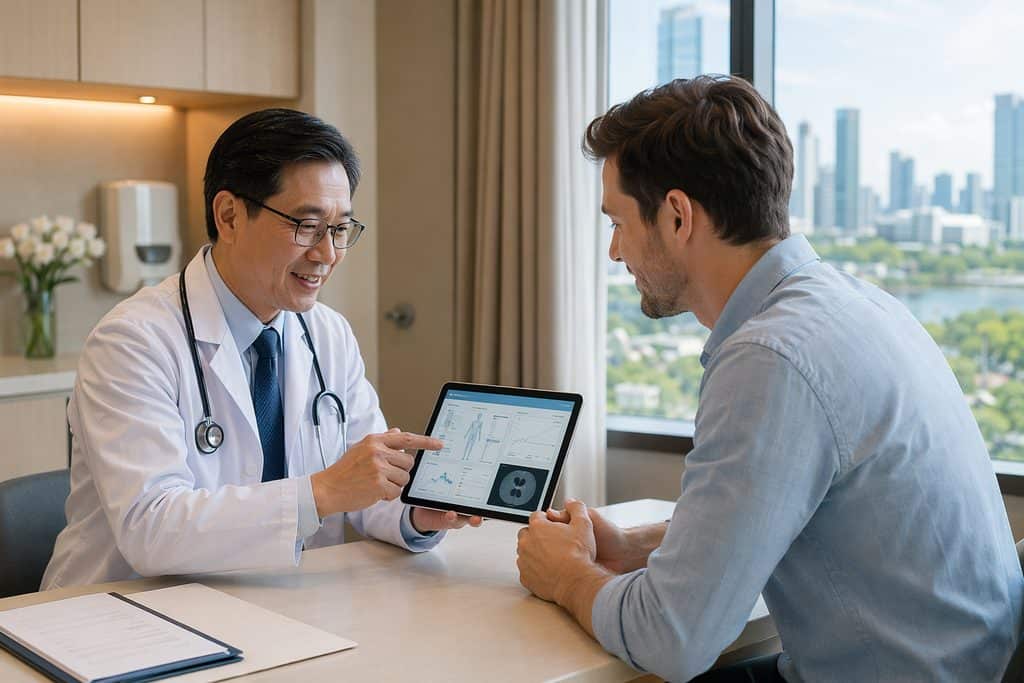
While a comprehensive executive physical at a major U.S. academic center can run anywhere from $4,000 to $10,000 and often requires booking months out, the same tier of full-body screening at a Fudan-ranked Chinese hospital typically costs between $400 and $1,200 — with results delivered in 24 to 72 hours. That’s not a typo. The gap is real, and it’s driven by volume, infrastructure, and a fundamentally different approach to preventive imaging. But a cheap scan means nothing if you can’t trust the read. So the real question isn’t just what a full body checkup cost China is. It’s whether the images, labs, and interpretations meet the standard you’d expect at home.
Full Body Checkup Cost China: The Short Answer
A comprehensive full body checkup cost China ranges from $300 for a solid basic package at a public tertiary hospital to $1,500–$2,000 for an executive-tier screening at a top-ranked hospital’s international medical center or a JCI-accredited private facility. That price typically covers a full day of tests: blood panels, abdominal and thyroid ultrasound, chest CT or X-ray, ECG, and often a head MRI or whole-body MRI depending on the package. The variance comes down to which hospital tier you choose, which imaging modalities are included, and whether you go through the standard outpatient route or the international/VIP channel with English coordination.
But here’s the caveat that matters. The scan itself is only half the product. The interpretation, the radiologist’s experience, and the follow-up pathway are what separate a trustworthy result from a stack of images you can’t act on. That’s where hospital selection matters more than the price tag.
Who This Is Right For — and Who It Isn’t
A structured health screening in China makes sense for a specific profile of traveler. You’re not sick — or at least you don’t have an acute problem that needs immediate treatment. You’re looking for baseline data, early detection, or peace of mind before a major life decision. Maybe you’re an expat already living in the region. Maybe you’re a medical tourist combining a checkup with a trip. Maybe your home system has made elective screening prohibitively expensive or slow.
Good candidates typically include:
- Adults 35–65 with no acute symptoms who want a comprehensive baseline, including cardiac and cancer screening markers
- People with a family history of cancer, heart disease, or metabolic conditions who want earlier or more frequent imaging than their home system covers
- Expats and frequent travelers to Asia who prefer to do annual physicals where the infrastructure is fast and the out-of-pocket cost is predictable
- Patients who already have imaging from home and want a high-volume reading center to provide a second interpretation
Who should not pursue this:
- Anyone with active symptoms — chest pain, unexplained weight loss, neurological changes, persistent pain. A screening package is not a diagnostic pathway. You need a targeted clinical workup, not a menu of tests.
- People who cannot tolerate a CT scan’s radiation exposure or who have contraindications to contrast agents
- Patients with complex, unstable chronic conditions that require ongoing management from their existing care team
- Anyone expecting the checkup to include treatment. It won’t. If a scan finds something, treatment is a separate pathway, often requiring additional consultation and hospital admission under Chinese rules.
Being honest about who shouldn’t come is part of the trust equation. A screening package is a snapshot, not a diagnosis.
The Options, Compared
Not all checkup packages are created equal. The table below compares the three genuine tiers available to international patients in China, based on the hospital database we maintain at China Medical Services.
| Factor | Public Tertiary Hospital (Standard Route) | Public Hospital International Medical Center | Private International Hospital (JCI-Accredited) |
|---|---|---|---|
| Typical cost (full body package) | $300–$800 | $800–$1,500 | $1,000–$2,000+ |
| English-speaking staff | Rare — bring a companion | Yes, standard | Yes, standard |
| Result turnaround | 3–7 days | 24–72 hours | 24–48 hours |
| Insurance direct billing | No — pay upfront, claim later | Sometimes | Usually yes |
| Imaging equipment | Modern, high-volume | Modern, often newer | Modern, lower patient volume |
| Radiologist experience | Extremely high volume, but reporting may be terse | High volume, more detailed reports | Western-style reporting, more narrative |
| Who it suits | Cost-sensitive patients comfortable with a bilingual companion | Most international patients — best balance of cost, quality, language support | Patients who want Western-style service and direct insurance billing |
The public hospital international medical center is the sweet spot for most foreign patients. You get the same imaging equipment and the same high-volume radiologists as the standard route, but with English coordination, faster reporting, and a more navigable process. The private international hospitals are excellent, but you’re paying a premium for service style more than diagnostic superiority. If your priority is the most experienced eyes on your images, the top public hospitals — the ones on the Fudan Top 100 list — are where the volume lives. A radiologist at a major Shanghai or Beijing center may read more chest CTs in a month than a Western radiologist reads in a year.
How Accurate Are Health Checkups in China? What the Data Shows
The question of accuracy is the one that keeps people up at night. And it deserves a straight answer.
China’s top-tier hospitals run on scale that’s hard to comprehend from the outside. A single major hospital can process over 10,000 outpatient visits per day. That means the radiology department at a hospital like Zhongshan Hospital in Shanghai or Peking Union Medical College Hospital in Beijing reads tens of thousands of studies every month. Volume builds pattern recognition. A radiologist who has seen 50,000 chest CTs catches the subtle nodule that a lower-volume reader might miss.
But accuracy isn’t just about the radiologist. It’s about the protocol. The best screening programs in China follow standardized imaging protocols, use modern equipment — often newer than what many Western hospitals run, because China’s hospital building boom of the last 15 years means the machines are recent — and apply double-reading for high-stakes findings. For cancer screening specifically, low-dose CT for lung cancer and ultrasound for thyroid and breast are the workhorses, and the sensitivity data in Chinese populations is comparable to Western benchmarks.
The honest caveat: accuracy varies by tier. A $300 package at a mid-tier city hospital will get you real imaging, but the report may be brief, and the radiologist’s specialization may be broader. A $1,500 package at a Fudan-ranked hospital’s international center gets you a more detailed read, often with a summary consultation. You’re not paying for magic. You’re paying for experience and attention.
Is a Full Body Scan Safe in Beijing? Radiation and Overdiagnosis
If you’re asking whether a full body scan is safe in Beijing, the answer is yes — with the same caveats that apply anywhere in the world. The machines are modern, the protocols are standardized, and the radiation doses for low-dose CT are comparable to what you’d get in the U.S. or Europe. A low-dose chest CT delivers roughly 1.5 mSv, about the same as six months of background radiation. A head MRI delivers zero ionizing radiation.
The real risk isn’t the machine. It’s overdiagnosis. A full-body scan will find things. Thyroid nodules. Small lung nodules. Liver cysts. Most are benign. But once found, they generate follow-up imaging, sometimes biopsy, always anxiety. That’s not a China-specific problem — it’s a screening problem, and it’s why responsible programs include a physician consultation to interpret findings in context, not just a report that says “nodule seen, follow up recommended.”
What China does well is speed. If a scan finds something that needs a closer look, you can usually get the follow-up MRI or contrast CT within days, not months. That compression of the diagnostic timeline is genuinely valuable. But it also means you need to be psychologically prepared for the possibility that your “clean” checkup turns into a workup. That’s the deal with screening, anywhere in the world.
Best Hospitals in Shanghai for Health Screening: Where the Volume Lives
Shanghai is the most common entry point for international patients seeking medical care in China, and for good reason. The city has 18 hospitals on the Fudan Top 100 list, second only to Beijing’s 21. For health screening specifically, three names come up repeatedly.
Zhongshan Hospital, affiliated with Fudan University, runs one of the highest-volume imaging departments in the country. Its health management center handles a massive throughput of executive physicals, and its cardiac imaging is particularly strong — relevant if your screening includes a coronary calcium score or cardiac CT. Huashan Hospital, also Fudan-affiliated, has a strong reputation in neurology and neurosurgical imaging, which matters if your package includes a head MRI. And Ruijin Hospital, affiliated with Shanghai Jiao Tong University, is a powerhouse in endocrinology and metabolic screening — the place to go if your primary concern is diabetes, thyroid function, or metabolic syndrome.
For a full breakdown of ranked hospitals by specialty, the department-level rankings are more useful than the general hospital list. A hospital can be top-ranked overall but mediocre in one specific area. The Fudan specialty reputation rankings — 45 specialties, each with a top 10 — are the tool to use when matching a screening package to your specific risk profile.
What a Full Body Checkup Cost China Includes — and What It Doesn’t
The price of a full body checkup cost China package is usually all-inclusive for the tests listed, but there are predictable extras. Here’s the breakdown.
Typically included in a $600–$1,200 executive package:
- Complete blood count, comprehensive metabolic panel, lipid profile, HbA1c
- Tumor markers (CEA, AFP, CA19-9, CA125, PSA depending on sex and age)
- Abdominal ultrasound (liver, gallbladder, pancreas, spleen, kidneys)
- Thyroid ultrasound
- Chest low-dose CT or X-ray
- ECG
- Basic physical examination and physician summary
Usually extra or optional:
- Head MRI (+$200–$400)
- Coronary calcium score or cardiac CT (+$150–$300)
- Gastroscopy or colonoscopy under sedation (+$300–$800, requires separate scheduling)
- Whole-body MRI or PET-CT (rarely recommended for asymptomatic screening; +$800–$1,500)
- Specialist follow-up consultation if a finding requires it
The single biggest cost driver is whether you go through the international medical center. That channel adds roughly 50–100% to the base price, but it buys English-speaking coordination, faster reporting, and a less chaotic experience. If you’re fluent in Mandarin and know how to navigate a Chinese hospital, you can save real money. If you’re not, the international channel is worth every dollar.
Book Executive Health Checkup Package China: The Process, Step by Step
Booking an executive health checkup package in China is not like booking a hotel room. You can’t just show up at the hospital’s main outpatient hall and expect to be seen the same day — not for a comprehensive package. The process has a few fixed steps.
First, you choose your hospital and package. This is where most international patients get stuck, because the hospital websites are in Chinese and the package menus are not standardized. That’s the gap a service like ours exists to fill: we maintain current package offerings and pricing across the hospitals in our database and can match you to a facility based on your age, risk factors, and budget.
Second, you schedule. For the international medical centers, you can typically book 1–2 weeks out. For standard outpatient packages, you may need to register in person on the day, which means arriving early and navigating a crowded hall — another reason the international channel is worth the premium.
Third, you complete the screening. Most full-body packages take 4–8 hours, including fasting blood draws in the morning, imaging throughout the day, and a summary consultation at the end or the following day. Some hospitals structure the package across two mornings.
Fourth, you receive results. In the international centers, expect a written report within 24–72 hours, often with an English summary. The standard route may take 3–7 days and may be in Chinese only.
The visa piece is straightforward but often misunderstood. Medical screening in China falls under the S2 visa category — the short-stay visa for private affairs, including medical treatment. It is not the M visa, which is for commercial and trade activities. You’ll need an invitation letter or supporting documentation from the hospital to strengthen your application. We provide guidance on exactly what documents to request and how to present them, but we never guarantee approval — that’s the consulate’s call.
Medical Tourism Health Screening Abroad Price: How China Compares
When you compare medical tourism health screening abroad price across destinations, China’s position is unusual. It’s not the cheapest option in Asia — Thailand and Malaysia can undercut it at the budget end. But it’s the only destination that combines low cost with the diagnostic volume of a 1.4-billion-person healthcare system.
Here’s the comparison that matters. A comprehensive executive physical in the U.S. at a major academic center: $4,000–$10,000, with a 2–4 month wait. The same tier of screening in Singapore: $1,500–$3,000, with a 1–2 week wait. In China at a top-ranked hospital’s international center: $800–$1,500, with a 1–2 week wait. The difference isn’t quality — it’s labor costs and system efficiency.
What China can’t offer is the kind of leisurely, spa-like experience some Thai and Malaysian providers market. A Chinese public hospital, even the international wing, is a high-throughput environment. It’s efficient, not luxurious. If you want a wellness retreat with your screening, go to Thailand. If you want the most experienced radiologists reading your images at a fraction of Western prices, China is the rational choice.
Practical Considerations: Records, Payment, and Follow-Up
Before you book, there are a few logistics that trip people up.
Bring your prior imaging. If you’ve had a CT, MRI, or ultrasound in the past two years, bring the images and reports — ideally on a CD or USB, not just the written report. A good radiologist wants to compare, not just read in isolation. This is especially important for lung nodules and thyroid nodules, where stability over time is the key finding.
Payment is upfront. Chinese public hospitals, including their international centers, require prepayment. You pay for the package before the screening begins. If you have international insurance, you’ll typically pay out of pocket and submit for reimbursement. Some private international hospitals in China offer direct billing with major insurers — United Family, Jiahui, and Parkway are the usual names — but the public hospital international centers generally do not.
Language is the wildcard. Even at the international medical centers, not every technician speaks English. The front desk will, and the physicians usually will, but the person running your ultrasound may not. That’s why a bilingual medical companion — someone who handles registration, guides you between departments, and translates on the spot — is the single highest-value add for most foreign patients. It’s not about hand-holding. It’s about not missing a critical instruction because it was given in rapid Mandarin.
Follow-up after you return home is the part most people don’t plan for. If your screening finds something that needs monitoring — a 6mm lung nodule, say — you need a plan for who will do the follow-up scan and who will compare it. A Chinese hospital can do the repeat scan, but continuity matters. Get the full DICOM files, not just the report, so any radiologist anywhere can review them.
Frequently Asked Questions
How much does a full body checkup cost in China for a foreigner?
Expect $800–$1,500 for a comprehensive package at a top-ranked public hospital’s international medical center. The same package through the standard outpatient route, without English support, runs $300–$800. Private JCI-accredited hospitals charge $1,000–
For more medical information and treatment options in China, visit chinamedservices.com (China Medical Services).
