Ugandan Patient Medical Service China: Kampala Cross-Border Care Coordination
A cardiac bypass surgery at the Uganda Heart Institute can cost approximately $15,000 and require months of waiting. The same procedure at a top-ranked Chinese public hospital runs $12,000–$20,000 — with surgery often scheduled within two weeks of in-person evaluation. The price difference is not always dramatic. The speed and clinical volume are.
That gap — between need and access — is why a growing number of Ugandan patients look to China for complex medical care. But searching for the cheapest hospital in China for Ugandans is only the first question. The harder ones follow. How do you verify a hospital’s credentials from Kampala? What visa do you actually need? Who translates your medical records into Mandarin?
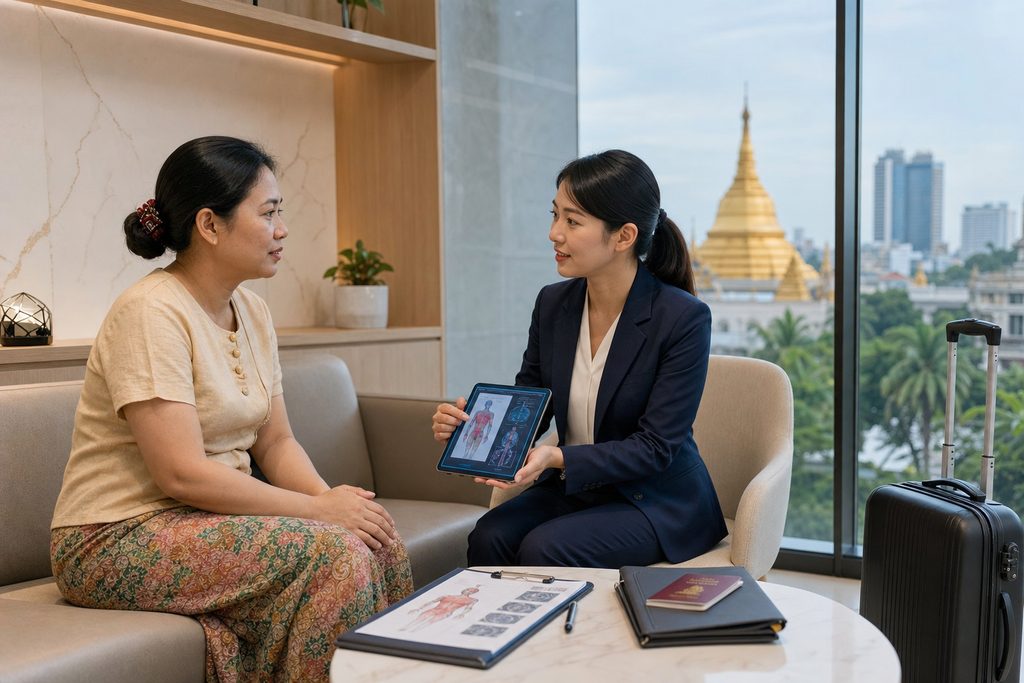
Our team handles those questions every day. We are not a hospital. We do not provide treatment or clinical diagnoses. We are the operational layer between you and China’s top-tier medical institutions — coordinating hospital matching, visa documentation, appointment scheduling, and bilingual accompaniment so you arrive prepared, not panicked.
Key Takeaways
- China’s top 5% of hospitals — ranked by the Fudan University hospital classification system — perform clinical volumes that routinely exceed Western benchmarks, particularly in cardiac surgery, oncology, and orthopedics.
- Realistic all-inclusive medical tourism packages in China start from approximately $8,000–$25,000 depending on procedure complexity, hospital tier, and length of stay — substantially less than comparable packages in India, Turkey, or South Korea when factoring in clinical volume and specialist seniority.
- Independent patients face three immediate barriers: the S2 medical visa application requires a hospital-issued invitation letter, Chinese public hospitals cannot pre-book surgeries without an in-person consultation, and payment systems like WeChat Pay and Alipay are nearly impossible for foreigners to set up before arrival.
- No legitimate service can guarantee a specific surgery date or promise a named surgeon before the hospital evaluates your case. Any claim otherwise is a red flag.
The Problem: When Kampala’s Options Run Out
Uganda has roughly one physician per 10,000 people. The country’s entire cardiac surgical capacity is concentrated in a single public institute. For complex oncology cases requiring targeted therapy or advanced radiotherapy, patients are routinely referred abroad — to India, Turkey, South Africa, or increasingly, China.
That referral comes with a price tag. A Ugandan family facing a stage III breast cancer diagnosis might be quoted $18,000–$25,000 for treatment in Nairobi or $30,000+ in India. Flights, accommodation, and months away from work add another $6,000–$10,000. The financial strain breaks families. Some patients simply wait. Waiting, with aggressive disease, is not a neutral decision.
What is changing is the availability of a third path. Chinese hospitals are not just cheaper on a line-item basis. They operate at a scale that produces clinical outcomes worth examining closely.
Who We Are
China Medical Services connects international patients with 340+ top-ranked hospitals across 37 cities in China. We translate medical records, coordinate with hospital international departments, arrange bilingual medical companions, and guide patients through the S2 visa process. We do not provide medical advice. We do not promise miracle cures. We build the logistical bridge so you can focus on treatment, not paperwork.
Why Chinese Hospitals Are Worth Serious Consideration for Ugandan Patients
Clinical Volume That Produces Better Outcomes
The relationship between surgical volume and patient outcomes is well-documented. A 2013 study in the New England Journal of Medicine found that hospitals performing more than 200 esophagectomies annually had mortality rates roughly half those of low-volume centers. Chinese hospitals routinely operate at volumes that make Western administrators pause. Fuwai Hospital in Beijing performs over 14,000 cardiac surgeries annually — the highest volume of any cardiac center in the world. Zhongshan Hospital at Fudan University in Shanghai handles more than 4,000 liver cancer resections each year.
For a Ugandan patient asking, “can a Ugandan get heart surgery in Beijing,” the answer is yes — and the surgeon you are matched with likely performed more valve replacements last month than a typical East African cardiac surgeon performs in two years.
Cost Structures That Do Not Compromise Quality
The cost of cancer treatment in Shanghai for foreigners varies by hospital tier and treatment protocol. At a public hospital international department, a course of chemotherapy might run $8,000–$15,000. At a private international hospital like Jiahui or United Family, the same protocol could reach $25,000–$40,000. Both options still undercut US prices by 60–80%.
Why the gap? Chinese hospital systems operate on high volume and thin margins. Labor costs are lower — not because surgeons are less qualified, but because the overall wage structure differs. A senior oncologist at a Fudan-affiliated hospital trained in the same international protocols as a US-based counterpart. The difference is what the system charges for their time.
This structural cost advantage extends across specialties. Orthopedic joint replacements, neurosurgical procedures, and complex abdominal surgeries all follow the same pattern: comparable or superior clinical outcomes at a fraction of the price patients face in Kampala’s outbound referral pathways.
| Procedure | China (Public Hospital Intl. Dept.) | India (Private Hospital) | Turkey (Private Hospital) |
|---|---|---|---|
| Cardiac Bypass Surgery | $12,000–$20,000 | $7,000–$12,000 | $10,000–$15,000 |
| Total Hip Replacement | $8,000–$15,000 | $6,000–$9,000 | $8,000–$12,000 |
| Breast Cancer Treatment (6 cycles chemo) | $8,000–$15,000 | $5,000–$10,000 | $9,000–$14,000 |
| Liver Resection (Hepatocellular Carcinoma) | $10,000–$18,000 | $8,000–$14,000 | $12,000–$20,000 |
Note: Ranges reflect public hospital international department pricing. Private international hospitals are higher. All figures are estimates — final costs vary by hospital and case complexity.
How to Arrange Surgery in China from Kampala: The Real Sequence
There is a persistent myth that you can book a surgery date in China by email, fly in, and walk straight into the operating room. That is not how the system works. Chinese public hospitals require an in-person consultation before any surgery is scheduled. The surgeon must examine you, review your imaging, and confirm the treatment plan face-to-face.
Here is the actual sequence for how to arrange surgery in China from Kampala:
Step 1: Medical Record Preparation. Your records — pathology reports, imaging studies, treatment history — must be translated into Mandarin. Not summarized. Translated in full, with technical accuracy. A mistranslated pathology report can derail a surgical plan before it starts.
Step 2: Hospital Matching. Based on your diagnosis, we identify hospitals with the highest clinical volume and best outcomes for your specific condition. For liver cancer, that might be Zhongshan Hospital in Shanghai. For esophageal cancer, the Fudan University Shanghai Cancer Center. This is not about picking a famous name. It is about matching your case to the surgical team that sees the most cases like yours.
Step 3: The Invitation Letter and S2 Visa. You cannot apply for a Chinese medical visa from Uganda without a formal invitation letter from the hospital. This letter confirms your treatment purpose and appointment schedule. The visa type is S2 for stays under 180 days. Family members accompanying you also apply for S2. The M visa — a business visa — has nothing to do with medical treatment. Using one for medical purposes risks entry denial or legal complications.
Step 4: In-Person Consultation. You fly to China. You meet the surgeon. Tests may be repeated — Chinese hospitals often want their own imaging, performed on their own equipment, to surgical-planning standards. This is not redundant. It is precision.
Step 5: Surgery Scheduling. After the consultation, surgery is typically scheduled within days to two weeks, depending on the hospital’s queue and your clinical urgency. This is where the system’s speed becomes real.
Medical Tourism Packages China All Inclusive: What That Actually Means
Searching for “medical tourism packages China all inclusive” returns a mix of legitimate facilitators and opaque middlemen. The term itself is slippery. Some packages bundle flights, hotel, hospital fees, and a translator into a single quote. Others quote only hospital costs and leave you to figure out the rest upon arrival.
A genuinely comprehensive package should cover:
- Hospital fees: Surgery, anesthesia, ward stay, consumables, and standard post-operative medications.
- Accommodation: A hotel or serviced apartment near the hospital for the patient and one companion. Recovery does not happen in the hospital bed beyond the necessary inpatient days.
- Bilingual coordination: Someone who meets you at the airport, accompanies you to every appointment, translates in real time during consultations, and handles payment queues. This is not a luxury. In a Chinese public hospital where 10,000 patients move through the outpatient department daily, navigating without language support is functionally impossible.
- Local logistics: Airport transfers, SIM card setup, hospital registration, and discharge paperwork.
Our team’s VIP End-to-End Coordination covers these layers. It starts from $5,000 and scales with case complexity. The hospital treatment costs are separate — paid directly to the hospital, not to us. That separation matters. It means our incentive is to match you to the right hospital, not the one that pays us the highest commission.
What You Need to Know Before Going Alone
Some patients attempt to arrange everything independently. It is possible. It is also exhausting and error-prone in ways that carry real clinical risk.
- Visa Requirements: The S2 medical visa requires a hospital-issued invitation letter with your name, passport number, diagnosis, and proposed treatment dates. No letter, no visa. Chinese public hospitals do not issue these letters to patients who have not already been accepted through their international department. This creates a chicken-and-egg problem: you need the letter to get the visa, but you need hospital acceptance to get the letter. A coordinator who has existing relationships with hospital international departments breaks this loop.
- Payment Systems: Chinese hospitals operate on a pre-payment model. You deposit funds at admission, and the hospital draws down against that deposit. The deposit for a major surgery can be $10,000–$20,000. International wire transfers take 3–5 business days. WeChat Pay and Alipay — the dominant payment platforms in China — require a Chinese bank account to fully activate for large transactions. Most foreign patients cannot set this up before arrival. Having a local coordinator who can facilitate payment logistics eliminates a major friction point.
- Medical Record Translation: A Google-translated pathology report is not sufficient. Chinese oncologists need precise terminology for tumor markers, histological subtypes, and immunohistochemistry results. A single mistranslated term can change the staging — and the entire treatment plan.
How We Help You Navigate This
These barriers are not design flaws. They exist because the Chinese healthcare system was built to serve a domestic population of 1.4 billion, not international patients. The system works brilliantly once you are inside it. Getting inside requires a key.
Our process starts with a free consultation. You send us your medical records. We review them with our network of hospital international departments to determine which centers are willing to accept your case. We do not charge for this initial assessment. If a hospital agrees to treat you, we coordinate the invitation letter, visa documentation, appointment scheduling, and in-country logistics.
During your stay, a bilingual medical companion accompanies you to every appointment. They translate in real time, handle registration queues, manage payment counters, and ensure your discharge instructions are clearly understood. After you return to Kampala, we can facilitate follow-up video consultations with your Chinese surgeon — the cost of which is credited in full if you later return for additional treatment.
Frequently Asked Questions
Yes. Chinese hospitals do not require a formal referral from a Ugandan physician. They require your complete medical records — cardiac catheterization reports, echocardiograms, CT scans, and treatment history. The surgeon’s decision to operate is based on those records and the in-person consultation, not on an external referral letter.
There is no single answer. Public hospital international departments generally offer the lowest costs for international patients, with cancer treatment protocols starting around $8,000. But “cheapest” should not be the only filter. Clinical volume and disease-specific expertise matter more for outcomes. We help patients weigh cost against clinical fit — matching your case to hospitals with the highest volumes for your specific cancer type, not simply the lowest sticker price.
Chinese hospitals carry medical liability insurance, and international patients sign consent forms that outline the hospital’s responsibilities and limitations. In the event of a medical dispute, resolution pathways include hospital mediation, third-party medical mediation committees, and Chinese civil courts. Our role is not to provide legal representation. But we remain present throughout your treatment, can document concerns in real time, and connect you with English-speaking legal resources if needed. We do not abandon patients when complications arise.
Typically four to six weeks. Medical record translation and hospital matching take one to two weeks. The S2 visa process at the Chinese embassy in Kampala takes another one to two weeks. Travel and in-person consultation add a few days. Surgery is then scheduled within one to two weeks. Urgent cases can sometimes be accelerated, but there are no shortcuts through the visa and consultation requirements.
Your Next Step
Ugandan patients have been traveling abroad for complex medical care for decades. The difference now is that China’s top hospitals — with their extraordinary clinical volumes, internationally trained specialists, and structural cost advantages — have become a realistic, evidence-backed option. The logistics are real. They are also solvable.
If you are researching the cost of cancer treatment in Shanghai for foreigners or trying to understand how to arrange surgery in China from Kampala, start with a conversation. Send us your medical records. We will tell you honestly which hospitals can help, what it will cost, and how long it will take. No pressure. No empty promises. Just the information you need to make an informed decision for yourself or your family member. Request a free consultation here.
Medical Disclaimer: This article is for informational purposes only and does not constitute medical advice. Always consult a qualified healthcare provider about your specific condition and treatment options. China Medical Services does not provide clinical diagnoses, treatment recommendations, or guarantees of surgical outcomes.
For more medical information and treatment options in China, visit chinamedservices.com (China Medical Services).
