Health Checkup in Shanghai: Hospital Match and Full Care
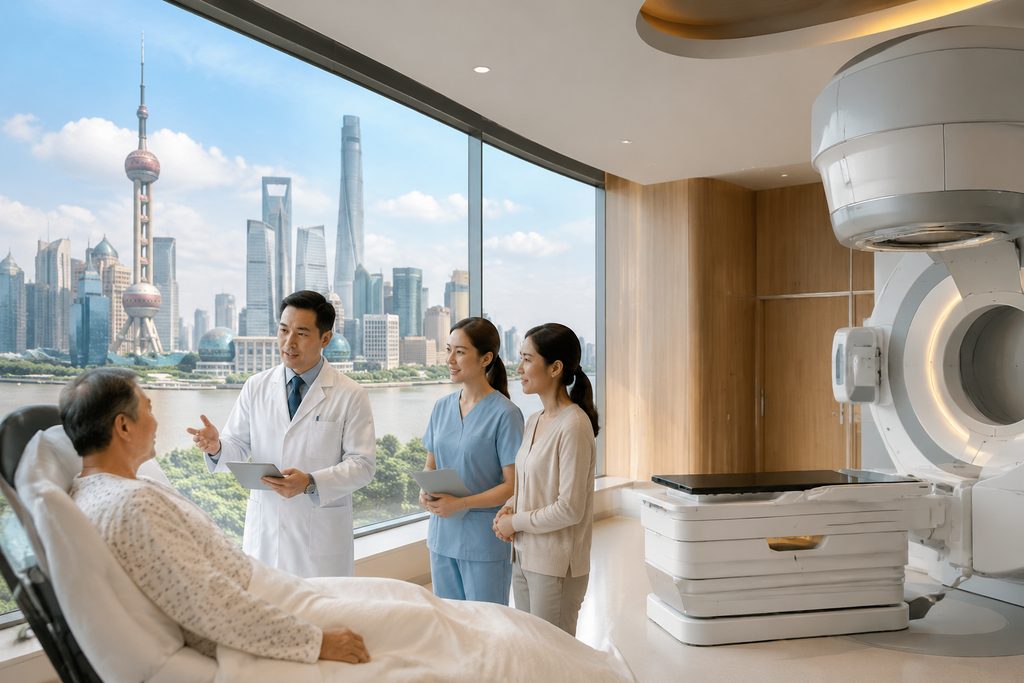
Health Checkup in Shanghai: Hospital Match and Full Care for Foreigners
An executive health checkup cost Shanghai is not a single fixed number. It ranges from roughly $300 for a streamlined private-clinic panel to $2,000 or more for a comprehensive top-tier hospital package with advanced imaging. What you actually pay depends on which hospital you choose, how deep the screening goes, and whether you need bilingual coordination. This guide explains how to match yourself to the right Shanghai facility and what full care actually looks like on the ground.
Shanghai hosts 18 of China’s Fudan-ranked top 100 hospitals — second only to Beijing. That density means real choice. But choice without local knowledge creates confusion. A foreigner walking into a public hospital without Chinese language support faces long queues, paper forms, and a system designed for domestic patients. The alternative is a private international hospital or a public hospital’s VIP international wing. Each route has different pricing, different wait times, and different levels of hand-holding.
How This Actually Works, Step by Step
You do not simply book a health screening package Shanghai international hospital and show up. The real sequence involves more steps than most people expect. Here is what happens from initial inquiry to walking out with results.
First, you define what you need screened. A basic panel covers blood work, urinalysis, chest X-ray, abdominal ultrasound, and an ECG. A deeper executive panel adds cardiac stress testing, low-dose chest CT, abdominal CT or MRI, tumor markers, thyroid function, and sometimes endoscopy. Your age, family history, and existing conditions determine which tier makes sense. We help you articulate this before any hospital is contacted.
Second, we match you to a facility. Public hospital international departments — such as those at Zhongshan Hospital or Ruijin Hospital — offer strong clinical depth at moderate pricing. Private international hospitals like Jiahui, United Family, or Parkway provide English-speaking staff, JCI accreditation, and direct insurance billing. The right match depends on your budget, your insurance, and how much clinical rigor you need versus comfort.
Third, we coordinate the appointment. Public hospital international wings typically allow advance scheduling — unlike standard outpatient departments, which require same-day queueing. Private hospitals book directly. We handle the registration, confirm which tests require fasting, and arrange a bilingual medical companion if you want one. Pricing for that companion starts from $300 per day.
Fourth, you arrive, complete the screening, and receive results. Most facilities deliver a written report within 24 to 72 hours. Some provide same-day verbal summaries from the reviewing physician. If anything abnormal appears, the next step is a follow-up consultation with a specialist — and that is where having a local coordinator becomes genuinely valuable.
Executive Health Checkup Cost Shanghai: What the Numbers Look Like
So how much is a comprehensive health check in Shanghai? The honest answer is that full body checkup price China for foreigners varies by hospital tier and package depth. Here is a realistic breakdown based on current market ranges.
| Facility Type | Package Scope | Typical Cost (USD) | Wait Time |
|---|---|---|---|
| Private international clinic | Basic panel: blood, urine, ECG, X-ray, ultrasound | $300–$600 | 2–5 days |
| Private international hospital | Comprehensive: adds CT, tumor markers, stress test | $800–$1,500 | 3–7 days |
| Public hospital international wing | Executive panel: full imaging, endoscopy, specialist review | $600–$1,200 | 5–14 days |
| Top-tier public hospital VIP | Deep executive: MRI, cardiac CT, multi-specialist consult | $1,500–$2,500 | 1–3 weeks |
These figures are ranges, not quotes. Final pricing depends on the exact tests ordered, the hospital, and case complexity. Anyone quoting you a precise number before reviewing your history is guessing.
A Realistic Timeline
People underestimate how long the full process takes. Not because Shanghai is slow — the hospitals are efficient once you are inside. The delays happen before you arrive.
| Stage | What Happens | Realistic Duration |
|---|---|---|
| Week 1 | Define screening needs, share medical history, select facility | 3–5 days |
| Week 2 | Appointment coordination, document translation if needed, payment deposit | 3–7 days |
| Week 3 | S2 visa application with hospital invitation letter | 5–15 business days |
| Week 4–5 | Travel to Shanghai, complete screening | 1–2 days on-site |
| Week 5–6 | Receive written report, schedule follow-up consult if flagged | 1–3 days after screening |
Document translation is the step people forget. If your prior records are in French, German, or Arabic, the reviewing physician may need them in English or Chinese. That adds a few days. Visa processing is another variable — S2 visas for medical purposes require supporting documents from the hospital, and consulate timelines fluctuate by country.
What Can Go Wrong — and What Happens Then
Things do go wrong. Here are the realistic failure modes for a Shanghai health screening, and what recourse actually exists.
The hospital cancels or reschedules. Public hospital international wings occasionally shift appointments when a senior specialist is called to an urgent case. If this happens, the coordinator rebooks — usually within 48 hours. Private hospitals rarely cancel, but they do overbook during peak seasons.
Your insurance refuses direct billing. Many public hospital international departments require prepayment; they do not bill Western insurers directly. You pay out of pocket, then claim reimbursement. Private international hospitals like United Family and Jiahui have direct billing agreements with major insurers — but not all policies qualify. Check before you fly.
Results are inconclusive. A borderline tumor marker or an ambiguous imaging finding triggers follow-up. That means another appointment, possibly with a different department. Having a bilingual companion who can navigate the referral process saves hours of confusion.
You arrive without the right visa. An M visa is for commercial and trade activities. It does not cover medical treatment. For a health screening, you need an S2 visa with the appropriate supporting documents from the hospital. Applying with the wrong category means rejection or entry refusal.
Is Shanghai Good for Medical Checkup for Expats? Evaluating the Real Trade-offs
The short answer: yes, for most people. But the value proposition depends on what you are comparing against. Is Shanghai good for medical checkup for expats compared to Singapore, Bangkok, or going home? Let us look at the actual trade-offs.
Shanghai’s clinical depth is exceptional. The same radiologists reading your CT scan at a Fudan-ranked hospital may review thousands of cases annually. That volume translates to pattern recognition you simply do not get at a boutique clinic. The equipment is current — 3T MRI, low-dose CT, high-resolution ultrasound are standard at top facilities.
But the experience is not Western. Even in international wings, the workflow feels more clinical and less spa-like than a Bangkok wellness retreat. Nurses are efficient, not chatty. Reports are thorough but sometimes terse. If you want a luxury experience, Shanghai’s private hospitals deliver it — at roughly twice the price of the public international wings.
Cost is the clearest advantage. A comprehensive executive panel in Shanghai runs $800 to $1,500. The equivalent in Singapore starts around $2,000. In the United States, without insurance, the same battery of tests can exceed $5,000. That gap is real and persistent.
Language is the biggest friction point. Even at international hospitals, not every support staff member speaks fluent English. At public hospital international wings, the physicians usually do — but the phlebotomist, the CT technician, and the registration desk may not. A bilingual medical companion closes that gap.
How to Match Yourself to the Best Hospital in Shanghai for Health Screening
Finding the best hospital in Shanghai for health screening is not about rankings alone. It is about matching your profile to the right facility type. Here is how we approach it.
If you have no existing conditions and want efficiency: a private international clinic or hospital makes sense. You get English-speaking staff, direct insurance billing, and a streamlined process. The clinical depth is adequate for routine screening. Jiahui and United Family are the usual starting points.
If you have a family history of cancer or cardiac disease: a public hospital international wing is the better call. You want the radiologists and cardiologists at a Fudan-ranked institution reading your images. Zhongshan Hospital’s cardiac program and Fudan University Shanghai Cancer Center‘s oncology screening are among the strongest in the country. You can explore our top-ranked hospital database by city to compare options.
If you want TCM integration: some screening packages include a traditional Chinese medicine assessment — pulse diagnosis, tongue examination, and a constitutional analysis. This is less about disease detection and more about preventive balance. Our TCM hospital directory covers facilities that offer this alongside conventional screening.
If you are coordinating from abroad: do not try to book directly. Public hospital international wings accept international patient inquiries, but response times vary. A coordinator who knows the system can confirm availability, negotiate package inclusions, and flag which tests require special preparation. That is the difference between a smooth visit and a frustrating one.
Practical Considerations: Records, Visa, Payment, and Follow-Up
Before you book anything, sort out the logistics. These are the practical items that determine whether your Shanghai screening goes smoothly.
Medical records. Bring any prior imaging, lab results, and specialist reports. If they are not in English or Chinese, arrange translation. The reviewing physician needs context — a single elevated marker means something different if you have a history of benign findings.
Visa category. For a health checkup in Shanghai, the applicable short-stay category is S2, issued for private affairs including medical treatment. Supporting documents from the hospital — typically an appointment confirmation or invitation letter — are required. Family members accompanying you also apply for S2. Requirements shift, so verify with the Chinese embassy or consulate in your country before booking flights.
Payment. Public hospital international wings generally require prepayment via bank transfer or card. Private international hospitals accept major credit cards and often bill insurers directly. If your insurer does not have a direct billing agreement, you pay first and claim later. Confirm this before you commit.
Insurance. Some international policies cover preventive screening; many do not. Check whether your plan treats a health checkup as a covered benefit or an exclusion. If excluded, the out-of-pocket cost is still often lower than the copay you would face at home.
Language. Even at the best hospital in Shanghai for health screening, the front-line staff may not speak your language. A bilingual companion handles registration, escorts you between departments, translates physician explanations, and ensures you understand every instruction. It is not a luxury — it is the difference between a coherent experience and a confusing one.
Follow-up at home. Your Shanghai report will be in English at international facilities, or available in English translation at public international wings. Share it with your primary physician back home. If something significant is flagged, you may need a repeat test or specialist consult in your home country. The Shanghai report gives your local doctor a solid baseline.
Frequently Asked Questions
Expect $800 to $1,500 for a thorough executive panel at a public hospital international wing or private international hospital. Basic panels start around $300. Deep VIP packages with full-body MRI and multi-specialist review can reach $2,500. Final pricing always depends on the exact tests and the facility.
Yes. Private international hospitals accept direct bookings from overseas patients. Public hospital international wings also accept international inquiries, though response times vary. A coordinator can handle the booking, confirm package details, and arrange any needed documents for your S2 visa application.
Shanghai offers stronger clinical depth than most regional alternatives at a lower price point than Singapore or Hong Kong. The trade-off is a less polished patient experience at public facilities. Private international hospitals in Shanghai close that gap, at a higher cost.
The reviewing physician will flag it in the written report and recommend follow-up. That may mean a specialist consultation, additional imaging, or a biopsy. We can coordinate those next steps — including scheduling with the appropriate department at the same hospital or a different one. No screening result is a diagnosis; it is a signal that needs clinical interpretation.
Most foreign nationals do. The applicable category for medical treatment is S2, not M. You will need supporting documents from the hospital. Processing times vary by consulate, so start the visa process at least three to four weeks before your intended travel date.
Your Next Step
A health checkup in Shanghai works best when the hospital matches your actual needs and someone on the ground handles the friction. That is what we do. We are China Medical Services — a coordination team, not a medical provider. We do not diagnose, treat, or promise outcomes. We match you to the right facility, book the appointment, arrange bilingual support, and guide you through visa and logistics. If you are considering a screening in Shanghai, start with a conversation. Tell us what you need screened and what your timeline looks like. We will tell you honestly whether Shanghai makes sense for you — and what it will cost. No pressure. Just clarity.
For more medical information and treatment options in China, visit chinamedservices.com (China Medical Services).
