Medical Treatment in Hefei China: USTC Hospital Access & East China Medical Guide
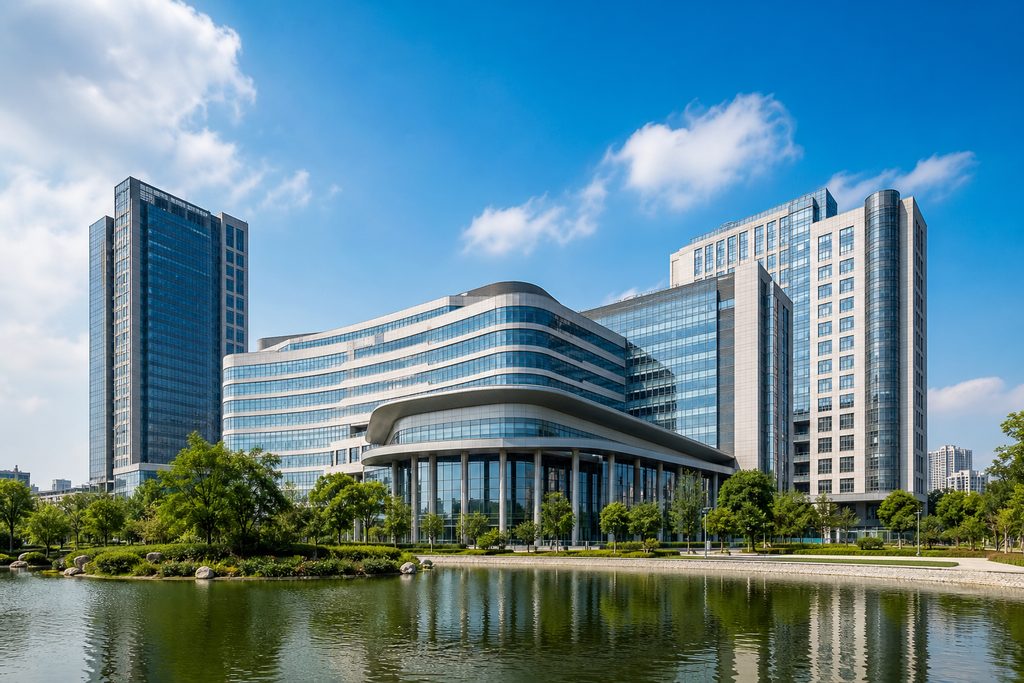
When 42-year-old Michael first heard the diagnosis, he had no idea where to start looking for treatment. His local oncologist in Manchester had given him a clear plan, but the waiting time for the specialized surgery he needed stretched to 14 weeks. That was 14 weeks he did not feel he had. A colleague mentioned something over coffee—something about advanced cancer programs in eastern China, specifically at a university hospital in a city called Hefei. Michael had never heard of it. He pulled out his phone and typed: “USTC hospital Hefei international patient price.”
That search is more common than you might think.
Every month, our team fields inquiries from patients across North America, Europe, the Middle East, and Southeast Asia who are looking beyond their borders for timely, high-quality medical care. They ask about costs, visa logistics, language barriers, and whether hospitals in China’s lesser-known cities can truly compete with the famous names in Beijing and Shanghai. The short answer? Yes. And often at a cost structure that makes treatment accessible without sacrificing clinical quality.
Key Takeaways
- The First Affiliated Hospital of USTC in Hefei performs over 120,000 surgeries annually, with specific oncology and cardiovascular programs that rival top coastal institutions.
- International patient coordination at USTC Hospital typically costs 60-70% less than equivalent private care in the US or UK, with transparent pricing from $800 for specialist consultation coordination.
- Hefei lacks the established expatriate infrastructure of Shanghai or Beijing—independent navigation without Mandarin fluency or a local coordinator is extremely difficult.
- You cannot simply book a surgery slot online. All treatment requires an in-person consultation first, and the S2 medical visa process demands specific hospital invitation documentation.
The Problem: Cancer Care Delays Are Costing Lives—and Wallets
A 2023 study published in The BMJ found that each four-week delay in cancer surgery increases mortality risk by 6-8%. In the UK’s National Health Service, more than 30% of cancer patients waited longer than the 62-day target to start treatment in 2023. In Canada, the median wait time between specialist consultation and actual treatment reached 27.4 weeks in 2023, according to the Fraser Institute. These are not just numbers. They are windows where treatable disease becomes harder to manage.
Then there is the financial side. A complex oncologic resection with reconstruction in the United States routinely exceeds $120,000 before insurance negotiations. Even with coverage, out-of-pocket maximums can devastate a family’s finances. Patients are caught between two impossible forces: wait too long at home, or go bankrupt seeking faster care elsewhere. That tension is exactly what drives people to search for the cost of cancer treatment in Anhui China and whether a hospital in a second-tier Chinese city can deliver the care they need.
Who We Are
We are not a hospital. We do not provide medical treatment or clinical diagnoses. Our team operates as a medical concierge—your logistical architects connecting international patients with China’s top-tier hospitals. We maintain verified relationships with 340+ top-ranked hospitals across 37 cities, including the First Affiliated Hospital of USTC in Hefei. We handle appointment coordination, bilingual medical companion services, visa guidance, and the countless friction points that make navigating Chinese healthcare independently so difficult. Think of us as the bridge. You bring the medical need. We bring the pathway.
Why Hefei and USTC Hospital Deserve Serious Consideration
Most international patients gravitate toward Beijing or Shanghai. That instinct makes sense. Those cities have the name recognition, the direct flights, and the largest expatriate communities. But they also have higher costs, more crowded international wards, and longer coordination timelines for top specialists. Hefei offers something different.
Clinical Volume That Builds Expertise
The First Affiliated Hospital of the University of Science and Technology of China (USTC) is not a small regional clinic. It is a massive academic medical center with over 5,000 beds and a surgical volume exceeding 120,000 procedures per year. To put that in perspective, the Mayo Clinic in Rochester—one of America’s largest hospitals—reports roughly 80,000 surgeries annually. USTC Hospital’s oncology department alone handles thousands of cases each year across gastrointestinal, thoracic, and hepatobiliary cancers.
Volume matters. A 2020 analysis in The Lancet Oncology demonstrated a clear inverse relationship between hospital surgical volume and patient mortality for complex cancer procedures. Surgeons who perform a specific operation 100 times a year simply have better outcomes than those who do it 20 times. At USTC Hospital, certain thoracic surgery teams complete over 400 esophageal cancer resections annually. That is a level of repetition that breeds rare clinical judgment.
Technology Infrastructure That Rivals Coastal Giants
USTC Hospital invested heavily in robotic surgery platforms over the past five years. Their Da Vinci Xi systems support urology, gynecology, and general thoracic procedures. The hospital also houses a proton therapy center for precision radiation oncology—one of only a handful in central and eastern China outside Shanghai. PET-CT, 3.0T MRI, and dual-source CT imaging are standard diagnostic tools, not special requests.
What does this mean for a foreign patient? It means the diagnostic and therapeutic technology at USTC Hospital is functionally equivalent to what you would find at a major US academic medical center. The difference is not in the machines. It is in the access timeline and the cost.
The Cost Structure: Why USTC Hospital Hefei International Patient Price Is So Different
Let us address the question that brought most readers here. The USTC hospital Hefei international patient price typically runs 60-70% below what you would pay for equivalent private-pay care in the United States or United Kingdom. A complex cancer surgery with a 10-day hospital stay might cost $15,000-25,000 at USTC Hospital’s international department, compared to $80,000-150,000 in the US. Chemotherapy cycles that bill at $12,000 per round in America often cost $2,000-4,000 in Hefei.
These are not low-quality shortcuts. The cost difference stems from structural economics—lower physician salaries relative to Western counterparts, higher patient throughput, and a hospital system built for volume rather than margin maximization. The clinical outcomes for many procedures are comparable. A 2019 study in JAMA Oncology comparing gastric cancer surgery outcomes across high-volume centers in China, Japan, and the US found no statistically significant difference in five-year survival rates when adjusted for stage and comorbidities.
What You Need to Know Before Going Alone
We are direct about this because we have seen too many patients arrive unprepared. Hefei is not Shanghai. The city has a fraction of the English-speaking infrastructure, fewer international direct flights, and almost no medical facilities designed with Western patient expectations in mind—except for the international department at USTC Hospital itself. Here are the barriers you will face if you try to navigate this independently.
- Visa Requirements Are Specific and Unforgiving: Medical treatment in China requires an S2 visa with the explicit purpose of medical treatment noted on the application. You cannot use a tourist (L) visa or a business (M) visa. To apply, you need an official invitation letter from the hospital confirming your treatment arrangement. USTC Hospital’s international department can issue this letter, but only after you have completed a formal registration process. That process cannot be done via email alone—it requires document submission, deposit payment, and appointment confirmation. Our team handles this end-to-end, but doing it solo from overseas is genuinely challenging.
- Mandarin Is Not Optional Inside the Hospital: USTC Hospital’s international department has English-speaking coordinators. The rest of the hospital does not. Registration counters, pharmacy windows, laboratory blood draws, CT scan check-in—all of these interactions happen in Mandarin. Even with a translation app, the speed and noise of a Chinese public hospital make independent navigation extremely stressful. A single missed queue number can cost hours.
- Payment Systems Do Not Work Like Home: Chinese hospitals operate on a prepaid deposit model. You load funds onto your hospital account at admission, and services draw down from that balance. International credit cards are not accepted at most hospital payment counters. You need a Chinese bank account, WeChat Pay, or Alipay linked to an accepted card—or you need someone who can handle these transactions for you. Wire transfers are possible for large deposits but take days to clear.
How We Help You Navigate This
These barriers exist for structural reasons, not because anyone is trying to make things difficult. Chinese public hospitals serve enormous domestic patient volumes—USTC Hospital sees over 15,000 outpatient visits per day. The system is optimized for local efficiency, not international accessibility. Our job is to layer accessibility on top of that efficiency.
Before you travel, we collect your medical records, have them professionally translated into Chinese, and submit them to the relevant department at USTC Hospital for review. We confirm that the hospital can treat your condition, obtain a preliminary treatment plan and cost estimate, and secure the official invitation letter required for your S2 visa application. We advise on flight routes—Hefei Xinqiao International Airport has limited direct international connections, so most patients route through Shanghai Pudong or Beijing Capital and connect domestically.
During your stay, a bilingual medical companion meets you at the hospital. This person handles registration, payment deposits, queue management, and real-time interpretation during consultations. They translate the doctor’s questions and your answers accurately—not just the words, but the clinical nuance. They accompany you to imaging appointments, blood draws, and pharmacy pickups. If you are admitted for surgery, they coordinate with the nursing station and keep your family updated.
After discharge, we help arrange follow-up consultations—either in person if you stay in Hefei, or via video consultation if you return home. All our video consultation coordination fees are credited in full toward any future on-the-ground coordination service within 90 days. That means a $500 remote consultation today is effectively free if you later come to China for treatment.
Is USTC Hospital Good for Foreigners? The Honest Assessment
No. Chinese public hospitals, including USTC Hospital, require an in-person consultation before any surgery can be scheduled. The surgeon must examine you directly, review your imaging with you present, and confirm that you are fit for the procedure. What we can arrange in advance is a locked-in consultation appointment with the specific specialist you need, plus a tentative surgery window based on your records. The consultation happens within days of your arrival, and surgery typically follows within one to two weeks, depending on preoperative testing and operating room availability. This is significantly faster than the multi-month waits common in many Western public health systems.
USTC Hospital is a tertiary academic medical center with full intensive care capabilities, 24-hour emergency surgical backup, and multi-specialty consultation teams. Complication management follows the same clinical protocols you would expect at any major international hospital. The practical challenge for foreign patients is not clinical competence—it is communication during an unexpected event. Our bilingual medical companion remains with you throughout your hospitalization, including any ICU transfers. They ensure you understand what is happening, what the doctors are recommending, and what your options are at every step. We also help coordinate medical evacuation insurance if you prefer to recover in your home country after stabilization.
USTC Hospital’s international department requires a deposit upfront, typically 50-70% of the estimated treatment cost, paid via wire transfer or through a Chinese payment platform. The balance is settled at discharge. Most international health insurance plans will reimburse treatment at Chinese hospitals, but almost none will pay the hospital directly. You pay first and claim reimbursement afterward. We provide fully itemized invoices and translated medical reports formatted for insurance submission. Some private international hospitals in Shanghai offer direct billing, but USTC Hospital does not. If direct insurance settlement is non-negotiable for you, we can discuss options at JCI-accredited private hospitals in our private hospital network.
The cost of cancer treatment in Anhui China is structurally lower for reasons unrelated to quality. Physician salaries, hospital construction costs, and pharmaceutical pricing in China are all lower than in the US or Western Europe. The clinical protocols—chemotherapy regimens, surgical techniques, radiation planning—are the same evidence-based standards used internationally. USTC Hospital participates in multinational clinical trials and publishes in peer-reviewed international journals. The oncologists treating you are reading the same New England Journal of Medicine articles as your doctor at home. The cost difference reflects economics, not corner-cutting. That said, the patient experience is different. You will not have a private room by default, and the nursing model expects family involvement. These are trade-offs, not safety concerns.
Your Next Step
Michael, the patient from Manchester we mentioned at the start, eventually came to Hefei. His surgery happened 19 days after his first inquiry to us. The total cost, including travel and our coordination services, came to just under $28,000. His insurance reimbursed 80%. More importantly, his surgery was successful, and he was back in the UK recovering before his original NHS surgery date would have even arrived.
Not every case is right for Hefei. Not every patient is comfortable with the cultural distance. But for those who prioritize clinical quality, speed of access, and financial transparency, USTC Hospital belongs on the shortlist. If you want to understand whether this path fits your specific diagnosis and circumstances, we are here to help you figure that out. No pressure. Just clarity.
Start with a free consultation. We will review your situation, suggest appropriate hospitals—in Hefei or elsewhere in our 340+ hospital network—and give you a realistic picture of costs, timelines, and what to expect. Reach out today and let us build a pathway that makes sense for you.
Frequently Asked Questions
Yes. We work with JCI-accredited and major Grade 3A tertiary hospitals that follow international safety standards comparable to top hospitals in the US and Europe. Surgical teams perform high volumes of procedures — often more than their Western counterparts — which studies show leads to better outcomes.
Costs vary by procedure and hospital, but international patients typically save 40-80% compared to US prices — even when factoring in travel and accommodation. A consultation with our team will give you an exact, all-inclusive quote with no hidden fees.
Send us your existing medical reports. The relevant specialty reviews them and gives you a written opinion, including treatment direction and options, before you commit to any travel. From there you can add a video consultation with the doctor, or have us attend an appointment on your behalf.
For more medical information and treatment options in China, visit chinamedservices.com (China Medical Services).
