Getting Your Oncology Care at Henan Cancer Hospital: Central China Full Coordination
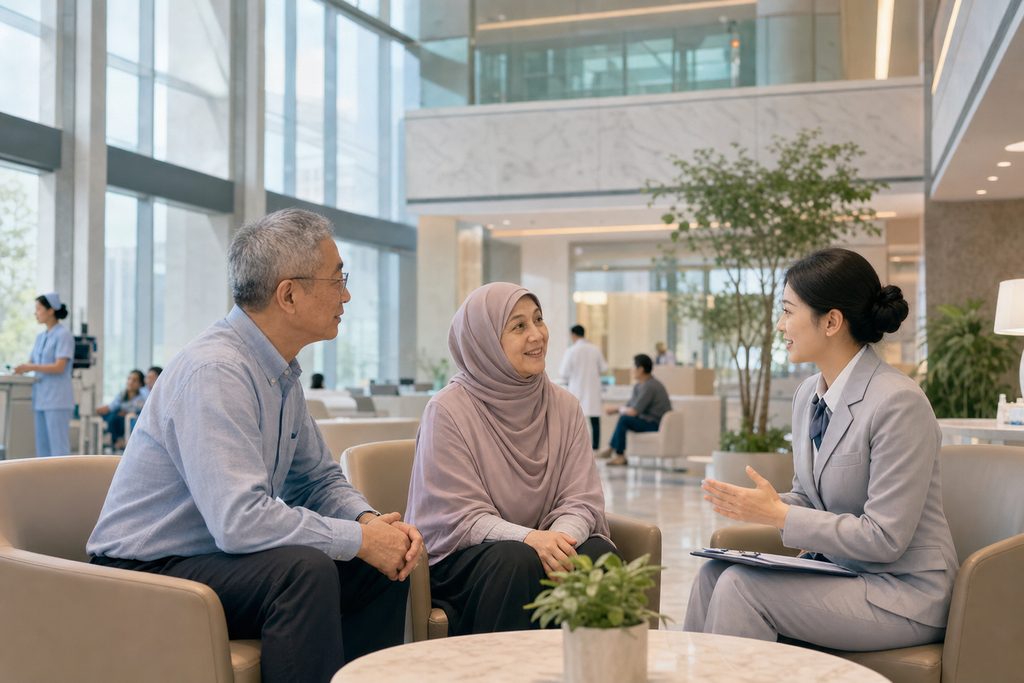
In the United States, a single cycle of immunotherapy can exceed $15,000. At Henan Cancer Hospital, the same class of drug often starts from $2,000 per cycle. That gap isn’t a marketing trick. It’s the structural difference between two healthcare economies. Henan Cancer Hospital treatment cost for international patients typically ranges from 20% to 35% of what comparable care costs in North America or Western Europe. But the price tag alone doesn’t answer the question you’re really asking. You want to know if the care is good. You want to know if the logistics are survivable. And you want the truth about what “full coordination” actually means on the ground in Zhengzhou.
The Short Answer
You can receive sophisticated oncology care at Henan Cancer Hospital for a fraction of Western prices. The hospital treats over 100,000 inpatients annually. Its oncology specialties are ranked among China’s top 10 nationally in the Fudan University hospital rankings. But this is not a hotel with an attached clinic. This is a massive, high-volume public institution where Mandarin is the operating language and navigating it without a coordinator is genuinely difficult. The quality is there. The access is not automatic.
Who This Is Right For — and Who It Isn’t
We tell patients this directly during initial consultations. This path makes sense for a specific profile, and it is a poor fit for others.
Patients who are typically a good fit:
- You have a confirmed cancer diagnosis with complete medical records in English or a translatable format.
- You are stable enough for international travel. No active crisis requiring ICU-level care in transit.
- You are seeking treatment not available in your home country, or you face prohibitive costs or wait times at home.
- You accept that a public Chinese hospital operates differently from a Western private clinic — faster pace, less hand-holding, more patients.
- You have a caregiver who can travel with you, or you are willing to use a bilingual companion service for daily logistics.
Patients who should not pursue this:
- You are in an acute, unstable phase of illness where a long-haul flight poses a medical risk.
- You expect a private room with concierge-level service at a public-hospital price point. The international/VIP wards are comfortable, but they are not luxury hotels.
- You need a treatment protocol that is only available in a clinical trial not offered here. Check trial availability before booking flights.
- You are unwilling to spend at least two weeks in Zhengzhou for initial evaluation and treatment planning. This is never a one-day consultation.
The Options, Compared
When international patients ask what is the best cancer hospital in central China, the answer usually comes down to Henan Cancer Hospital versus other regional centers. But the real comparison you need is between care models. Here is how the paths stack up.
| Factor | Henan Cancer Hospital (Public, International Channel) | Private International Hospital (Shanghai/Beijing) | Treatment at Home (US/UK/Canada/Australia) |
|---|---|---|---|
| Cost per chemo cycle | $1,500–$4,000 | $5,000–$12,000 | $10,000–$25,000+ |
| Radiotherapy course | $8,000–$18,000 | $20,000–$40,000 | $50,000–$120,000+ |
| Language environment | Mandarin-dominant; coordinator essential | English-speaking staff available | Native language |
| Wait time to start treatment | 1–3 weeks after records review | 1–2 weeks | 2–12 weeks (varies by system) |
| Coordination complexity | High — requires local logistics partner | Moderate — hospital handles more internally | Low — within known system |
| Annual inpatient volume | 100,000+ | 5,000–20,000 | Varies |
The private international route works for patients who prioritize English-language communication and a familiar care environment and can absorb the higher cost. Henan Cancer Hospital suits patients who want deep disease-specific expertise at a lower price point and are willing to work through a coordination layer. Neither path is universally better. The right one depends on your diagnosis, your budget, and your tolerance for navigating an unfamiliar system.
Why Henan Cancer Hospital Specifically
Most international patients gravitate toward Beijing or Shanghai. That is understandable. Those cities have the brand-name hospitals. But Henan Cancer Hospital occupies a specific position that matters for certain diagnoses.
The hospital is the largest cancer center in central China and one of the highest-volume oncology institutions in the country. Volume matters in cancer surgery. A surgical team that performs 400 esophagectomies a year operates differently from one that performs 40. The hospital’s thoracic surgery, hematology, and radiation oncology departments carry particular weight in national rankings. It is also a designated national clinical research center for cancer, which means patients here access treatment protocols that are current with — and sometimes ahead of — global standards.
And there is a practical reason. Zhengzhou is a major high-speed rail hub. You can reach it from Beijing in about two and a half hours, from Shanghai in roughly four. If you need a second opinion from a specialist in those cities, the logistics are manageable. You are not isolated.
But the question is cancer treatment in China safe for foreigners deserves a straight answer. Clinical safety at a top-tier public cancer hospital is not the primary risk. These institutions follow internationally recognized protocols. The safety question is really about communication gaps, informed consent when you do not speak the language, and what happens if complications arise and you cannot explain your symptoms to a night-shift nurse. That is where coordination prevents small problems from becoming serious ones.
Henan Cancer Hospital Treatment Cost: A Real Breakdown
We cannot quote a fixed price for cancer treatment. Anyone who does, before reviewing your records, is guessing. But we can give you the ranges our patients encounter, based on treatment type and complexity.
What drives the variance? Three things. First, the specific drug regimen. A standard chemotherapy protocol using generic drugs costs far less than a targeted therapy requiring a branded biologic. Second, the length of stay and number of cycles. Third, whether you need surgery, radiotherapy, or both in combination with systemic therapy.
Typical cost ranges for international patients at Henan Cancer Hospital:
- Initial consultation with records review and treatment plan: $300–$800
- Standard chemotherapy cycle (drugs, administration, monitoring): $1,500–$4,000 per cycle
- Radiotherapy course (IMRT/VMAT, 25–35 fractions): $8,000–$18,000 total
- Major cancer surgery (e.g., thoracic, gastrointestinal, gynecologic oncology): $12,000–$28,000 including hospital stay
- Immunotherapy per cycle (checkpoint inhibitor): $2,000–$5,000 depending on the agent
These figures cover the hospital’s charges. They do not include airfare, accommodation in Zhengzhou, meals, local transportation, or coordination and interpretation services. A full treatment episode lasting two to three months, including a modest apartment rental and a bilingual companion for key appointments, typically adds $6,000–$12,000 in non-medical costs. Compare that to the treatment savings and the math still works. But you need to budget for it.
When patients search for oncology care packages China price, they are usually hoping for an all-inclusive number. Those packages exist at some private international hospitals. At a public hospital like Henan Cancer Hospital, the model is different. You pay the hospital directly for medical services at their standard rates. You pay separately for coordination, interpretation, and logistics support. The total is still substantially lower than a Western hospital bill, but it arrives in pieces rather than as one bundled price.
Practical Considerations: Records, Visas, and Daily Life in Zhengzhou
You cannot book cancer treatment at Henan Cancer Hospital the way you book a hotel room. The process starts with a remote records review. The oncology team evaluates your pathology reports, imaging, treatment history, and current status. Only after that review can they confirm whether they will accept your case and propose a treatment plan.
What you need to prepare:
- Complete medical records translated into Chinese or English. The hospital’s international coordination team can arrange translation, but the records must exist first.
- Pathology slides or digital pathology images. The hospital’s pathologists will want to confirm the diagnosis themselves. This is standard practice and not a sign of distrust.
- Recent imaging on CD or via secure digital transfer. PET-CT, MRI, CT scans from the past 30 days are ideal.
- A summary letter from your current oncologist outlining what has been done and what the next proposed steps are.
The visa category for medical treatment in China is the S2 visa, endorsed for private affairs including medical treatment. The accompanying family member applies under the same category. The hospital provides an invitation letter and treatment confirmation that supports the visa application. Processing time varies by embassy, but plan for two to four weeks. Do not book flights until the visa is in your passport.
Zhengzhou itself is a city of over 10 million people. It is not a tourist destination. It is a working city with functional infrastructure, a metro system, and a range of accommodation near the hospital from budget hotels to serviced apartments. English is not widely spoken outside the hospital’s international coordination office. You will need a local SIM card, a payment app like Alipay or WeChat Pay linked to your international card, and a plan for meals. These are small things individually. Collectively, they are the difference between a focused treatment experience and a stressful one.
Frequently Asked Questions
Some senior oncologists at the hospital have working English proficiency, particularly those who have trained or presented internationally. But the hospital’s default operating language is Mandarin. Nursing staff, technicians, administrative personnel, and junior doctors generally do not speak English. Relying on the occasional English-speaking doctor is not a communication plan. A bilingual medical companion or coordinator who can translate in real time during consultations, explain discharge instructions, and handle phone calls about appointment changes is not a luxury. It is the mechanism that makes the entire process function.
This is the hardest question, and it deserves a direct answer. The hospital will provide a discharge summary and treatment records in Chinese, which you can have translated. Your home-country oncologist can use these to continue your care. But the Chinese medical team cannot prescribe across borders or manage complications remotely. You need a local oncologist who agrees to receive you back before you leave for China. Establish that relationship and share the treatment plan with them before you travel. If your home doctor is hostile to the idea of you seeking care abroad, find one who is at least professionally willing to manage your follow-up. Going without a post-return plan is the single most dangerous decision a patient can make.
The short answer is yes, for the core technologies that matter. The hospital operates linear accelerators for IMRT and VMAT radiotherapy, a PET-CT, multiple MRI and CT scanners, and a fully equipped interventional radiology suite. The equipment is modern and well-maintained. The difference is not the machines. It is the patient-to-staff ratio, the physical environment of the wards, and the communication culture. The technology is not the limiting factor. The experience of being a patient there is what requires adjustment.
Henan Cancer Hospital is a public institution. You pay for services as you receive them, typically via bank transfer, UnionPay card, or Chinese payment apps. The hospital does not do direct billing with international insurance companies. You pay upfront and seek reimbursement from your insurer. Before committing to treatment, call your insurance provider and ask explicitly whether they cover cancer treatment at a public hospital in China and what documentation they require for claims. Some medical tourism facilitators offer letters of guarantee or payment coordination for an additional fee, but the underlying transaction is still patient-pays-first.
Your Next Step
The decision to pursue oncology care in central China is not a small one. The clinical quality at Henan Cancer Hospital is real. The cost advantage is real. So is the logistical complexity. Our team exists to handle that complexity — the records translation, the hospital coordination, the bilingual companion who stands beside you in the consultation room and makes sure you understand every word. We are not a hospital. We do not diagnose or treat. We are the operational layer that connects you to the medical expertise you need.
If you have a confirmed diagnosis and records ready for review, a conversation costs nothing. We can tell you whether your case is a fit for Henan Cancer Hospital, what the timeline looks like, and what the realistic budget range will be. Request a free consultation here. No pressure. Just information, delivered straight.
For more medical information and treatment options in China, visit chinamedservices.com (China Medical Services).
