Hospital Matching on a Budget: Real Costs for Foreign Patients in China
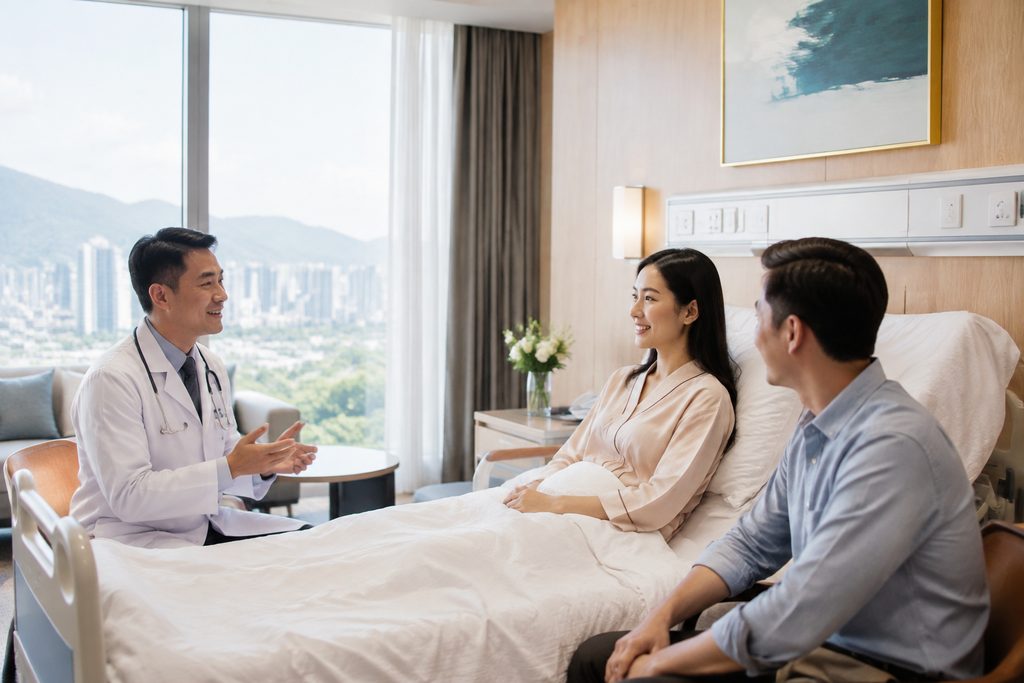
According to China’s National Health Commission, over 300,000 international patients received inpatient care in Chinese hospitals in 2023. Many came for one reason: the math. A heart bypass surgery cost China runs between $12,000 and $20,000 at a top-tier public hospital. The same procedure in the United States averages $120,000 to $180,000. That gap reshapes what “affordable” means when you are matching hospitals to a fixed budget.
But cost is only half the equation. A hospital that fits your wallet but cannot handle your specific condition wastes every dollar. The real task is matching clinical capability with what you can actually pay. Our team does this daily. We have seen patients arrive with unrealistic expectations and leave with workable plans. This guide walks through the numbers, the trade-offs, and the honest math behind hospital matching for international patients.
How This Actually Works, Step by Step
You start with medical records, not with a hospital wish list. Send us your existing diagnostics — imaging reports, blood work, pathology slides, surgical history. A Chinese specialty team reviews them. They assess whether your case is treatable in China and which departments have relevant experience with your condition.
Then comes the budget conversation. We ask directly: what can you realistically spend on the procedure itself, separate from travel and lodging? That number drives everything. A $15,000 cardiac budget points toward a public hospital international department. A $60,000 oncology budget opens different doors, including private international hospitals with English-speaking staff and direct insurance billing.
After that, we match. We present two or three hospitals with the right specialty reputation, a realistic price range for your case complexity, and appointment feasibility. You choose. We coordinate the appointment, arrange a bilingual companion if needed, and handle the logistics. The sequence matters: records first, budget second, hospital matching third.
Heart Bypass Surgery Cost China: What the Numbers Actually Cover
The headline figure for a heart bypass surgery cost China — $12,000 to $20,000 — comes from public hospital international departments. This typically covers the surgical procedure, standard hospital stay of seven to ten days, anesthesia, operating room fees, and basic post-operative monitoring. It does not include your airfare, visa fees, lodging for family members, or extended rehabilitation.
Fuwai Hospital in Beijing performs over 14,000 cardiac surgeries annually, the highest volume globally. Volume matters for outcomes. Surgeons who perform a procedure thousands of times develop pattern recognition no textbook provides. But volume also means high patient flow. You will not get a leisurely bedside manner. You will get efficiency.
Private international hospitals in China charge more — typically $30,000 to $50,000 for the same bypass procedure. What do you get for that premium? English-speaking nurses, Western-style private rooms, direct insurance billing, and longer consultation times. For some patients, that is worth it. For others, a public hospital with a bilingual companion costs less and delivers equivalent surgical quality. The trade-off is comfort, not competence.
Our cardiac surgery department rankings list the top ten hospitals by Fudan University’s specialty reputation scores. Cross-reference those with your budget before committing.
A Realistic Timeline
| Stage | Duration | What Happens |
|---|---|---|
| Document translation and review | 3–7 days | Your records are translated into Chinese and reviewed by the relevant specialty team |
| Written second opinion | 5–10 days | You receive a written analysis with treatment direction and hospital recommendations |
| Hospital matching and appointment request | 1–3 weeks | We contact the hospital’s international department and request a consultation slot |
| Visa processing (S2) | 2–6 weeks | Apply at your local Chinese embassy or consulate with the hospital’s invitation letter |
| Travel and in-person consultation | 3–5 days | You meet the specialist, undergo additional testing if needed, and confirm the surgical plan |
| Surgery scheduling | 1–4 weeks | Public hospitals schedule surgery after the in-person consultation, not before |
| Procedure and hospital stay | 7–14 days | Varies by procedure and recovery speed |
| Post-operative follow-up at home | Ongoing | Your local physician handles recovery; we can arrange remote follow-up consultations |
Notice the waiting steps people forget. Document translation takes real time. Visa processing depends on your home country’s consulate workload. And public hospitals in China do not schedule surgery before an in-person consultation. That rule is universal. Plan for it.
What Can Go Wrong — and What Happens Then
Appointment delays happen. A top specialist may have a two-week backlog. We cannot promise a specific surgeon on a specific date. What we can do is coordinate through the hospital’s official international department and keep you informed. If an appointment cannot be secured as requested, the coordination fee is refunded in full.
Your condition may not be treatable in China. That is a real possibility. Some rare diseases have better treatment infrastructure elsewhere. The written second opinion exists precisely to catch this before you buy a plane ticket. If the reviewing team says no, you save yourself the trip.
Costs can exceed the initial estimate. A bypass surgery quoted at $15,000 may climb to $22,000 if complications extend your ICU stay. Public hospitals require prepayment, and additional charges are billed as they accrue. Budget a 20–30% buffer above the quoted range.
Language friction is real. Outside the international department, most hospital staff speak Mandarin only. A bilingual companion from $300 per day handles registration, queueing, payment, and translation. Without one, a single missed instruction can delay your entire schedule.
Affordable Cancer Treatment Hospitals China: Where the Savings Actually Are
Cancer treatment costs in China run 50–70% below US prices for comparable protocols. A course of immunotherapy that bills $150,000 in the US often costs $40,000–$60,000 at a top Chinese cancer center. Affordable cancer treatment hospitals China cluster in Beijing, Shanghai, and Guangzhou. Fudan University’s oncology reputation rankings place Peking Union Medical College Hospital, Zhongshan Hospital, and West China Hospital among the top ten nationally.
The savings come from lower labor costs, not inferior drugs. Chinese hospitals use the same chemotherapy agents, the same targeted therapies, and increasingly the same immunotherapy protocols as Western centers. The difference is the price of a nurse’s hour and a hospital bed’s night.
But cancer treatment is not a single procedure. It is a protocol spanning months. Budget for the full course, not the first cycle. And check whether your insurance covers treatment abroad. Most US insurers do not. Most Middle Eastern government programs do. Know your payer before you commit.
What Is the Cost of Hip Replacement in Shanghai?
A direct answer: what is the cost of hip replacement in Shanghai runs $8,000 to $15,000 at public hospital international departments. Private international hospitals charge $20,000 to $35,000. The US average for the same procedure is $40,000 to $60,000. So Shanghai delivers a 60–80% saving at public facilities.
Shanghai’s orthopedic strength is concentrated at Shanghai Sixth People’s Hospital and Zhongshan Hospital. Both handle high volumes of joint replacements. The city’s hospital database page lists facilities by specialty and tier. A key consideration: implant choice. Chinese hospitals offer both domestic and imported prostheses. Imported implants cost more. Ask which one your quote includes.
Recovery matters too. Hip replacement requires six to twelve weeks of rehabilitation. Shanghai has excellent rehab infrastructure, but you cannot fly home the week after surgery. Budget for a month of local accommodation if you want proper early-stage physiotherapy.
Is Medical Treatment in China Safe for Foreigners?
The honest answer: is medical treatment in China safe for foreigners depends on which hospital you choose. China’s top-tier public hospitals — the Fudan-ranked top 100 — meet international standards for surgical volume and clinical capability. Fuwai Hospital’s cardiac outcomes are published in peer-reviewed journals. Peking Union Medical College Hospital trains physicians to Western standards. These are not back-alley clinics.
But China’s hospital system is vast and uneven. The country has over 35,000 hospitals. The top 5% are genuinely excellent. The bottom half can be rough. Our database covers 340+ top-ranked hospitals across 37 cities. That is the top 5% we just mentioned. We do not match patients to anything below that tier.
Safety also means process safety. Chinese public hospitals move fast. You may see a specialist for ten minutes. You may be sent for tests without lengthy explanations. A bilingual companion translates and interprets, ensuring you understand what is happening and why. That is not a luxury. It is a safety measure.
Book Spine Surgery Package Beijing: What a Package Actually Includes
Searching to book spine surgery package Beijing suggests you want a bundled price. Be careful with that term. Chinese public hospitals do not sell “packages” the way medical tourism agencies in Thailand or India do. What you can get is a coordinated plan: consultation, imaging, surgery, hospital stay, and follow-up arranged as a sequence with an itemized quote.
Beijing’s spine surgery strength sits at Peking University Third Hospital and Peking Union Medical College Hospital. Both rank among China’s top ten for orthopedics. A lumbar fusion at a Beijing public hospital international department runs $12,000 to $25,000. The same procedure in the US averages $80,000 to $110,000.
What you are actually booking is coordination, not a prepaid bundle. You pay the hospital directly for treatment. You pay us separately for coordination and bilingual support. Anyone offering a single all-inclusive price is likely marking up the hospital’s fees. Ask for the itemized breakdown.
Best Hospital for Liver Transplant China Price: A Word of Caution
We need to address this search directly. Patients ask about the best hospital for liver transplant China price frequently. China has excellent transplant centers. Renji Hospital in Shanghai and West China Hospital in Chengdu perform high volumes of liver transplants with strong outcomes.
But we do not facilitate solid-organ transplants for international patients. Organ allocation in China is governed by national regulations that prioritize Chinese citizens. Foreign nationals face significant legal and logistical barriers to accessing donor organs. We will not promise access that does not exist.
What we can do is connect you with transplant centers for evaluation and pre-transplant management. If you have a living donor, the conversation changes. But deceased-donor transplantation for foreigners is not a service we coordinate. Anyone telling you otherwise is misleading you.
Practical Considerations: Records, Visa, Payment, Insurance
Your medical records must be translated into Chinese before any hospital review. This takes three to seven days. Send everything: imaging CDs, pathology reports, surgical notes, current medication list. Incomplete records delay the entire process.
For visa purposes, you need an S2 visa for short-term medical treatment. The hospital’s international department provides an invitation letter confirming your appointment. Family members accompanying you also apply for S2 visas. Processing takes two to six weeks depending on your consulate. Do not book flights before the visa is in your passport.
Payment at public hospitals is prepaid. You deposit an estimated amount at admission and settle the balance at discharge. Insurance reimbursement is your responsibility. Private international hospitals like United Family and Jiahui offer direct billing with major international insurers. Check our private hospital comparison page if insurance billing matters to you.
Follow-up at home requires planning. Your local physician should receive a discharge summary in English. We can arrange remote video consultations with your Chinese specialist for post-operative questions. Budget $100–$300 per video consultation.
Frequently Asked Questions
Plan for $18,000 to $30,000 all-in. The surgical procedure runs $12,000 to $20,000. Round-trip airfare for two people adds $2,000 to $4,000. A month of accommodation near the hospital costs $1,500 to $3,000. Bilingual companion services, visa fees, and a contingency buffer cover the rest.
No. Public hospitals in China require an in-person consultation before scheduling surgery. This is a universal rule. You can complete the written second opinion and video consultation remotely, but the final surgical plan requires a face-to-face visit. Plan for two trips or an extended stay.
We present alternatives. If the first hospital’s quote exceeds your range, we approach a second or third facility. Sometimes a hospital in a lower-cost city like Chengdu or Wuhan offers the same specialty at 20–30% less than Beijing or Shanghai. The trade-off is travel convenience, not clinical quality.
Many are. Over 100 Chinese hospitals hold JCI accreditation, the same standard used by top hospitals in the US and Europe. The Fudan University rankings we use evaluate clinical reputation, research output, and specialty strength. A hospital can be excellent without JCI accreditation, but JCI status is a useful proxy for international patient readiness.
Your Next Step
Hospital matching on a budget is not about finding the cheapest option. It is about finding the hospital where your money buys the most clinical capability for your specific condition. That requires records review, honest budget math, and access to accurate hospital data. Our team provides all three. We coordinate with 340+ top-ranked hospitals across 37 cities, and we are honest about what we cannot do — including organ transplants and guaranteed surgeon access. If you are ready to see what your budget can actually cover, request a free consultation. Send your records and your budget range. We will tell you what is possible.
Your budget is a constraint, not a verdict. Used correctly, it is a filter that narrows thousands of hospitals to the handful that fit both your condition and your wallet. That is the matching work. That is what we do.
For more medical information and treatment options in China, visit chinamedservices.com (China Medical Services).
