The Hospital Has No Reviews: Is That Bad for Medical Travel?
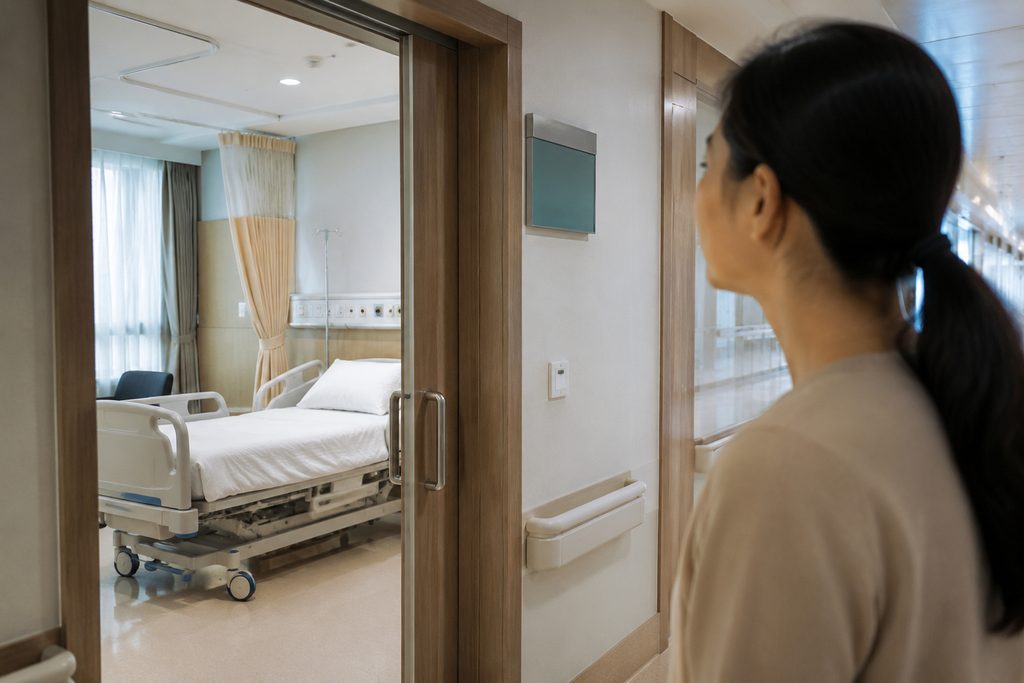
While patients in Canada wait a median 27.4 weeks between specialist referral and orthopedic surgery, surgeons at Shanghai’s Zhongshan Hospital complete over 400 cardiac interventions monthly — outcomes tracking with the best Western centers. Yet when international patients search for these hospitals online, they often find almost nothing. No Google reviews. No Yelp pages. No patient testimonials. That silence feels like a warning sign. In China, it usually is not.
If you have searched for a hospital no reviews China and felt your stomach drop, you are not alone. Western patients are trained to read reviews before booking a haircut, let alone surgery. When a hospital has no digital footprint, the instinct is to walk away. But the absence of reviews in China’s medical system is structural, not suspicious. Understanding why changes how you evaluate the options — and opens doors to care that Western review platforms simply cannot see.
Key Takeaways
- China’s top 100 hospitals, ranked by Fudan University’s national evaluation system, serve over 35,000+ hospitals’ worth of patients — and most have zero Western online reviews.
- Review absence reflects China’s domestic platform ecosystem (WeChat, Dianping, Haodf) and cultural norms, not a lack of quality or patient volume.
- Verification requires different tools: Fudan rankings, JCI accreditation status, publication records, and on-the-ground coordination.
- Bilingual coordination services help bridge the information gap without relying on review platforms that do not exist in China’s system.
The Problem: Western Review Platforms Do Not Map to Chinese Healthcare
Google reviews influence 81% of US patients when choosing a healthcare provider, according to a 2024 survey by Software Advice. Patients in Germany, the UK, and Australia behave similarly. A hospital without 50+ Google reviews and a 4.5-star average reads as unproven, even dangerous. Now apply that lens to China, where Google itself is blocked and the entire review ecosystem runs on different platforms. The result: some of the world’s highest-volume, most technically advanced hospitals appear invisible to Western patients.
This is not a niche problem. An estimated 500,000 international patients sought care in China in 2019, before travel restrictions. Many arrived after struggling to verify hospital quality through familiar channels. They found that Fuwai Hospital — the world’s highest-volume cardiac surgery center with 14,000+ annual open-heart procedures — has no meaningful Google review presence. Peking Union Medical College Hospital, often called China’s Mayo Clinic equivalent, has fewer English patient reviews than a mid-sized suburban clinic in Ohio.
The information gap is real. But it is solvable.
Why a Hospital No Reviews China Is Often a Signal of Excellence, Not Risk
The Chinese healthcare system does not run on consumer review platforms. It runs on state-administered rankings, internal quality metrics, and physician reputation networks. When you understand these systems, the absence of Western reviews stops looking like a red flag and starts looking like a category error — you were searching the wrong database.
Fudan University Rankings: China’s Internal Quality Signal
Every November, Fudan University’s Hospital Management Institute releases the most authoritative hospital ranking in China. The comprehensive list places the top 100 hospitals into five tiers — A++++ through A — based on clinical reputation, research output, and specialty strength. No specific numerical ranking. Just tier placement. For international patients, a hospital in the A++++ tier is the equivalent of a US News Honor Roll institution.
Our directory of top-ranked hospitals by Fudan tier maps these institutions across 23 cities. Beijing alone hosts 21 of the top 100. Shanghai has 18. Guangzhou has 10. These hospitals handle patient volumes that dwarf Western centers — a single outpatient department at West China Hospital in Chengdu sees over 20,000 patients daily. They do not need Google reviews to prove demand. The demand is visible in the waiting rooms.
JCI Accreditation: The International Standard That Does Exist
Some Chinese hospitals do pursue Western-recognized accreditation. The Joint Commission International (JCI) certifies hospitals against US-derived safety and quality standards. A JCI accredited hospital Beijing no reviews is actually quite common — the accreditation exists, the English-language reviews do not. United Family Healthcare, Jiahui, ParkwayHealth, and Raffles Medical all hold JCI accreditation and serve international patients with English-speaking staff and direct insurance billing. You can verify JCI status directly on the JCI website, independent of any review platform.
For public hospitals, JCI accreditation is rarer but not absent. Some top-tier public institutions have obtained JCI certification for their international departments specifically, recognizing that foreign patients need familiar quality signals. When you cannot find reviews, JCI status becomes your most reliable external verification tool.
Publication Records: The Academic Paper Trail
Chinese top-tier hospitals are research powerhouses. A hospital that publishes 2,000+ peer-reviewed papers annually in indexed journals is not hiding quality — it is documenting it. Zhongshan Hospital Fudan University, Ruijin Hospital, and Peking Union Medical College Hospital collectively publish tens of thousands of studies in journals indexed by PubMed, The Lancet, and Nature family publications. You can verify a hospital’s academic output through PubMed without speaking a word of Chinese. This trail is more rigorous than any star rating.
How to Check Chinese Hospital Reputation Without Reviews
So you have found a hospital with no Western reviews. What do you actually do? The verification process is different, but it is not harder. It just requires knowing which tools exist and what they measure.
Step 1: Check the Fudan Tier
Start with the Fudan comprehensive list. Is the hospital in the top 100? What tier? A++++ signals elite national status. A signals strong regional standing. Anything outside the top 100 does not mean bad — China has 35,000+ hospitals, and many excellent specialty institutions fall outside the comprehensive list. But for a first-time international patient, sticking to the top tier reduces uncertainty dramatically. Our specialty-specific hospital rankings break down the top 10 hospitals in 45 clinical departments, from oncology to cardiac surgery to reproductive medicine.
Step 2: Verify JCI Status Directly
Go to the JCI website and search the hospital name. If it holds active accreditation, that is a third-party, Western-standard quality verification. If it does not, that is not necessarily disqualifying — many elite public hospitals have never sought JCI because their domestic reputation makes it unnecessary. But for a private or international hospital, JCI status is the minimum bar.
Step 3: Search Chinese Platforms Through Translation
Chinese patients do leave reviews — just not on Google. Haodf (好大夫在线) hosts physician ratings and patient feedback for public hospital doctors. Dianping (大众点评) covers private clinics and some hospital departments. WeChat mini-programs often contain hospital-specific patient communities. These platforms are in Chinese, but browser translation tools make them accessible. A physician with 2,000+ patient reviews on Haodf and a 98% satisfaction rate is the Chinese equivalent of a five-star Google profile.
Step 4: Look at Volume, Not Stars
When evaluating any hospital, volume matters more than reviews. A cardiac surgery department performing 14,000 procedures annually has seen every complication, every variation, every difficult case. That institutional experience is the strongest quality signal in medicine. Volume data is often published in hospital annual reports or academic papers. Look for it.
When the Absence of Reviews Should Actually Worry You
Now the honest counterpoint. Sometimes no reviews does mean something is wrong. The key is distinguishing structural absence from strategic absence.
Structural absence is the norm in China: top public hospitals do not participate in Western review platforms because they have no incentive to. Their patients come through domestic referral networks. Strategic absence is different — a clinic that targets international patients, advertises in English, and still has no reviews anywhere. That is a red flag. If a provider actively courts foreign patients, it should have some English-language footprint: patient testimonials, Google Business profile, Facebook presence, or at minimum a professional English website with verifiable physician credentials.
Also be cautious with small private clinics that claim affiliation with famous hospitals. China has strict rules about hospital naming, but unaffiliated clinics sometimes use language that implies connection. Verify any claimed affiliation directly with the parent hospital’s international department. If the hospital cannot confirm the relationship, walk away.
Practical Considerations: Verifying and Accessing Care Without Review Platforms
Once you accept that Chinese hospital quality is verified through rankings, accreditation, and volume rather than Google stars, the practical work begins. Here is what you actually need to handle.
Medical records. Chinese hospitals require your existing examination reports, imaging, and pathology slides before any remote consultation or in-person visit. Translated summaries help, but original DICOM files for imaging are essential. Our team handles document translation and formatting to match Chinese hospital requirements.
Visa. Foreign patients traveling to China for medical treatment use the S2 visa, annotated for medical purposes. Accompanying family members also apply for S2. Processing typically takes 1-4 weeks depending on your home country’s Chinese embassy or consulate. You will need a hospital invitation letter or treatment confirmation to support the application. We provide guidance on this process, though approval always rests with the embassy.
Payment. Chinese public hospitals operate on a prepayment model. You deposit funds at admission, and treatment is deducted from the balance. Credit cards are accepted at international departments, but many public hospital departments require cash or Chinese mobile payment. Private international hospitals like United Family and Jiahui accept major international insurance and direct billing. Budget accordingly: a cardiac bypass at a top Chinese public hospital runs $12,000-20,000 versus $120,000+ in the US, but the payment structure is different.
Language. Public hospital staff rarely speak English outside international departments. Even in international departments, navigating registration, payment, pharmacy, and imaging requires Chinese language ability or a bilingual companion. This is the single most underestimated challenge for foreign patients. A bilingual medical companion handles registration, queue management, payment, wayfinding, and interpretation — services that cost from $300 per day and dramatically reduce the friction of a Chinese hospital visit.
Follow-up. Chinese surgeons will provide post-operative instructions, but long-distance follow-up is limited. Plan for how you will communicate with your home physician after returning. Request complete medical records and imaging on discharge. Many international patients arrange one remote video consultation with their Chinese surgeon 4-6 weeks post-op to review recovery.
Frequently Asked Questions
In China, yes — provided you verify through the right channels. A hospital on the Fudan top 100 list, with JCI accreditation or a strong publication record, is safe by any reasonable standard. The absence of Google reviews reflects China’s platform ecosystem, not clinical quality. The key is doing the verification work through rankings, accreditation, and volume data rather than star ratings.
Trust should be earned through evidence, not platform presence. A hospital’s Fudan tier, JCI status, surgical volume, and academic publication record are more rigorous quality signals than any Google review. That said, if a hospital actively markets to international patients and has zero English-language footprint anywhere, that is a legitimate concern. The absence of reviews is only reassuring when the hospital’s domestic reputation is independently verifiable.
Shanghai’s top public hospitals — Zhongshan, Ruijin, Huashan, Renji — do not have meaningful English patient review profiles. But they dominate China’s domestic review platforms. Huashan Hospital’s dermatology department and Zhongshan’s cardiac surgery are ranked among China’s top 10 in Fudan’s specialty lists, with patient volumes that dwarf Western equivalents. For English-language patient reviews, Shanghai’s JCI-accredited private hospitals like Jiahui and United Family have more visible Western patient feedback, though their case complexity and volume differ from public giants.
Work through four layers: Fudan comprehensive tier and specialty rankings, JCI accreditation status, publication volume on PubMed, and domestic platform reviews on Haodf or Dianping via translation. Each layer verifies a different aspect of quality. Together they provide a more complete picture than any single review platform could. For patients unfamiliar with Chinese systems, a coordination service can compile this verification into a digestible summary.
Because Google is blocked in China and Chinese patients use domestic platforms. A hospital serving 20,000 outpatient visits daily has no incentive to cultivate a Google Business profile that its own patients cannot access. The review ecosystem runs on WeChat, Haodf, and Dianping instead. The absence of Google reviews is a geographic and platform reality, not a quality signal.
Your Next Step
You now know that a hospital with no Western reviews can be genuinely excellent — and how to verify that excellence through rankings, accreditation, and volume. The question is whether you want to navigate those verification systems alone or with support. We are China Medical Services, a coordination team that connects international patients with China’s top-tier hospitals. We are not a hospital and do not provide diagnoses or treatment. We handle the practical work: hospital matching, document preparation, appointment coordination, bilingual accompaniment, and visa guidance. If you are considering care in China, start with a conversation about your specific situation. Visit our homepage to learn more, or reach out through our patient consultation page when you are ready to explore options. The absence of reviews does not mean the absence of excellent care. It just means you need a different map.
For more medical information and treatment options in China, visit chinamedservices.com (China Medical Services).
