Hotel Recovery After Surgery in China: Safety, Nursing, and Real Costs
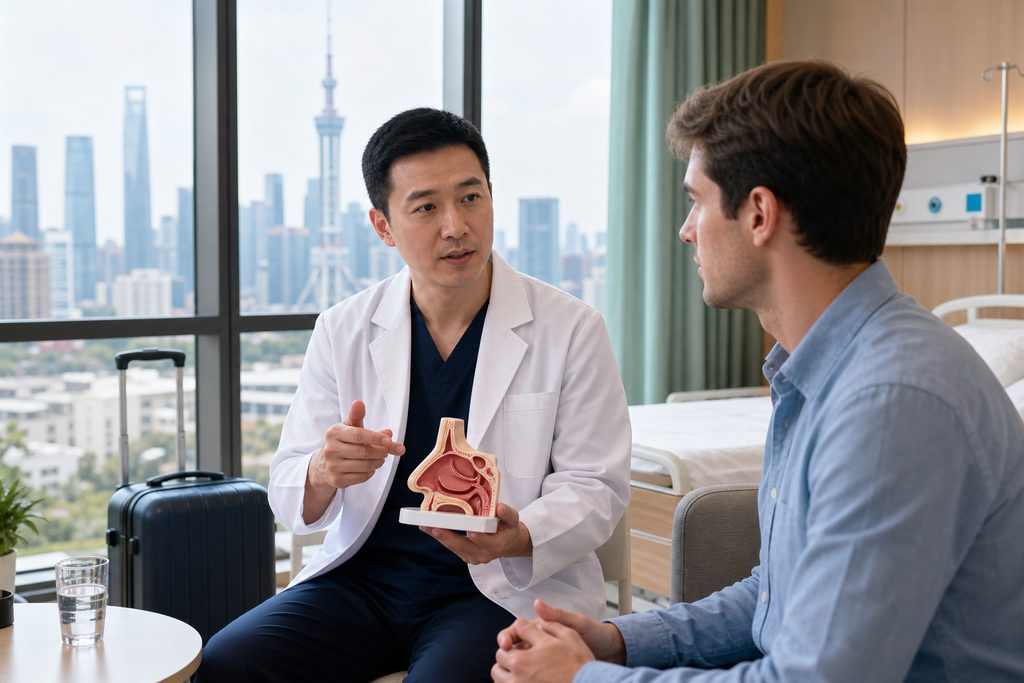
When 42-year-old Daniel from Manchester booked his orthopedic procedure in Shanghai, the surgery itself was the easy part. The harder question came a week before departure: where would he actually recover? A hospital ward felt too clinical for a three-week rehabilitation. A standard hotel room felt dangerously unsupervised. He needed something in between — and he had no idea what it cost.
Daniel’s dilemma is exactly what this article addresses. The short answer is that hotel recovery after surgery in China is safe when arranged through a hospital’s international department or a licensed nursing agency, with costs typically ranging from $120 to $380 per day for accommodation plus nursing care. But the safety depends entirely on three variables: the nurse’s qualifications, the hotel’s proximity to your surgical hospital, and whether your surgeon signs off on the plan.
Hotel Recovery After Surgery China Price: The Short Answer
Expect to budget between $2,500 and $7,000 for a two-week hotel recovery period in a major Chinese city like Shanghai or Beijing. That covers a four-star hotel room, a registered nurse for 8–12 hours daily, basic medical equipment rental, and coordination with your surgical team. The price swings based on nursing hours, hotel tier, and whether you need specialized wound care or just monitoring.
The caveat: this is not a regulated, standardized service. China’s medical tourism infrastructure is mature in some cities and fragmented in others. You are not buying a package off a shelf. You are assembling a care plan, and the quality of that plan determines whether hotel recovery is genuinely safe or merely convenient.
Who Hotel Recovery Is Right For — and Who It Isn’t
Hotel recovery works well for specific patient profiles. You are likely a good candidate if your surgery was elective, minimally invasive, or outpatient-adjacent — think arthroscopic knee repair, rhinoplasty, liposuction, or hernia repair. You need monitoring but not intensive intervention. You are mobile enough to use a bathroom independently. And you have a companion traveling with you, or you have budgeted for round-the-clock nursing.
You should not pursue hotel recovery if your surgeon requires inpatient observation beyond 48 hours. Or if your procedure carries a meaningful risk of post-operative bleeding, infection requiring IV antibiotics, or respiratory complications. Cardiac surgery, major abdominal surgery, and any procedure with a drain or external fixator generally belong in a hospital ward. The same applies if you have uncontrolled diabetes, a bleeding disorder, or a history of poor wound healing.
Being honest about this boundary matters. A hotel is not a hospital. No amount of nursing care changes that.
The Options, Compared
What are the genuine alternatives for post-surgical recovery in China? Three models dominate, and they differ sharply in cost, supervision level, and patient experience.
| Recovery Model | Typical Cost Range | Nursing Coverage | Best For |
|---|---|---|---|
| Hospital ward (standard) | $80–$200/day | 24/7 ward nurses, shared room | Complex surgeries, drains, IV needs |
| Hospital VIP/international ward | $250–$600/day | 24/7 nursing, private room, English support | Patients wanting hospital safety plus privacy |
| Hotel + private nurse (4-star) | $120–$380/day | 8–12 hrs/day, on-call overnight | Stable patients after minimally invasive surgery |
| Hotel + 24/7 private nurse | $300–$700/day | Round-the-clock dedicated nurse | Solo travelers, higher-acuity recovery |
| Serviced apartment + nurse visits | $150–$400/day | 2–4 hrs/day, plus telehealth check-ins | Longer stays, family present, low acuity |
Which column suits you depends on one question: how much can go wrong without a doctor in the building? If the answer is “very little,” a hotel with a day nurse is reasonable. If the answer is “I don’t know,” stay in the hospital. The cost difference between a hospital VIP ward and a hotel with nursing is sometimes only $100–$200 per day. For that premium, you get immediate physician access, sterile environments, and liability coverage. For many patients, that premium is worth paying.
How Does Hotel Nursing Work After Surgery Abroad?
Here is what actually happens on the ground when you book surgery in China with private nurse recovery. The process starts before you travel. Your surgical hospital’s international department — or a third-party medical concierge — identifies licensed nurses who have post-operative care experience. These are not hospital ward nurses moonlighting after shifts. They are typically registered nurses employed by private nursing agencies that contract with hospitals.
The nurse meets you at the hospital on discharge day. They receive a handover from the surgical team: wound care instructions, medication schedule, red-flag symptoms, and the surgeon’s direct contact number. Then you travel together to the hotel. The nurse sets up the room — medical supplies on a clean surface, a medication chart on the wall, the bathroom checked for fall risks.
Daily structure varies. A typical 12-hour shift includes vital signs monitoring, wound inspection, medication administration, assistance with bathing and mobility, meal preparation aligned with dietary restrictions, and a written log that gets shared with your surgeon. Overnight, the nurse may stay in an adjacent room or be on-call by phone. Some packages include a second nurse for overnight coverage. That is where the price climbs.
The critical factor is the handover. A hotel recovery plan is only as safe as the information transfer from hospital to nurse. Insist on a written discharge summary in English. Insist that your nurse receives it before you leave the hospital. If the hospital cannot provide this, that is a red flag — not about the nurse, but about the hospital’s experience with international patients.
Is Home Recovery Safe After Plastic Surgery in China?
This question deserves a direct answer because plastic surgery is the most common procedure international patients book with hotel recovery packages. The honest answer: home recovery after plastic surgery in China is generally safe for procedures like rhinoplasty, blepharoplasty, liposuction of limited areas, and breast augmentation — provided you stay within 30 minutes of your surgical hospital and have a nurse for the first 48–72 hours.
But “home” in this context usually means a hotel, not a private residence. And the first 72 hours are when complications appear. Hematoma after rhinoplasty. Seroma after liposuction. Infection at incision sites. A nurse who sees you twice a day can catch these early. A patient alone in a hotel room cannot.
For larger procedures — tummy tucks, body lifts, combined surgeries — home recovery is not appropriate. The risk profile changes. You need drains managed, compression garments adjusted, and mobility assistance that exceeds what one nurse can provide in a hotel setting. Stay in the hospital for at least 3–5 days after major body contouring. Your surgeon should make this call, not your budget.
Best Hospital Hotel Recovery Shanghai Cost
Shanghai has the most developed hotel recovery ecosystem in China, partly because it hosts several JCI-accredited private hospitals that cater to international patients. The best hospital hotel recovery Shanghai cost typically falls between $200 and $450 per day for a package that includes a hotel room near the hospital, daily nursing visits, and a direct line to the surgical team.
What drives the variance? The hospital’s relationship with nearby hotels. Some Shanghai hospitals have preferred partnerships with specific four-star and five-star properties. These partnerships matter because the hotel staff are familiar with post-operative guests — they handle medical waste disposal, dietary requests, and wheelchair access without friction. A hospital-recommended hotel is safer than a random booking, even if it costs $30–$50 more per night.
Expect to pay toward the higher end if you want a nurse who speaks English. Bilingual nurses are scarce and command a premium. In Shanghai, a Mandarin-only registered nurse might cost $80–$120 per 8-hour shift. An English-speaking nurse with international patient experience might cost $150–$250 for the same shift. That language premium is not a luxury. When you need to describe that your incision feels warm or that your pain changed from dull to sharp, vocabulary matters.
Practical Considerations: Documentation, Visas, and Payment
Before you book surgery in China with private nurse recovery, sort out the paperwork. You will need an S2 visa for medical treatment — do not apply for an M visa, which is strictly for commercial and trade activities. Your hospital provides the invitation letter and treatment confirmation that supports the S2 application. Your accompanying family member also applies for an S2 visa. Processing times vary by embassy, so start at least 6–8 weeks before your planned surgery date.
Payment is another layer. Chinese public hospitals generally require prepayment for surgical procedures, with a deposit that may be 50–100% of the estimated cost. Private international hospitals often accept direct insurance billing, but public hospital international departments typically do not — you pay upfront and claim reimbursement from your insurer later. Hotel nursing fees are almost always paid directly to the nursing agency or concierge service, not to the hospital. Ask for a detailed invoice breakdown. You will need it for insurance claims.
Language remains the biggest practical barrier. Outside of Shanghai, Beijing, and Guangzhou, English-speaking hospital staff are rare. Even in those cities, the nursing agencies that provide hotel recovery services often operate in Mandarin. If you do not have a bilingual coordinator, you will struggle to arrange nurse handovers, medication instructions, and emergency communication. This is not a reason to avoid China. It is a reason to budget for coordination support.
After you return home, continuity of care matters. Request a complete discharge summary, operative report, and medication list in English before you leave China. Your home physician needs these records to manage your ongoing recovery. Some Chinese hospitals provide English documentation as standard in their international departments. Others require you to request it explicitly, sometimes with a translation fee. Ask early, not on discharge day.
Frequently Asked Questions
For a two-week stay in a major city, budget $2,500 to $7,000 total. That includes a four-star hotel room, a registered nurse for 8–12 hours daily, basic equipment, and coordination. The range reflects nursing hours, hotel tier, and whether you need an English-speaking nurse. Prices vary by hospital and case complexity.
It is safe for stable patients after minimally invasive or elective procedures, provided a licensed nurse manages the first 72 hours and the hotel is within 30 minutes of your surgical hospital. It is not safe for complex surgeries, patients with drains or IV needs, or anyone with significant co-morbidities. Your surgeon should make the final determination.
Yes, but the package structure varies. Some private hospitals in Shanghai and Beijing offer bundled packages that include surgery, hotel accommodation, and nursing. Public hospital international departments usually arrange surgery and nursing separately, with the hotel booked through a partner agency. Read the package terms carefully — some exclude nursing hours beyond a daily minimum, and others do not include medication costs.
Your nurse should have a direct line to your surgeon and a written escalation protocol. If a complication arises, the standard response is transfer back to the hospital — either by ambulance or private car, depending on urgency. Make sure your package specifies who arranges and pays for that transfer. Also confirm that your travel insurance covers post-operative complications requiring re-admission. Many standard travel policies exclude this.
You can recover alone if you budget for 24/7 nursing for at least the first three days. After that, 12-hour daily coverage is usually sufficient for low-acuity recovery. But a family member or friend provides something a nurse cannot: advocacy. They notice when you are not yourself. They push for answers when communication breaks down. If you travel solo, choose a package with round-the-clock nursing and a bilingual coordinator.
Your Next Step
Hotel recovery after surgery in China is a legitimate, safe option when the surgery is appropriate, the nurse is qualified, and the logistics are handled before you board the plane. The dangers come from improvisation — booking a random hotel, hiring an unlicensed caregiver, skipping the discharge handover. None of that is necessary.
Our team at China Medical Services helps international patients evaluate whether hotel recovery fits their procedure and their risk profile. We are not a hospital, and we do not provide medical advice or diagnoses. What we do is connect you with top-ranked Chinese hospitals, coordinate bilingual nursing arrangements, and make sure the practical details — visas, documentation, transfers — are handled before you travel. If you are weighing surgery in China and want to understand your recovery options, start with a conversation. Visit our consultation page to tell us about your case. No obligation, just clarity.
Recovery is where surgeries succeed or fail. Plan it as carefully as you plan the operation itself.
For more medical information and treatment options in China, visit chinamedservices.com (China Medical Services).
