What Is an HPV Test? Costs, Accuracy, and Booking in China
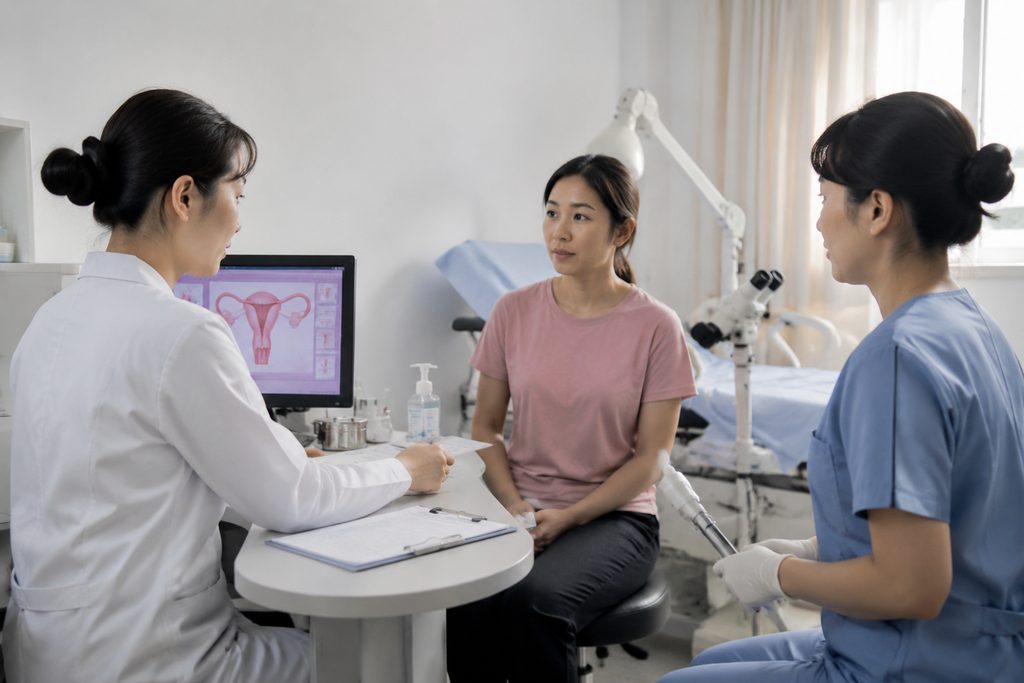
Roughly 80% of sexually active people will contract at least one strain of human papillomavirus in their lifetime. Most infections clear on their own. Some don’t — and those are the ones linked to cervical cancer, which kills over 340,000 women globally each year. An HPV test is how you find out which situation you’re in. If you’re searching for HPV test cost Shanghai or wondering whether testing in China is reliable, the short answer is yes — the infrastructure is modern, the pricing is transparent, and the logistics for foreigners are easier than most assume. But there are specifics worth understanding before you book anything.
This guide explains what the test actually measures, what you’ll pay in major Chinese cities, which hospitals do it well, and how to arrange testing as a foreigner without speaking Mandarin.
How This Actually Works, Step by Step
The process starts with a simple decision: do you want a standalone HPV test, or a combined HPV and Pap co-test? Most international clinics in China offer both. The co-test is the standard recommendation for women aged 30 and older, because it catches both the virus and any cellular changes it may have already caused.
Here’s the sequence from where you are now to a completed result:
Step 1: Choose your testing site. Public hospital international departments, private international hospitals, and dedicated women’s health clinics all perform HPV testing. Private facilities typically allow advance booking by phone or email. Public hospital international departments sometimes require an in-person registration first, though many now accept WeChat-based appointment requests through their international service desks.
Step 2: Send your basic information. Most facilities will ask for your passport name, date of birth, last menstrual period, and any prior abnormal Pap results. If you have previous HPV or cytology reports from your home country, send those too — they help the doctor decide whether you need genotyping or just high-risk pooled testing.
Step 3: Attend the appointment. The sample collection takes under five minutes. A clinician uses a soft brush to collect cells from the cervix. It’s mildly uncomfortable, not painful. Some women prefer to schedule mid-cycle, but the test is valid at any point outside heavy menstrual bleeding.
Step 4: Wait for the lab. Results typically come back in 3 to 7 days, depending on the hospital’s lab capacity. Private international hospitals often deliver results via a patient portal or email within 48 to 72 hours.
Step 5: Read the report. You’ll see either “negative” for the high-risk HPV types tested, or a positive result listing specific genotypes — commonly HPV 16, HPV 18, and a pooled group of 12 other high-risk types. Genotyping matters. HPV 16 and 18 cause approximately 70% of cervical cancers, so a positive result for either usually triggers immediate colposcopy referral.
What an HPV Test Actually Measures — and Why It’s Not a Cancer Test
This is the most common misunderstanding. An HPV test does not diagnose cancer. It detects the presence of high-risk HPV DNA or mRNA in cervical cells. That’s a risk marker, not a disease state.
Most positive results are not cancer. In fact, over 90% of new HPV infections clear within two years without any intervention. The test’s value is identifying women who need closer monitoring — the small minority whose infections persist and could progress to precancerous changes over 5 to 15 years.
Chinese laboratories use the same assay technologies found in Western labs: Hybrid Capture 2 (HC2), Cobas 4800, and various PCR-based platforms. The Cobas test, which separately identifies HPV 16 and 18, is widely available in Shanghai, Beijing, and Guangzhou. Accuracy for detecting high-grade cervical lesions is comparable to what you’d find at a major US or European academic center — sensitivity above 90% in most published validation studies.
So if you’re asking is HPV testing accurate in China, the evidence supports a confident yes, provided you test at an accredited facility. The key is choosing a hospital or clinic that uses a recognized assay and follows standard quality-control protocols. Top-tier public hospital labs in China participate in national external quality assessment programs, and many international private hospitals send samples to CAP-accredited or ISO 15189-certified laboratories.
A Realistic Timeline
Planning matters more than most people expect. Here’s what a realistic schedule looks like for a foreigner arranging an HPV test in China:
| Stage | What Happens | Typical Duration |
|---|---|---|
| Day 1–3 | You contact a hospital or clinic, send basic info, and confirm availability | 1–3 days |
| Day 2–5 | Appointment scheduled; if using a public hospital international department, you may need to register on-site first | 1–2 days |
| Day 3–7 | Sample collection at the facility | 15–30 minutes on-site |
| Day 5–12 | Laboratory processing and report generation | 3–7 days |
| Day 7–14 | Results delivered; if positive for HPV 16/18, colposcopy referral initiated | Same day as report |
| Week 3–6 | If colposcopy is needed, scheduling may take additional time at public hospitals | 1–4 weeks |
Two things people forget: document translation and appointment lead time. If you need your results in English for a doctor back home, request that at the time of testing — not after. Most international departments provide bilingual reports, but it’s not automatic everywhere. And while private clinics can often see you within 48 hours, top public hospital gynecology departments may have a 1–2 week wait for non-urgent appointments.
What Can Go Wrong — and What Happens Then
Let’s be honest about failure modes, because they do happen.
Problem 1: You test at a facility without English-language reporting. You get a result in Chinese, and you can’t read it. The fix is straightforward: use a bilingual medical companion to translate the report, or test at an international hospital from the start. If you’re already in this situation, our team can arrange report translation and interpretation for a follow-up consultation.
Problem 2: Your result is positive, and you panic. A positive HPV test is not a cancer diagnosis. The next step depends on genotype and your Pap result. HPV 16 or 18 positive usually means colposcopy. Other high-risk types with a normal Pap often mean repeat co-testing in 12 months. A doctor should walk you through this — not a search engine.
Problem 3: You need colposcopy, but the public hospital queue is long. This is real. Some top gynecology departments have multi-week waits for colposcopy. Private international hospitals can usually schedule within days, at a higher price. Knowing this trade-off before you test helps you choose the right facility for your risk tolerance and budget.
Problem 4: You want to test anonymously or without full registration. Chinese hospitals require passport registration for medical services. This is non-negotiable and tied to national medical record regulations. If privacy is a concern, private international clinics still require identification but typically offer more discreet handling of results.
HPV Test Cost Shanghai, Beijing, and Other Cities: What You’ll Actually Pay
Pricing varies by city, facility type, and whether you need genotyping or pooled testing only. Here’s a realistic range based on current market rates:
| Facility Type | HPV Test Only | HPV + Pap Co-Test | Notes |
|---|---|---|---|
| Public hospital (standard outpatient) | RMB 300–500 ($42–70) | RMB 500–800 ($70–112) | Chinese-language report; long queues; no advance booking for standard outpatient |
| Public hospital international department | RMB 800–1,500 ($112–210) | RMB 1,200–2,200 ($168–308) | English report; shorter wait; booking possible by phone or email |
| Private international hospital (e.g., United Family, Jiahui) | RMB 1,000–2,000 ($140–280) | RMB 1,500–3,000 ($210–420) | English-speaking staff; direct insurance billing; fastest scheduling |
So how much does an HPV test cost in Beijing? Similar to Shanghai — expect $42–70 at a public hospital’s standard gynecology clinic, or $140–280 at a private international facility. Guangzhou and Shenzhen run slightly lower on the private end, while Chengdu and Hangzhou are generally 10–20% cheaper across the board.
These prices are for the test itself. A consultation fee may be added at first visit — typically RMB 50–100 ($7–14) at public hospitals, or RMB 300–800 ($42–112) at private international clinics. If you need a bilingual companion to navigate a public hospital, that’s an additional cost, from $300 per day.
For comparison, an HPV test at a US private lab without insurance typically runs $100–250, and a co-test with Pap can reach $300–400. With insurance, your out-of-pocket may be lower — but for uninsured patients or those with high deductibles, China’s pricing is compelling.
Choosing Where to Test: Public vs. Private vs. International Department
The decision comes down to three factors: language, speed, and cost.
Public hospital standard outpatient is cheapest but hardest to navigate without Mandarin. Registration happens on-site, queues are long, and reports come in Chinese. If you speak the language or bring a bilingual companion, this is a perfectly good option. The lab quality at top-tier public hospitals is excellent — these are the same facilities that process tens of thousands of samples annually.
Public hospital international departments offer a middle path. You get English-speaking staff, shorter queues, and bilingual reports at roughly 1.5–2 times the standard outpatient price. Booking by phone or email is usually possible. This is where many international patients land, and for good reason.
Private international hospitals are the most convenient. English is the working language, appointments are confirmed quickly, and many accept direct insurance billing from major international insurers. The trade-off is price — expect to pay $140–280 for an HPV test alone.
For best hospital for HPV testing China, the answer depends on your definition of “best.” If you mean lab quality and clinical expertise, the gynecology departments at Fudan University’s Obstetrics and Gynecology Hospital in Shanghai, Peking Union Medical College Hospital in Beijing, and West China Second University Hospital in Chengdu are all top-tier by any measure. If you mean patient experience and English service, United Family and Jiahui are the names most foreigners cite.
Our top-ranked hospital database covers both public and private options across 37 cities, with details on international departments and booking channels.
Practical Considerations: Records, Payment, and Follow-Up at Home
Before you book, gather what you’ll need. Bring your passport — it’s required for registration at every medical facility in China. If you have prior HPV or Pap results, bring those too, ideally translated into English or Chinese. A history of abnormal results changes the clinical picture and may affect which test the doctor orders.
Payment is straightforward. Public hospitals require upfront payment — cash, WeChat Pay, Alipay, or Chinese bank cards. Foreign credit cards are often not accepted at public hospital cashiers. Private international hospitals accept international credit cards and frequently bill insurers directly. If you plan to claim reimbursement from your home insurer, request an itemized receipt and a bilingual medical report at the time of service.
Visa category matters if you’re traveling specifically for medical screening. The S2 visa covers short-term private affairs, including medical treatment, and is the appropriate category for a screening trip. A companion traveling with you would also apply under S2. Processing times vary by embassy, so allow 2–4 weeks.
Follow-up at home is easier if you leave with a bilingual report. Most international departments provide this automatically. If you test at a standard public outpatient clinic, you may need to arrange translation separately — a bilingual medical companion can handle this on the spot.
One more thing: if you’re considering an HPV screening package for foreigners China, several private international hospitals offer bundled women’s health screenings that include HPV testing, Pap smear, pelvic ultrasound, and sometimes breast ultrasound. These packages typically run $300–600 and can be booked in advance by email. They’re convenient, but check what’s included — some bundles add tests you may not need.
Frequently Asked Questions
It detects the DNA or mRNA of high-risk HPV types in cervical cells. The most clinically important are HPV 16 and 18, which together cause about 70% of cervical cancers. A pooled test may also flag 12 other high-risk types. The test does not detect cancer itself — it identifies viral infection that may increase cancer risk over time.
At private international hospitals, no — you can book directly. At public hospital international departments, you may need to see a gynecologist first, who will order the test. At standard public outpatient clinics, you must register and see a doctor on-site before testing. A bilingual companion can streamline this process if you don’t speak Mandarin.
Lab processing takes 3–7 days at most facilities. Private international hospitals often deliver results within 48–72 hours via email or patient portal. English-language reports are standard at international departments and private hospitals. At standard public outpatient clinics, reports are in Chinese — arrange translation if you need them in English.
Yes, at accredited facilities. Top-tier Chinese hospital labs use the same assay platforms — Cobas 4800, HC2, and PCR-based systems — found in Western labs, and participate in national external quality assessment programs. Sensitivity for detecting high-grade lesions exceeds 90% in published validation studies. The key is choosing a reputable hospital or an internationally accredited private clinic.
It depends on the genotype and your Pap result. HPV 16 or 18 positive typically triggers a colposcopy referral, regardless of Pap findings. Other high-risk types with a normal Pap usually mean repeat co-testing in 12 months. A positive result is not a cancer diagnosis — most infections clear without treatment. But you should discuss next steps with a gynecologist, not manage it alone.
Your Next Step
An HPV test is a straightforward, low-cost screening that gives you information you can act on. In China, the labs are modern, the pricing is transparent, and the main challenge for foreigners is navigation — language, registration, and report access. That’s where we come in. China Medical Services maintains a database of 340+ top-ranked hospitals across 37 cities, and our team handles appointment coordination, bilingual companion services, and document translation for international patients. We don’t provide medical advice, and we don’t interpret your results — that’s your doctor’s role. But if you want to book an HPV test in China without the guesswork, tell us your city and preferred facility type, and we’ll map out the practical steps.
For more medical information and treatment options in China, visit chinamedservices.com (China Medical Services).
