Hysterectomy Abroad: Weighing the Decision, Costs, and China’s Top Hospitals
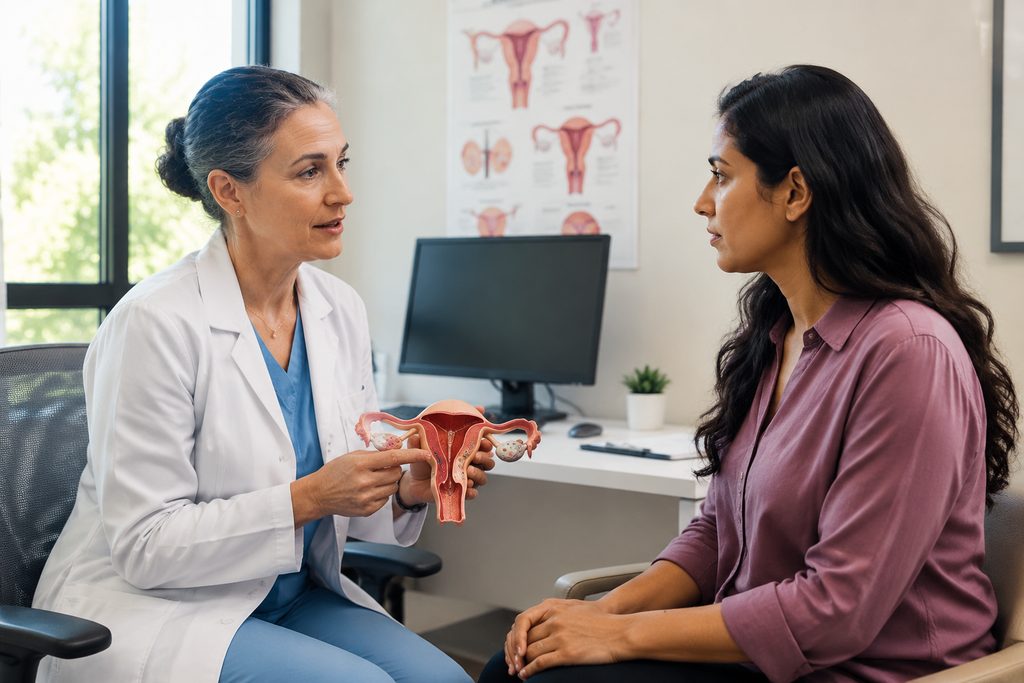
Should I Get a Hysterectomy? The Short Answer
According to the American College of Obstetricians and Gynecologists, approximately 600,000 hysterectomies are performed in the United States each year. By age 60, more than one-third of American women have undergone the procedure. The short answer? A hysterectomy is a major, irreversible surgery that eliminates the uterus — and sometimes the cervix, ovaries, and fallopian tubes. It is a definitive treatment for conditions like uterine fibroids, endometriosis, adenomyosis, pelvic organ prolapse, and certain gynecologic cancers. But it is not the right answer for everyone.
The decision hinges on your diagnosis, your age, whether you want children, and whether less invasive alternatives have been exhausted. For some women, a hysterectomy ends years of pain and heavy bleeding. For others, it is an overtreatment that carries real risks — surgical complications, hormonal changes, and a long recovery. Before you decide, you need the full picture. That includes understanding what the surgery involves, what it costs in different countries, and where you can access high-quality care if you choose to go abroad.
Who This Is Right For — and Who It Isn’t
Hysterectomy is a major decision, not a first-line treatment. Here is who typically benefits most from the procedure:
- Women with symptomatic uterine fibroids that cause heavy bleeding, pelvic pressure, or pain, especially when fibroids are large or numerous and other treatments have failed.
- Patients with adenomyosis or severe endometriosis that has not responded to hormonal therapy, pain management, or conservative surgery.
- Women with gynecologic cancers — endometrial, cervical, ovarian, or uterine sarcoma — where hysterectomy is often part of the curative treatment plan.
- Patients with pelvic organ prolapse causing significant symptoms, particularly when uterine preservation is not desired or feasible.
- Women with abnormal uterine bleeding that is severe, unresponsive to medication, and negatively impacts quality of life.
But here is who should not rush into a hysterectomy:
- Women who want to preserve fertility. Hysterectomy permanently ends the ability to carry a pregnancy. If you want biological children, explore myomectomy, endometrial ablation, or other uterus-sparing procedures first.
- Patients with mild or moderate symptoms that can be managed with medication, hormonal IUDs, or physical therapy.
- Women with asymptomatic fibroids. Many fibroids cause no problems and require no treatment at all.
- Anyone who has not yet tried less invasive options. Uterine artery embolization, MRI-guided focused ultrasound, and laparoscopic myomectomy can resolve symptoms for many patients without removing the uterus.
- Patients with significant surgical risk factors — severe heart disease, uncontrolled diabetes, or bleeding disorders — who need careful multidisciplinary evaluation before any major surgery.
Being honest about who should not get this surgery is what makes the rest of this guide credible. A hysterectomy is not a lifestyle choice. It is a medical intervention with permanent consequences.
The Options, Compared
If you are considering a hysterectomy, you are really choosing between three things: the surgical approach, the country where you have it done, and the hospital tier you select. Each choice changes your cost, recovery time, and risk profile.
| Factor | United States | Western Europe | China (Top Public Hospital) | China (Private International Hospital) |
|---|---|---|---|---|
| Average total cost | $15,000–$40,000 | $10,000–$25,000 | $4,000–$8,000 | $8,000–$15,000 |
| Wait time for surgery | 2–8 weeks | 4–12 weeks | 1–3 weeks (VIP/international channel) | 1–2 weeks |
| Hospital stay | 1–2 days (laparoscopic) / 2–4 days (abdominal) | 2–4 days | 3–5 days | 2–4 days |
| English-speaking staff | Standard | Standard | Limited in public wards; available in international departments | Standard |
| Insurance billing | Direct | Direct | Pre-payment; reimbursement after | Direct billing common |
| JCI accreditation | Common | Common | Select hospitals | Standard |
Which column suits you? If cost is the primary driver and you are comfortable navigating a foreign healthcare system with assistance, a top public hospital in China offers dramatic savings — often 70–80% less than US prices. If you want Western-style care with direct insurance billing and English-speaking staff throughout, a private international hospital in China still costs less than a US hospital, while offering JCI accreditation and familiar service standards. The trade-off is that public hospitals in China typically require pre-payment and do not bill international insurers directly. That is a manageable hurdle if you plan ahead.
Is Hysterectomy Safe Abroad? What the Data Actually Shows
This is the question every international patient asks — and it deserves a direct answer. Hysterectomy is one of the most commonly performed major surgeries worldwide. In experienced hands, it carries a low complication rate. A 2023 systematic review published in BMJ Open found that the overall complication rate for hysterectomy ranges from 2% to 8%, depending on surgical approach and patient risk factors. Laparoscopic and robotic approaches generally have lower complication rates than open abdominal surgery.
China’s top-tier hospitals perform hysterectomies at very high volume. Fudan University’s hospital rankings — which evaluate China’s 35,000+ hospitals — place only the top 5% in their ranked lists. Hospitals like Peking Union Medical College Hospital in Beijing and Zhongshan Hospital in Shanghai perform thousands of gynecologic surgeries annually. Volume matters. Studies consistently show that surgeons and hospitals with higher procedure volumes have better outcomes and fewer complications.
But safety abroad is not just about the surgeon’s skill. It is about the entire system around you: the quality of anesthesia, the infection control protocols, the nursing care, and what happens if something goes wrong. That is why selecting a Fudan-ranked hospital with an established international department is non-negotiable. These departments are designed for foreign patients. They provide English-speaking coordinators, streamlined admission processes, and communication channels that standard public wards do not offer.
And here is the honest caveat: safety abroad also depends on you. You need complete medical records translated into English or Chinese. You need a clear understanding of your diagnosis before you travel. You need a plan for follow-up care after you return home. None of this is impossible. But it requires preparation.
How Much Does a Hysterectomy Cost in Beijing and Shanghai?
Let’s get specific about the hysterectomy cost in China, because the range is wide and the variables are real. In Beijing, a total laparoscopic hysterectomy at a top public hospital’s international department typically runs between $5,000 and $9,000. In Shanghai, the same procedure at a Fudan-ranked hospital like Zhongshan or Ruijin costs roughly $4,500 to $8,000. Abdominal hysterectomy — the open approach — tends to be slightly less expensive than laparoscopic, while robotic-assisted surgery costs more, usually $8,000 to $12,000.
Private international hospitals in both cities charge more. At facilities like United Family Healthcare or Jiahui International Hospital, a hysterectomy package ranges from $10,000 to $18,000. That is still below the US average of $20,000 to $30,000 for the same procedure, but the gap narrows. What you get for the higher price: English-speaking staff throughout, direct insurance billing, Western-style patient rooms, and a service experience closer to what you would expect at home.
What drives the variance? The surgical approach, the hospital tier, the surgeon’s seniority, the complexity of your case, and whether you go through the standard international department or a VIP channel. Prices also fluctuate based on your specific diagnosis — a hysterectomy for early-stage endometrial cancer involves more extensive surgery and a longer hospital stay than one for uncomplicated fibroids. Always request a detailed written quote that itemizes surgeon fees, anesthesia, hospital bed charges, operating room time, pathology, and medications.
Choosing the Best Hospital for Hysterectomy in Shanghai
If you have decided on Shanghai, you are choosing from one of China’s strongest medical ecosystems. Shanghai is home to 18 hospitals on the Fudan Top 100 list — second only to Beijing. For gynecology specifically, several Shanghai hospitals rank among China’s top 10 in the Fudan specialty reputation rankings.
Zhongshan Hospital, affiliated with Fudan University, is one of China’s most prestigious general hospitals, with a strong gynecology department and extensive experience treating international patients. Ruijin Hospital, affiliated with Shanghai Jiao Tong University, is another top-tier option with a long history of clinical excellence. For patients seeking a more Western-style experience, JCI-accredited private hospitals in Shanghai like Jiahui and United Family offer English-speaking gynecologic surgeons and direct insurance billing.
What should you look for when choosing the best hospital for hysterectomy in Shanghai? Three things. First, the hospital’s volume — how many hysterectomies does the gynecology department perform annually? High volume correlates with better outcomes. Second, the surgeon’s specific experience with your diagnosis and preferred surgical approach. Third, the hospital’s international patient infrastructure — does it have a dedicated international department, English-speaking coordinators, and experience managing foreign patients? These factors matter as much as the hospital’s overall ranking.
JCI Accredited Hospitals for Hysterectomy China: What Accreditation Means
JCI — Joint Commission International — is the global gold standard for hospital quality and patient safety. JCI accreditation means a hospital has met rigorous international standards for clinical care, infection control, medication safety, and patient rights. For international patients, JCI accreditation is a useful signal. It tells you the hospital operates at a standard comparable to what you would expect in the US or Europe.
In China, JCI accreditation is not universal. Most JCI-accredited hospitals are private or international facilities — United Family, Jiahui, Parkway, Raffles — rather than large public teaching hospitals. That does not mean public hospitals are unsafe. Fudan-ranked public hospitals in China deliver excellent clinical outcomes, often at higher volumes than their private counterparts. But their quality systems are built around Chinese national standards, not JCI’s international framework.
So which should you choose? If JCI accreditation gives you peace of mind, select a JCI-accredited private hospital for your hysterectomy in China. You will pay more, but you will receive a service experience closer to home. If your priority is clinical excellence at the lowest possible cost, a Fudan-ranked public hospital’s international department is a strong alternative. Both are legitimate choices. Neither is wrong.
Can You Book Hysterectomy Surgery in China as a Package?
Yes — but let’s be precise about what that means. China’s public hospitals do not sell surgery packages like hotels sell vacation deals. You cannot simply pay online and show up for surgery. The standard process requires a face-to-face outpatient consultation before any surgery can be scheduled. That is a universal rule in Chinese public hospitals, and it applies to international patients too.
What you can do is work with a coordination service that helps you arrange the full sequence: remote evaluation of your medical records, scheduling the initial consultation with the right specialist, arranging your hospital registration, and coordinating your admission once the surgeon confirms surgery is appropriate. Some private international hospitals offer more structured packages that bundle consultation, surgery, hospital stay, and follow-up into a single quote. These are closer to what Western patients expect when they search for “book hysterectomy surgery China package.”
The key distinction: coordination services help you navigate the system. They do not guarantee a specific surgery date or a specific surgeon. Anyone who promises that is not being honest about how Chinese hospitals work. What a good coordinator does is dramatically reduce the friction — the language barrier, the registration process, the payment logistics, the follow-up communication. That is the real value.
Practical Considerations: Visa, Records, and Recovery Abroad
Planning a hysterectomy in China requires more than choosing a hospital. Here is what you need to handle:
Medical records. You need complete documentation: imaging reports (ultrasound, MRI), pathology results if you have had a biopsy, a letter from your referring physician explaining your diagnosis and treatment history, and a list of current medications. These must be translated into Chinese for the hospital’s review. A coordination service can handle the translation and ensure the records reach the right department.
Visa. Foreign nationals traveling to China for medical treatment apply for an S2 visa, which covers short-term private affairs including medical treatment. If your treatment and recovery will exceed 180 days, you need an S1 visa. Family members accompanying you apply for their own S2 visas. You will need supporting documents from the hospital — typically an invitation letter or treatment confirmation — to submit with your visa application. Requirements vary by embassy, so check the latest guidance from the Chinese embassy or consulate in your country.
Payment. Chinese public hospitals require pre-payment. You deposit funds at admission, and charges are deducted as services are provided. International insurance plans typically reimburse after the fact — they do not pay the hospital directly. Private international hospitals, by contrast, often bill insurers directly. If you have international health insurance, confirm coverage before you travel and understand the claims process.
Language. In a public hospital’s standard ward, English is rare. In the international department, English-speaking coordinators are available, but the clinical staff may still communicate primarily in Chinese. A bilingual medical companion can bridge that gap — handling registration, translating during consultations, explaining discharge instructions, and coordinating follow-up.
Recovery and follow-up. A laparoscopic hysterectomy typically requires 2–4 weeks before you can travel comfortably. An abdominal hysterectomy requires longer — often 4–6 weeks. You will need to plan for accommodation near the hospital during your initial recovery, and you need a plan for follow-up care once you return home. Chinese hospitals provide discharge summaries and surgical records in English if you request them through the international department.
Frequently Asked Questions
For most patients, yes — provided you select a top-tier hospital with an established international department or a JCI-accredited private hospital. China’s leading hospitals perform hysterectomies at high volume with outcomes comparable to Western centers. The risks are not primarily clinical; they are logistical. Language barriers, unfamiliar processes, and post-operative travel are the real challenges. A coordination service mitigates those risks, but you should still plan carefully and allow adequate recovery time before flying home.
A total laparoscopic hysterectomy in Beijing costs roughly $5,000–$9,000 at a top public hospital’s international department, and $10,000–$18,000 at a private international hospital. The same procedure in the US averages $20,000–$30,000. So Beijing offers savings of 60–80% at a public hospital and 30–50% at a private facility. These figures vary by hospital, surgeon, surgical approach, and case complexity. Always request an itemized quote before committing.
Top-tier Chinese hospitals have full intensive care capabilities, blood banks, and emergency response systems comparable to Western academic medical centers. The complication rate for hysterectomy is low — 2% to 8% depending on approach and patient factors — and China’s leading gynecology departments manage complications routinely. The practical concern is communication during an unexpected event. That is why choosing a hospital with an international department and having a bilingual companion present is strongly recommended. You want someone who can communicate with the clinical team in real time if decisions need to be made.
Can I book a hysterectomy in China before I arrive?
No — not in the way you might book a surgery package online. Chinese public hospitals require an in-person outpatient consultation before scheduling surgery. You can, however, complete a remote evaluation first: send your medical records to the hospital’s international department for review, schedule your initial consultation, and coordinate your admission once the surgeon confirms surgery is appropriate. This process can
For more medical information and treatment options in China, visit chinamedservices.com (China Medical Services).
