Severe Dental Anxiety China: Sedation Surgery Plans From $300
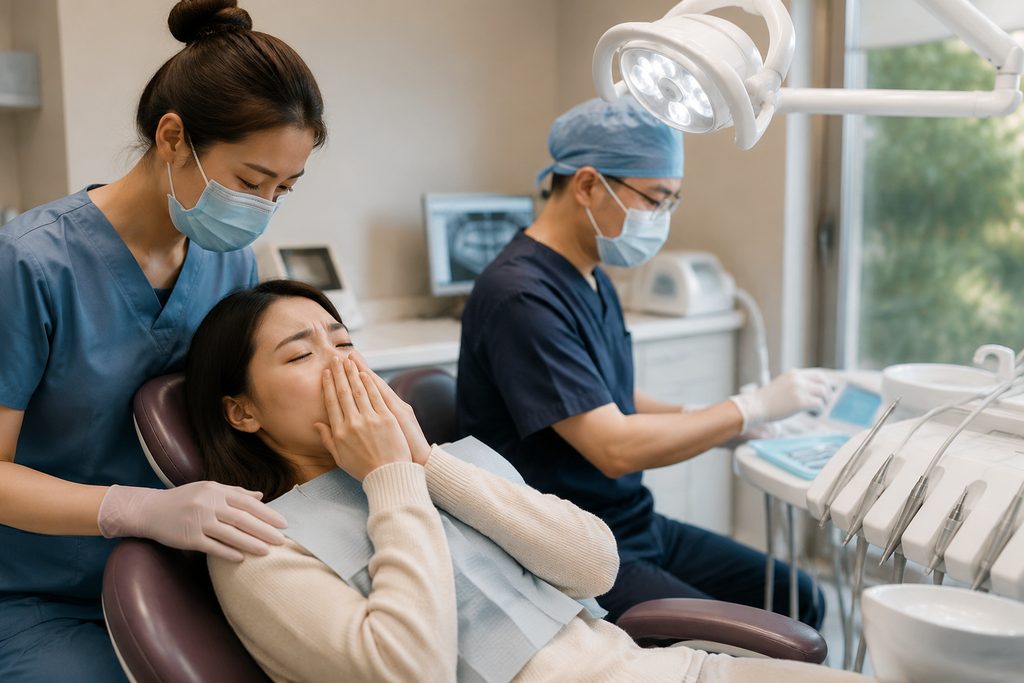
In the United States, roughly 36% of the population avoids the dentist due to fear. In China, the concept of treating that fear as a medical condition in its own right has accelerated rapidly. A full IV sedation session in Shanghai now starts around $500, compared to $1,500 to $3,000 in a typical Western private clinic. That gap has made the dental sedation cost China a serious variable for patients who have put off extractions, implants, and root canals for years.
But price is the easy part. The harder question is whether a clinic halfway around the world can actually handle a patient who shakes in the waiting room, cries at the sound of the drill, or needs a precise blend of medication just to sit in the chair. Our team has coordinated these cases. The answer is yes—but only if you pick the right facility and the right protocol, not just the lowest quote.
Severe Dental Anxiety in China: The Short Answer
You can get dental surgery under deep sedation or general anesthesia in China within a week of arrival. The cost runs from $300 for oral sedation to $1,200 for a full IV general-anesthesia session managed by an anesthesiologist. The catch: walk-in public hospital dental departments are not set up for this. You need a private international clinic or a public hospital VIP wing that stocks the right drugs and staffs a dedicated sedation team. We have seen patients fly in on a Monday, consult on Tuesday, and undergo full-mouth reconstruction under IV sedation on Wednesday. It is not hypothetical. But you cannot book it from a random listing on a map app.
Who This Is Right For — and Who It Isn’t
Sedation dentistry abroad is a specific tool, not a universal fix. The patients who benefit most share a clear profile.
Typically a good candidate:
- You have avoided the dentist for 5+ years and now face multiple extractions, implants, or deep cleanings.
- Your gag reflex is so strong that even X-rays trigger it.
- You have a diagnosed anxiety disorder or PTSD triggered by clinical settings.
- You need 4+ hours of work in a single session and do not want to remember any of it.
- You are physically healthy enough for sedation—ASA Class I or II.
Should not pursue this route:
- You have uncontrolled hypertension, severe sleep apnea, or advanced COPD. An anesthesiologist will likely refuse the case.
- You are pregnant or breastfeeding.
- You are allergic to benzodiazepines or propofol.
- You expect a single pill to erase a phobia without any pre-consultation psychological prep. Sedation manages physiology. It does not cure the underlying fear.
- You have no companion. Post-IV sedation, you cannot sign documents, navigate a taxi, or recall discharge instructions for several hours.
We state the exclusions plainly because a clinic that takes your money without screening for them is not safe.
The Options, Compared
Not all sedation is the same depth. The right level depends on how severe your anxiety is and how invasive the surgery will be. Here is how the main tiers stack up in Chinese private and international clinics.
| Sedation Level | What You Feel | Best For | Cost Range (USD) | Recovery Time |
|---|---|---|---|---|
| Oral Sedation (pill) | Drowsy but awake; can respond to commands | Moderate anxiety, cleanings, single fillings | $300 – $500 | 2-4 hours; need escort |
| Nitrous Oxide (laughing gas) | Relaxed, slightly euphoric; fully conscious | Mild to moderate anxiety; quick procedures | $100 – $200 per session | 15-30 minutes; can leave alone |
| IV Sedation (twilight sleep) | Deep relaxation; little to no memory of the procedure | Severe anxiety, multiple extractions, implant placement | $500 – $800 | 24 hours; mandatory escort |
| General Anesthesia (full unconsciousness) | Completely asleep; no awareness at all | Extreme phobia, full-mouth reconstruction, jaw surgery | $800 – $1,200 | 24-48 hours; hospital setting often required |
Most nervous patients land in the IV sedation column. It is the sweet spot for dental anxiety treatment packages abroad China—deep enough to erase the experience, light enough to avoid intubation and an overnight hospital stay. If you are searching for a way to book sedation dentistry China fast appointment, the IV route is what international clinics can schedule most efficiently because it does not require an operating theater.
Where to Find the Best Dentist for Severe Anxiety Shanghai
Shanghai has the densest concentration of English-speaking sedation dentists in mainland China. Three types of facilities compete for this patient, and they are not equal.
Private International Clinics. This is where most of our patients end up. Brands like Jiahui, United Family, and Parkway have JCI accreditation, native English-speaking dentists, and in-house anesthesiologists who sedate nervous patients daily. They stock midazolam and propofol. They know the protocols. A consultation feels like a Western clinic, not a crowded Chinese public hospital. The trade-off: prices are higher than public hospitals, though still far below Western private rates.
Public Hospital VIP Wings. The Ninth People’s Hospital in Shanghai runs a renowned dental department. Its international wing can arrange sedation for complex surgical cases. The clinical skill is top-tier. The administrative experience is rougher—fewer English-speaking staff, less hand-holding. This path works if you have a medically complex jaw surgery and need a specific professor-level surgeon. For pure anxiety management, the private clinics are smoother.
Dental Chains Aimed at Chinese Consumers. Brands like Arrail and iByer have hundreds of locations. Some offer sedation. But English fluency varies wildly between branches, and the sedation protocols are less standardized. We do not typically route foreign patients here for anxiety cases unless a specific surgeon comes recommended.
Finding the best dentist for severe anxiety Shanghai is not about a single name. It is about matching the sedation method to a facility that performs it at least 20 times a week. Volume matters. A dentist who sedates one patient a month is not the same as one who sedates five a day.
Is Dental Sedation Safe in China for Nervous Patients?
The safety question splits into two parts: the drugs and the monitoring.
The drugs are the same. Midazolam, propofol, fentanyl—these are global molecules. Chinese anesthesiologists train on the same pharmacology as their American or German counterparts. In JCI-accredited hospitals, the crash cart, pulse oximeter, capnography, and defibrillator are present and checked. We have verified this on site visits.
The variable is the monitoring culture. In a top-tier international clinic, a dedicated anesthesiologist or nurse anesthetist stays with the patient from induction to recovery. Vital signs are recorded every five minutes. This is the standard you need. In a lower-tier clinic, a dentist might administer oral sedation without a separate monitoring professional in the room. That is legal in some jurisdictions. It is also a risk we tell patients not to take.
So is dental sedation safe in China for nervous patients? Yes, when two conditions are met. First, the facility is JCI-accredited or operates as a public hospital VIP wing with a separate anesthesia department. Second, a dedicated sedation provider—not the dentist doing the drilling—monitors you continuously. Ask that question directly before booking. If the answer is vague, walk away.
One more safety point. Chinese clinics often use lower initial doses of midazolam than Western clinics, titrating up slowly. This conservative approach actually reduces the risk of over-sedation. It means the first few minutes might feel underwhelming if you expect to be knocked out instantly. But it is safer.
What It Costs: A Real Breakdown
The dental sedation cost China headline number is only part of the bill. Here is what a typical full case looks like for a patient needing multiple extractions and implant placements under IV sedation at a Shanghai private clinic.
| Line Item | Cost Range (USD) | Notes |
|---|---|---|
| Pre-sedation consultation & medical clearance | $100 – $200 | Includes ECG and blood work if needed |
| IV sedation session (up to 4 hours) | $500 – $800 | Covers anesthesiologist fee, drugs, monitoring |
| Surgical extractions (per tooth) | $80 – $200 | Depends on complexity; wisdom teeth at the high end |
| Dental implant (per implant, including abutment and crown) | $800 – $1,500 | Korean or German brands common; Swiss Straumann at premium |
| Bone graft (if needed, per site) | $200 – $500 | Not always required; determined by CBCT scan |
| Post-op medications | $30 – $80 | Antibiotics, painkillers, chlorhexidine rinse |
| Follow-up visit | $50 – $100 | Usually one week later for suture removal |
A patient needing four extractions and four implants under IV sedation might pay $5,000 to $8,000 total in Shanghai. The equivalent in a US private clinic often exceeds $25,000. The gap is real. It is also why some patients combine a dental trip with a short vacation—recovering in a serviced apartment near the Bund rather than at home.
What is not included: flights, accommodation, meals, and any medical complication that requires hospitalization. Travel insurance rarely covers elective dental work abroad. Some patients buy a standalone medical complication policy. Most self-insure by choosing a clinic with admitting privileges at a nearby general hospital.
How to Get Dental Surgery If Terrified of Dentists China: The Step-by-Step
The logistics of how to get dental surgery if terrified of dentists China are not obvious. Here is the sequence that works.
Step 1: Remote records review. You send a recent panoramic X-ray or CBCT scan, a list of medications, and a brief note on what triggers your anxiety. The clinic’s dental team and anesthesiologist review it together. They tell you whether you are a sedation candidate before you buy a plane ticket. This step costs $100–$300 as a written second opinion or video consultation. It is the single best money you will spend on this process.
Step 2: Medical clearance. If you are over 50 or have any cardiac history, the clinic will require a recent ECG and possibly a letter from your primary care physician. Get this done at home. It is faster and cheaper than doing it on arrival.
Step 3: Visa and travel. You apply for an S2 visa with an invitation letter from the dental clinic. Processing takes 5–10 business days at most Chinese embassies. Book 10–14 days in-country. Day 1-2: consultation, consent, maybe a cleaning. Day 3: the main sedation surgery session. Day 4-7: rest, soft diet, follow-up. Day 8-10: suture removal and clearance to fly.
Step 4: The sedation day. You fast for 6-8 hours. An IV line goes in. The anesthesiologist pushes midazolam. You feel warm, then nothing. You wake up in a recovery room with the work done. A companion takes you back to your hotel. You sleep for the rest of the day.
Step 5: Follow-up and return home. The clinic gives you a discharge summary in English. You fly home. Your local dentist can handle any long-term follow-up. Implant restorations—placing the final crown—happen 3-6 months later. Some patients fly back for that. Others have the crown made locally using the implant brand’s components.
This is how we have seen dozens of phobic patients get through it. The key is the pre-trip consultation. It removes the fear of the unknown, which for an anxious patient is half the battle.
Practical Considerations: Records, Language, and the Companion Requirement
Sedation dentistry abroad has three non-negotiable logistics that first-timers miss.
You must bring a companion. Clinics in Shanghai and Beijing will not discharge a sedated patient to a taxi alone. It is a liability and safety issue. Your companion does not need medical training. They need to be able to call the clinic if you feel unwell, help you to the bathroom, and make sure you eat. If you travel solo, you can hire a bilingual medical companion through a coordination service. But someone must be there.
Your dental records must be in English or Chinese. If your X-rays come with a report in German, French, or Arabic, have it translated. The anesthesiologist needs to read your medical history without guessing. This sounds obvious. You would be surprised how often it is overlooked.
Payment is upfront and mostly in Chinese yuan. Private clinics accept Visa, Mastercard, and sometimes Alipay linked to international cards. Public hospital VIP wings may require a cash deposit or WeChat Pay, which is harder for foreigners. Clarify payment methods before you arrive. Also, US and European dental insurance rarely covers treatment in China. Expect to pay out of pocket and seek reimbursement later if your policy allows it.
And a note on language. The dentist performing the surgery in an international clinic will speak English. The anesthesiologist may speak functional but not fluent English. The nursing staff often speaks limited English. This is where a bilingual coordinator in the room makes a tangible difference—not for the surgery itself, but for the moments before and after when you are anxious and need to understand what is happening.
Frequently Asked Questions
Yes. General anesthesia—total unconsciousness—is available at hospital-based dental departments and some private clinics with operating theater access. Most anxious patients do not need it. IV sedation produces a state where you breathe on your own, respond to physical prompts, and remember nothing afterward. It is safer than general anesthesia and sufficient for 95% of phobic patients. Ask the clinic which level they recommend after reviewing your medical history.
This is common. Some clinics offer oral pre-medication—a small dose of diazepam or midazolam in pill form—30 minutes before the IV insertion. You take it in the waiting room. By the time you sit in the dental chair, you are calm enough for the needle. Not every clinic offers this. Ask explicitly. If your anxiety is so severe that even the consultation triggers a panic attack, discuss this during the initial video call so the team can plan around it.
The cost difference is not about quality. It is about labor costs and clinic overhead. A prosthodontist in Shanghai earns less than one in Los Angeles or London. Commercial rent, malpractice insurance, and nursing salaries are all lower. The implant systems—Straumann, Nobel Biocare, Osstem—are the same brands used globally. We have seen CBCT scans and surgical guides used in Chinese clinics that match any Western standard. The risk is not the technology. It is the variation between clinics. A top-tier Shanghai clinic is world-class. A random clinic in a third-tier city may not be. Choose accordingly.
Serious adverse events during dental sedation are rare—roughly 1 in 300,000 cases for major complications, based on large-scale studies. When they occur, the response depends on the facility. JCI-accredited clinics have resuscitation equipment, emergency drugs, and transfer agreements with nearby hospitals. Before booking, ask: “If I have a cardiac event or respiratory depression during sedation, what is the exact protocol?” A credible clinic will describe it in detail. A vague answer is a red flag.
How do I know the clinic won’t take advantage of me while I’m sedated?
This fear is common and understandable. Two safeguards exist. First, the treatment plan is documented
For more medical information and treatment options in China, visit chinamedservices.com (China Medical Services).
