Joint Replacement for Obese Patients in China: High BMI Orthopedic Surgery Full Support
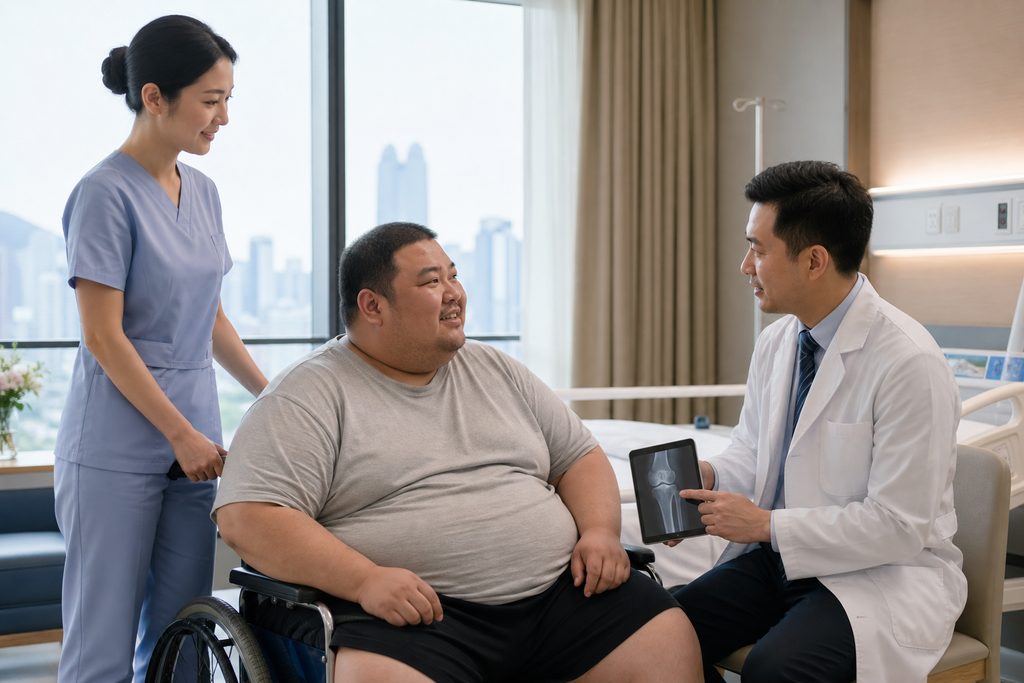
Joint replacement surgery replaces a damaged joint surface with a metal, ceramic, or plastic implant. For a patient carrying significant extra weight, the decision to proceed carries heavier stakes. The pain is often worse, the mobility loss more profound, and the surgical risks a genuine source of worry. Our team has guided patients through this specific crossroads many times. The question is never simply “can it be done.” The real question is “where can it be done safely, with a team that sees your case as routine rather than exceptional, and at a cost that does not wipe out a family’s savings.”
We consistently see that China’s top-tier orthopedic centers clear a path that has narrowed elsewhere. The combination of extreme surgical volume, dedicated high-BMI protocols, and a cost structure that resets the financial equation draws patients from North America, Europe, and the Middle East. This article lays out what you need to know about the obesity knee replacement cost China offers, the BMI realities in Chinese hospitals, and the full support framework that makes the journey possible.
Key Takeaways
- A top Chinese joint replacement surgeon performs 200–500 procedures annually, compared to roughly 65 for the average US surgeon, building deep experience with complex high-BMI cases.
- The all-inclusive obesity knee replacement cost China offers typically runs $12,000–$22,000, a fraction of the $45,000–$70,000 charged in the US for comparable implant systems.
- Chinese hospitals do not enforce a universal hard BMI cutoff. Surgical clearance depends on a metabolic workup, cardiac fitness, and the specific center’s perioperative protocol, not a number on a scale alone.
- Language, visa logistics, and hospital navigation are real obstacles. A dedicated coordination team handles the non-medical burden so you can focus on recovery.
The Problem: When Weight Becomes a Barrier to Mobility
Osteoarthritis hits heavier patients harder and earlier. A 2022 analysis in Arthritis & Rheumatology found that adults with a BMI over 30 are nearly four times more likely to develop knee osteoarthritis than those with a healthy weight. The mechanics are unforgiving. Every pound of body weight translates to roughly four pounds of force across the knee joint. For a patient weighing 280 pounds, that is over 1,100 pounds of stress with each step.
Pain is not the only thief. Sleep suffers. Work becomes impossible. The metabolic cascade of inactivity deepens the original problem. Yet when these patients seek surgical relief in the US, Canada, or the UK, they often hit a wall. Some orthopedic groups enforce a strict BMI limit of 35 or 40. Others will operate but quote a cash price north of $50,000. The wait in Canada’s public system can stretch past 18 months for a hip, during which time muscle atrophy and joint deformity worsen. The patient is stuck. The disease progresses. The surgical risk climbs while the patient waits.
This is not a niche problem. The World Health Organization reports that global obesity rates have tripled since 1975. In the US alone, over 42% of adults now have a BMI above 30. The collision of these two epidemics—obesity and osteoarthritis—means millions of people need a high-BMI joint replacement and cannot access one at a viable price point. China Medical Services exists for precisely this reason.
Why China’s Orthopedic Centers Deliver Results for High-BMI Patients
Surgical Volume That Builds Unshakeable Confidence
A surgeon who does 400 knee replacements a year has seen everything. The tricky exposure. The unexpected bone quality. The soft-tissue tension that demands an intraoperative pivot. This is not theoretical. A 2023 study published in The Journal of Bone and Joint Surgery demonstrated a clear inverse relationship between surgeon annual volume and complication rates in total joint arthroplasty. Surgeons performing over 100 cases annually had significantly lower rates of revision, infection, and readmission.
Now consider the numbers at a major Chinese orthopedic center. A single high-volume surgeon at Peking University Third Hospital or Shanghai Sixth People’s Hospital will complete 200–500 joint replacements annually. Their operating room teams scrub into multiple replacements every single day. The anesthesiologists manage high-BMI airways as a matter of routine. The physiotherapists mobilize heavy patients on post-op day zero without hesitation. This is not special. It is Tuesday. For a Western patient with a BMI of 42 who has been turned away by two clinics, walking into a department where the staff do not blink is a profound relief.
Perioperative Protocols Designed for Metabolic Complexity
The danger in high-BMI joint surgery is not the implant. Modern prostheses are biomechanically sound. The danger is the soft-tissue envelope, the wound healing, the risk of deep infection, and the cardiac stress. Chinese academic centers have developed aggressive perioperative pathways to neutralize these risks. Preoperative glycemic optimization is non-negotiable. Hemoglobin A1c must typically be below 7.5% before clearance. Nutritional screening with serum albumin and prealbumin is standard. Obstructive sleep apnea screening with same-day polysomnography is routine in centers like West China Hospital.
Intraoperatively, the use of tranexamic acid to reduce blood loss, spinal anesthesia with sedation rather than general anesthesia when possible, and a meticulous, unhurried surgical technique all contribute to safer outcomes. Postoperatively, chemical and mechanical venous thromboembolism prophylaxis extends beyond the standard duration for high-BMI patients. The protocol is not a suggestion. It is a checklist, and it is followed. This systematic approach—not magic, just disciplined medicine—is what allows Chinese centers to accept patients that Western centers often decline.
What Is the BMI Limit for Knee Surgery in Chinese Hospitals?
There is no single national rule. That is the honest answer. Different hospitals set different thresholds based on their internal data and comfort level. Some private international hospitals in Shanghai will accept patients up to a BMI of 45 without hesitation, provided the metabolic workup is clean. Major public teaching hospitals may set a guideline of 40 but will evaluate each case individually. We have coordinated successful surgeries for patients with a BMI of 43 and 44. The key is the preoperative clearance process. A patient with a BMI of 41, well-controlled blood pressure, an A1c of 6.8%, and a recent normal stress echocardiogram will almost always be approved. A patient with a BMI of 36, uncontrolled diabetes, active smoking, and untreated sleep apnea will be declined or delayed. The number on the scale is one data point among many.
This is fundamentally different from the rigid cutoffs seen in some Western systems. It reflects a surgical culture that judges risk by the whole patient, not by a screening algorithm. It is also why a thorough remote evaluation—sending your full medical records for review before you book a flight—is essential. We help patients gather exactly the right tests, from a cardiac echo to a dental clearance letter, so the Chinese surgical team can make an informed decision quickly.
Obesity Knee Replacement Cost China: The Financial Reality
Let us put numbers on the table. The obesity knee replacement cost China offers is not just cheaper. It is structurally different. In the US, the largest line items are the implant itself, the surgeon’s fee, and the hospital facility charge. A single Zimmer or Stryker knee implant can cost a US hospital $4,000–$7,000. The same implant, purchased by a high-volume Chinese hospital that negotiates directly with the manufacturer, may cost $1,500–$2,500. The surgeon’s fee in the US for a complex primary knee replacement can reach $3,000–$5,000. In China, even a top-ranked specialist’s fee is a fraction of that, not because of lower skill but because of a different healthcare economic model.
Here is the breakdown a patient should expect for a self-pay, international-patient pathway at a top-tier Chinese hospital:
| Cost Component | Estimated Range (USD) |
|---|---|
| Implant (cemented or cementless, standard brand) | $1,500 – $3,500 |
| Surgeon, anesthesiologist, and OR fees | $3,000 – $5,000 |
| Hospital stay (5–7 days, private room) | $2,500 – $4,500 |
| Preoperative workup (labs, imaging, cardiac clearance) | $800 – $1,500 |
| Postoperative physiotherapy (inpatient + initial outpatient) | $600 – $1,200 |
| Medications, consumables, and miscellaneous | $400 – $800 |
| Total Estimated Package | $12,000 – $22,000 |
A comparable procedure in the US, even at a non-profit hospital, typically lands between $45,000 and $70,000. A high BMI hip surgery Shanghai price follows a similar structure, usually landing at the upper end of the knee range due to slightly longer OR time and implant cost. These are not bargain-basement numbers. They reflect real, high-quality care with internationally recognized implant systems. The savings come from structural efficiency, not corner-cutting.
Can morbidly obese patients get joint replacement in China without paying a prohibitive premium? Yes. The price does not multiply with BMI. A patient with a BMI of 42 pays the same package rate as a patient with a BMI of 32, assuming no additional medical interventions are required. This is a critical point. The fee is for the surgery, not a penalty for body size.
High BMI Hip Surgery Shanghai Price and the City’s Orthopedic Infrastructure
Shanghai has become a gravitational center for complex orthopedic cases. The reason is straightforward. Shanghai Sixth People’s Hospital runs one of the largest and most respected orthopedic trauma and joint replacement departments in the world. Its microsurgery and limb reconstruction heritage, dating back to the world’s first successful hand reattachment in 1963, created a culture of tackling cases others find too difficult. The high BMI hip surgery Shanghai price falls within the $14,000–$24,000 range, depending on the specific implant and the need for any advanced bearing surfaces like ceramic-on-polyethylene.
The city’s infrastructure supports recovery. Wide, accessible hotel rooms near the hospital are plentiful. International-standard physiotherapy centers can continue rehabilitation after discharge. The airport is a major international hub with direct flights from most continents. For a patient who will need to stay in China for two to three weeks postoperatively before flying home, Shanghai offers both the surgical expertise and the practical logistics to make that stay manageable. Our Shanghai city page details the specific hospitals and support services available.
How to Book Joint Replacement for Obese Patients China Package: The Stepwise Path
The process is not a one-click purchase. It is a staged medical evaluation that protects both the patient and the surgical team. Here is the sequence we walk every patient through.
Stage 1: Remote Record Review. You send us your standing anteroposterior and lateral X-rays, any existing MRI or CT scans, a recent metabolic panel, HbA1c, complete blood count, coagulation profile, and a cardiac workup including an ECG and echocardiogram if you are over 50 or have cardiac risk factors. We translate these records and present them to one or two surgical teams for a candid assessment. The written second opinion costs from $300–$500 and answers the core question: is this surgery indicated and feasible, and what specific approach does the surgeon recommend?
Stage 2: Video Consultation. You speak directly with the orthopedic team. This is not a sales call. It is a medical conversation. You describe your pain, your functional limitations, and your goals. The surgeon explains the planned approach, the implant choice, the expected hospital stay, and the rehabilitation timeline. The video consultation costs $500–$800 with a top specialist. This step is optional but recommended. It builds the trust that makes a long-haul medical journey feel safe rather than reckless.
Stage 3: On-the-Ground Coordination. Once both sides agree to proceed, we handle the logistics. Hospital registration and surgical scheduling. Visa support documentation for your S2 visa application. Airport pickup and hotel booking. Daily bilingual companion service during your hospital stay—from $300 per day, covering interpretation, navigating the hospital campus, and ensuring you understand every step. The hospital appointment coordination fee starts from $300. If your dates or surgeon availability shift, we manage the rescheduling.
Stage 4: Surgery and Recovery. You arrive, complete any final preoperative tests, undergo surgery, and recover in the hospital for typically five to seven days. After discharge, you stay locally for another week to ten days for wound checks and initial outpatient physiotherapy before receiving clearance to fly home.
Any remote consultation fee you have paid is credited in full toward the on-the-ground coordination service if you proceed to surgery within 90 days. This is a one-time credit applied to the coordination fee only, never to hospital charges. It aligns our incentives with yours: we only succeed if you receive good care.
Selecting the Best Orthopedic Hospital for Overweight Patients China Medical Tourism
Not every hospital is equipped for this. The best orthopedic hospital for overweight patients China medical tourism offers is one that combines high surgical volume, a dedicated international patient department, and a perioperative protocol that explicitly addresses metabolic risk. Here are the centers our team most frequently recommends for high-BMI joint replacement, based on published rankings and our direct coordination experience.
Peking University Third Hospital (Beijing). Its orthopedics department is consistently ranked among the top three nationally in the Fudan University specialist reputation rankings. The sports medicine and joint reconstruction division handles a massive caseload, and the hospital’s international department provides English-language coordination. Surgeons here routinely manage patients with BMI over 35.
Shanghai Sixth People’s Hospital. A global reference center for orthopedic surgery. The volume is staggering. The experience with complex primary and revision cases is deep. The international patient pathway is well-established, though the hospital campus is large and busy—a bilingual companion is not a luxury here, it is essential.
West China Hospital (Chengdu). One of the largest hospital campuses in the world by patient volume. Its orthopedics department is a Fudan top-10 fixture. The hospital has a mature perioperative medicine program that excels at preoperative optimization for high-risk patients. Chengdu’s cost of living is lower than Beijing or Shanghai, which reduces the overall trip expense. Our specialist department rankings page provides a fuller picture of China’s top orthopedic centers across all major cities.
Practical Considerations: Documentation, Visas, and Aftercare
The surgical decision is the hard part. The logistics are simpler, but they must be handled correctly.
Visa. Medical treatment in China requires an S2 visa, which covers short-term private affairs including medical care. Your accompanying family member applies for the same category. The hospital will issue an official invitation letter and treatment confirmation that you submit with your application. Processing times vary by embassy. Budget four to six weeks. We guide you through the document package, but the final approval rests with the Chinese consulate in your home country.
Medical Records. Bring everything. Original imaging on a CD or USB drive. Printed copies of all lab results. A detailed medication list with generic drug names. A letter from your primary care physician summarizing your medical history and surgical clearance. The more complete your records, the faster the Chinese team can move.
Payment. Chinese public hospitals require upfront payment before admission. The hospital will provide a detailed cost estimate. Payment is typically made via international wire transfer or credit card, though credit card limits on large transactions can be an issue. Confirm the payment method with the hospital’s international department before arrival. Private international hospitals may accept direct insurance billing, but public hospitals almost universally operate on a pay-first, claim-later model for international patients.
Aftercare at Home. You will leave China with a discharge summary in English, your operative report, implant stickers with lot and serial numbers, and a rehabilitation protocol. Your home orthopedic surgeon or physiotherapist should receive these before your first follow-up appointment. The Chinese surgical team typically offers one remote follow-up consultation via video at six weeks and three months post-op. Wound photos and progress reports are reviewed. This is not a substitute for in-person follow-up but provides continuity.
Frequently Asked Questions
Often, yes. The decision hinges on a full preoperative evaluation, not BMI alone. If your cardiac, metabolic, and respiratory status are optimized, many Chinese centers will proceed. We have coordinated successful surgeries for patients with a BMI of 43 and 44 who were previously declined in their home countries. The key is honest preoperative disclosure and a willingness to complete the full clearance process.
What happens if a complication occurs after I return home?
This is the question every patient should ask. The Chinese surgical team provides a complete operative record and remains available for remote consultation. You must have a local orthopedic surgeon identified in advance who agrees to manage postoperative care, including any complications. The cost of treating a complication at home
For more medical information and treatment options in China, visit chinamedservices.com (China Medical Services).
