Joint Revision Treatment Worth It: Shanghai Sixth Hospital Outcomes
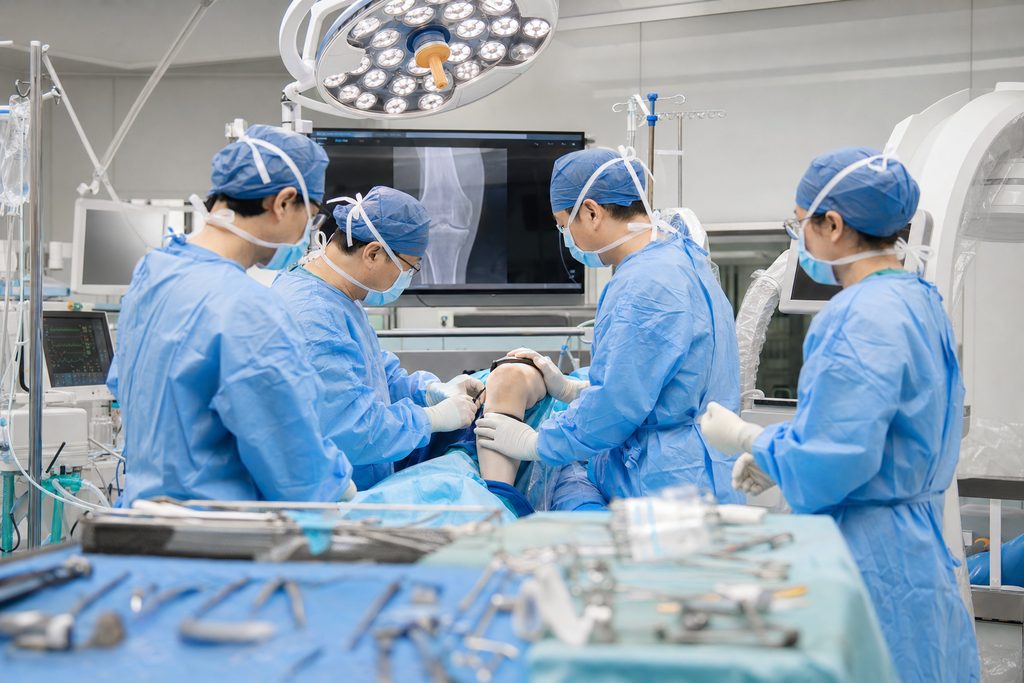
Is Joint Revision Treatment Worth It? A Close Look at Shanghai Sixth Hospital
Over 300,000 international patients traveled to China for medical care in 2024, with orthopedic procedures among the fastest-growing categories. For patients facing a failed hip or knee replacement, the joint revision surgery cost Shanghai Sixth Hospital typically runs 60–75% below comparable US pricing — but cost alone rarely answers the harder question: is revision joint surgery worth it in China when the stakes involve bone loss, infection risk, and a second chance at mobility? This article breaks down what Shanghai Sixth People’s Hospital actually offers, what the evidence says about revision outcomes, and the honest trade-offs you need to weigh before booking a flight.
Key Takeaways
- Shanghai Sixth People’s Hospital performs over 1,500 revision arthroplasty cases annually, placing it among the highest-volume orthopedic centers globally.
- Revision surgery in China costs roughly $12,000–$25,000 at top public hospitals, compared to $40,000–$80,000 in the United States for comparable complexity.
- Revision procedures carry inherently higher failure rates than primary replacements — typically 10–15% at 10 years — regardless of where surgery is performed.
- International patients must use the hospital’s VIP/international department to schedule in advance, which costs 1.5–2 times standard public pricing.
The Problem: When a Joint Replacement Fails
Around 10% of primary hip and knee replacements fail within 15 years, according to registry data from the American Joint Replacement Registry. That translates to roughly 100,000 revision surgeries annually in the US alone. The reasons vary: polyethylene liner wear, implant loosening, periprosthetic joint infection, instability, or osteolysis around the implant. For the patient, failure means pain returns, function declines, and the window for successful revision narrows as bone stock deteriorates.
But here is what most patients do not realize until they are in the thick of it. Revision surgery is not simply a “redo” of the original operation. It is longer, technically harder, and carries higher complication rates. The surgeon must remove the old components, manage bone defects — sometimes with augments, cages, or impaction grafting — and reconstruct soft tissue that has scarred and weakened. Infection revisions often require two separate operations staged months apart. So when a patient in the US or Europe receives a quote of $60,000 for a hip revision and a 6-month wait for a surgeon with adequate revision volume, the search for alternatives begins. That search increasingly leads to Shanghai.
Why Shanghai Sixth Hospital Delivers Results in Revision Arthroplasty
Shanghai Sixth People’s Hospital — officially Shanghai Jiao Tong University Affiliated Sixth People’s Hospital — is not a newcomer. Its orthopedic department was founded in 1963 and has grown into one of China’s largest. The hospital is consistently ranked among China’s top 10 for orthopedics in the Fudan University hospital rankings, which evaluate clinical reputation and research output across 45 specialties. For revision cases specifically, volume matters enormously. And volume is where this hospital stands apart.
Clinical Volume Drives Technical Competence
A surgeon who performs 200 revision cases per year simply sees complications and anatomical variations that a surgeon performing 20 per year will never encounter. At Shanghai Sixth, the orthopedic department handles over 15,000 joint procedures annually, of which more than 1,500 are revision arthroplasties. By comparison, the average US orthopedic surgeon performs fewer than 10 revision hip replacements per year, according to data from the Journal of Arthroplasty. High-volume centers demonstrate measurably lower revision failure rates and fewer perioperative complications — a relationship documented in registry studies across multiple countries.
That does not guarantee a better outcome for any individual patient. It does mean the surgical team has likely managed cases similar to yours before. For complex revisions involving severe acetabular defects or multiply-revised knees, that institutional experience is not a marketing phrase. It is the difference between a surgeon improvising and a surgeon following a well-worn protocol.
Technology and Infrastructure at Scale
Shanghai Sixth operates dedicated revision arthroplasty teams with access to intraoperative navigation, 3D-printed custom implants, and on-site biomechanical engineering support. The hospital pioneered 3D-printed titanium augments for severe bone defects — components designed from the patient’s own CT scan to fill irregular cavities where standard off-the-shelf augments will not fit. This capability matters for patients who have been told elsewhere that their bone loss makes revision impossible.
The hospital also runs a bone and tissue bank, which shortens the logistical gap when impaction grafting or structural allograft is needed mid-surgery. In many Western centers, obtaining allograft bone for a large acetabular reconstruction can add weeks of scheduling delay. At Shanghai Sixth, the resource is in-house.
Cost Advantage Without Quality Compromise
The Shanghai Sixth Hospital orthopedic revision price reflects structural economics, not clinical shortcuts. Chinese public hospitals pay surgeons fixed salaries rather than procedure-based fees. Hospital construction costs are amortized across enormous patient volumes. Device pricing is negotiated nationally through volume-based procurement. The result: a complex aseptic hip revision that might bill at $55,000 in the US costs $15,000–$22,000 at Shanghai Sixth’s international department. A two-stage infected knee revision, including both surgeries and the interim antibiotic spacer period, runs $25,000–$35,000 versus $80,000–$120,000 in the US.
Does lower cost mean lower quality? The implant manufacturers are the same — Zimmer Biomet, DePuy Synthes, Stryker, Smith+Nephew. The navigation systems are the same. The sterilization protocols follow international standards. What differs is the labor cost structure and the absence of a multi-layered private insurance billing apparatus. Patients who have undergone revision surgery at Shanghai Sixth and other top Chinese orthopedic centers report satisfaction rates comparable to Western benchmarks, though formal head-to-head registry data remains limited.
What Revision Surgery at Shanghai Sixth Actually Involves: Step by Step
A reader searching “how successful is joint revision surgery abroad” usually wants a concrete picture of the process, not abstract reassurance. Here is the actual sequence for an international patient pursuing hip or knee revision at Shanghai Sixth.
Step 1: Remote records review. You submit your original operative notes, implant labels (critical — the surgeon needs to know exactly which components are in your body), recent X-rays, CT or MRI if available, and bloodwork including CRP and ESR if infection is suspected. The orthopedic team reviews these and provides a written assessment: whether revision is indicated, what approach they would take, and what additional imaging they require.
Step 2: Video consultation. You speak directly with the revision surgeon or the team lead via video. This is where you ask the hard questions: How many revisions like mine have you done? What is your personal infection rate? What implant system would you use and why? What happens if you find unexpected bone loss intraoperatively?
Step 3: Pre-operative planning in Shanghai. You travel to Shanghai, typically 3–5 days before surgery. The hospital performs fresh imaging, full pre-anesthetic workup, and any necessary dental clearance. For infection revisions, a joint aspiration is done to confirm or rule out periprosthetic infection before the surgical plan is finalized.
Step 4: Surgery and inpatient stay. Aseptic single-stage revisions typically require 7–10 days of hospitalization. Two-stage infection revisions involve the first operation (implant removal + antibiotic spacer placement), 6–8 weeks of IV and oral antibiotics, then the second operation (new implant insertion). Some patients complete the entire two-stage protocol in Shanghai; others return home between stages and come back for the second surgery.
Step 5: Rehabilitation and discharge. Physiotherapy begins on post-operative day one. Most patients are discharged to a nearby serviced apartment or hotel with daily outpatient physio for 2–4 weeks before flying home. The hospital provides a detailed discharge summary and imaging for your home orthopedic surgeon.
Who Should Not Pursue Revision Surgery in China
For patients facing long waits, prohibitive costs, or limited access to high-volume revision surgeons at home, China offers a credible alternative. The cost savings are real, and the clinical volume at centers like Shanghai Sixth is exceptional. But the trade-offs are equally real: you are far from your support network, navigating a foreign healthcare system, and managing follow-up across borders. Worth it depends on your specific clinical situation, financial position, and tolerance for logistical complexity.
Your home orthopedic surgeon assumes care for any post-operative complications. This is standard for all medical travel, not unique to China. Before traveling, confirm that your home surgeon is willing to accept you back for follow-up and complication management. Some surgeons decline to manage complications from surgery performed elsewhere, so this conversation must happen before you book anything.
International patients cannot use the standard public registration system, which operates on same-day queueing. You must go through the hospital’s international department or a coordination service that works with that department. This typically adds 1.5–2 times to the standard public pricing but provides English-language communication, expedited scheduling, and assistance with the admission process.
Plan for a minimum of 4–6 weeks for a single-stage aseptic revision: 3–5 days pre-operative workup, 7–10 days inpatient, and 2–4 weeks of outpatient rehabilitation before flying home. Two-stage infection revisions require either a 3–4 month total stay or two separate trips of 4–6 weeks each, depending on whether you complete the interim antibiotic period in Shanghai or at home.
Your Next Step
Revision arthroplasty is a serious undertaking wherever it happens. The decision to pursue it abroad should rest on clinical evidence, surgeon volume, and honest cost-benefit analysis — not marketing. At China Medical Services, we help international patients evaluate whether a specific Chinese hospital is a good fit for their case, coordinate records review and video consultations, and provide on-the-ground support if you decide to proceed. We are not a hospital and we do not provide medical advice or diagnoses. If you want to explore whether Shanghai Sixth is a realistic option for your situation, start with a conversation. The first step is understanding your case clearly — everything else follows from that.
Frequently Asked Questions
Yes. The hospitals used for international patients are JCI-accredited and follow the same international safety standards as top hospitals in the US and Europe. Surgical teams perform high volumes of procedures — often more than their Western counterparts — which studies show leads to better outcomes.
Costs vary by procedure and hospital, but international patients typically save 40-80% compared to US prices — even when factoring in travel and accommodation. A consultation with our team will give you an exact, all-inclusive quote with no hidden fees.
Send us your existing medical reports to get started. We handle everything from hospital selection and appointment scheduling to visa assistance and post-operative recovery planning. Your medical records are reviewed by the specialist before you even book a flight.
For more medical information and treatment options in China, visit chinamedservices.com (China Medical Services).
