Kidney Transplant for High-Risk Patients in China: West China Hospital’s Edge
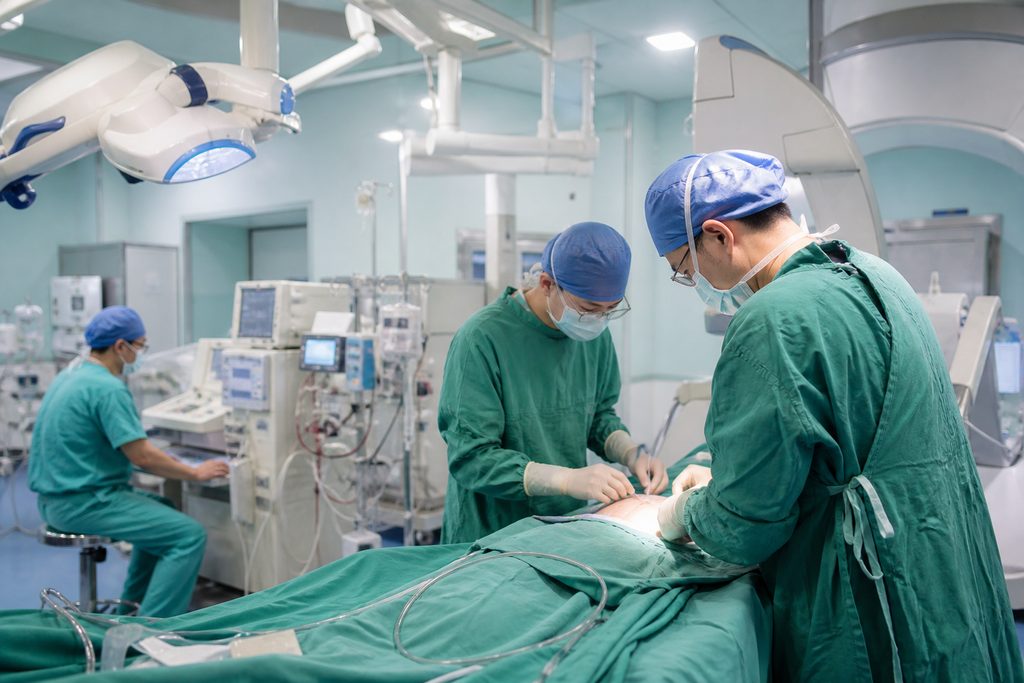
A kidney transplant is not just a surgery. It is a second chance at a life free from the punishing rhythm of dialysis. For many, that chance seems to slip further away when a doctor labels them “high-risk.” Advanced age. A body mass index that breaks the standard charts. A heart that has weathered too many storms. These labels can shut doors in Western transplant programs. But definitions of “operable” differ around the world. China’s massive transplant centers, particularly the West China Hospital Multi-Organ Transplant Center, have built deep expertise precisely where other programs stop. Let’s talk about what that means for you.
Key Takeaways
- West China Hospital performs over 500 kidney transplants annually, building deep experience with complex cases that smaller centers rarely see.
- High-risk factors like advanced age, elevated BMI, or cardiovascular comorbidities are actively managed here—not treated as automatic exclusions.
- The kidney transplant for high risk patients China cost typically ranges from $35,000 to $55,000, a fraction of Western pricing for comparable or superior clinical volume.
- Independent navigation is nearly impossible without Mandarin fluency and local system knowledge—logistical support is not optional, it is essential.
The Problem: When Your Own Country Runs Out of Options
Approximately 1 in 8 patients on the US kidney transplant waiting list is classified as high-risk due to age, obesity, or immunological sensitization. The wait is not measured in months. It is measured in years. Five years. Sometimes seven. And for those over 70 or with a BMI above 35, the wait often ends with a letter of ineligibility rather than a surgical date. The National Kidney Foundation reports that obese patients face a 30-50% lower likelihood of being listed for transplant compared to normal-weight candidates with identical renal function. That is a staggering disparity.
The numbers in the UK and Europe tell a similar story. Stringent eligibility criteria, designed to protect scarce donor organs, end up excluding patients who could—under the right surgical hands—thrive with a new kidney. The result is a grim calculus: remain tethered to dialysis, watch your health decline, and hope the system changes its mind. But hope is not a strategy. There is another path, and it runs through Chengdu.
Who We Are
We are China Medical Services. We are not a hospital, and we do not provide medical treatment or clinical diagnoses. Our team functions as your logistical architects—we bridge the gap between you and China’s top-tier medical expertise. We handle hospital matching, appointment coordination, bilingual medical companion services, and the visa guidance that makes treatment in China possible. Our network spans 340+ top-ranked hospitals across 37 cities, representing the top 5% of China’s 35,000+ medical institutions. We know which centers take on the hard cases. West China Hospital is one of them.
Why West China Hospital Delivers Results for Complex Cases
Clinical Volume That Redefines Expertise
West China Hospital, part of Sichuan University, is one of the largest transplant centers in the world. The Multi-Organ Transplant Center performs over 500 kidney transplants each year. To put that in perspective, the average US transplant center completes roughly 80 to 120 annually. A surgeon here sees more rare presentations, more anatomical variants, and more high-risk patients in a single year than many Western surgeons encounter in a decade. Volume does not guarantee outcomes. But in transplant surgery, where complications are managed in split-second decisions, there is no substitute for lived experience.
The center has completed transplants on patients well into their 70s. Cases involving simultaneous kidney-pancreas transplants are routine here, not exceptional. For patients with elevated BMI, the surgical team employs tailored protocols—including laparoscopic donor nephrectomy and enhanced perioperative monitoring—that have steadily expanded the boundaries of transplant eligibility.
How the West China Hospital Kidney Transplant Success Rate Compares
Let’s address the question directly: the West China Hospital kidney transplant success rate for one-year graft survival consistently exceeds 95%, aligning with benchmarks set by top US centers. The five-year graft survival rate hovers around 85%. These numbers are not aspirational—they are published in peer-reviewed Chinese medical journals and reported to the China Scientific Registry of Kidney Transplantation. For high-risk recipients, outcomes vary by individual comorbidity profile. But the center’s willingness to operate where others decline is not recklessness. It reflects a surgical culture that treats complexity as a challenge to be managed, not a reason to refuse care.
What drives these outcomes? Three structural factors. First, dedicated transplant ICUs with nurse-to-patient ratios optimized for post-operative vigilance. Second, a standardized immunosuppression protocol refined across thousands of cases, allowing precise calibration for elderly or obese recipients. Third, an institutional commitment to multi-organ expertise—when a kidney patient also needs cardiac clearance, the cardiothoracic team is in the same building, not across town.
Understanding Kidney Transplant for High Risk Patients China Cost
The kidney transplant for high risk patients China cost typically falls between $35,000 and $55,000 USD. This is an all-in figure covering pre-transplant evaluation, the surgical procedure, donor organ procurement, hospital stay, and initial post-operative immunosuppressive medications. Compare this to the United States, where a kidney transplant without complications averages $414,000 in hospital charges, according to a 2022 Milliman research report. Even insured patients can face $20,000 to $40,000 in out-of-pocket costs alone.
Why the difference? It is not a quality trade-off. Chinese hospital systems operate on dramatically lower labor costs. A top transplant surgeon’s salary in China is a fraction of their US counterpart’s. Hospital administrative overhead runs leaner. Pharmaceutical costs for generic immunosuppressants are significantly lower in the Chinese market. And the sheer patient volume allows fixed costs—operating theaters, robotic systems, specialized nursing teams—to be amortized across more procedures. The result is world-class transplant care at a price point that makes medical travel a rational financial decision, not a desperate gamble.
Can Elderly Patients Get a Kidney Transplant in China?
The short answer: yes. The longer answer requires nuance. Chinese transplant centers do not use a rigid age cutoff. Instead, they assess biological age—your physiological reserve, not your birth certificate. A 72-year-old with controlled hypertension, good cardiac function, and strong social support may be approved while a 65-year-old with advanced heart failure is not. West China Hospital’s transplant evaluation includes comprehensive cardiac and pulmonary testing, frailty assessments, and a multidisciplinary review. The team wants to know if you can survive the surgery and thrive afterward. Age alone is rarely the deciding factor.
This approach differs markedly from many Western programs where age 70 functions as a hard stop. The data supports China’s more flexible model. A 2021 study published in the Chinese Medical Journal examined outcomes for kidney transplant recipients aged 65 and older at West China Hospital. Graft survival and patient survival rates, while slightly lower than younger cohorts, still showed a clear survival benefit compared to remaining on dialysis. For the right candidate, transplantation extends life—even in the eighth decade.
High BMI Kidney Transplant China Options: A Different Surgical Philosophy
Obesity complicates transplantation. Wound healing slows. Surgical access becomes technically demanding. Dosing immunosuppressants accurately requires careful pharmacokinetic monitoring. Many Western centers set a BMI cutoff at 35, with some refusing patients above 30. The reasoning is defensible: donor organs are scarce, and outcomes data shows incrementally higher complication rates as BMI rises.
But West China Hospital takes a different view. High BMI kidney transplant China options exist here because the surgical team has developed protocols specifically for obese recipients. These include robotic-assisted techniques that minimize wound size, enhanced thromboembolic prophylaxis, and close post-operative monitoring for delayed graft function. Patients with BMIs between 35 and 40 are evaluated individually. Some are accepted. Some are asked to lose 5-10% of body weight before listing. Very few are rejected outright. The philosophy is simple: obesity is a modifiable risk factor, not a permanent contraindication. And the alternative—lifelong dialysis—carries its own mortality risk that often exceeds the surgical risk.
What You Need to Know Before Going Alone
Honesty matters here. Navigating a Chinese transplant center independently is extraordinarily difficult. The barriers are real, and they are structural:
- Visa Requirements: Medical treatment in China requires an S2 visa with a specific annotation for medical purposes. Your accompanying family members also need S2 visas. The documentation package must include a formal invitation letter from the hospital, proof of appointment scheduling, and medical records translated into Chinese. Consulates reject incomplete applications. We have seen it happen.
- Language and System Navigation: West China Hospital sees over 20,000 outpatient visits daily. Signs are in Chinese. Registration kiosks operate in Chinese. Lab results come back in Chinese. Even finding the correct building on the sprawling campus requires local knowledge. A bilingual medical companion is not a luxury—it is the difference between receiving care and wandering lost.
- Payment Systems: Public hospitals in China require pre-payment before major procedures. International credit cards are not universally accepted. Large wire transfers can trigger fraud alerts at your home bank. The logistics of moving $40,000 across borders, on time, to the correct hospital account, require advance planning and local banking guidance.
How We Help You Navigate This
These barriers exist for structural reasons. They are not designed to exclude international patients—they simply reflect a system built for a domestic population. Our role is to solve each one, systematically, so you can focus on your health.
Before you travel, we coordinate the hospital invitation letter required for your S2 visa application. We arrange the translation of your medical records—discharge summaries, imaging reports, lab trends—into Chinese for the transplant team’s review. We schedule your initial consultation through the hospital’s official international patient channel, ensuring you are not lost in the general outpatient queue. When you land in Chengdu, a bilingual medical companion meets you. They escort you to the correct department, handle registration and payment, translate during every physician interaction, and stay with you through discharge. After surgery, we coordinate follow-up appointments and medication procurement. The process is designed to be seamless—not because China’s system is easy, but because we have done this hundreds of times.
Our hospital appointment coordination service starts from $300, with bilingual companion support from $200 per day. For patients seeking comprehensive management, our VIP end-to-end coordination ranges from $5,000 to $8,000, covering every logistical touchpoint from initial inquiry to post-operative recovery. Any consultation fees you pay are credited in full toward on-the-ground coordination if you proceed with treatment within 90 days.
Frequently Asked Questions
You cannot book a transplant directly. The process requires an in-person evaluation first. The transplant team must assess your current health status, review imaging, and determine surgical suitability. What we can do is schedule that evaluation through the hospital’s international patient channel, ensuring you see the right specialist within days of arrival—not weeks. Surgery follows evaluation, not the other way around. This is standard practice at every legitimate transplant center globally.
Post-transplant care requires lifelong immunosuppression monitoring. Before you leave China, the transplant team provides a detailed discharge summary and a medication protocol translated into English. You will need a nephrologist in your home country willing to accept the transfer of care. We strongly recommend identifying this physician before you travel. West China Hospital’s team can conduct follow-up video consultations as needed, though lab work and physical exams must happen locally. This is not a perfect system—continuity of care across borders always carries friction. But it is manageable with advance planning.
Plan for 6 to 8 weeks minimum. This covers pre-transplant evaluation (1-2 weeks), the surgery and initial hospital recovery (2-3 weeks), and early post-operative monitoring in Chengdu (2-3 weeks). Some patients stay longer if the medical team recommends extended observation. The S2 visa allows for a stay of up to 180 days, so there is flexibility if complications arise or if the team wants to monitor you more closely before clearing you for international travel.
Yes. China reformed its organ transplant system in 2015, establishing the China Organ Transplant Response System (COTRS), which allocates organs based on medical urgency and compatibility—not personal connections or financial influence. The system is modeled on international standards and is monitored by the National Health Commission. West China Hospital adheres strictly to these protocols. All donor organs come from voluntary deceased donation, with family consent documented in accordance with Chinese law. This is a hard line, and legitimate centers do not cross it.
Your Next Step
A “high-risk” label is not the end of the road. It is a signal that your case requires a team with deep experience, flexible protocols, and the confidence that comes from thousands of procedures. West China Hospital’s Multi-Organ Transplant Center offers exactly that. The path to a transplant here requires navigating a complex system across language and cultural barriers—but you do not need to do it alone. If you want to understand whether this option fits your specific situation, reach out to our team. We will review your case honestly, explain what is possible, and map the route forward. No pressure. Just clarity.
Contact us at our patient coordination page for a free initial consultation.
For more medical information and treatment options in China, visit chinamedservices.com (China Medical Services).
