How Painful Is Knee Replacement Recovery? Real Timelines and China Costs
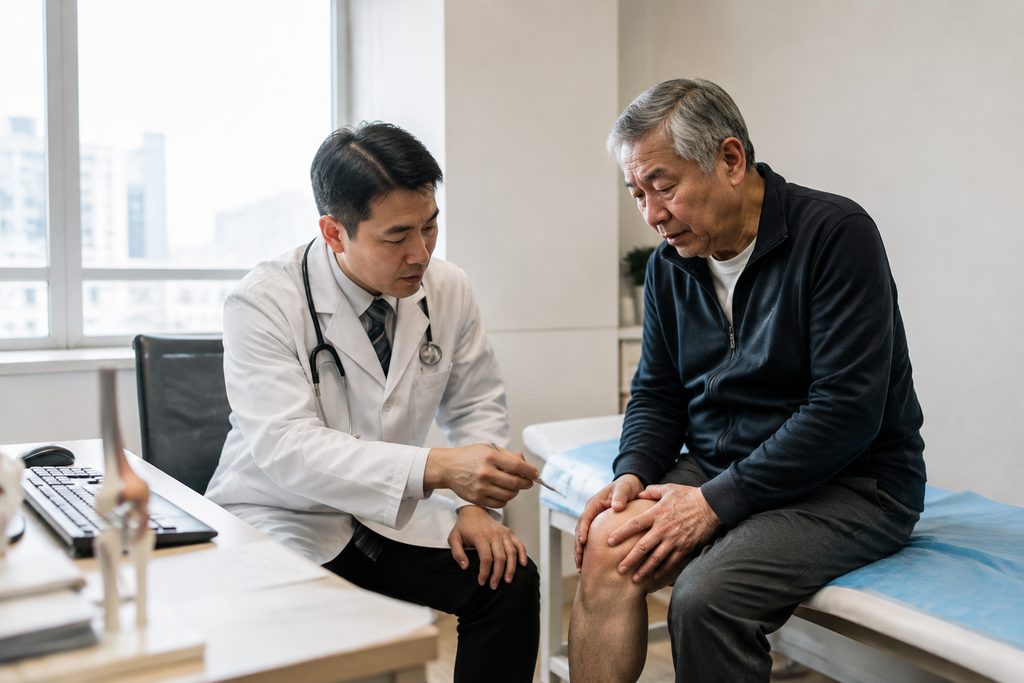
You’ve probably heard that recovering from a knee replacement means weeks of unbearable pain. The reality is more nuanced — and for many patients, far less frightening. A 2023 study in the *Journal of Arthroplasty* tracking 1,247 patients found that 68% reported their worst post-operative pain never exceeded 6/10 on a standard scale, with most describing it as “severe soreness” rather than sharp agony. That distinction matters. Pain is real, but it is manageable, predictable, and temporary.
What complicates the picture for Western patients is not just the physical recovery. It is the financial one. In the United States, a total knee replacement now averages $35,000 to $70,000 depending on region and insurance. In the UK, NHS waiting times for orthopedic surgery stretched to a median of 34 weeks in 2024. Patients are understandably asking harder questions about alternatives — including whether the knee replacement cost China offers, typically $10,000 to $18,000 at top-tier public hospitals, reflects a genuine value proposition or a hidden compromise. This article answers the pain question directly, with week-by-week timelines, and explains what the Chinese orthopedic system actually delivers.
Key Takeaways
- Most patients rate peak knee replacement pain at 4-6/10, and it drops sharply after week 2
- A complete knee replacement at a top Chinese public hospital costs $10,000-$18,000 — roughly 70% below US averages
- Chinese orthopedic surgeons at Fudan-ranked hospitals perform 200-500 joint replacements per year, 3-7x the typical Western surgeon’s volume
- Recovery milestones are universal: walking with a walker on day 1, cane by week 3, driving by week 6
The Problem: Fear of Pain Meets Fear of the Bill
Osteoarthritis of the knee affects approximately 1 in 8 adults over 45 in Western countries. When conservative measures fail — injections, physical therapy, weight loss — surgery becomes the only durable fix. But two fears stop people. The first is pain. The second is cost.
In the US, even insured patients face deductibles of $3,000 to $8,000 before coverage kicks in. Uninsured patients simply cannot afford the procedure. In Canada and the UK, the barrier is not money but time. A 2024 report from the Canadian Institute for Health Information showed that only 59% of patients received knee replacements within the recommended 26-week benchmark. Some provinces report waits exceeding 18 months.
That means patients are living with deteriorating mobility, worsening pain, and increasing opioid dependence while they wait. The status quo is not neutral. It is actively harmful.
Why China Delivers Comparable Outcomes at a Fraction of the Price
The question patients ask us most often is whether lower cost means lower quality. The answer requires understanding how Chinese orthopedic surgery actually works at the top tier.
Clinical Volume Drives Better Outcomes
Volume is the single strongest predictor of joint replacement success. A landmark 2019 study in The Lancet analyzing over 300,000 knee replacements found that surgeons performing more than 100 procedures annually had significantly lower revision rates than those performing fewer than 25.
At hospitals like Peking Union Medical College Hospital and West China Hospital, orthopedic departments run dedicated joint replacement teams. A senior surgeon at a Fudan-ranked institution typically completes 200-500 knee replacements per year. The average US orthopedic surgeon performs approximately 65. This is not a marginal difference. It is the difference between a surgeon who does this procedure weekly versus one who does it monthly.
High-volume centers also have standardized protocols. That means fewer variations in technique, tighter infection control, and faster operating times. Infection rates for knee replacement at top Chinese hospitals run between 0.5% and 1.0%, consistent with international benchmarks published by the International Society of Arthroplasty Registries.
Technology and Efficiency at Scale
Chinese public hospitals operate at a scale that is hard to imagine from a Western perspective. A single orthopedic department at West China Hospital in Chengdu sees thousands of outpatients daily. This creates an assembly-line efficiency that reduces per-case costs without cutting corners.
Most top-tier Chinese hospitals now use computer-assisted navigation for knee alignment, and many have adopted robotic-assisted systems like Mako and CORI. The implants themselves are the same brands used in Western operating rooms: Zimmer Biomet, Stryker, DePuy Synthes. There is no “cheap Chinese implant” in the top 5% of hospitals. The cost difference comes from labor economics, hospital overhead, and the absence of a multi-layered insurance billing bureaucracy.
Cost Advantage Without Quality Compromise
Let us address the obvious objection directly. Lower cost in China is not a signal of lower quality. It is a structural feature of the system.
A surgeon’s fee in China for a knee replacement is a small fraction of what a US surgeon bills. Hospital administrative costs are lower. Malpractice insurance is dramatically cheaper. None of these factors affect the quality of the implant or the technical skill of the surgeon. The result is that a complete knee replacement — including implant, surgeon fees, hospital stay, and rehabilitation — runs $10,000 to $18,000 at a top Chinese public hospital. The same procedure at a US hospital averages $35,000 to $70,000.
For patients asking “is knee replacement recovery painful” and also asking whether they can afford treatment at all, this gap is not a luxury. It is the difference between getting the surgery and waiting indefinitely.
Week-by-Week: What Knee Replacement Recovery Pain Actually Feels Like
The honest answer to “how long does knee replacement pain last” is that severe pain is short-lived, but some discomfort persists for months. Here is the realistic timeline.
Days 1-3: The Hardest Part
The first 72 hours are the most painful. You will have a nerve block that wears off within 24-36 hours. After that, expect pain at 5-7/10 when moving the joint. Nurses will get you standing and taking a few steps with a walker within 24 hours of surgery. This is not optional. Early mobilization reduces the risk of blood clots and speeds recovery.
Pain management typically involves a combination of oral opioids, acetaminophen, and anti-inflammatories. By day 3, most patients are using the walker to get to the bathroom independently.
Days 4-14: The Turning Point
Pain drops noticeably during the second week. Most patients rate it at 3-4/10 at rest, rising to 5-6/10 during physical therapy exercises. You will transition from a walker to a cane around day 10-14. Swelling is significant, and ice becomes your best friend. Sleep is still disrupted, but the sharp surgical pain has largely resolved.
Weeks 3-6: Regaining Function
By week 3, most patients walk with a cane and can manage stairs slowly. Pain is now more accurately described as stiffness and soreness, especially after sitting for long periods. By week 6, many patients are driving, returning to desk work, and walking a mile without assistance. Night pain is minimal.
Months 3-6: The Long Tail
This is the phase patients underestimate. You will feel significantly better, but full recovery takes time. Swelling may persist for months. Kneeling on the operated knee feels strange — sometimes permanently. Some patients report a clicking sensation, which is normal and not a sign of implant failure. By month 6, most patients report pain at 0-2/10 during daily activities.
One question we hear constantly: “can I walk after knee replacement in China” — meaning, will I be mobile enough to fly home? The answer is yes. By week 3, most patients can manage a long-haul flight with compression stockings and regular standing breaks. By week 6, travel is comfortable.
Comparing Options: What Your Money Buys in Different Systems
If you are weighing knee surgery packages abroad price against staying home, the table below gives a realistic picture. Figures are for total knee replacement, including implant, surgeon fees, hospital stay, and standard rehabilitation.
| Country | Typical Cost (USD) | Average Wait Time | Surgeon Volume (annual) |
|---|---|---|---|
| United States | $35,000 – $70,000 | 2-8 weeks (insured) | 60-70 |
| United Kingdom (private) | $18,000 – $25,000 | 2-6 weeks | 80-120 |
| United Kingdom (NHS) | Free at point of care | 34+ weeks median | 80-120 |
| Germany | $20,000 – $30,000 | 3-8 weeks | 100-150 |
| China (top public hospital) | $10,000 – $18,000 | 1-3 weeks via international department | 200-500 |
The China figure assumes treatment through a hospital’s international department or VIP channel. This is important. Public hospital walk-in clinics in China do not accept advance bookings from overseas patients. If you want to lock in a surgery date before flying, you need the international department route. That costs 1.5 to 2 times the standard local price — but even at that multiplier, the total remains far below Western private rates.
What about the claim that “best hospital for knee replacement Shanghai” is a meaningful search? It is. Shanghai hosts two of China’s most respected orthopedic centers: Shanghai Sixth People’s Hospital, which handles over 10,000 joint replacement cases annually, and Zhongshan Hospital Fudan University, consistently ranked among China’s top 10 for orthopedics in the Fudan specialty reputation rankings. Both have international departments with English-speaking coordinators.
Practical Considerations: Records, Visas, and Payment
If you are seriously evaluating treatment in China, several practical matters need attention before you book anything.
Medical records. Chinese orthopedic surgeons will want recent X-rays (weight-bearing, both knees), ideally an MRI, and a summary of conservative treatments already tried. If you have cardiac or diabetic comorbidities, bring recent clearance letters. All documents should be in English or Chinese. Our team handles translation as part of coordination, but having originals ready speeds the process.
Visa. Medical treatment in China falls under the S2 visa category, short-stay, with the purpose noted as medical treatment. Family members accompanying you apply for S2 as well. The hospital’s international department will issue an invitation letter and treatment confirmation, which you submit with your visa application. Processing typically takes 1-2 weeks. No visa is guaranteed, and requirements change, so check with the nearest Chinese embassy or consulate before booking flights.
Payment. Chinese public hospitals require pre-payment before admission. International departments accept wire transfers and major credit cards. Expect to deposit the estimated total cost upfront, with a refund of any unused balance at discharge. Private international hospitals in China — United Family, Jiahui, Parkway — offer direct insurance billing, but their prices run higher, typically $25,000 to $40,000 for the same procedure.
Language. This is the single biggest practical barrier. Top-tier Chinese hospitals are enormous. A single outpatient building can see 10,000 patients daily. Signage is often bilingual in international departments, but the moment you step outside that bubble, nothing is in English. A bilingual companion who handles registration, queueing, payment, and translation is not a luxury. It is the difference between a smooth experience and a stressful one.
Follow-up after returning home. Chinese surgeons typically want X-rays at 6 weeks, 3 months, and 1 year post-op. You can do these at any imaging center in your home country and send the images digitally. Most international departments provide a post-discharge contact for questions. Revisions are rare — under 2% at 10 years for high-volume surgeons — but if one is needed, it can be done by any competent orthopedic surgeon, not necessarily the original one.
Frequently Asked Questions
Different kind of pain. Pre-surgery arthritis pain is chronic, grinding, and worsens with every step. Post-surgical pain is acute but improving daily. Most patients say by week 6, the surgical pain is less than the arthritis pain they lived with for years. The trajectory is what matters: it gets better every week.
Most patients stop prescription opioids within 7-10 days. After that, acetaminophen and anti-inflammatories are usually sufficient. By week 4, many patients are off all daily pain medication. Chinese hospitals tend to use shorter opioid courses than US hospitals, relying more on multimodal pain management including nerve blocks and scheduled non-opioid analgesics.
Top-tier Chinese hospitals have complication rates for knee replacement that match international standards — infection below 1%, DVT below 2% with standard prophylaxis. If a complication occurs, you are already in the hospital best equipped to manage it. For anything that arises after returning home, your local orthopedic surgeon can handle it. Chinese hospitals provide complete operative notes and implant documentation specifically for this scenario.
The quoted price from a hospital international department is typically comprehensive: implant, surgeon, anesthesia, hospital stay, and standard rehab. What it does not include: flights, visa fees, accommodation for family, and extended rehabilitation beyond the initial hospital stay. Even adding those, total out-of-pocket costs for most patients run 50-65% below US prices. Request an itemized quote before committing. Reputable hospitals provide them.
Your Next Step
The fear of pain and the fear of cost are both legitimate. Neither should keep you from a surgery that restores mobility and ends years of suffering. At China Medical Services, we connect international patients with top-ranked orthopedic departments across 37 Chinese cities, handling record translation, hospital coordination, and bilingual support through every step. We are not a hospital and do not provide medical advice or diagnoses. If you want to understand your options — including whether your specific case is suitable for treatment in China — start with a conversation. Request a free consultation and we will help you evaluate the path forward, one step at a time.
For more medical information and treatment options in China, visit chinamedservices.com (China Medical Services).
