Knee Surgery Recovery at Home: A Complete Preparation Guide for International Patients
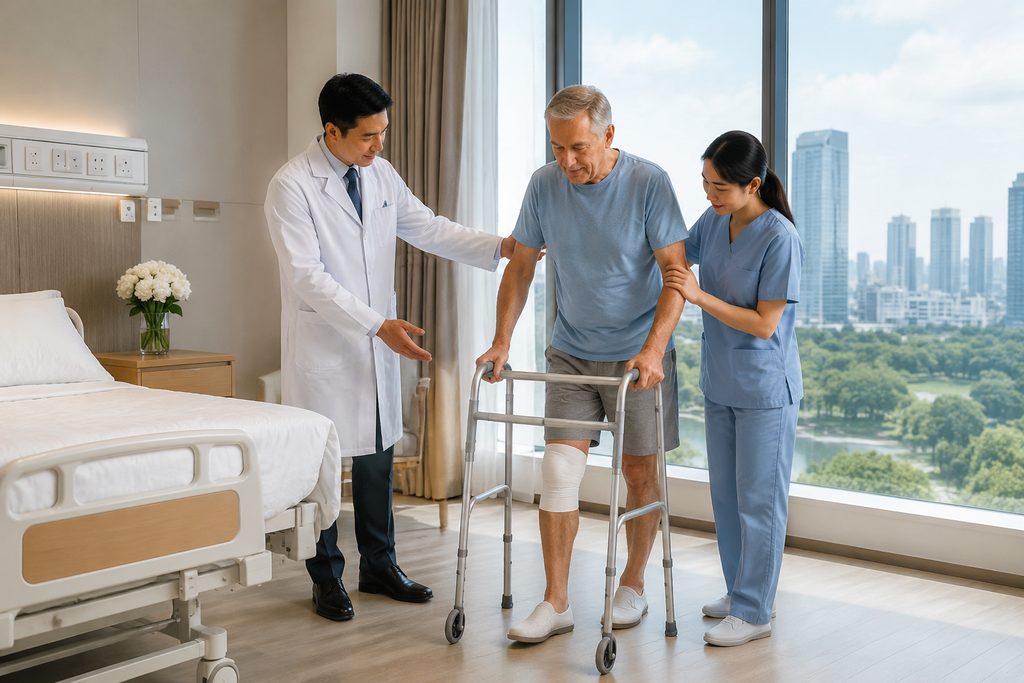
How Do I Prepare My Home for Knee Surgery Recovery? A Practical Guide That Also Covers Knee Replacement Cost China
You’ve probably heard that preparing for knee surgery means renting a hospital bed and clearing your hallway. That’s part of it. But if you’re traveling internationally for the procedure, the real preparation starts weeks before you ever pack a suitcase. And the question patients ask us most often isn’t about ice packs or grab bars. It’s about the knee replacement cost China — and whether the savings justify the logistics. The answer, based on what our coordination team sees daily, is more nuanced than a price tag. Let’s walk through the actual sequence, from your living room to a hospital ward in Shanghai and back.
Most patients fixate on the surgery itself. They should. But recovery at home after a knee replacement is where the outcome is won or lost. A well-prepared home reduces fall risk, lowers infection rates, and shortens the time before you can walk unaided. For international patients, there’s an added layer: you’ll recover partly in a hotel or serviced apartment near the hospital, then finish at home. That means two environments, two sets of preparations, and a timeline that stretches across borders.
How This Actually Works, Step by Step
Here’s the real sequence, stripped of brochure language. You don’t fly to China and walk into a hospital. You start remotely.
Step 1: Send your records. You email us your existing knee X-rays, MRI reports, and any orthopedic consultation notes. A Chinese joint-replacement specialist reviews them. This usually takes three to five business days. You get back a written assessment: whether you’re a candidate for total knee arthroplasty, what approach the surgeon recommends, and what the expected hospital stay looks like.
Step 2: Video consultation. If the written review looks promising, you speak directly with the surgical team. This is where you ask the hard questions: implant brand, surgical volume, infection rates, and what happens if something goes wrong. You also discuss your medical history in detail. The team tells you what additional tests you’ll need once you arrive.
Step 3: Hospital and date coordination. The hospital’s international department reviews your case and confirms a surgical window. This is not a guarantee of a specific date — public hospital rules in China require an in-person outpatient visit before surgery is formally scheduled. But the international department can hold a tentative slot and arrange your registration in advance.
Step 4: Visa and travel. You apply for an S2 visa with a supporting letter from the hospital. Processing typically takes one to two weeks, sometimes longer depending on your home country’s consulate. You book flights and accommodation near the hospital.
Step 5: Arrival, outpatient visit, surgery. You land, attend your outpatient appointment, complete pre-operative tests, and undergo surgery. Total time in China for a standard knee replacement is usually three to four weeks, including initial rehabilitation.
Step 6: Recovery at home. You fly back and continue physiotherapy. This is where your home preparation — the grab bars, the raised toilet seat, the cleared pathways — finally comes into play.
Preparing Your Home: The Non-Negotiable Checklist
Prepare both. For your in-country recovery near the hospital, book a serviced apartment or hotel room with an elevator, a walk-in shower, and space to practice walking with a walker. For home, follow the checklist above: bed height, bathroom grab bars, raised toilet seat, shower chair, cleared pathways, and a ground-floor recovery base if you have stairs. The goal is the same in both places: reduce fall risk and keep essentials within reach.
The strongest orthopedic departments are concentrated in Beijing, Shanghai, and Guangzhou. Peking Union Medical College Hospital, Shanghai Sixth People’s Hospital, and West China Hospital in Chengdu all have high-volume joint replacement programs. Our orthopedics department rankings list the top 10 hospitals by specialty reputation, based on the Fudan University rankings. Surgical volume and international patient experience matter as much as brand name.
What happens if I have complications after I return home?
This is the risk every international patient should plan for. You’ll have a written discharge summary and contact information for your Chinese surgical team. If you develop fever, increasing pain, calf swelling, or wound drainage, see a local orthopedic surgeon immediately. Your Chinese team can consult remotely if needed, but they
Frequently Asked Questions
Yes. The hospitals used for international patients are JCI-accredited and follow the same international safety standards as top hospitals in the US and Europe. Surgical teams perform high volumes of procedures — often more than their Western counterparts — which studies show leads to better outcomes.
Costs vary by procedure and hospital, but international patients typically save 40-80% compared to US prices — even when factoring in travel and accommodation. A consultation with our team will give you an exact, all-inclusive quote with no hidden fees.
Send us your existing medical reports to get started. We handle everything from hospital selection and appointment scheduling to visa assistance and post-operative recovery planning. Your medical records are reviewed by the specialist before you even book a flight.
For more medical information and treatment options in China, visit chinamedservices.com (China Medical Services).
