Lab Tests in China: Sharing With Your Doctor Back Home Safely
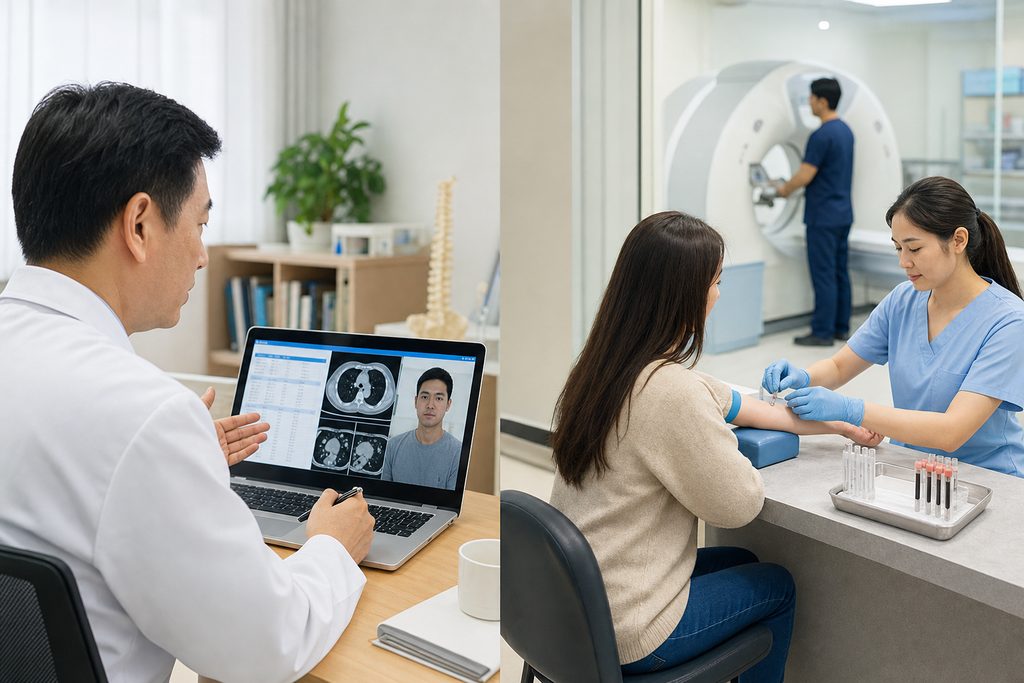
Lab Tests in China: Sharing With Your Doctor Back Home Safely
Roughly 1 in 3 international patients who contact us about treatment in China start with the same small request: a set of lab tests. Not surgery. Not a specialist consultation. Just blood work, imaging, and a clear answer. And the question that follows is almost always the same — how do I get these results to my doctor back home? The lab test cost China hospitals charge is often a fraction of Western pricing, which is exactly why so many people begin here. But cheap tests mean nothing if the results never reach the physician who will act on them.
That handoff is where most self-guided medical travel quietly falls apart. So let’s walk through it properly.
How This Actually Works, Step by Step
Here is the real sequence, from the moment you decide to get tested in China to the moment your physician abroad is reading the results.
Step 1 — You send us your existing records. Old lab reports, imaging CDs, discharge summaries, medication lists. Anything relevant. We have it translated and organized into a format a Chinese hospital department can review quickly.
Step 2 — A Chinese specialty reviews your file. This is the written second opinion stage. You receive analysis, treatment suggestions, and a clear direction: which tests are actually worth repeating, and which are not.
Step 3 — We coordinate the appointment. Through the hospital’s official international department or VIP channel, we book registration and the relevant tests. You do not queue at 6 a.m. hoping a slot exists.
Step 4 — You arrive, and a bilingual companion meets you. Registration, payment, phlebotomy, imaging, pharmacy — all navigated with someone beside you who speaks both languages.
Step 5 — Results come back, in Chinese. Typical turnaround is 4 to 24 hours for routine blood work, 1 to 3 days for advanced panels, and 2 to 5 days for most imaging reports.
Step 6 — Translation and delivery. We produce certified English translations of the reports and send them to your physician abroad, in whatever format their clinic accepts.
That last step is the one people underestimate. More on it below.
What Lab Tests Actually Cost in China — and Why the Numbers Surprise People
The single biggest driver of interest in Chinese diagnostics is price. A comprehensive metabolic panel that bills at several hundred dollars in the United States can run well under $50 at a top-tier Chinese public hospital. A full-body MRI that costs $2,000–$5,000 in the U.S. is frequently available for $300–$800 in China, depending on the hospital and whether contrast is used.
| Test | Typical China Range (USD) | Typical U.S. Range (USD) |
|---|---|---|
| Complete blood count (CBC) | $8–$25 | $50–$150 |
| Comprehensive metabolic panel | $20–$60 | $100–$400 |
| Thyroid panel (TSH, T3, T4) | $25–$70 | $150–$500 |
| Lipid panel | $10–$30 | $50–$200 |
| Tumor marker panel | $60–$200 | $300–$1,000 |
| MRI (single region, no contrast) | $150–$500 | $1,000–$3,500 |
| CT with contrast | $150–$450 | $800–$3,000 |
| PET-CT | $700–$1,400 | $4,000–$8,000 |
These are reference ranges. Real lab test cost China pricing varies by hospital tier, city, and case complexity — a private international hospital will charge noticeably more than a public tertiary facility for the same assay. Final quotes always depend on the specific tests and the institution.
One thing worth stating plainly: cheap is not the same as good. What matters is whether the laboratory is accredited, whether the reference ranges match the assay method your home doctor uses, and whether the report can be interpreted without ambiguity. Top Chinese hospitals meet these standards. Smaller clinics may not.
A Realistic Timeline
People consistently underestimate how long the administrative side takes. Here is an honest schedule for a patient who wants testing plus a specialist review.
| Stage | Realistic Duration | What Slows It Down |
|---|---|---|
| Records collection and translation | 3–7 days | Incomplete files from previous providers |
| Written second opinion turnaround | 3–10 days | Department workload; need for additional records |
| Appointment coordination | 5–14 days | Popular specialists book out further |
| Visa (S2, medical purpose) | 1–3 weeks | Consulate processing times; document gaps |
| Travel and arrival | 1–3 days | Flight availability |
| Testing itself | 1–3 days on the ground | Fasting requirements; imaging scheduling |
| Results, translation, delivery abroad | 2–7 days | Complex pathology or genetic panels |
Add it up and a well-run diagnostic trip takes roughly four to eight weeks door to door. Anyone promising you results in ten days is skipping the parts that protect you.
What Can Go Wrong — and What Happens Then
Plenty can go sideways. Pretending otherwise would be dishonest.
Your home doctor refuses to accept foreign results. This happens more than anyone admits. Some physicians want the test repeated on their own validated platform, especially for anything guiding treatment. That is a legitimate clinical position, not obstruction. The recourse: ask your Chinese hospital for the raw data, the assay methodology, and the reference intervals, and send all three. Some doctors accept it. Some still won’t. Plan for the possibility that you may pay twice.
Reference ranges don’t match. Chinese labs use their own reference intervals, which can differ from Western labs for the same analyte. A value flagged as abnormal in Shanghai may read normal in Chicago. Always request the reference range alongside the result.
Something unexpected shows up. A screening panel occasionally finds an incidental finding nobody was looking for. That is genuinely good — early detection saves lives. It also means you may suddenly need a specialist consultation you didn’t budget for. Our coordination model exists precisely for that pivot.
The translation is rejected. Some clinics require certified translation with a translator’s declaration. We handle this, but if you’re doing it yourself, verify the format before you leave China. Fixing it remotely is slow and expensive.
How to Share Lab Results With Your Doctor Abroad
This is the question that brings most people to us, and it deserves a direct answer.
Your physician abroad needs three things: the result values, the reference ranges, and enough clinical context to interpret them. A scanned Chinese report with no translation satisfies none of these. So build the package deliberately.
- Certified English translation of every report page — not a summary
- Reference intervals printed next to each value, exactly as the Chinese lab reported them
- Method notes where available — assay platform, units, any deviation from standard protocols
- Imaging in DICOM format, not just the radiologist’s written impression
- A one-page cover summary listing what was tested, when, and why
Then decide how to send it. Secure patient portals are ideal. Encrypted email works. Plain email with attachments is common but not ideal for sensitive data. What you should not do is hand your doctor a phone with photos of a report.
If your physician wants to speak directly with the Chinese specialist, video consultation can be arranged. That conversation often resolves the “I’d rather you retest” standoff in fifteen minutes.
Is It Safe to Get Blood Tests in China?
At accredited tertiary hospitals, yes. China’s top facilities run tens of thousands of tests daily and are held to national laboratory standards. Needle safety, sample handling, and quality control at this tier are not the concern people imagine.
The real variables are different. Which hospital. Which laboratory within that hospital. Whether the results will be accepted downstream. And whether anyone on site can explain what’s happening to you in a language you understand.
That last point is not a small thing. A hospital with 10,000+ daily outpatient visits is not a place where you improvise. Registration, payment, sample collection, and report pickup happen at different counters, often on different floors, sometimes in different buildings. Without language support, a simple blood draw becomes a half-day ordeal. This is why bilingual medical companion services exist, and why we consider them non-optional for first-time visitors.
For patients weighing a broader diagnostic trip, our guide to top-ranked Chinese hospitals by city shows which facilities handle international patients routinely. If you’re leaning toward a private international hospital instead — English-speaking staff, JCI accreditation, direct insurance billing — that’s a different tradeoff, and we cover it separately.
Practical Considerations: Records, Visa, Payment, and Follow-Up
Visa category. Medical travel to China uses the S2 visa, annotated for medical treatment purposes. Family members accompanying you apply for S2 as well. Stays exceeding 180 days fall under S1. Requirements shift, so confirm current rules with the nearest Chinese embassy or consulate before booking anything. Note that the M visa is for commercial and trade activity — it has nothing to do with medical treatment, and applying under the wrong category creates real problems at the border.
Payment. Public hospitals require prepayment; insurance reimbursement happens afterward, in your home country. Private international hospitals often bill insurers directly. Bring a card that works internationally, and confirm accepted payment methods before you arrive.
Insurance. Most Western insurers do not reimburse diagnostics performed in China without prior authorization. Call yours before you travel. A five-minute phone call can prevent a four-figure surprise.
Follow-up at home. This is the piece that determines whether the whole trip was worth it. Establish, before you leave, exactly which physician at home will receive your results and what they need in order to act on them. A diagnostic trip with no receiving physician is just an expensive vacation with needles.
Frequently Asked Questions
Sometimes. It depends on the physician, the test, and whether the clinical decision hinges on the result. Routine screening values are usually accepted when accompanied by certified translation and reference ranges. Results that will guide cancer treatment or surgery are more likely to be repeated on your doctor’s own platform. Ask before you travel, not after.
A basic panel — blood count, metabolic panel, lipids, thyroid — typically runs $60–$180 at a public tertiary hospital. Add imaging and you’re looking at $300–$1,500 depending on modality. Comprehensive executive health packages at private international hospitals range higher. Every quote varies by hospital and case complexity, so treat any figure as a starting range.
At most public hospitals, no. You need a physician order to access the laboratory. Some private international clinics offer direct-access testing, but the menu is narrower and prices higher. This is one reason a written second opinion is a sensible first step — it generates the test orders you actually need rather than a scattershot panel.
Routine blood work returns in 4–24 hours. Advanced panels take 1–3 days. Most imaging reports take 2–5 days. Genetic and specialized pathology testing can take one to three weeks, which may exceed your trip. Arrange digital delivery in advance for anything that won’t be ready before your flight.
Rarely on its own. The economics only work when testing is bundled with specialist consultation, imaging, or treatment that would cost substantially more at home. If you need a $6,000 PET-CT and a specialist review, the math changes quickly. If you need a $40 blood panel, it does not.
Your Next Step
The core message is simple: getting tested in China is straightforward, but getting those results into the hands of the physician who will act on them requires planning. Do the translation, reference ranges, and digital files properly, and the whole process works. Skip them, and you’ve bought expensive paper.
China Medical Services connects international patients with 340+ top-ranked hospitals across 37 cities. We are not a hospital and we do not practice medicine. We translate records, coordinate appointments through official hospital channels, provide bilingual companions on the ground, and guide you through the S2 visa process. If you’re considering diagnostics in China and want an honest read on whether it makes sense for your situation, start with a free consultation. No pressure, no obligation — just a clear answer about what’s realistic.
This article is for general information only and does not constitute medical advice. Laboratory results must be interpreted by a qualified physician in the context of your full clinical picture. Always consult a licensed healthcare provider before making decisions about testing or treatment.
For more medical information and treatment options in China, visit chinamedservices.com (China Medical Services).
