Liposuction Fat Removal Limits: How Much Can Surgeons Take Safely?
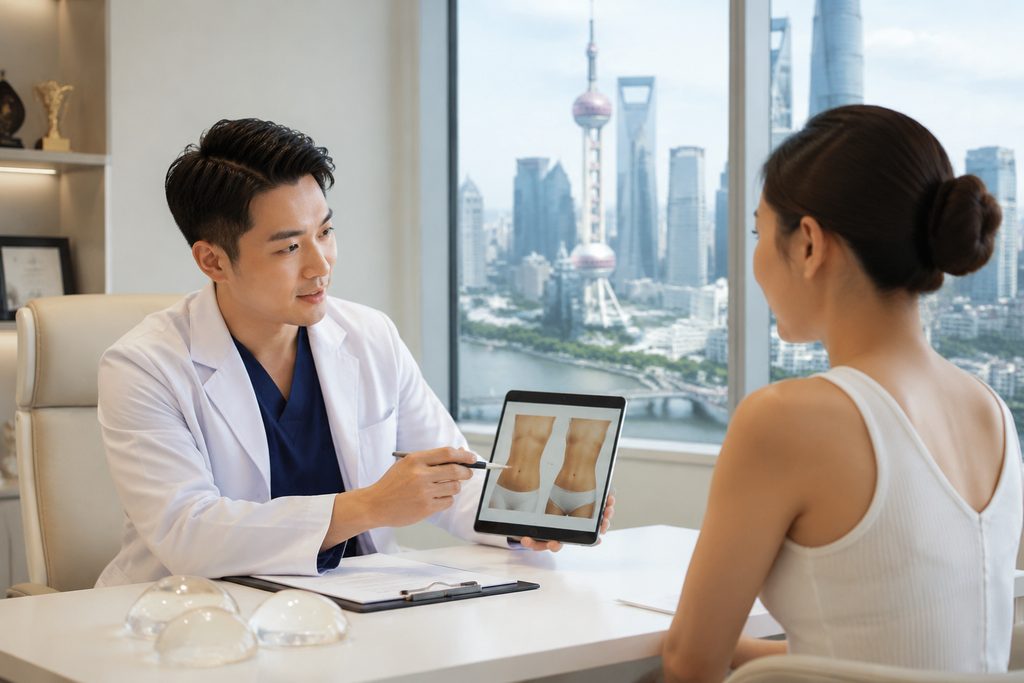
While a patient in the United States might pay $6,000 to $12,000 for liposuction of a single area, the same procedure at a top-tier hospital in Shanghai often runs between $1,800 and $4,500. That gap is not a sign of lower quality. It reflects a different cost structure—one where hospital efficiency, surgical volume, and labor economics work in the patient’s favor. But before you book a flight, you need to understand the actual medical limits of the procedure. Because the real question is not just “how much does liposuction cost in China” — it is “how much fat can a surgeon safely remove in one session, and what does that mean for your body?”
Key Takeaways
- Most reputable surgeons cap liposuction at 5 liters of total aspirate per session, regardless of how much fat a patient wants removed.
- Liposuction cost China typically ranges from $1,800 to $8,000 depending on the number of areas treated and hospital tier.
- Liposuction is body contouring, not weight-loss surgery — patients should be within 30% of their ideal weight before scheduling.
- Safety in China depends entirely on hospital selection: top-tier public hospitals and JCI-accredited private facilities follow international protocols, while unregulated clinics do not.
The Problem: Patients Overestimate What Liposuction Can Do
The American Society of Plastic Surgeons reports that liposuction was the second most common cosmetic surgical procedure in the United States in 2023, with over 347,000 performed. Many of those patients walked into consultations believing the procedure could remove 10, 15, or even 20 kilograms of fat. They walked out learning the truth: the ceiling is far lower.
That misconception is dangerous. Ask any board-certified plastic surgeon and you will hear the same number: 5 liters. That is the maximum total volume of fat and fluid most surgeons will remove in a single outpatient session. Some will push to 6 or 7 liters in a hospital setting with overnight monitoring. Beyond that, the risk of fluid shifts, blood loss, and pulmonary complications climbs sharply. The fat itself is not the problem. The fluid that comes with it is.
So how much actual fat is 5 liters? Roughly 4 to 5 kilograms, or about 9 to 11 pounds. That is enough to reshape a midsection, sculpt thighs, or eliminate a double chin. It is not enough to transform a 250-pound body into a 180-pound one. And no ethical surgeon will pretend otherwise.
Why China Delivers Results for Liposuction Patients
The question patients ask us most often is not about technique. It is about trust. Can you get the same standard of care in Shanghai as you would in Los Angeles or London? The answer depends on where you go. And that is where the Chinese system’s structure works in your favor — if you know how to navigate it.
Surgical Volume Creates Refined Technique
Chinese plastic surgeons at high-volume centers perform liposuction cases at a pace that Western surgeons rarely match. A senior plastic surgeon at Shanghai Ninth People’s Hospital — one of the most respected plastic surgery departments in Asia — may complete 10 to 15 liposuction procedures per week. Over a career, that translates to thousands of cases. Compare that to a typical US plastic surgeon who might perform 50 to 100 liposuctions per year. Volume alone does not guarantee better results. But it does mean the surgeon has seen more anatomical variation, handled more complications, and refined their technique through repetition. For a procedure as technique-dependent as liposuction, that matters.
Modern Equipment Is Standard at Top Hospitals
The days of crude suction cannulas are gone in any serious Chinese hospital. Top-tier facilities now use the same equipment you would find in Seoul or Beverly Hills: power-assisted liposuction (PAL), ultrasound-assisted liposuction (VASER), and laser-assisted liposuction. VASER, in particular, has become common in Chinese aesthetic surgery centers because it allows for more precise fat removal with less trauma to surrounding tissue. The technology is not the differentiator. The operator is. And at the hospitals we work with, the operators have the volume to use that technology well.
Liposuction Cost China: The Structural Advantage
Let’s address the obvious question directly. Why is liposuction cost China so much lower than in the West? A full liposuction package at a top Shanghai hospital — including surgeon fees, anesthesia, operating room time, and one night of observation — typically runs between $3,000 and $6,000. The same package in the United States averages $7,000 to $15,000. The gap is not because Chinese surgeons are less skilled. It is because the cost of running a hospital in Shanghai is structurally lower than in New York or London. Labor costs, administrative overhead, and malpractice insurance all cost less. The patient gets the same procedure, often from a surgeon with more experience, at a fraction of the price.
Practical tip: When comparing liposuction packages China offers, always ask what the price includes. Some clinics quote a surgeon fee only. Others bundle anesthesia, compression garments, and follow-up visits. Get an itemized quote before you commit.
How Much Fat Can Liposuction Remove: The Medical Limits
Let’s get precise about the numbers. The 5-liter rule is a guideline, not a law. But it is a guideline that every serious surgeon follows for good reason.
Liposuction removes a mixture of fat and tumescent fluid — the saline solution injected to numb the area and reduce bleeding. Of that 5-liter total, roughly 60% to 70% is actual fat. So you are looking at 3 to 3.5 liters of pure fat, weighing about 3 kilograms or 6.5 to 7.5 pounds. Some patients lose more. Some lose less. It depends on the area treated and the patient’s starting point.
Multiple areas can be treated in one session. A typical full-abdomen liposuction removes 2 to 3 liters of aspirate. Adding flanks might bring the total to 4 liters. Adding inner thighs pushes you to the 5-liter ceiling. At that point, the surgeon stops — not because the patient does not want more removed, but because the risk of complications rises exponentially.
Patients who need more than 5 liters removed are typically staged across two or more sessions, spaced at least three months apart. That allows the body to recover, the swelling to subside, and the surgeon to reassess the contour. Anyone who promises to remove 10 liters in one session is not someone you should trust with your body.
Is Liposuction Safe in China? What the Data Shows
The honest answer: it depends on where you go. China has over 35,000 hospitals. The top 5% — ranked by the Fudan University hospital rankings and JCI accreditation — operate at international standards. The bottom tier does not. And in cosmetic surgery, the bottom tier is where the horror stories come from.
Liposuction is generally safe when performed by a qualified surgeon in an accredited facility. The overall mortality rate is approximately 1 in 5,000 to 1 in 10,000 procedures. Most complications are minor: contour irregularities, numbness, fluid accumulation. Serious complications — pulmonary embolism, fat embolism, organ perforation — are rare but real. They are almost always the result of aggressive technique, excessive volume removal, or inadequate monitoring.
That is why hospital selection matters more than anything else. A JCI-accredited private hospital like United Family or Jiahui in Shanghai follows the same safety protocols as any Western hospital. A public hospital like Shanghai Ninth People’s Hospital has the volume and the oversight. But an unregulated clinic in a shopping mall does not. The price might be tempting. The risk is not worth it.
Warning: Avoid any clinic that quotes a liposuction price per liter of fat removed. Ethical surgeons charge per area treated, not per liter. Per-liter pricing incentivizes over-removal, which is exactly what causes complications.
Liposuction Price Shanghai: What You Actually Pay
Shanghai is the most common destination for international patients seeking cosmetic surgery in China. The city has the highest concentration of top-tier plastic surgery departments and JCI-accredited private hospitals. It also has the most transparent pricing.
| Procedure Scope | Shanghai Price Range (USD) | US Average Price (USD) |
|---|---|---|
| Single area (e.g., abdomen only) | $1,800 – $3,500 | $4,500 – $8,000 |
| Two areas (e.g., abdomen + flanks) | $3,000 – $5,500 | $7,000 – $12,000 |
| Three or more areas | $5,000 – $8,000 | $10,000 – $18,000 |
| VASER liposuction (single area) | $2,500 – $4,500 | $6,000 – $10,000 |
These are reference ranges from hospitals we work with. Final pricing varies by hospital and case complexity. A patient with a BMI of 32 will pay more than a patient at BMI 26 because the procedure takes longer and carries more risk. A patient who wants liposuction plus a tummy tuck will pay more than someone doing liposuction alone. The point is that even at the high end, liposuction price Shanghai is roughly half what you would pay in the United States.
But price is not the only factor. The real question is whether you can book the surgery safely and legally as a foreign patient. And that brings us to the logistics.
Book Liposuction Surgery China: The Process Step by Step
Here is what actually happens when you decide to book liposuction surgery China. The process is more involved than booking a flight and showing up. But it is manageable if you know the sequence.
First, you need a consultation. Chinese public hospitals do not allow foreign patients to pre-book surgery online. You must be seen in person by the surgeon before any procedure is scheduled. That means either flying to China for a consultation trip, or using a remote video consultation first. Many patients choose the remote option: you send photos and medical history, the surgeon reviews them via video call, and you get a preliminary assessment of what is feasible and what it will cost. That remote consultation typically costs $100 to $300.
Second, you arrange your visa. For medical treatment in China, the correct visa is the S2 visa, which covers short-stay private affairs including medical treatment. Your hospital or coordination service provides a treatment invitation letter that supports the application. The S2 visa is typically issued for 30 to 90 days, which is enough for the procedure and initial recovery. If you need to stay longer than 180 days, you would apply for an S1 visa. Family members accompanying you also apply for S2 visas.
Third, you arrive and have your in-person consultation. The surgeon examines you, confirms the plan, and schedules the procedure. Most liposuction cases are done under general anesthesia or deep sedation, with one night of observation in the hospital. You will need compression garments, which the hospital provides or you purchase locally. Recovery before flying home is typically 7 to 10 days for a single area, longer for multiple areas.
Practical tip: Book your return flight for at least 10 days after surgery. Flying too soon after liposuction increases the risk of blood clots. Your surgeon should clear you for air travel before you leave.
Practical Considerations: Documentation, Payment, and Follow-Up
Chinese hospitals require a passport and a medical history summary before any surgical procedure. Bring copies of any relevant lab work, especially if you have a history of bleeding disorders, heart conditions, or prior surgeries. The hospital will run its own pre-operative labs regardless, but your history helps the anesthesiologist assess risk.
Payment is typically required in full before surgery. Public hospitals in China generally do not accept foreign insurance directly — you pay upfront and file for reimbursement with your insurer afterward. Some JCI-accredited private hospitals do offer direct insurance billing, which is worth checking if you have international coverage. Payment methods include international credit cards, bank transfers, and sometimes cash. Check with the hospital in advance about transaction limits and currency requirements.
Language is the biggest practical barrier. Public hospitals in China operate in Mandarin, and the front-desk staff may not speak English. That is where a bilingual medical companion becomes valuable — someone who handles registration, payment, translation, and navigation while you focus on recovery. The service costs from $300 per day, and for most international patients, it is the difference between a smooth experience and a stressful one.
Follow-up after returning home is another consideration. Liposuction results take 3 to 6 months to fully reveal themselves as swelling subsides. You will need to send photos to your surgeon for remote follow-up, or see a local plastic surgeon if complications arise. Most Chinese hospitals offer remote follow-up for international patients, but you should confirm this before booking.
Frequently Asked Questions
The safe maximum is approximately 5 liters of total aspirate, which includes tumescent fluid. That translates to roughly 3 to 3.5 liters of pure fat, or about 6.5 to 7.5 pounds. Surgeons who remove more in a single session are taking risks that no ethical practitioner would accept.
No. Liposuction removes localized fat deposits that resist diet and exercise. It does not significantly change your body weight. Most surgeons require patients to be within 30% of their ideal body weight before considering liposuction. If you need to lose 50 pounds, liposuction is not the tool — weight-loss surgery or a medically supervised program is.
This is the question every patient should ask before booking. At top-tier Chinese hospitals, complication rates are comparable to Western benchmarks. Serious complications are rare but include pulmonary embolism, infection, and contour deformities. JCI-accredited hospitals have protocols for managing these complications, and many have English-speaking staff in their international departments. The key is choosing a hospital with those protocols in place. A low-cost clinic without accreditation may not have the resources to handle a crisis. That is a risk no savings justify.
Yes, but with limits. A tummy tuck can often be done in the same session as abdominal liposuction. Multiple liposuction areas can be treated together up to the 5-liter ceiling. But combining liposuction with a major procedure like a Brazilian butt lift adds surgical time and risk. Your surgeon will advise on what is safe to combine. Never push to combine more than the surgeon recommends.
Your Next Step
Liposuction is a safe, effective body-contouring procedure when done by a qualified surgeon in an accredited facility. The fat removal limits are well established, and the cost advantage in China is real. But the value depends entirely on hospital selection and proper planning. That is what we help with at China Medical Services — we are not a hospital and we do not provide medical advice, but we connect you with top-tier Chinese hospitals, coordinate your consultation, and handle the logistics so you can make an informed decision. If you are considering liposuction in China, start with a conversation. Request a free consultation and we will help you understand your options, including realistic pricing from hospitals we trust.
For more medical information and treatment options in China, visit chinamedservices.com (China Medical Services).
