Longevity Medicine Assessment Service China: Test Your Biological Age & Reset Aging
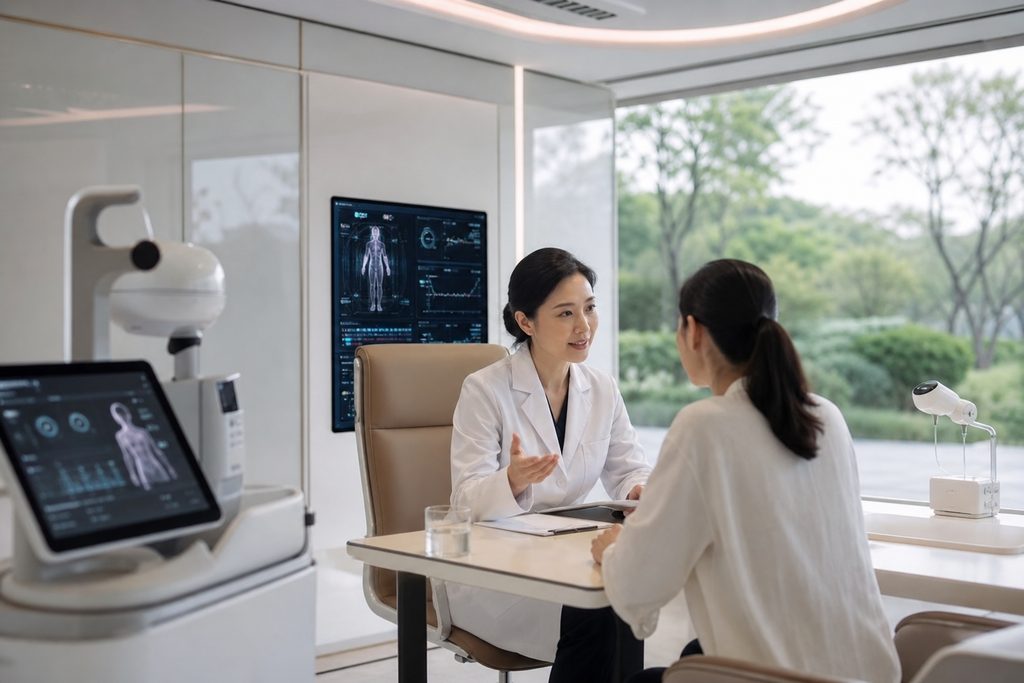
When 52-year-old Sarah from London booked a biological age test at a Harley Street clinic, she expected validation. She ran marathons. She ate clean. The result showed her cells were 61 years old. The quote for a personalized intervention program made her flinch—£18,000 for the first year, with no guarantee. Six months later, she flew to Shanghai. Her follow-up test, after a structured longevity medicine assessment service China program, read 49. The total outlay, including flights and a three-week stay, came in under half the UK quote.
That gap is not a fluke. It is structural.
Key Takeaways
- A comprehensive biological age testing panel in China costs $800–$2,500, compared to $4,000–$10,000 in the US or UK for equivalent depth.
- China’s top longevity clinics run volumes that dwarf Western centers—some process over 5,000 longevity assessments annually, sharpening diagnostic precision.
- Language barriers in public hospitals are real; most advanced longevity programs sit inside international medical centers with English-speaking staff.
- No biomarker panel replaces a physician’s judgment. Testing without a board-certified doctor interpreting results is data, not medicine.
The Problem: You Are Aging Faster Than Your Calendar Says
Chronological age counts birthdays. Biological age measures cellular wear. The two drift apart faster than most people realize. A 2021 study published in *Nature Aging* tracked 1,037 participants in the Dunedin cohort and found that by age 38, some individuals had biological ages ranging from 28 to 61. That is a 33-year spread among people born the same year.
The implications are not cosmetic. Accelerated biological aging correlates with earlier onset of cardiovascular disease, cognitive decline, and metabolic dysfunction. The American Heart Association now recognizes epigenetic age acceleration as an independent risk factor for heart failure. Yet most annual physicals still ignore these markers entirely. Standard lipid panels and fasting glucose tell you what happened. They do not tell you how fast the engine is wearing down.
Patients who seek biological age testing abroad often hit the same wall. Western clinics offer the tests. The prices are steep. The intervention protocols are often generic—metformin prescriptions, basic supplement stacks, quarterly check-ins by email. The structural reason is simple. Most longevity clinics in the US and Europe are small practices. They lack the patient volume to iterate protocols rapidly or negotiate lab costs down.
China operates differently.
Who We Are
We are not a hospital. We do not prescribe treatment or interpret lab results. We are a medical concierge team based in China, connecting international patients with the country’s top-tier longevity assessment centers. Our database spans 340+ top-ranked hospitals across 37 cities. We handle the logistics—hospital matching, appointment coordination, bilingual medical companion services, visa guidance—so you can focus on the medicine. Think of us as the bridge between your health goals and China’s clinical infrastructure.
How Biological Age Testing Works in a Chinese Longevity Assessment
The term “longevity medicine assessment” sounds futuristic. The core is actually grounded in measurable, reproducible biomarkers. A high-quality biological age testing program in China typically runs across two to three days and includes several layers that go far beyond a standard executive physical.
Epigenetic Clocks: The Core of Biological Age Testing
DNA methylation patterns change predictably with age. Epigenetic clocks measure these patterns at specific CpG sites across the genome. The most validated clocks—Horvath, Hannum, PhenoAge, and GrimAge—each capture different dimensions of aging. GrimAge, for example, predicts time to coronary heart disease and all-cause mortality better than any single conventional biomarker.
Chinese longevity clinics increasingly run multiple clocks simultaneously. A typical panel includes GrimAge, PhenoAge, and the newer DunedinPACE clock, which measures the *pace* of aging rather than a static age estimate. Running all three gives a more complete picture than any single clock. In the US, a multi-clock panel often costs $800–$1,500 per clock. Shanghai clinics bundle them. The combined biological age testing price Shanghai clinics quote typically lands between $400 and $900 for a three-clock panel, including the blood draw and bioinformatics analysis.
Why the price difference? Volume. A single longevity center in Shanghai’s Zhangjiang Hi-Tech Park processes more epigenetic arrays in a month than a typical Western longevity clinic runs in a year. Lab costs fall when you run thousands of samples through standardized pipelines.
Beyond Methylation: The Full Biomarker Landscape
DNA methylation is one layer. A serious longevity medicine assessment service China program layers on additional dimensions. These are the components that separate a consumer-grade biological age test from a clinically actionable assessment.
GlycanAge measures immunoglobulin G glycosylation patterns. Changes in these sugar molecules on antibodies track chronic inflammation with surprising precision. A 2020 paper in *GeroScience* showed GlycanAge predicts all-cause mortality independently of conventional risk factors. The test is not cheap anywhere—but Chinese labs have driven the cost below $300, compared to $600–$800 in European clinics.
Telomere length analysis remains part of many panels, though its standalone predictive value is debated. More useful are the functional aging biomarkers: VO2 max measured via cardiopulmonary exercise testing, DEXA-derived visceral adipose tissue, continuous glucose monitoring over 72 hours, and advanced lipid subfraction analysis via NMR spectroscopy. A properly equipped longevity center runs all of these. The data feeds into a composite biological age score that accounts for epigenetic, proteomic, and functional aging dimensions.
Intervention Design: From Data to Protocol
This is where most longevity assessments fail. A patient receives a 40-page report full of biomarkers and no clear path forward. The best Chinese longevity programs close this gap with a structured intervention design session.
After testing, a longevity-trained physician—often an endocrinologist or sports medicine specialist with additional fellowship training in aging biology—reviews the full dataset. The consultation lasts 60 to 90 minutes. The output is a prioritized intervention protocol. Not a generic list of supplements. A specific plan that ranks interventions by expected impact on the patient’s particular aging trajectory.
Someone with high GrimAge driven by inflammatory markers gets a different protocol than someone with accelerated DunedinPACE driven by metabolic dysfunction. The physician may prescribe targeted senolytics, NAD+ precursor protocols, specific exercise prescriptions based on VO2 max and muscle mass data, or pharmaceutical interventions like low-dose rapamycin where clinically appropriate. All within Chinese regulatory frameworks—no experimental gene therapies, no unapproved compounds.
Why Longevity Medicine Cost China Is Structurally Lower
The longevity medicine cost China clinics charge is not lower because of corner-cutting. The cost structure differs for specific, explainable reasons.
High patient volume drives lab costs down. A Shanghai longevity center might process 400–500 biological age panels monthly. Fixed costs—the mass spectrometer, the sequencing equipment, the bioinformatics pipeline—spread across more patients. The per-test cost of an epigenetic clock is mostly equipment amortization and technician time. Both get cheaper at scale.
Physician time costs less, but the training is not inferior. China’s top longevity physicians train at the same international conferences and publish in the same journals as their Western counterparts. The difference is labor economics. A fellowship-trained endocrinologist in Shanghai earns a fraction of what a comparable physician earns in London or New York. That flows through to consultation fees.
The regulatory environment also plays a role. China’s medical device and lab regulatory framework allows certain tests to reach clinical use faster than the FDA or EMA pathways permit. This does not mean lower standards. It means less administrative delay between validation and clinical availability. Some epigenetic clocks cleared for clinical use in China are still classified as research-use-only in the US, which limits insurance coverage and drives up out-of-pocket costs.
What about safety? The question “is longevity assessment safe in China” appears in our inbox regularly. The testing itself—blood draws, DEXA scans, exercise testing—carries the same minimal risks as anywhere else. The interventions prescribed depend on the physician. In a top-tier international medical center, the safety profile matches what you would expect from a major academic hospital in the West. The key variable is not the country. It is the specific hospital and physician. That is why our team only works with hospitals ranked in the top 5% of China’s 35,000+ institutions, evaluated by Fudan University’s national hospital ranking system and JCI accreditation status.
What a Full Longevity Assessment Package Actually Includes
Patients who book longevity medicine package China programs through our coordination service typically receive a structured multi-day protocol. Here is what a representative three-day assessment looks like at a top Shanghai international medical center.
Day one focuses on baseline measurements. Fasting blood draw for epigenetic clock analysis, GlycanAge, telomere length, and a comprehensive metabolic panel that goes far beyond standard lipids—NMR lipoprotein subfraction analysis, ApoB, Lp(a), hs-CRP, fasting insulin, HbA1c, and a full hormone panel including free testosterone, SHBG, DHEA-S, and IGF-1. A DEXA scan measures bone density, lean mass distribution, and visceral adipose tissue. Resting metabolic rate is measured via indirect calorimetry.
Day two tests functional capacity. A cardiopulmonary exercise test with gas exchange analysis yields VO2 max, the single most powerful predictor of all-cause mortality. Grip strength and leg extension power are measured as proxies for neuromuscular aging. A 72-hour continuous glucose monitor is applied. Some centers add a corneal confocal microscopy scan to assess small nerve fiber density—an early marker of metabolic and neurodegenerative aging that shows damage years before symptoms appear.
Day three delivers interpretation and intervention design. The physician reviews all results, calculates composite biological age scores across multiple clocks, and maps the patient’s aging trajectory against population norms. The consultation produces a ranked intervention protocol with specific doses, frequencies, and follow-up timelines. Patients leave with a written plan and, where appropriate, prescriptions for pharmaceutical interventions that can be filled at the hospital pharmacy.
The all-in cost for this depth of assessment? Between $1,800 and $3,500, depending on the exact panel composition and the seniority of the interpreting physician. A comparable workup at a top US academic longevity center runs $8,000–$15,000. The gap is not about quality. It is about structural economics.
| Assessment Component | China (Shanghai Intl. Center) | US (Academic Center) | UK (Private Clinic) |
|---|---|---|---|
| Multi-clock epigenetic panel (3 clocks) | $400–$900 | $2,400–$4,500 | £1,200–£2,500 |
| GlycanAge inflammatory aging test | $250–$350 | $600–$800 | £500–£700 |
| Advanced metabolic panel (NMR lipids, ApoB, Lp(a)) | $150–$300 | $500–$1,200 | £400–£900 |
| DEXA + VO2 max + RMR testing | $300–$500 | $1,000–$2,000 | £800–£1,500 |
| Physician interpretation & protocol design (90 min) | $400–$800 | $1,500–$3,000 | £1,000–£2,500 |
| Total estimated range | $1,800–$3,500 | $6,000–$11,500 | £3,900–£8,100 |
Prices are estimates and vary by hospital, physician seniority, and case complexity. All figures in USD unless otherwise noted.
What You Need to Know Before Booking an Anti-Aging Intervention Abroad
Traveling to China for a longevity assessment is not like booking a spa retreat. There are real logistical hurdles. Being clear-eyed about them prevents disappointment—and in some cases, prevents medical risk.
- Visa Requirements: Medical treatment in China requires an S2 visa, specifically annotated for medical purposes. The hospital must provide an invitation letter confirming your appointment. Family members accompanying you also need S2 visas. The M visa is for commercial business only and cannot be used for medical visits. Processing takes one to three weeks depending on your home country’s Chinese consulate workload.
- Hospital Access Reality: Public hospital outpatient departments in China do not accept advance bookings from overseas patients. You cannot email a public hospital and reserve a slot with a specific longevity physician. The pathway for international patients runs through the hospital’s international medical center or VIP department. These channels offer English-speaking coordination and confirmed appointments—at roughly 1.5 to 2 times the standard consultation fee. This is not a markup for foreigners. It is the price of guaranteed scheduling and language support.
- Payment and Insurance: Chinese public hospitals require prepayment. International medical centers typically accept major credit cards and wire transfers. Most international health insurance plans do not cover longevity assessments, as they are classified as elective or preventive. Budget for out-of-pocket payment. Private international hospitals like United Family or Jiahui may offer direct billing with certain insurers—check before booking.
- Language in Clinical Settings: The physician conducting your longevity consultation may speak functional English, especially in international medical centers. But the technicians drawing blood, running the DEXA scanner, and administering the exercise test almost certainly will not. A bilingual medical companion bridges this gap. Our team provides companions who handle every interaction—check-in, procedure explanation, result collection—so nothing gets lost in translation.
How We Help You Navigate a Longevity Medicine Assessment Service China Program
These barriers are real. They also have solutions. Our role is to make the logistics invisible so you can focus on the medicine.
Before you travel, we match you with a longevity program that fits your health profile and budget. We work with centers across Shanghai, Beijing, and Guangzhou that run high-volume biological age testing programs with English-speaking physicians. We confirm appointment dates, secure the hospital invitation letter for your visa application, and provide a detailed itinerary—where to go, when to fast, what to bring.
During your assessment, a bilingual medical companion stays with you. They translate every conversation with physicians, escort you between testing stations, collect results as they come available, and ensure the physician has your full dataset before the interpretation consultation. No missed tests. No lost reports. No nodding through a consultation you do not fully understand.
After you return home, we remain available. If your protocol includes follow-up testing at six or twelve months, we coordinate the repeat visit. If you need a remote video consultation with your Chinese longevity physician to adjust your protocol, we arrange it. The goal is continuity—not a one-off test that gathers dust in a drawer.
Our coordination fees are transparent. Hospital appointment coordination starts from $300. A full-day bilingual medical companion starts from $200. For patients who want a seamless experience, our VIP end-to-end coordination package runs $5,000–$8,000 and covers every logistical detail from visa paperwork to post-departure follow-up. Any consultation fee you pay is credited in full toward future on-the-ground coordination if you decide to return for a follow-up program within 90 days.
We do not promise miracles. We promise access, translation, and logistical precision. The medicine is between you and your physician.
Frequently Asked Questions
The epigenetic clocks and biomarker assays used in top Chinese longevity centers are the same technologies deployed in Western academic centers—Illumina methylation arrays, mass spectrometry-based proteomics, DEXA scanners from Hologic or GE. The variable that matters is the interpreting physician’s training, not the lab equipment. We only work with physicians who have published in peer-reviewed aging research and practice within JCI-accredited or Fudan top-tier hospitals. Ask to see the physician’s credentials before booking. A serious center will provide them without hesitation.
Biological age testing measures molecular and functional markers that correlate with chronological aging but can diverge significantly. Epigenetic clocks read DNA methylation patterns. GlycanAge analyzes immunoglobulin glycosylation. Functional tests measure VO2 max, muscle strength, and metabolic flexibility. The composite score estimates how fast your body is aging relative to population norms. And yes, the results can change. A 2023 trial published in *Aging Cell* demonstrated that a structured diet, exercise, and supplement protocol reduced the GrimAge clock by an average of 3.2 years over 12 months. The point of testing is not a single number. It is a baseline you can track over time to see if your interventions are working.
What if the physician recommends an intervention I cannot access in my home country?
This happens. Some longevity protocols include pharmaceuticals that are off-label for aging in certain jurisdictions or not approved at all. The physician’s role is to prescribe within Chinese regulatory frameworks and to provide you with a written rationale you can discuss with your home-country doctor. We never facilitate the export of
For more medical information and treatment options in China, visit chinamedservices.com (China Medical Services).
