Longhua Hospital Shanghai TCM: Help for International Patients
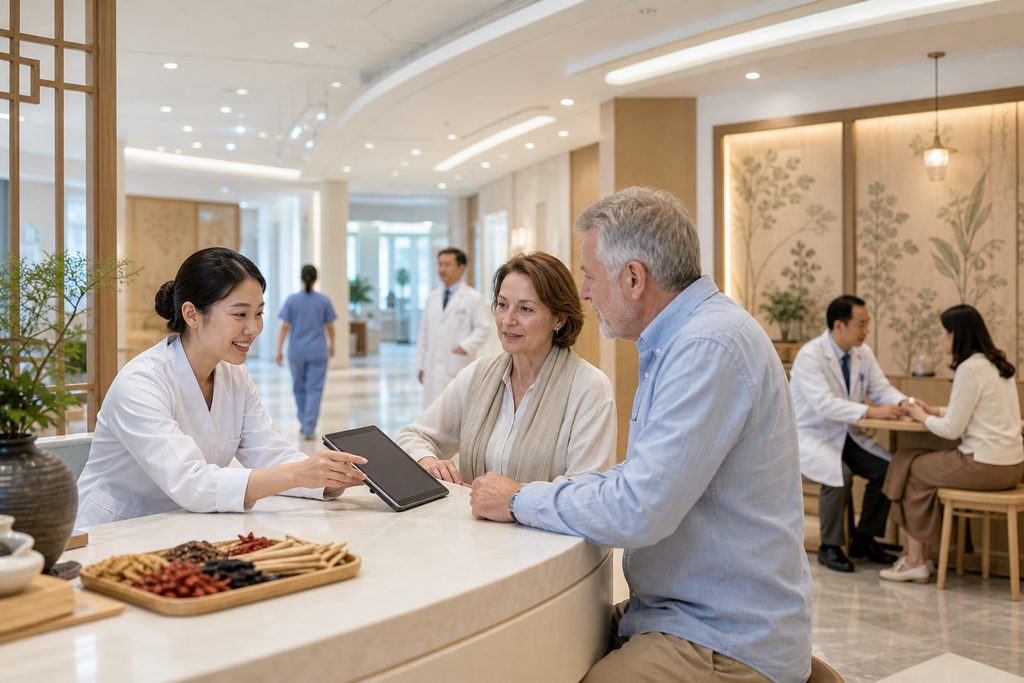
Longhua Hospital Shanghai TCM cost for international patients usually lands somewhere between $60 and $250 for a first consultation and treatment session, depending on whether you use the standard outpatient department or an international clinic. That range surprises most Western patients. It also raises a fair question: if it is that cheap, is it real medicine? Traditional Chinese medicine is a licensed, regulated medical profession in China, not a spa add-on. Longhua Hospital is one of the country’s best-known TCM institutions, and it treats serious conditions alongside routine ones.
But here is the honest part. Getting seen there as a foreigner is not like booking a dentist in London or Toronto. The public queue system, the language barrier, and the registration rules all work against you. This guide explains what Longhua actually offers, what it costs, what is safe, and how international patients realistically get in the door.
What Longhua Hospital Actually Is
Longhua Hospital is the affiliated hospital of Shanghai University of Traditional Chinese Medicine. It is a public tertiary hospital — the highest tier in China’s hospital grading system — and it is known for integrating TCM with modern diagnostics. That matters. You are not choosing between “herbs” and “real medicine” here. You are choosing a hospital where both exist under one roof, with blood tests, imaging, and specialists available when needed.
The hospital’s core departments include oncology support, orthopedics and traumatology, dermatology, gastroenterology, and rehabilitation. Acupuncture, tuina (manual therapy), and herbal formulas are the main treatment tools. Many patients arrive after a Western diagnosis — a herniated disc, chronic eczema, post-stroke weakness, chemotherapy side effects — looking for something the standard protocol has not solved.
That is a reasonable thing to look for. It is also where expectations need calibrating. TCM is not a replacement for surgery, antibiotics, or cancer treatment. Good TCM doctors in China will tell you that themselves.
Is Traditional Chinese Medicine Safe for Foreigners in China?
This is the question that stops most people. And it deserves a straight answer rather than reassurance.
Acupuncture, when performed by a licensed practitioner with sterile single-use needles, carries a very low risk profile. The most common side effects are minor bruising or soreness at the needle site. Serious complications are rare and almost always linked to poor hygiene or unqualified operators — which is exactly why you want a public tertiary hospital rather than a backstreet clinic.
Herbal medicine is more complicated. Some formulas interact with prescription drugs. Some contain ingredients that require monitoring. A responsible TCM doctor asks what you are already taking. If nobody asks, that is a red flag.
So is traditional Chinese medicine safe for foreigners in China? At a top-tier hospital like Longhua, with licensed doctors and pharmacy-controlled herbs, yes — for most patients, under proper supervision. The risks rise sharply when you self-prescribe online, buy unregulated powders, or skip disclosure of your existing medications.
How This Actually Works, Step by Step
Here is the real sequence, without the brochure language.
Step one: you gather your records. Recent blood work, imaging reports, discharge summaries, and a list of current medications. If you have a Western diagnosis, include it. The more the Chinese doctor understands your baseline, the more useful the visit becomes.
Step two: a remote review. You can have your records reviewed before you fly. A written second opinion from a Chinese specialty team typically runs $300–500, and a video consultation with a hospital international department runs $100–300. This step exists to answer one question: is a trip to Shanghai actually worth your time and money? Sometimes the answer is no, and finding that out for a few hundred dollars beats finding it out after a $4,000 flight.
Step three: appointment coordination. Public TCM outpatient registration in China generally cannot be pre-booked from overseas. You register on the day, in person, in a queue. International departments and VIP channels are the exception — they can often be scheduled in advance, at roughly 1.5 to 2 times the standard fee.
Step four: the in-person visit. A first consultation at Longhua involves tongue and pulse diagnosis, a history, and often a prescription plus an acupuncture session. Plan for 30 to 60 minutes with the doctor, plus waiting time.
Step five: follow-up. Herbal treatment works on a timeline of weeks, not days. Most patients are given a two-to-four-week supply and asked to return or report back.
What It Costs: A Realistic Breakdown
Prices vary by hospital, department, and case complexity. The figures below are typical ranges for international patients at Shanghai TCM hospitals, converted to US dollars.
| Service | Typical Cost (USD) | Notes |
|---|---|---|
| Standard outpatient consultation | $15–$50 | Registration plus doctor fee; queue-based |
| International department consultation | $80–$250 | English support, advance booking |
| Acupuncture session | $20–$70 | Per session; packages often cheaper |
| Tuina / manual therapy | $25–$80 | Per session |
| Herbal prescription (2 weeks) | $40–$150 | Depends on formula complexity |
| Written second opinion | $300–$500 | Remote, records-based |
| Video consultation | $100–$300 | Standard or private international department |
| Bilingual medical companion | from $300/day | Registration, queueing, payment, translation |
So how much does TCM treatment cost in Shanghai overall? A one-week visit with daily acupuncture and herbs commonly falls between $500 and $1,500, excluding flights and accommodation. That is a fraction of comparable private integrative care in the US or Europe, where a single acupuncture session alone often runs $100–$200.
One clarification on the phrase you may have seen online: “acupuncture and herbal medicine treatment packages China” usually refers to bundled multi-session programs. Hospitals generally do not sell these as fixed-price products. You pay per session and per prescription. Be cautious with any provider quoting a single all-in package price before examining you.
A Realistic Timeline
This assumes you are starting from abroad and want a proper consultation rather than a walk-in.
| Stage | Timeframe | What Happens |
|---|---|---|
| Records collection | 3–10 days | Gather reports, arrange translation if needed |
| Remote review | 3–7 days | Written opinion or video consultation |
| Appointment coordination | 1–3 weeks | International department slots fill up |
| Visa (S2) | 1–3 weeks | Requires hospital invitation documents |
| Travel and first visit | Day 1–3 in China | Registration, consultation, first treatment |
| Treatment course | 2–6 weeks | Typically 10–20 sessions plus herbs |
| Follow-up at home | Ongoing | Herbal supply, remote check-ins |
Note the visa step. Foreigners coming to China for medical treatment use the S2 visa, with the purpose of visit noted as medical treatment. Family members accompanying a patient apply for S2 as well. The M visa is for commercial and trade activity and has nothing to do with medical care — if anyone tells you otherwise, they are wrong. S2 processing times and document requirements vary by consulate, so confirm current rules with the relevant embassy before booking flights.
What Can Go Wrong — and What Happens Then
Things go sideways. Here is what that looks like in practice.
You cannot get the appointment you wanted. Public TCM registration is same-day and first-come. Popular senior doctors fill their quota within the first hour of the morning. The realistic recourse is the international or VIP channel, which costs more but can be scheduled ahead.
The doctor does not speak English. This is common even at major hospitals. Interpretation is not optional here — a mistranslated symptom or medication can change the prescription. This is the single strongest argument for a bilingual companion.
The herbs conflict with your medication. If you did not disclose your prescriptions, the doctor cannot protect you. Disclose everything, every time.
The treatment does not work. TCM is not guaranteed for any condition. Chronic pain, digestive issues, and rehabilitation often respond. Some conditions do not. A good doctor will tell you within a few weeks whether the approach is helping.
Payment and insurance. Public hospitals require upfront payment; you claim reimbursement from your insurer afterward, and many Western insurers will not cover TCM abroad. Private international hospitals often bill insurers directly. Check your policy before you travel.
How to Choose the Right TCM Hospital in Shanghai
Longhua is not the only option, and it may not be the best fit for your specific problem. Shanghai has several strong TCM institutions, each with different departmental strengths.
Three criteria matter more than reputation rankings.
First, departmental match. A hospital famous for oncology support may be mediocre for dermatology. Look at the specific department, not the hospital’s overall name. China’s Fudan specialist reputation rankings list the top hospitals by department, which is a more useful signal than any general list.
Second, access to modern diagnostics. If your condition needs imaging or bloodwork, you want a hospital that can do it on site rather than sending you elsewhere.
Third, language infrastructure. If the hospital has an international department, your entire visit gets easier — booking, payment, and communication.
For patients comparing options across the country, our ranked directory of top Chinese hospitals groups facilities by city and tier so you can see what each one is actually known for.
Practical Considerations for Your Trip
Records first. Get your Western diagnosis, imaging, and medication list translated into Chinese before you arrive. Hospital interpreters can help, but arriving prepared saves a day.
Visa timing. Apply for S2 with your hospital invitation letter well ahead of your intended travel date. Do not book non-refundable flights until the visa is in hand.
Payment. Bring a card that works internationally and expect to pay per visit. Public hospitals are cashless but require local payment methods in some departments — another reason a companion service earns its fee.
Duration. Do not plan a three-day trip for a chronic condition. Herbal medicine needs weeks. A realistic first course is two to four weeks.
Follow-up. Ask the doctor for a written formula list and dosage instructions you can take home. If you want to continue treatment after returning, you will need a practitioner who can work from that document.
Frequently Asked Questions
Standard public outpatient registration generally cannot be pre-booked from abroad — you register in person on the day. International and VIP departments are the exception and can often be scheduled in advance, usually at 1.5 to 2 times the standard fee. A remote video consultation is a good way to establish whether an in-person visit is worth it.
It is one of the most established, and it has the infrastructure international patients need. But “best” depends on your condition. For dermatology, orthopedics, or oncology support, other Shanghai TCM hospitals may have stronger departments. Match the department to your problem rather than chasing a single brand name.
Expect roughly $800 to $2,500 for consultations, 10 to 14 acupuncture sessions, and herbal prescriptions, depending on the hospital tier and formula complexity. Accommodation, flights, and companion services are separate. Prices vary by hospital and case complexity, so treat these as planning ranges rather than quotes.
If you have no Mandarin, yes. Registration, payment, pharmacy pickup, and the consultation itself all happen in Chinese. A bilingual medical companion typically costs from $300 per day and covers queueing, registration, payment, and translation. It is not a luxury at a hospital that sees thousands of outpatients daily.
Usually not. Most Western policies exclude traditional medicine and treatment sought abroad outside emergencies. Check your policy in writing before you travel, and expect to pay upfront at public hospitals and claim afterward — if you can claim at all.
Your Next Step
The core message is simple: Longhua Hospital and Shanghai’s other top TCM institutions offer legitimate, licensed, affordable care — but the system is built for Chinese-speaking patients, and that gap is where foreign visitors struggle. Understanding the process before you fly is most of the battle.
China Medical Services helps international patients navigate that process. We are a coordination service, not a medical provider — we do not diagnose, prescribe, or promise outcomes. What we do is review your records with the right specialty, coordinate appointments through official hospital channels, and put a bilingual companion beside you on the day. If you want to know whether a TCM visit makes sense for your situation, start with a free consultation and we will tell you honestly, including when the answer is no.
This article is for general information only and is not medical advice. Treatment decisions should be made with a qualified physician who has reviewed your individual case.
For more medical information and treatment options in China, visit chinamedservices.com (China Medical Services).
