Medical Travel to China: Surgery, Costs, and Recovery Guide
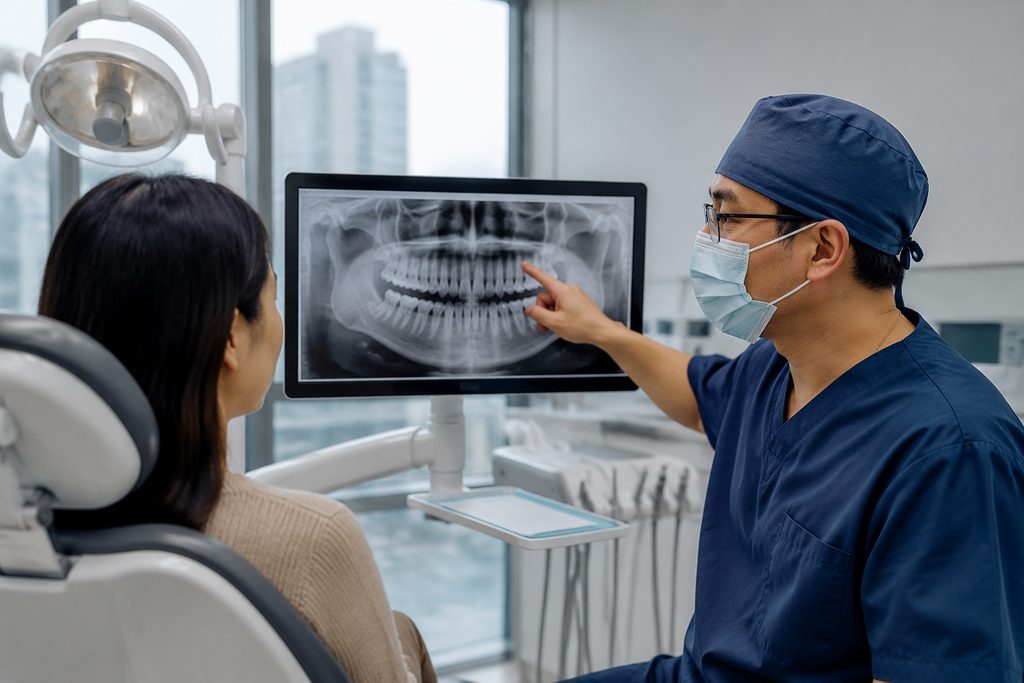
What if the surgery you need isn’t years away and financially out of reach, but available within weeks at a fraction of the cost? For a growing number of international patients, that question leads to one destination. Navigating medical travel to China for a major procedure involves understanding a completely different healthcare system. Our team helps patients bridge that gap every day, connecting them with specialists in a network of 340+ top-ranked hospitals across 37 cities. This guide lays out exactly what you need to know about planning your surgery, treatment, and recovery journey—from selecting the best hospital for spine surgery in China to understanding the real cost of a hip replacement in Beijing.
Key Takeaways
- China’s top-tier hospitals, representing the top 5% of the nation’s 35,000+ facilities, perform high surgical volumes that correlate with better outcomes, often at 1/5 to 1/10 of US costs.
- Direct access to public hospital specialists requires an in-person consultation first; locking in a specific surgery date before you travel means coordinating through a hospital’s official international VIP channel.
- Language is the single biggest barrier—public hospitals operate entirely in Mandarin, making a bilingual medical companion essential for navigating registration, consultations, and payments safely.
- Medical visas (S2 category) are straightforward with the right hospital documentation, but never guaranteed; always confirm requirements with the Chinese embassy or consulate in your home country before booking flights.
The Problem: When Your Healthcare System Makes You Wait
Waiting for surgery is not just inconvenient. It is destructive. A patient in Canada with severe spinal stenosis might wait 6 to 12 months for a decompression surgery, all while nerve damage potentially worsens. In the UK’s NHS, the national target is that 92% of patients should wait less than 18 weeks for non-urgent surgery, yet in early 2024, over 40% of patients on the waiting list had been there longer than that. In the United States, the barrier is often financial. A single-level spinal fusion can cost upwards of $110,000 before insurance, and even insured patients face deductibles that rival a year’s salary.
This dual crisis of wait times and cost pushes people to look beyond borders. But looking abroad for something as serious as open-heart surgery or a hip replacement brings a flood of difficult questions. Is the quality comparable? How do I even begin? And what happens if something goes wrong when I am 7,000 miles from home? These are not abstract fears. They are the exact concerns that should drive your research, and they deserve direct, factual answers.
Why China’s Top Surgical Centers Deliver Results
There is a well-documented relationship between the number of times a hospital performs a procedure and how well its patients do. This is the volume-outcome relationship. A study published in the New England Journal of Medicine found that for several major operations, patients at low-volume hospitals had a 26% to 44% higher risk of dying than those at high-volume centers. China’s top hospitals operate at a scale that is hard to comprehend from a Western perspective. Fuwai Hospital in Beijing, the world’s largest cardiovascular center, performs over 14,000 cardiac surgeries annually. A busy US heart center might do 1,500.
This scale applies across specialties. An orthopedic surgeon at a top-tier Chinese public hospital may perform 400 joint replacements a year. Their typical US counterpart performs roughly 65. When you are choosing the best hospital for spine surgery in China, you are not just looking for a brand name. You are looking for a team that has seen your specific problem hundreds of times this year. That repetition breeds a kind of intuitive expertise you cannot get from a textbook.
Technology and Efficiency at Unmatched Scale
Chinese public hospitals are not quaint. The major centers are sprawling medical cities. Peking Union Medical College Hospital (PUMCH) and Huashan Hospital in Shanghai see over 10,000 outpatient visits per day. To manage this, they have invested heavily in digital infrastructure. You will see fully integrated systems where your CT scan from this morning is on the specialist’s tablet before you walk down the hall. Surgical robotics, like the Mako system for orthopedics or the da Vinci for urology and gynecology, are widely installed. The adoption of minimally invasive techniques is aggressive because it increases patient throughput and reduces bed occupancy, which is a critical metric in a high-volume system.
But this efficiency has a sharp edge. It is not a spa. The system moves fast, and it moves in Mandarin. A consultation that might be a relaxed 45-minute conversation in a US clinic could be a focused 15-minute, data-driven assessment here. The expertise is world-class. The bedside manner is culturally different. Understanding this trade-off before you arrive is crucial.
Cost Advantage Without Quality Compromise
How can a hospital with the latest robotic systems charge $15,000 for a procedure that costs $130,000 in the US? The answer is structural, not magical. It is a combination of a lower cost of living for medical staff, a regulated pharmaceutical and implant pricing system, and a public hospital model designed for high throughput rather than high margin per case. It does not mean the surgeon is less qualified. It means the economic ecosystem around the surgery is fundamentally different. A hip replacement cost in Beijing at a top public hospital typically ranges from $12,000 to $18,000. The same procedure in the US averages over $40,000. The implants used—from companies like Zimmer Biomet or Johnson & Johnson—are often the exact same models. You are paying for the service, the skill, and the facility, not the inflated administrative overhead of a Western insurance-driven billing department.
What Surgery and Recovery Actually Look Like: A Week-by-Week Timeline
Let’s move from the abstract to the concrete. You have decided to explore this path. What does the journey actually feel like on the ground? This is a realistic timeline for a major orthopedic procedure like a hip or knee replacement, assuming you are coordinating through a hospital’s international department.
Weeks 1–3: Remote Evaluation. You do not just book a flight and show up. The process starts at home. You send your existing medical records—X-rays, MRI scans, blood work, a summary from your local doctor—for a written second opinion. A specialist at the Chinese hospital reviews them. They confirm you are a suitable candidate and propose a surgical plan. This step costs $300–$500 and confirms you are not making a wasted trip.
Week 4: Travel and In-Person Consultation. You arrive on an S2 visa. Our team coordinates your airport transfer and hotel. The next day, you have your face-to-face consultation with the surgeon who reviewed your file. They order a final round of pre-operative tests. This is not a suggestion; it is a mandatory step. No reputable surgeon will operate on you based on foreign scans alone.
Week 5: Admission and Surgery. If all tests are clear, you are admitted. Surgery happens, typically within a day or two of admission. The procedure itself is the same as anywhere else. You are in the operating room for a few hours, then in recovery.
Week 6: In-Hospital Recovery and Discharge. For a joint replacement, you will be on your feet with a physical therapist within 24 hours. Hospital stays are often slightly longer in China than in the US—perhaps 5 to 7 days instead of 1 to 3—because the discharge infrastructure is different. You will be discharged to a hotel, not your home. You will need to stay in the city for at least one more week for a wound check and to ensure no immediate complications like a deep vein thrombosis arise.
Week 7 and Beyond: Return Home. You fly back. Before you leave, you receive a detailed discharge summary in English and a digital copy of all your operative notes and imaging. Your follow-up is a shared responsibility. We can coordinate a video consultation at 3 months, but your local orthopedic surgeon must handle the physical checks.
Evaluating Safety and Quality: How to Verify a Hospital
“Is it safe to get a liver transplant in China?” This is one of the most common questions we hear, and it is the right one to ask. Safety is not a feeling; it is a verifiable set of standards. You should not take anyone’s word for it. You should check. Start with international accreditation. Look for the JCI accredited hospitals China list. JCI, or Joint Commission International, is a non-profit organization that certifies hospitals against a set of rigorous, US-comparable patient safety and quality standards. A hospital that has earned and maintained this certification has been audited by an external, objective body.
Next, look at the national standard. The Fudan University Hospital Ranking is the most authoritative domestic ranking. The top 100 hospitals are grouped into tiers (A++++ to A). For a specific specialty, you can see which hospitals are ranked in the top 10 nationally for that field. A hospital that is JCI-accredited AND ranked highly by Fudan for your specific condition is a very strong signal. You can cross-reference these on our top-ranked hospitals database. For a procedure like a liver transplant, you need to understand that China operates under a strict, government-regulated system. The notion of “transplant tourism” and buying an organ is a dangerous myth. The system uses a national allocation list, and foreign patients are assessed for eligibility based on strict medical criteria, not financial ones. No ethical hospital will ever promise a transplant outside of this framework.
Practical Considerations: Visas, Payments, and Language
This is the part where a great plan can fall apart if you get the details wrong. The logistics are not impossible, but they are non-negotiable.
Visas: Get the Category Right. For medical treatment, you and one accompanying family member will apply for an S2 visa. This is a short-term private affairs visa. The application requires an invitation letter from the Chinese hospital. This letter is a formal document, not an email. You will need it to be stamped with the hospital’s official seal. Processing times vary by embassy, but plan for at least two weeks. Do not book a non-refundable flight until the visa is in your passport. The M visa is for commercial trade and has nothing to do with medical treatment.
Payments: Be Prepared to Pay Upfront. Public Chinese hospitals require a deposit upon admission. This is often a significant sum, calculated to cover the estimated cost of the surgery and a buffer for complications. You pay the deposit via bank transfer or credit card, and the hospital deducts costs daily. You will receive a final bill and a refund of any unused balance upon discharge. International private hospitals, like those found on our private hospital network page, often have direct billing agreements with major insurers. For public hospitals, you will almost certainly be paying out of pocket and seeking reimbursement from your insurance company later. A full medical tourism package in China that is all-inclusive is rare in the public system; it is more common to pay for the hospital and logistical coordination separately. This ensures transparency.
Language: You Cannot Do This Alone. This is not an exaggeration. The top surgeon may speak fluent English. The nurse, the orderly who takes you to X-ray, the cashier in the billing department, and the pharmacist will not. A single miscommunication about a drug allergy or a post-operative instruction can have serious consequences. A bilingual medical companion is not a luxury. They are your voice and your ears in the system, ensuring your medical history is perfectly understood and that you understand every step of your recovery plan. This service starts from $300 a day and is the single most critical investment you can make in your safety.
Frequently Asked Questions
How much does a hip replacement cost in Beijing?
At a top-tier public hospital, the total cost for a primary total hip replacement typically ranges from $12,000 to $18,000. This usually includes the implant, surgeon’s fee, anesthesia, and a 5–7 day hospital stay. This is an estimate, and the final cost varies by hospital and case complexity. A complex revision surgery will be more expensive.
Can I book open heart surgery in Shanghai and know the price before I travel?
You can get a very accurate estimate, but not a fixed, all-inclusive price for a package. The process starts with a remote evaluation. You send your angiogram and echocardiogram for a written second opinion ($300–$500). The cardiac surgery team will then provide a treatment plan and a detailed cost estimate for the surgery, including the valve type or number of grafts. The final price is confirmed after your in-person pre-operative tests. A coronary artery bypass graft (CABG) in Shanghai typically costs between $15,000 and $22,000.
What happens if there is a complication after I return home?
This is a critical question. Before you leave the hospital in China, you will receive a complete medical record in English, including operative notes, an implant card, and all imaging on a CD or USB drive. Your local doctor at home must agree to take over your post-operative care before you even travel. We strongly recommend establishing this relationship first. The Chinese surgical team remains available for remote video consultations to advise your local doctor, but they cannot provide direct physical care. All surgical procedures carry risk, and managing complications locally is a reality you must plan for.
Your Next Step
A decision this significant deserves a methodical first step, not a leap of faith. The most logical starting point is a remote evaluation. It allows a top Chinese specialist to review your case and give you an honest, data-backed opinion on whether this path is right for you—before you spend a dollar on a flight. Our team at China Medical Services exists to make this process clear and manageable. We do not provide medical advice or diagnoses; we connect you with the specialists who do and handle the coordination so you can focus on your health. If you are ready to explore your options with clarity, we invite you to request a free initial consultation.
For more medical information and treatment options in China, visit chinamedservices.com (China Medical Services).
