Medical Treatment in Xining China: Your Complete Highland Access Guide
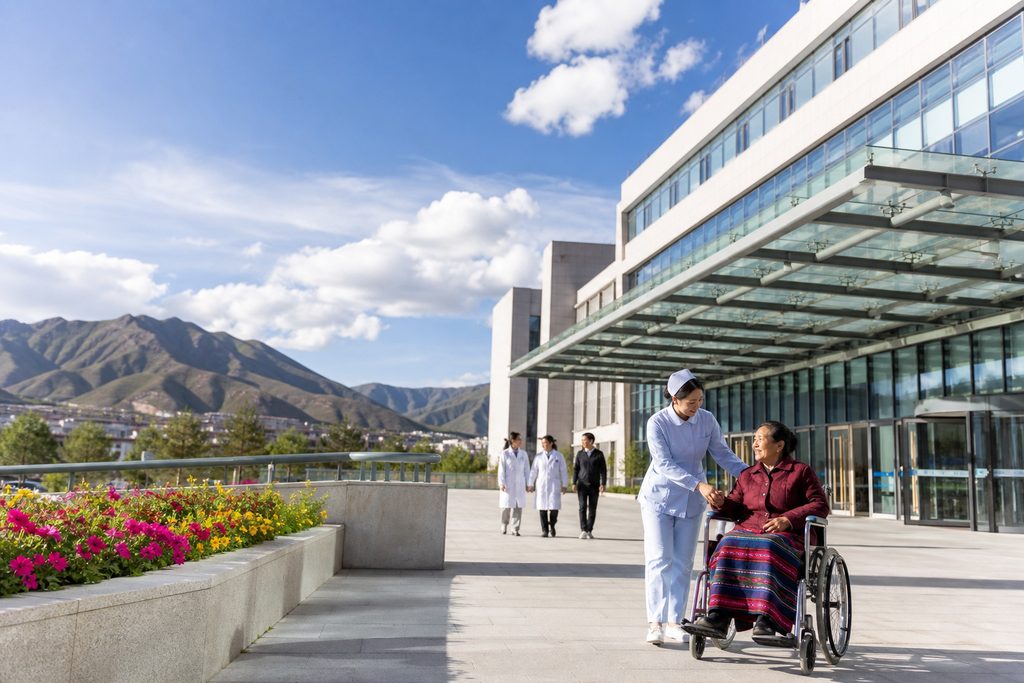
When 57-year-old Elena from Vancouver scheduled a specialist consultation at Qinghai Provincial People’s Hospital, her excitement quickly gave way to a knot of anxiety. She had the medical reports, the travel documents, and the hotel booking. What she lacked was a clear answer to an urgent question: who would physically guide her through a sprawling Chinese public hospital at 2,260 meters above sea level, where the signs are in Mandarin, the registration system runs on a local health app, and the thin air already made her feel short of breath just walking from the taxi stand? For international patients, seeking medical care in a high-altitude city like Xining is not simply a clinical decision. It is a logistical operation where the margin for error shrinks with every thousand feet of elevation gained.
The medical treatment companion service Xining China cost represents a fraction of what most Western patients budget for their overall trip, yet it is the single line item that determines whether the experience is a controlled, efficient visit or a disorienting, multi-day struggle. Our team has coordinated access for patients across 37 Chinese cities, including highland regions where standard medical tourism playbooks fall apart. Here is what you need to know before you book a flight to Qinghai.
Key Takeaways
- A bilingual medical companion in Xining starts from $300 per day, covering hospital navigation, translation, and administrative coordination — the difference between a completed consultation and a wasted trip.
- Xining sits at 2,260 meters (7,414 feet). Acclimatization is not optional. A structured companion service builds in altitude adjustment days before any hospital visit, which is critical for patients with cardiovascular or respiratory conditions.
- Public hospitals in Xining do not accept international insurance directly. You will pay upfront at each step — registration, tests, consultation — and file for reimbursement later. A local guide ensures you do not pay the wrong fee at the wrong window.
- No service can guarantee a specific surgeon or surgery date before an in-person consultation. Any provider promising otherwise is not being honest about how China’s top-tier public hospitals operate.
The Problem: High-Altitude Medical Logistics Are Unforgiving
Xining, the capital of Qinghai province, is home to several nationally recognized hospitals, including Qinghai Provincial People’s Hospital and Qinghai University Affiliated Hospital. These institutions serve a vast population across the Tibetan Plateau and have developed deep clinical experience with conditions exacerbated by altitude — pulmonary hypertension, congenital heart defects in highland populations, and chronic mountain sickness. For a foreign patient, accessing this expertise means confronting three simultaneous challenges: a language barrier that extends far beyond conversational Mandarin, a hospital workflow that assumes local residency and digital literacy, and an altitude that can trigger acute mountain sickness (AMS) in roughly 25% of people who ascend rapidly to above 2,000 meters, according to research published in the New England Journal of Medicine.
You cannot solve these problems from a hotel room. You cannot solve them with a translation app. And you certainly cannot solve them if you are already symptomatic from hypoxia.
Why a Highland Medical Companion Service Delivers Results
A companion is not a luxury add-on. In Xining, it is the operational backbone of a safe medical visit. Here is what that looks like in practice.
Altitude Acclimatization as a Clinical Prerequisite
Most international patients fly into Xining Caojiabao Airport, which sits at 2,200 meters. The city center is slightly higher. For a patient traveling from sea level — London, New York, Sydney — the drop in barometric pressure is immediate and physiologically real. Oxygen saturation can fall to 90-92% within hours. A structured Qinghai highland medical access full service package price includes a mandatory rest period: 24 to 48 hours of limited activity, hydration monitoring, and, for patients with known cardiac or pulmonary conditions, supplemental oxygen coordination. We arrange portable oxygen concentrators upon arrival and schedule the first hospital visit only after a nurse-led vitals check confirms stability. Skipping this step is dangerous. We do not skip it.
Hospital Navigation That Goes Beyond Translation
Qinghai Provincial People’s Hospital handles over 5,000 outpatient visits daily. The registration counters are organized by department and sub-specialty. Payment windows are separate from registration windows. Lab results are collected from self-service kiosks that require a Chinese ID number or a hospital-issued card. A companion does not just translate words. They translate the workflow. They hold your place in the queue, carry your medical records to the correct consultation room, and ensure the doctor receives the right imaging files — not a blurred photocopy. This is what how does medical companion service work in Xining China means at the operational level: a person who knows which floor the endocrinology department is on, which machine prints your CT report, and which pharmacy window dispenses your prescribed medication.
Cost Transparency in a Cash-First System
Let us address the financial reality directly. A public hospital in Xining requires payment before services are rendered. You pay for registration. Then you pay for the blood test. Then you pay for the ultrasound. Each transaction happens at a different counter, often on different floors. Fees are displayed in Chinese on scrolling LED screens. A companion tracks every payment, collects every receipt, and translates every line item into English for your insurance claim. The medical treatment companion service Xining China cost — from $300 per day — covers this administrative shield. Without it, you risk double-paying, missing a critical test because you did not pay at all, or losing receipts that your insurer back home will demand.
| Service Component | Estimated Cost (USD) | Notes |
|---|---|---|
| Bilingual Medical Companion (full day) | from $300/day | 8 hours; includes hospital navigation, translation, payment coordination |
| Airport Transfer (round-trip) | $200 | Xining Caojiabao Airport to city center hotel |
| Written Second Opinion (specialist review) | $300–500 | Remote review of existing records before travel |
| Specialist Video Consultation | $500–800 | Live online consultation with a department head |
| VIP End-to-End Coordination | $5,000–8,000 | Full itinerary management for complex cases |
All prices are reference ranges. Final quotes vary by hospital, case complexity, and specific requirements. Any remote consultation fee is credited in full toward on-the-ground coordination if you proceed to treatment within 90 days.
Is Healthcare Safe in Qinghai High Altitude for Foreigners? The Evidence
This is the question that keeps patients awake at night. Is healthcare safe in Qinghai high altitude for foreigners — not just the clinical care, but the entire environment? The short answer: yes, with preparation. The longer answer requires separating the medical quality from the environmental risk.
Qinghai’s top hospitals maintain clinical standards comparable to other Chinese tertiary-A institutions. The province has invested heavily in telemedicine infrastructure precisely because its population is dispersed across high-altitude terrain. Qinghai University Affiliated Hospital, for example, operates a dedicated high-altitude medicine research center that studies the physiological adaptations and pathologies of plateau living. For a foreign patient with a condition related to altitude, you are arguably in one of the most experienced clinical environments on earth.
The risk is not the hospital. The risk is the unmanaged transition from sea level to 2,260 meters. Acute mountain sickness typically presents within 6 to 12 hours of arrival — headache, nausea, dizziness, fatigue. In rare cases, it progresses to high-altitude pulmonary edema (HAPE) or high-altitude cerebral edema (HACE), both of which are medical emergencies. Patients with pre-existing hypertension, coronary artery disease, or COPD are at elevated risk. A responsible companion service will not schedule a hospital consultation on the day of arrival. It will not leave you alone in your hotel room without a pulse oximeter and a direct line to an English-speaking coordinator. These are not optional precautions. They are the standard of care for highland medical access.
How to Book a Full Medical Companion Service in Xining: The Step-by-Step Timeline
Patients researching how to book full medical companion service Xining China often assume the process starts with selecting a hospital. It does not. It starts with a remote clinical evaluation that determines whether traveling to Xining is medically appropriate in the first place.
Week 1–2: Remote Triage and Record Review
You send your existing medical records — imaging, lab results, physician notes, current medication list — to our coordination team. A specialist at a Xining hospital reviews the files and provides a written assessment. This step answers the threshold question: is there a clinical reason to come to Xining specifically, or would a hospital at sea level serve you better? The written second opinion costs $300–500. If the recommendation is to proceed, that fee is credited toward your on-the-ground coordination.
Week 3: Visa and Travel Planning
Medical treatment in China requires an S2 visa, which covers short-term private affairs including medical visits. Your accompanying family members also apply for S2 visas. The application requires an invitation letter from the Chinese hospital — something the companion service facilitates. Processing typically takes 5 to 10 business days at your local Chinese embassy or consulate. Do not book a non-refundable flight before the visa is in your passport.
Week 4: Pre-Departure Altitude Preparation
Your coordinator sends a pre-acclimatization protocol: hydration targets, medication guidance (acetazolamide may be prescribed by your home physician for AMS prevention), and a packing list that includes a portable pulse oximeter. You also receive a detailed itinerary: airport pickup time, hotel address, rest day schedule, hospital visit time, and the name and photo of your bilingual companion.
Day 1 in Xining: Arrival and Acclimatization
Your companion meets you at the airport with a vehicle and supplemental oxygen. You are taken directly to your hotel. No hospital visit today. The companion checks your oxygen saturation and blood pressure. You rest. This is the most important day of your trip, and it contains zero medical consultations.
Day 2–3: Hospital Consultation and Diagnostics
Your companion escorts you to the hospital, handles registration, pays fees on your behalf (with funds you have provided), translates your history to the attending physician, and translates the doctor’s assessment back to you. If additional tests are ordered — an echocardiogram, a CT scan, a stress test — your companion schedules them, often for the same day if slots are available. You receive a written summary in English of everything discussed and diagnosed.
Day 4+: Treatment Decision and Next Steps
If the specialist recommends a procedure that can be scheduled within your stay, your companion coordinates the admission process. If the recommendation is a longer-term treatment plan, you return home with a clear clinical roadmap, translated records, and a direct channel for follow-up video consultations.
Evaluating Medical Tourism Services in Xining: What Reviews Cannot Tell You
Patients searching for the best medical tourism service Xining Qinghai reviews often encounter a problem: there are not many reviews. Xining is not a major medical tourism hub like Shanghai or Beijing. The volume of international patients is lower, which means online testimonials are sparse. This does not mean the services are unreliable. It means you need a different evaluation framework.
Ask these questions of any provider before committing:
- Do you have a direct working relationship with the hospital’s international department, or are you outsourcing to a third-party agency? The answer should be immediate and specific — a named department, a named coordinator.
- What is your altitude safety protocol? If the answer is vague (“we monitor the patient”), move on. The correct answer includes specific oxygen saturation thresholds, rest day requirements, and a plan for emergency descent to lower altitude if AMS worsens.
- Can you provide a sample itinerary for a patient with my condition? A legitimate service will show you a de-identified, condition-specific timeline — not a generic template.
- What happens if the specialist cancels? Chinese hospital schedules are fluid. A senior doctor may be called into emergency surgery without notice. Your companion should have a backup plan: rescheduling for the next available slot, arranging a consultation with a colleague in the same department, or, if necessary, coordinating with an alternative hospital.
These questions reveal operational competence faster than any five-star review.
Practical Considerations: Documentation, Payment, and Insurance for Xining Medical Visits
No. Chinese public hospital specialists have clinical, teaching, and administrative responsibilities that shift week to week. A department head may be called to a provincial health meeting or an emergency surgery without notice. We can request a specific physician and confirm their availability 24 hours before your appointment, but we cannot guarantee any individual doctor. What we can guarantee: if your requested specialist is unavailable, we will arrange a same-day consultation with a senior attending physician in the same department, and you will be informed of the change before you leave your hotel.
Coordination fees for remote services — written second opinions and video consultations — are non-refundable once the specialist has begun reviewing your records. For on-the-ground companion days, cancellation with more than 72 hours’ notice receives a full refund minus a $100 administrative charge. Cancellation within 72 hours is refunded at 50%. We recommend travel insurance that covers trip cancellation for medical reasons.
Your companion can accompany you through admission, pre-operative preparation, and post-operative recovery coordination. However, companions do not stay overnight in the hospital ward. Chinese public hospital wards have strict visiting hours and do not permit non-family members to remain after hours. Your companion will return each morning, coordinate with the nursing staff, translate the daily care plan, and remain reachable by phone throughout the evening. For patients who require continuous bedside support, we can arrange a private nurse — this is a separate service coordinated with the hospital’s nursing department.
Your Next Step
Seeking medical care on the Qinghai highlands is not a decision to make lightly, nor is it one to make alone. The clinical expertise exists in Xining. The infrastructure for international patients does not — not without someone on the ground who knows the system, speaks the language, and understands the physiological demands of altitude. Our team at China Medical Services connects patients with top-ranked hospitals across 37 Chinese cities, including the highland institutions of Qinghai. We do not provide medical advice or diagnose conditions. We provide the operational layer that makes a safe, efficient hospital visit possible. If you are considering treatment
Frequently Asked Questions
Yes. The hospitals used for international patients are JCI-accredited and follow the same international safety standards as top hospitals in the US and Europe. Surgical teams perform high volumes of procedures — often more than their Western counterparts — which studies show leads to better outcomes.
Costs vary by procedure and hospital, but international patients typically save 40-80% compared to US prices — even when factoring in travel and accommodation. A consultation with our team will give you an exact, all-inclusive quote with no hidden fees.
Send us your existing medical reports to get started. We handle everything from hospital selection and appointment scheduling to visa assistance and post-operative recovery planning. Your medical records are reviewed by the specialist before you even book a flight.
For more medical information and treatment options in China, visit chinamedservices.com (China Medical Services).
