Medical Visa for African Patients: A Practical Guide to Treatment in China
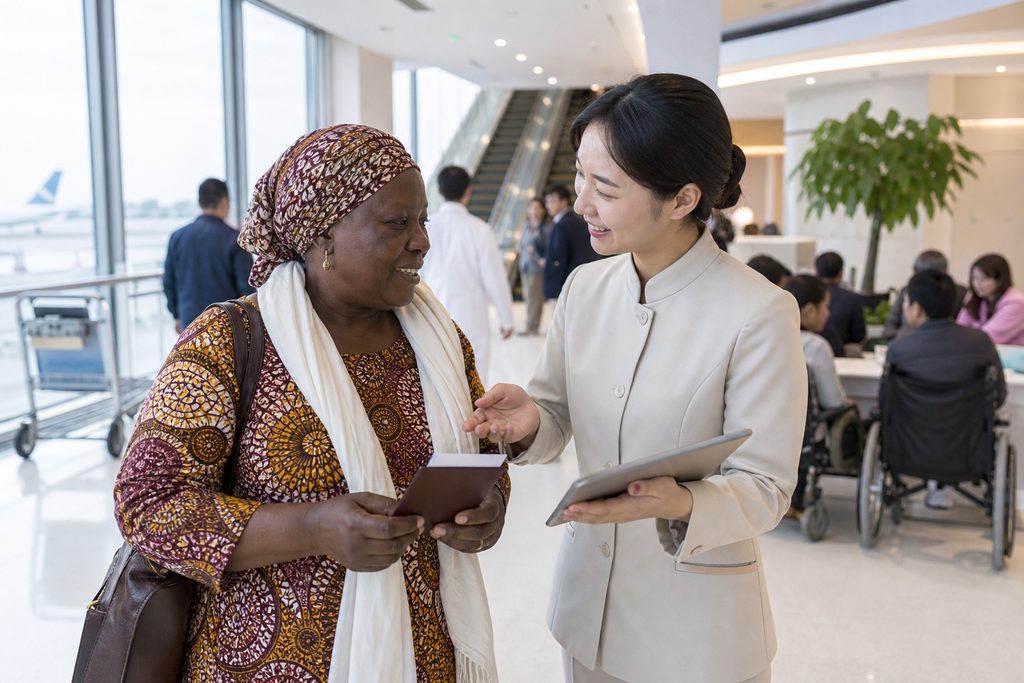
Medical Visa for African Patients: A Practical Guide to Treatment in China
Navigating a medical visa China for African patients is often the first real hurdle families face when considering treatment abroad. Every year, thousands of patients from Nigeria, Ghana, Kenya, and South Africa look beyond their borders for cardiac surgery, oncology care, orthopedics, and advanced diagnostics. China has become a serious destination. The country’s top hospitals now perform over 14,000 cardiac surgeries annually at a single center — Fuwai Hospital in Beijing — a volume unmatched anywhere in the world. But getting there legally and logistically requires understanding a system that does not always make itself easy to understand.
This guide breaks down the visa category you actually need, the documents that matter, the hospital landscape, and what the process costs. We work with patients from across the African continent every month. The questions are consistent. The confusion is consistent too. Let’s clear it up.
Key Takeaways
- China has no visa category officially named “medical visa” — African patients use the S2 visa, annotated for medical treatment purposes, with supporting hospital documentation.
- Top-ranked Chinese hospitals charge roughly one-fifth to one-tenth of US prices for comparable procedures; cardiac bypass surgery runs $12,000–$20,000 versus $120,000+ in America.
- The biggest practical barrier is not the visa itself but hospital access: public hospital outpatient departments cannot be pre-booked from overseas, and language barriers inside massive facilities are real.
- Visa approval is never guaranteed. The Chinese embassy or consulate reviews each case individually, and hospital invitation letters must be genuine and verifiable.
The Problem: Getting Clear Answers About Medical Travel to China
Surgeons who perform a procedure hundreds of times per year simply have lower complication rates. This is well-documented in surgical literature. At Fuwai Hospital, cardiac surgeons complete over 14,000 operations annually. A top Chinese orthopedic surgeon often performs 200–500 joint replacements per year, compared to roughly 65 for the average US surgeon. For African patients who may have waited months or years for surgery at home, this volume translates into shorter waits and deep procedural experience.
China’s top-tier hospitals are ranked by the Fudan University Hospital Rankings, which evaluates the top 100 hospitals nationwide into five tiers (A++++ through A) without assigning specific numerical ranks. Our database covers 340+ top-ranked hospitals across 37 cities, representing the top 5% of China’s 35,000+ hospitals. These are the institutions where clinical volume is concentrated.
Technology and Efficiency at Scale
Chinese hospitals adopted electronic medical records, AI-assisted imaging, and robotic surgery platforms at a pace that surprised many Western observers. A patient arriving at a major Shanghai hospital can complete a full diagnostic workup — blood panels, CT, MRI — within one to two days. The same sequence might take three to six weeks in many Western systems. For an international patient paying for accommodation and travel, that speed matters financially as much as medically.
But scale has a downside. Top Chinese public hospitals see 10,000+ outpatient visits daily. Corridors are crowded. Signage is in Mandarin. Registration, payment, and test collection happen at different counters on different floors. Without Chinese language ability or a bilingual companion, the experience can be overwhelming. This is not a reason to avoid China. It is a reason to plan properly.
Cost Advantage Without Quality Compromise
Lower cost does not mean lower quality. The price difference is structural. Chinese labor costs for nurses, technicians, and support staff are lower. Hospitals operate at enormous scale, spreading fixed costs across far more patients. Malpractice insurance and administrative overhead are a fraction of US levels. The clinical training of senior specialists, however, is comparable — many have trained in the US, UK, Germany, or Japan, and publish in international peer-reviewed journals.
For African patients paying out of pocket, the numbers are stark. Cardiac bypass surgery: $12,000–$20,000 in China versus $120,000+ in the US. Knee replacement: $8,000–$15,000 versus $40,000–$60,000. These figures vary by hospital and case complexity, but the gap is consistent across procedures.
How the Medical Visa China for African Patients Process Actually Works
Let’s walk through the real sequence, because the order of operations surprises most people. You do not start with the visa. You start with the hospital.
Step 1: Obtain a hospital acceptance or invitation document. This is the foundation. A Chinese hospital — usually through its international department or VIP clinic — reviews your medical records and confirms they can treat your condition. They then issue an invitation letter or treatment confirmation. Without this document, the visa application has no basis. Some patients try to apply for the visa first and figure out the hospital later. That does not work.
Step 2: Gather your medical records. You need diagnostic reports, imaging results, pathology slides if relevant, and a referral or summary from your treating physician at home. These must be translated into Chinese or English. Translation quality matters. A poorly translated pathology report can delay clinical evaluation by weeks.
Step 3: Apply for the S2 visa at the Chinese embassy or consulate in your country. For Nigerian patients, this means the Chinese Embassy in Abuja or the Consulate in Lagos. For Ghanaian patients, the Chinese Embassy in Accra. You submit the hospital invitation letter, your passport, the application form, a recent photo, and proof of sufficient funds to cover treatment and stay. Requirements vary slightly by country, so check the specific embassy website before submitting.
Step 4: Wait for processing. Standard S2 processing time is typically 4–10 working days, though this varies by embassy workload and completeness of your application. Express processing may be available for an additional fee.
Step 5: Travel and register at the hospital. Upon arrival, you register at the hospital’s international department. The hospital will guide you through the admission process. Your accompanying family members also need S2 visas — there is no separate “caregiver visa” category.
Important: A visa allows entry into China. It does not guarantee hospital admission, a specific surgeon, or a surgery date. Hospital admission is determined by the hospital after in-person evaluation. Plan for a preliminary consultation before any surgical date is confirmed.
China Medical Treatment Visa Requirements for Africans: Documents and Costs
The China medical treatment visa requirements for Africans are not mysterious, but they are strict. Embassies verify documents. Submitting incomplete or inconsistent paperwork is the most common reason for rejection.
Core requirements include a passport valid for at least six months beyond your intended stay, a completed visa application form with photo, the hospital invitation or treatment confirmation letter, proof of funds (bank statements showing you can cover treatment and living costs), and sometimes a letter from your home physician explaining why treatment in China is recommended. Some embassies also request proof of accommodation or a travel itinerary.
What does the cost of medical visa China for Africans look like? Visa fees vary by nationality and reciprocity agreements. For most African countries, the S2 visa fee ranges from $30 to $150 for single entry, with express service costing more. This is the visa fee only. It does not include document translation, courier fees, or any service fees charged by agencies that assist with the application. The visa itself is inexpensive. The real costs are medical treatment, flights, accommodation, and on-the-ground support.
| Cost Item | Typical Range (USD) | Notes |
|---|---|---|
| S2 visa fee (single entry) | $30 – $150 | Varies by country and reciprocity |
| Document translation (medical records) | $50 – $300 | Depends on volume and language pair |
| Round-trip flight (Lagos/Accra to Beijing/Shanghai) | $800 – $1,800 | Economy class, varies by season |
| Hospital appointment coordination | from $300 | Refundable if appointment cannot be secured |
| Bilingual medical companion | from $300/day | Half-day or full-day; handles registration, translation, navigation |
| Written second opinion from top specialist | $300 – $500 | For reference only, not a prescription |
| Cardiac bypass surgery (top public hospital) | $12,000 – $20,000 | Varies by hospital and case complexity |
These figures are reference points, not quotes. Final costs depend on the hospital, the specific procedure, and the patient’s clinical condition. Always confirm pricing directly with the hospital’s international department before committing.
Best Hospitals in China for African Patients: Where to Start Looking
The question of the best hospitals in China for African patients has no single answer. It depends entirely on the condition being treated. A hospital excellent for cardiac surgery may not be the right choice for oncology or orthopedics. That said, certain institutions consistently appear at the top of the Fudan rankings across multiple specialties.
For cardiac care, Fuwai Hospital in Beijing is the global volume leader. For comprehensive internal medicine and complex diagnostics, Peking Union Medical College Hospital (PUMCH) in Beijing is widely regarded as the most prestigious. For oncology, Fudan University Shanghai Cancer Center and Sun Yat-sen University Cancer Center in Guangzhou are leading centers. For orthopedics, Beijing Jishuitan Hospital has an international reputation. These are all public hospitals with international departments that handle foreign patients.
For African patients who prefer English-speaking staff and Western-style care, private international hospitals are an alternative. Facilities like United Family Healthcare and Jiahui International Hospital offer JCI accreditation, direct insurance billing, and English-speaking medical staff. The trade-off is cost — private international hospitals typically charge two to three times public hospital rates, though still below US or European prices. Explore private international hospital options if language support and comfort are priorities.
Specialty rankings matter more than general reputation. The Fudan rankings publish top-10 lists for 45 clinical specialties. A hospital ranked among China’s top 10 for oncology may not appear on any list for cardiac surgery. Our specialty-specific hospital rankings break this down by department, which is how patients should actually choose.
Practical Considerations: Documents, Payment, and Language
The visa is one piece of a larger logistical puzzle. Patients who prepare for the non-medical realities have smoother experiences.
Medical records and translation. Bring physical copies of everything — imaging on CD or USB, pathology slides if applicable, and written reports. Digital copies stored in cloud storage are a backup, not a substitute. Hospitals in China will want their own diagnostic workup anyway, but prior records guide the initial consultation and avoid redundant testing.
Payment methods. Chinese public hospitals require prepayment for treatment. International credit cards are accepted at international departments, but not always at every payment counter. Large sums may require bank transfer or UnionPay. Alipay and WeChat Pay, ubiquitous in China, are increasingly linked to international cards but verification can be finicky. Carry multiple payment options.
Insurance. Most African patients pay out of pocket. Some international insurance plans cover treatment in China, but reimbursement models vary. Public hospitals generally do not bill international insurers directly. Private international hospitals often do. Check with your insurer before traveling.
Language and interpretation. This is the single most underestimated challenge. Even in international departments, nursing staff and technicians may speak limited English. Registration counters, pharmacy windows, and test collection points operate in Mandarin. A bilingual companion handles these interactions — queuing, translating instructions, confirming medication dosages, and navigating between departments. The cost, from $300 per day, is often the difference between a manageable experience and a disorienting one.
Follow-up after returning home. Chinese hospitals provide discharge summaries and treatment records in English when requested. For ongoing care, patients coordinate with their home physicians. Telemedicine follow-up with the Chinese hospital is possible in many cases, though not universally available. Clarify follow-up arrangements before leaving China.
Frequently Asked Questions
Can I apply for a medical visa to China without a hospital invitation letter?
No. The S2 visa application for medical treatment requires a genuine invitation or confirmation letter from a Chinese hospital. Without this document, the embassy has no basis to approve a medical-purpose visa. Start with the hospital, not the visa.
How long does the S2 visa process take for patients from Nigeria or Ghana?
Standard processing typically takes 4–10 working days from submission at the Chinese embassy or consulate, assuming all documents are complete. Express processing may reduce this to 2–3 working days for an additional fee. Delays usually stem from incomplete documentation, not embassy backlog.
What happens if my visa is rejected?
You can reapply after addressing the reasons for rejection. Common causes include insufficient proof of funds, an invitation letter that cannot be verified, or inconsistencies between your application and supporting documents. Work with the hospital’s international department to ensure the invitation letter is properly issued, and double-check every form field before submission.
Is it safe to travel to China for medical treatment as an African patient?
China’s major cities are generally safe for international visitors, and hospital international departments are experienced with foreign patients. That said, no medical travel is risk-free. You are navigating a foreign healthcare system, a foreign language, and a foreign culture while managing a health condition. Preparation — proper documents, clear communication with the hospital, and on-the-ground language support — reduces these risks substantially.
Your Next Step
This process is navigable, but it rewards preparation. Start by identifying the right hospital for your specific condition, then let that hospital’s international department guide the invitation letter and visa application. We are China Medical Services — we help patients from across Africa connect with top-ranked Chinese hospitals, coordinate appointments, and arrange bilingual companions who handle the logistics on the ground. We are not a hospital, and we do not provide diagnoses or medical advice. If you want help sorting through hospital options or understanding which documents you need, request a free consultation and we will walk you through the first steps.
China’s top hospitals offer world-class care at a fraction of Western prices. The visa process is manageable once you understand it. The real work is choosing the right hospital and preparing your documents properly. Do that, and the rest follows.
For more medical information and treatment options in China, visit chinamedservices.com (China Medical Services).
