Medical Visa: Bringing a Family Member to China for Care
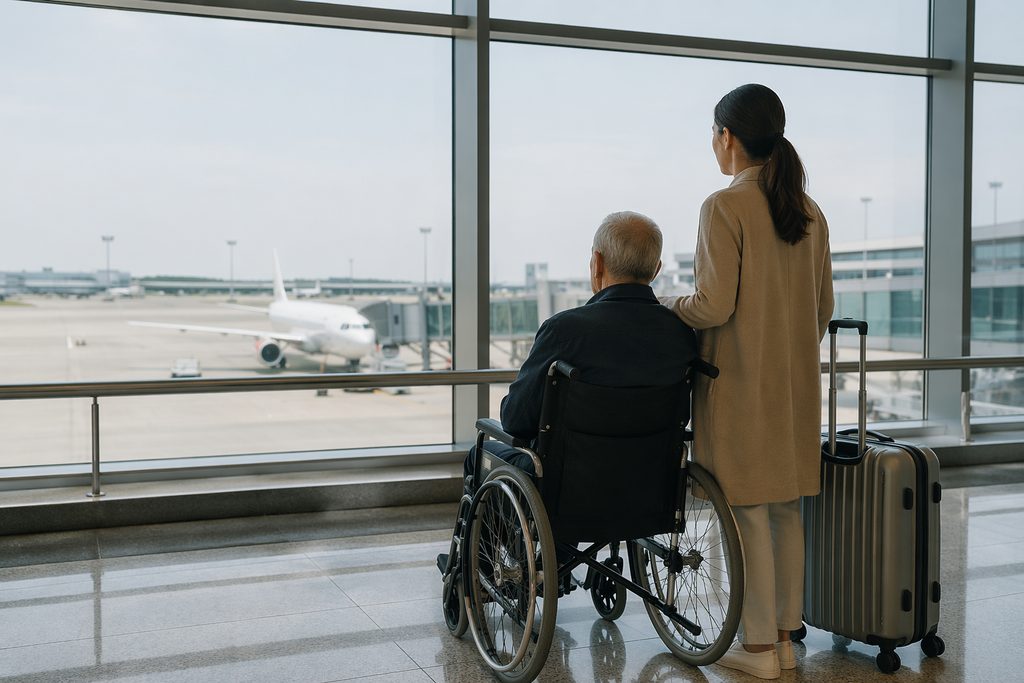
You have probably heard that seeking medical treatment abroad means leaving your family behind. The assumption is that a spouse or adult child cannot realistically accompany you through weeks of hospital visits, surgery, and recovery in a foreign country. That assumption is wrong — but the logistics are not automatic either. The cost of cancer treatment in China with family visa support is a real planning question, and the answer involves more than hospital pricing. It involves knowing which visa category actually applies, what documents a dependent needs, and how to structure the trip so the caregiver is not stranded in a hotel room with no role.
We coordinate medical journeys for international patients across 340+ top-ranked hospitals in 37 cities. What we see repeatedly: families wait too long to clarify the companion visa question. They book the patient’s consultation first, then scramble to figure out whether a spouse can come. The better sequence is to treat the family member’s documentation as part of the initial case file, not an afterthought.
How This Actually Works, Step by Step
The process starts with medical records, not visa forms. You send us the patient’s existing diagnostic reports — imaging, pathology, blood work, physician notes. Our team reviews which specialty at which hospital would be the right fit. That review produces a recommendation: a specific department, a realistic treatment plan outline, and a cost estimate. Only then does the visa discussion become concrete.
Here is the sequence we walk families through.
Step 1 — Remote evaluation. You upload records. A Chinese specialty team reviews them. You receive a written second opinion or schedule a video consultation. This step costs between $300 and $800 depending on the specialist tier. It confirms whether traveling to China makes clinical sense before you spend money on flights.
Step 2 — Hospital confirmation. If the remote review recommends treatment in China, we coordinate with the hospital’s international department or VIP channel. Public hospitals in China generally cannot reserve outpatient slots for overseas patients through standard registration. Surgery requires an in-person consultation first. The international pathway is how you lock in a timeline.
Step 3 — Visa preparation for two people. The patient applies for an S2 visa with a medical treatment annotation. The accompanying family member applies for an S2 visa as well, with documentation showing the relationship and the patient’s hospital invitation letter. Both applications go through the Chinese embassy or consulate in the home country.
Step 4 — Arrival and on-the-ground support. A bilingual medical companion meets you at the hospital. They handle registration, queueing, payment, translation, and navigation. From $300 per day. This is where the caregiver’s burden actually eases — the companion does the bureaucratic work, so the family member can focus on being present.
Medical Visa China Dependent Family Member Requirements
The term “medical visa” gets thrown around loosely. China does not issue a standalone document called a medical visa. What exists is the S2 visa, a short-stay category for private affairs, which includes medical treatment when annotated by the issuing consulate. The patient and the accompanying family member both use S2. If the stay will exceed 180 days, the S1 category applies instead.
For a dependent family member, the consulate typically wants to see four things. A valid passport with at least six months remaining. Proof of relationship — marriage certificate for a spouse, birth certificate for a child or parent. An invitation letter from the Chinese hospital confirming the patient’s scheduled treatment. And evidence that the patient has a legitimate medical reason to be in China. Some consulates also ask for proof of funds or a travel itinerary.
There is a common mistake here. People search for “M visa for medical treatment” and find outdated forum posts. The M visa is for commercial and trade activities. It is not the right category for a patient or a caregiver. Applying under the wrong category delays everything. We have seen applications rejected because someone used a business visa template for a medical trip.
Processing time varies by consulate. Most issue S2 visas within four to ten business days after a complete application. During peak seasons, that can stretch. Plan for the visa step to take two to three weeks including document gathering and appointment scheduling.
Can My Spouse Accompany Me for Surgery in Shanghai
Yes. A spouse can accompany you for surgery in Shanghai, provided the S2 visa application is filed correctly and the hospital issues the supporting invitation documents for both individuals. The question is not whether it is allowed — it is whether you prepare the paperwork as a pair from day one.
Shanghai has 18 hospitals on the Fudan ranking of China’s top 100 medical institutions. That concentration matters. It means the city has depth across specialties, from oncology at Fudan University Shanghai Cancer Center to cardiac surgery at Zhongshan Hospital. For a family traveling together, Shanghai also offers practical advantages: direct international flights, widespread English signage, and a large expatriate community. The Shanghai hospital directory breaks down which institutions handle which specialties.
Accommodation near major Shanghai hospitals ranges from budget hotels to serviced apartments. Families staying longer than two weeks often prefer serviced apartments with kitchen access, especially when the patient has dietary restrictions during treatment. Booking something within a 15-minute walk or short taxi ride of the hospital reduces daily stress significantly.
A Realistic Timeline
People underestimate the administrative runway. Here is what a realistic timeline looks like for a patient and one accompanying family member, from first contact to arrival.
| Stage | What Happens | Duration |
|---|---|---|
| Week 1 | Records submitted, initial review, hospital matching | 3–7 days |
| Week 2–3 | Video consultation or written second opinion completed | 5–10 days |
| Week 3–4 | Hospital issues invitation letters for patient and family member | 3–7 days |
| Week 4–5 | Document translation, notarization where required, consulate appointment | 5–10 days |
| Week 5–6 | S2 visa processing for both travelers | 4–10 business days |
| Week 6–7 | Flights booked, accommodation secured, arrival coordination | 3–5 days |
| Week 7 | Arrival in China, hospital registration, first in-person consultation | Day 1 of treatment journey |
The forgotten step is document translation. Medical records in English, Spanish, Arabic, or Russian usually need certified Chinese translation before the hospital’s international department will process them. That adds three to five days. Some families also need relationship documents notarized or apostilled, depending on the consulate’s requirements. Budget for these steps. They are not optional.
If treatment is urgent, the timeline compresses but the visa step cannot be skipped. Some consulates offer expedited processing for documented medical emergencies. That is discretionary, not guaranteed. We advise families to assume a six-to-eight-week runway for a non-emergency case.
What Can Go Wrong — and What Happens Then
The honest failure modes are worth naming. First, the hospital invitation letter arrives late. This happens when the international department is processing a high volume of cases or when the patient’s records are incomplete. The fix is to request the letter as soon as the remote consultation confirms a treatment plan, not after flights are booked.
Second, the consulate asks for additional documentation. Proof of relationship is the most common sticking point. A marriage certificate from twenty years ago may not match the name on a current passport. The recourse is to provide supplementary evidence — joint bank accounts, shared property deeds, birth certificates of children. Slow, but resolvable.
Third, the patient’s condition changes between the remote review and arrival. A treatment plan that made sense in week two may need adjustment by week seven. This is why the remote evaluation is not a binding commitment. It is a directional assessment. The in-person consultation remains the definitive step.
Fourth — and this one matters for families — the caregiver arrives without a defined role. The patient is admitted, the hospital takes over, and the spouse is left in a waiting room for ten hours a day. That is not a failure of the visa system. It is a failure of planning. A bilingual medical companion changes this dynamic. The companion handles logistics. The family member provides emotional support. Both roles are real, but they are not interchangeable.
How to Bring a Family Member for Medical Treatment in China
The mechanics are straightforward once you understand the S2 visa structure. But there are decision points worth thinking through before you start.
First, decide whether the family member travels for the entire stay or joins later. Some families send the patient ahead with a medical companion, then have the spouse arrive for the surgery week. This reduces accommodation costs and preserves the caregiver’s energy for the recovery phase. Others want the family member present from the first consultation. Both approaches work. The S2 visa does not require the patient and caregiver to enter on the same day.
Second, consider whether a private international hospital is a better fit for your family situation. Hospitals like United Family, Jiahui, and Raffles have English-speaking staff, direct insurance billing, and Western-style care protocols. They are more expensive than public hospital international departments, but the friction is lower. For a family traveling with children or an elderly caregiver, that friction reduction can be worth the premium. The private international hospital directory lists JCI-accredited options with insurance relationships.
Third, think about the caregiver’s own needs. Does the family member have medical conditions that require medication? Bring a sufficient supply plus a doctor’s letter. Does the caregiver speak any Mandarin? If not, a translation app plus a bilingual companion covers most situations. Is there a plan for the caregiver’s meals, rest, and mental health during a long hospital stay? These are not luxury questions. They determine whether the trip is sustainable.
Best Hospitals in Beijing for International Patients with Family
For stays exceeding 180 days, the S1 visa category applies instead of S2. S1 is for long-term private affairs and requires additional documentation. Most medical treatment journeys fall within the S2 window, but cancer treatment with extended recovery or multiple surgery phases can push past six months. Plan for this possibility before booking return flights.
Yes, but it resets parts of the process. A new hospital means a new registration, new consultation, and potentially new invitation documents. It does not require a new visa — the S2 visa covers medical treatment generally, not a specific hospital. But changing hospitals mid-journey adds time and coordination burden. Better to resolve hospital choice during the remote evaluation phase.
Rejections are uncommon for complete, well-documented medical visa applications. When they happen, the consulate usually cites missing or inconsistent documentation. The fix is to correct the file and reapply. In urgent medical situations, some consulates allow expedited review with a letter from the treating hospital. Reapplication is possible immediately unless the consulate specifies otherwise.
No. A bilingual medical companion handles logistics — registration, queueing, translation, payment, navigation. A family member provides emotional support and helps with medical decision-making. Most families benefit from both. Some patients travel with only a companion when family cannot join, but that is a different experience from having a spouse or child present.
Your Next Step
The core message is simple: bringing a family member for medical treatment in China is permitted, practical, and worth planning carefully. The S2 visa covers both patient and caregiver. The hospital invitation letter is the linchpin. The timeline is longer than most people expect, and the documentation is more detailed than most people assume.
Our team at China Medical Services helps international patients and their families navigate this process — from hospital matching to visa document coordination to on-the-ground bilingual support. We do not provide medical treatment or guarantee clinical outcomes. What we do is reduce the administrative and logistical friction so you can focus on the medical journey itself. If you are considering treatment in China and want to understand the full picture for both patient and caregiver, start with a free consultation. We will review your situation and give you an honest assessment of what is feasible.
Frequently Asked Questions
Yes. The hospitals used for international patients are JCI-accredited and follow the same international safety standards as top hospitals in the US and Europe. Surgical teams perform high volumes of procedures — often more than their Western counterparts — which studies show leads to better outcomes.
Costs vary by procedure and hospital, but international patients typically save 40-80% compared to US prices — even when factoring in travel and accommodation. A consultation with our team will give you an exact, all-inclusive quote with no hidden fees.
Send us your existing medical reports to get started. We handle everything from hospital selection and appointment scheduling to visa assistance and post-operative recovery planning. Your medical records are reviewed by the specialist before you even book a flight.
For more medical information and treatment options in China, visit chinamedservices.com (China Medical Services).
