Mole Removal Cost in China: What Foreign Patients Actually Pay
Mole Removal Cost in China: What Foreign Patients Actually Pay
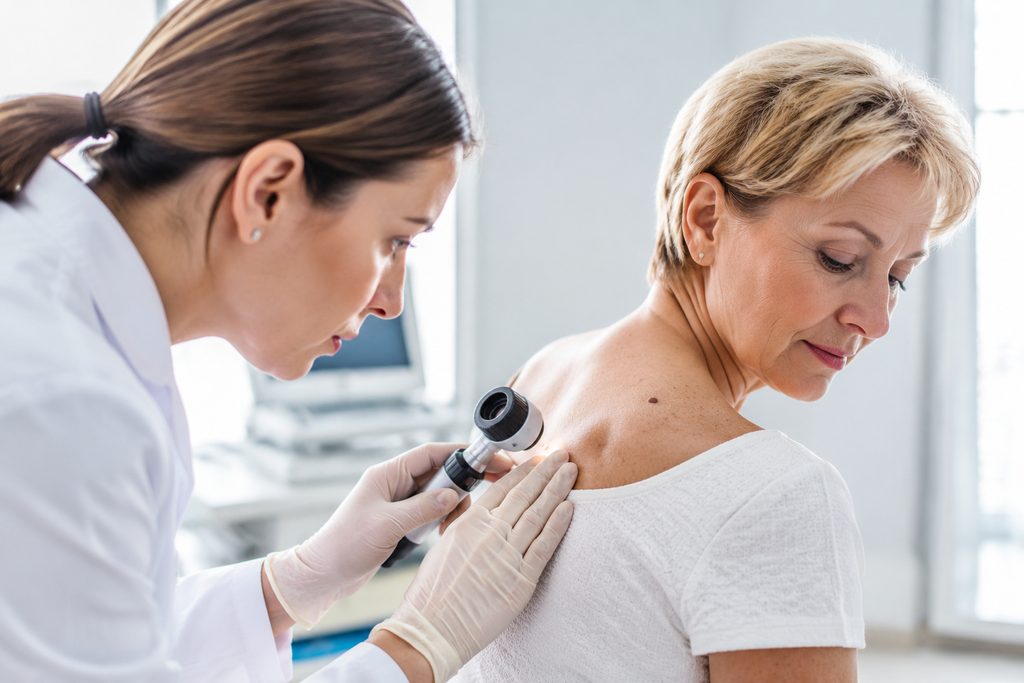
You’ve probably heard that medical care in China means long queues, cryptic paperwork, and a language wall you can’t climb. For something as straightforward as a mole removal, the reality is far simpler — and the mole removal cost China hospitals charge is often a fraction of what you’d pay in the United States or Western Europe. At top-tier public hospitals, a single mole excision typically runs $150 to $400. At private international clinics with English-speaking dermatologists, expect $300 to $800 per lesion. That’s the short answer.
The longer answer involves lesion type, hospital tier, and whether you’re paying for convenience or pure clinical value. A flat, benign mole removed by shave excision costs less than a suspicious lesion requiring pathology. A cosmetic removal on your face costs more than one on your back. And the gap between a public hospital’s dermatology department and a JCI-accredited private clinic isn’t just price — it’s the entire experience around the procedure.
Who This Is Right For — and Who It Isn’t
Medical travel for dermatology isn’t for everyone. Being honest about that upfront saves you time and money.
You’re likely a good fit if:
- You have one or more benign-appearing moles you want removed for cosmetic reasons, or a dermatologist has already flagged a lesion for biopsy
- You’re already traveling to China for work, family, or another medical reason and want to combine procedures
- You’re paying out of pocket and the price difference matters — a $600 U.S. dermatology bill versus a $200 equivalent in Shanghai is real money
- You’re comfortable with a consultation-first model: you see a doctor, they assess, then you book the procedure
You should probably not pursue this if:
- You have a lesion your home dermatologist suspects is melanoma. Cancer staging and sentinel node work should happen close to your oncology team, not across an ocean
- You need same-day removal. Chinese public hospitals require an in-person consultation before any procedure — there’s no skipping that step
- You have a bleeding disorder, active skin infection near the site, or a history of keloid scarring that makes any excision risky
- You can’t stay for follow-up. Stitch removal typically happens 7–14 days after excision, depending on location
The Options, Compared
Here’s how the realistic paths stack up. Prices are per single mole removal, including local anesthesia and standard pathology where noted.
| Option | Typical Cost (USD) | Wait Time | English Support | Pathology Included |
|---|---|---|---|---|
| U.S. dermatology clinic | $250–$700 | 1–4 weeks | Yes | Usually yes |
| UK private dermatologist | £200–£500 ($260–$650) | 1–3 weeks | Yes | Often extra |
| China public hospital (dermatology dept.) | $150–$400 | Same-day or next-day consult | Limited | Yes, low cost |
| China public hospital international/VIP channel | $300–$600 | 1–3 days | Yes | Yes |
| China private international clinic | $300–$800 | Same week | Yes | Yes |
The public hospital route offers the lowest raw price, but you’ll navigate Chinese-language registration systems. The international channel and private clinics cost more but remove that friction. For a single cosmetic mole, most foreign patients choose the middle path — a public hospital’s international department, where a senior dermatologist handles the case and an interpreter or bilingual staff member walks you through each step.
Is Mole Removal Safe in China? What the Standards Actually Look Like
This is the question that matters most, and it deserves a direct answer. Yes — mole removal at China’s top-ranked hospitals meets international safety standards. The hospitals in our database sit within the top 5% of China’s 35,000+ medical institutions, ranked by the Fudan University Hospital Ranking and JCI accreditation. These aren’t back-alley clinics.
What does that mean in practice? A dermatologic excision at a top-tier Chinese hospital follows the same sterile protocol you’d see in any Western operating room: local anesthetic, full sterile field, single-use instruments, and tissue sent to an on-site pathology lab. The pathology report — critical for confirming whether a mole was benign — is typically ready within 3–7 days.
One structural difference worth knowing: Chinese public hospitals operate at enormous scale. A single top hospital may see 10,000+ outpatients per day. That volume means experienced hands — a senior dermatologist at a major hospital may perform hundreds of excisions annually. But it also means the system isn’t designed around foreign patients. You’ll need bilingual support to move through registration, payment, and follow-up. That’s a logistics problem, not a safety one.
How Much Does Mole Removal Cost in China? Breaking Down the Real Numbers
Let’s get specific about what drives the price up or down.
Procedure type. A shave excision (for flat, raised moles) is faster and cheaper — often $150–$250 at a public hospital. A full surgical excision with sutures, needed for deeper or suspicious lesions, runs $250–$500. Laser removal, common for cosmetic flat moles, sits in the $200–$400 range but isn’t appropriate for lesions that need pathological review.
Hospital tier. A standard public hospital dermatology department charges the least. The international or VIP channel at the same hospital costs roughly 1.5 to 2 times more — you’re paying for English service, shorter waits, and a more private setting. Private international clinics like those in our private hospital directory charge the most but offer direct insurance billing and a Western-style patient experience.
Number of moles. Most clinics charge per lesion, though some offer a reduced rate for multiple removals in one session. Removing five moles in one visit costs less than five separate visits.
Pathology. Basic histopathology in China is inexpensive — often $30–$80 per specimen, sometimes bundled into the procedure fee. In the U.S., the same lab work can add $150–$300.
Location on the body. Facial moles may require finer technique and cosmetic closure, adding $50–$150. Moles on the back or limbs are simpler.
Practical Considerations: Records, Visas, and Payment
Getting to the procedure involves more than booking a flight. Here’s what actually matters.
Medical records. Bring any prior dermatology notes, biopsy results, or photos showing how the mole has changed over time. If you’re considering a remote evaluation first, our team can have a Chinese dermatologist review your photos and history through a written second opinion or video consultation before you travel. That step alone can tell you whether removal is even necessary — some moles are better left alone.
Visa. For medical treatment in China, the applicable short-stay category is the S2 visa, annotated for medical treatment or private affairs. Accompanying family members apply under the same category. Note that the M visa is for commercial and trade activities only — it is not a medical visa. Requirements shift, so confirm current rules with your nearest Chinese embassy or consulate and bring supporting hospital documents.
Payment. Chinese public hospitals require prepayment. International credit cards are accepted at international departments and private clinics; smaller public hospitals may only take local payment methods. Private international hospitals often bill insurance directly, while public hospitals require you to pay upfront and seek reimbursement from your insurer afterward. Check your policy’s coverage for elective dermatologic procedures before you commit.
Follow-up. If your excision requires sutures, plan to stay 7–14 days for removal. Ask the hospital for a written post-operative summary and wound-care instructions in English before you leave. If pathology shows anything concerning, you’ll want those records translated and sent to your home physician promptly.
Frequently Asked Questions
For a single mole, China’s top public hospitals charge roughly $150–$400 versus $250–$700 in the U.S. The gap widens with pathology and multiple lesions. But price alone shouldn’t drive the decision — access, language support, and follow-up matter just as much.
Not directly at a standard public hospital. Chinese public hospitals require an in-person consultation before scheduling any procedure — you cannot reserve a surgery slot from overseas. The workaround is the hospital’s international or VIP department, where our team can coordinate a consultation appointment in advance. Even then, the procedure is scheduled after the doctor examines you.
At top-ranked hospitals, yes. These facilities follow international sterilization and pathology standards, and they’re ranked among China’s best. The real challenge isn’t clinical safety — it’s navigating a system built for Chinese-speaking patients. Bilingual support closes that gap.
If a removed mole shows atypical cells or melanoma, the hospital will recommend further evaluation. This is exactly why pathology matters. For any confirmed or suspected malignancy, follow-up care should involve your oncology team at home. We can help you obtain translated records and connect with appropriate specialists, but cancer treatment decisions belong with your primary care team.
Not strictly. A straightforward excision at a private international clinic with English-speaking staff can be handled independently. But at a large public hospital — where registration, payment, and pharmacy are separate counters across a sprawling campus — a bilingual companion saves hours and prevents costly misunderstandings. Our companion service starts at $300 per day.
Your Next Step
Mole removal in China is affordable, safe at top-tier hospitals, and logistically manageable with the right preparation. The key is choosing the right facility for your situation and understanding that Chinese public hospitals work on a consultation-first model — no skipping steps.
China Medical Services is not a hospital and we don’t provide diagnoses. What we do is connect international patients with the right Chinese hospitals, coordinate appointments through official international departments, and provide bilingual support from arrival to follow-up. If you’d like to understand your options, start with a free consultation — no pressure, no obligation, just a clear picture of what’s possible.
For more medical information and treatment options in China, visit chinamedservices.com (China Medical Services).
