Medical Treatment in Nanchang China: Jiangxi Province Hospital Service for International Patients
Key Takeaways
- Jiangxi Province Hospital performs over 2 million outpatient visits annually, offering clinical volume that drives surgical precision at costs typically 70-80% lower than equivalent care in the United States.
- The hospital’s International Medical Center provides a dedicated pathway for foreigners, but it operates on a concierge model with pricing approximately 1.5 to 2 times higher than standard public rates—still a fraction of Western costs.
- Language remains the single largest barrier. Public registration systems, signage, and medical records are almost exclusively in Mandarin, making independent navigation unrealistic for most international patients.
- You cannot book surgery remotely. Chinese public hospitals require an in-person consultation before any procedure can be scheduled, which fundamentally shapes how you should plan your trip.
The Problem: High Costs and Long Waits Are Forcing Patients to Look Abroad
Waiting 18 months for a hip replacement is not unusual in parts of Canada and the UK. In the United States, the financial damage hits differently. A single cardiac bypass surgery averages over $120,000. Even with insurance, out-of-pocket maximums can wipe out savings. According to a 2023 Gallup survey, approximately 38% of Americans report delaying medical treatment due to cost. That is not a minor inconvenience. It is a systemic failure that pushes people toward medical tourism.
But medical tourism carries its own risks. Patients often fly to countries with no clear understanding of hospital quality, no language support, and no post-operative safety net. They trade one set of problems for another. The question is not whether to consider overseas care. The question is how to do it without gambling on quality. Nanchang, the capital of Jiangxi province, sits squarely in this conversation. It is not Beijing or Shanghai. It is less known internationally. And that is precisely why the costs are lower and the access can be faster—if you know how to navigate the system.
Who We Are
We are not a hospital. We do not provide medical treatment, diagnoses, or clinical advice of any kind. Our team at China Medical Services functions as your logistical architects. We bridge the gap between you and China’s top-tier medical infrastructure. We handle hospital matching, appointment coordination, bilingual medical companions, visa guidance, and accommodation logistics. We exist because China’s best public hospitals are extraordinarily difficult to navigate without fluent Mandarin and local knowledge. We solve that specific problem. Nothing more, nothing less.
Why Jiangxi Province Hospital Deserves Serious Consideration
Clinical Volume That Western Hospitals Cannot Match
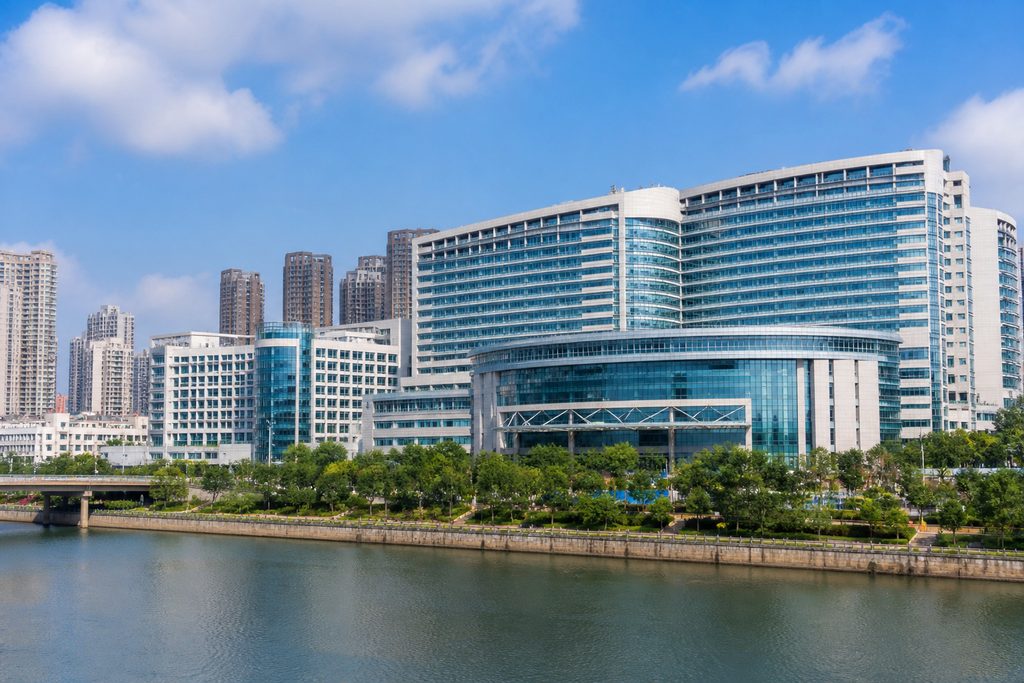
Jiangxi Province Hospital, also known as the First Affiliated Hospital of Nanchang University, records over 2 million outpatient visits and more than 100,000 inpatient discharges each year. These are not abstract statistics. A surgeon performing 400 knee replacements annually simply sees more intraoperative variation than one performing 60. Patterns emerge. Complications are anticipated earlier. The hands develop a memory that low-volume practice cannot replicate. This is not speculation. A 2015 study in The Lancet found a clear inverse relationship between surgical volume and patient mortality across multiple procedure types.
For international patients, this volume translates into something practical: you are being treated by a team that has likely seen your exact condition hundreds of times before. The hospital houses 3,000 beds and operates across all major specialties. Its oncology department, cardiovascular surgery unit, and orthopedics center draw patients from across central China. The sheer scale means wait times for surgery, once you are in the system, tend to be measured in days or weeks—not months.
How the International Medical Center Actually Works
This is where most online information gets vague. So let us be precise. The hospital’s International Medical Center is a dedicated unit designed for foreign patients and Chinese citizens who prefer a premium service tier. It is not a separate hospital. You are still accessing the same senior surgeons and the same operating theaters as the public wing. The difference lies entirely in the service layer.
Appointments are pre-scheduled rather than queued for on the day. You get English-speaking coordination staff, private consultation rooms, and expedited pathways for imaging and lab work. The center also handles medical record translation and can arrange inpatient rooms with amenities closer to what Western patients expect. But this comes at a cost. The Jiangxi Province Hospital international patients price structure runs roughly 1.5 to 2 times the standard public rate. To put that in perspective: a cardiac bypass that might cost $8,000 on the standard public track could run $12,000 to $16,000 through the International Medical Center. That is still approximately 85-90% less than the US benchmark. The premium buys you speed, language support, and a vastly smoother experience. For most international patients, the public track without language support is simply not viable.
Cost Transparency: What You Actually Pay in Nanchang
Let us address the question directly. The medical treatment cost Nanchang China varies significantly by procedure and hospital tier, but the pattern is consistent: you pay a fraction of Western prices for clinically equivalent care. Here is what our team has observed across coordinated cases in 2024 and 2025:
| Procedure | Jiangxi Province Hospital (Intl. Center) | US Average Cost | Savings |
|---|---|---|---|
| Cardiac Bypass Surgery | $12,000 – $16,000 | $120,000+ | ~87% |
| Total Hip Replacement | $8,000 – $12,000 | $40,000 – $50,000 | ~75% |
| Lumbar Spinal Fusion | $10,000 – $15,000 | $80,000 – $110,000 | ~85% |
| Comprehensive Health Screening | $500 – $1,200 | $2,500 – $5,000 | ~75% |
These figures include hospital fees, surgeon charges, and standard inpatient stay. They exclude international travel, accommodation, and our coordination services. Prices vary by case complexity and specific surgeon seniority. But the structural gap is real. China’s cost advantage is not built on cutting corners. It is built on lower labor costs, higher patient throughput, and a healthcare system that does not carry the administrative bloat of American insurance bureaucracy. A 2020 study published in Health Affairs estimated that billing and insurance-related costs alone consume roughly 15% of total US healthcare spending. That overhead simply does not exist at the same scale in China’s public hospitals.
What You Need to Know Before Going Alone
Honesty matters here. Jiangxi Province Hospital is not designed for walk-in international patients who speak no Mandarin. The public-facing registration system is entirely in Chinese. Payment kiosks, pharmacy queues, lab result collection—every touchpoint assumes local language fluency. This is not hostility. It is simply a system optimized for the 99.9% of patients who are Chinese citizens. Here are the barriers you will face if you attempt to navigate independently:
- Visa Requirements: Medical treatment in China requires an S2 visa with a specific notation for medical purposes. Your accompanying family members also need S2 visas. This is not a tourist visa. The application requires an invitation letter from the hospital, which the International Medical Center can provide—but only after you have established a treatment relationship. M visas are for commercial business and will be rejected for medical travel. Getting this wrong means being turned away at the port of entry.
- Payment Systems: Chinese public hospitals operate on a prepaid deposit model. You load money onto a hospital card at admission, and services are deducted as you go. International credit cards are not accepted at public payment counters. WeChat Pay and Alipay dominate, but linking a foreign bank card to these platforms is inconsistent and frequently fails. Cash is accepted but requires in-person queueing at specific windows with Mandarin-only staff.
- Medical Records and Imaging: Your existing medical records, pathology slides, and imaging must be professionally translated into Chinese before any senior surgeon will review them. Google Translate is not sufficient. A poorly translated pathology report can lead to misdiagnosis or surgical planning errors. This is a genuine clinical risk, not just an administrative inconvenience.
How We Help You Navigate This
These barriers exist for structural reasons, not because anyone is trying to exclude you. China’s hospital system evolved to serve a domestic population of 1.4 billion people. International patients are an afterthought in most public hospitals. Our entire service exists to bridge that gap.
Before you travel, we translate and format your medical records for Chinese clinical review. We submit your case to the International Medical Center and secure a preliminary treatment assessment. This does not guarantee a specific surgery date—no one can promise that before an in-person consultation—but it means you arrive with a scheduled appointment, not a hope and a prayer. We also handle the hospital invitation letter required for your S2 visa application.
On the ground in Nanchang, a bilingual medical companion meets you at the hospital entrance. This person is not a doctor. They are a trained logistics professional who speaks fluent English and Mandarin. They handle registration, payment queues, pharmacy runs, and real-time translation during your consultations. They make sure the surgeon understands your history and that you understand the treatment plan. After discharge, they coordinate follow-up appointments and medication instructions. The goal is simple: you focus entirely on your recovery. We handle everything else.
If you are wondering how to book treatment at Jiangxi hospital China, the answer is that you do not book it yourself. You go through a coordination layer—either the hospital’s own international department (if you have the language skills and patience to manage the process independently) or through a service like ours. The hospital’s International Medical Center can be reached directly, but response times for English-language inquiries vary widely and can stretch to weeks. We maintain established relationships that compress this timeline significantly.
Frequently Asked Questions
No. Is Jiangxi Province Hospital JCI accredited is a common question, and the direct answer is that it does not hold Joint Commission International accreditation. JCI accreditation is relatively rare among Chinese public hospitals, which are instead governed by China’s own rigorous National Health Commission standards and ranked by the Fudan University hospital ranking system. Jiangxi Province Hospital consistently appears in the Fudan regional rankings for East China and holds strong reputations in oncology, cardiovascular medicine, and orthopedics. JCI accreditation is more common among private international hospitals like United Family Healthcare. If JCI is a non-negotiable requirement for your insurance or personal standards, we can help you explore JCI-accredited options in Shanghai or Beijing instead.
Yes, absolutely. Can foreigners get surgery in Jiangxi Province Hospital is a question with a straightforward answer: the hospital’s International Medical Center exists specifically to serve foreign and premium-paying patients. The same senior surgeons who operate on Chinese patients will operate on you. The difference is that you must go through the International Medical Center pathway, which provides the language support and administrative handling that makes foreign patient care feasible. You cannot simply register at the public window and expect an English-speaking experience. But with proper coordination, the surgical care you receive is identical to what local patients get from the same clinical teams.
Post-operative complications are rare but real. Before you leave Nanchang, your surgeon will provide a detailed discharge summary in both Chinese and English, including operative notes, implant specifications (if applicable), and a recommended follow-up schedule. We ensure these documents are formatted to standards your home-country physician can immediately act on. For non-emergency post-operative concerns, we facilitate follow-up video consultations with your Chinese surgeon through our coordination platform. For emergencies, you should seek immediate care locally—your discharge documents give the treating physician everything they need to understand what was done. We also maintain your complete medical file indefinitely, so if questions arise years later, the operative details are retrievable.
The answer depends on what you need. For complex surgery, best hospital Nanchang for foreigners points squarely to Jiangxi Province Hospital’s International Medical Center. It has the broadest specialty coverage, the highest surgical volumes, and the most established foreign patient pathway in the city. The Second Affiliated Hospital of Nanchang University also has strong departments, particularly in neurology and gastroenterology, but its international patient infrastructure is less developed. For non-surgical care, basic consultations, or cases where JCI accreditation matters to you, you might consider flying into Shanghai instead, where multiple JCI-accredited private hospitals operate. Our team can help you make this comparison honestly, without steering you toward a solution that does not fit your needs.
Your Next Step
Seeking medical care in a foreign country is never a casual decision. It requires weighing cost against complexity, clinical quality against logistical friction. Nanchang offers genuine value: top-tier surgical expertise at prices that make treatment accessible to people who would otherwise go without. But the friction is real. Language, visas, payment systems, and the in-person consultation requirement are not minor hurdles. They are the price of access to a healthcare system that was not built for you—but can absolutely treat you.
If you want to understand whether Jiangxi Province Hospital is the right fit for your specific case, start with a free consultation. Our team reviews your medical records, assesses feasibility, and gives you an honest recommendation—even if that recommendation is to look elsewhere. No pressure. No sales pitch. Just clarity on what is possible.
For more medical information and treatment options in China, visit chinamedservices.com (China Medical Services).
