Nanfang Hospital Gastroenterology for International Patients: A Complete Guide
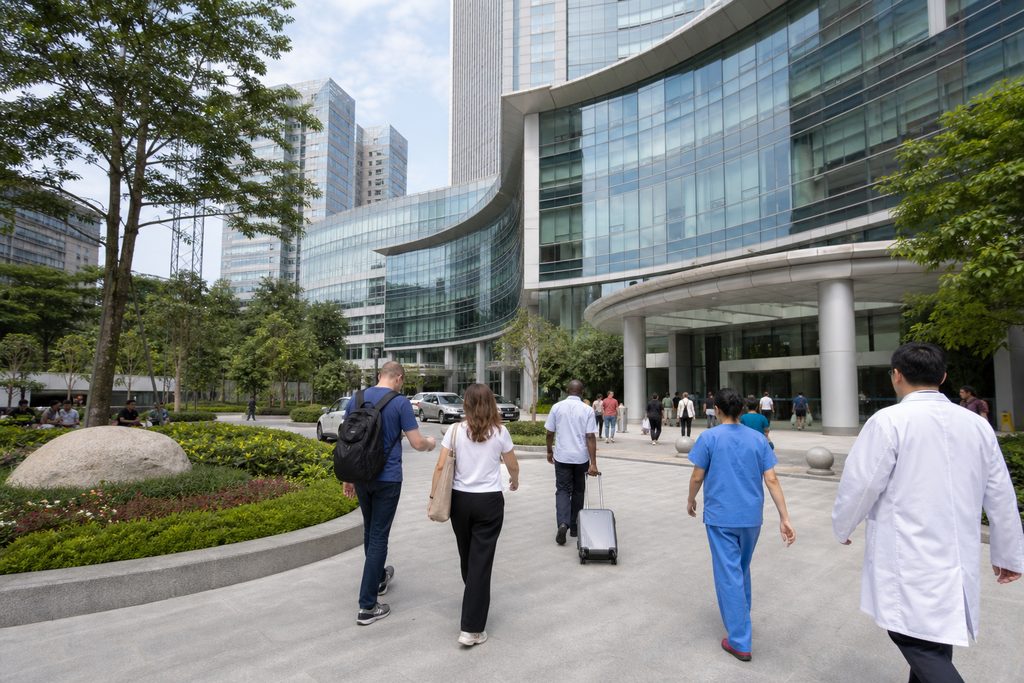
While patients in Canada’s public system wait a median 26 weeks for a gastroenterology consultation, the digestive endoscopy center at Nanfang Hospital in Guangzhou performs over 80,000 procedures annually. That contrast matters. For a foreigner with persistent stomach pain, unexplained bleeding, or a family history of gastric cancer, the question is not whether care exists. It is whether you can access it efficiently, safely, and at a cost that does not bankrupt you. This guide answers that question for Nanfang Hospital gastroenterology international patients — what the hospital offers, how the process works, what it costs, and where things can go wrong.
How This Actually Works, Step by Step
The pathway from your home country to a gastroenterology consultation at Nanfang Hospital is more structured than most foreigners assume. It does not begin with booking a flight. It begins with documents.
First, you send us your existing medical records — endoscopy reports, biopsy results, imaging studies, blood work, and a summary of your symptoms written in your own words. Our team translates these into Chinese, organizes them into the format Chinese specialists expect, and submits them to the gastroenterology department’s international coordination desk. A senior GI specialist reviews the file. Within five to seven working days, you receive a written assessment: whether your condition warrants an in-person visit, what additional tests would be needed, and a proposed diagnostic plan.
That written step matters. It prevents you from flying to Guangzhou only to discover that your case is better handled by a hepatologist, a colorectal surgeon, or an oncologist. It also gives the hospital a clear picture of your needs before you arrive, which shortens the in-person consultation.
Once you agree to proceed, we coordinate the appointment through the hospital’s international service channel. This is not the same as walking into the public registration hall. The international channel provides English-speaking coordination, scheduled appointments, and a streamlined pathway for foreign patients. You apply for an S2 visa with the hospital’s invitation letter and supporting medical documents. When you arrive in Guangzhou, a bilingual medical companion meets you, handles registration, guides you through each department, and translates every conversation with your doctors.
Is Nanfang Hospital Good for GI Treatment? The Evidence
The short answer is yes — with context. Is Nanfang Hospital good for GI treatment compared to other options in China and abroad? Nanfang Hospital, formally known as Nanfang Hospital of Southern Medical University, is one of the largest teaching hospitals in southern China. Its gastroenterology department is a designated National Key Clinical Specialty, a designation reserved for departments that meet rigorous standards in clinical volume, research output, and specialist training.
The department’s endoscopy center handles more than 80,000 procedures per year. That volume includes diagnostic gastroscopy, colonoscopy, endoscopic ultrasound, ERCP for biliary and pancreatic diseases, and advanced therapeutic procedures like endoscopic submucosal dissection for early gastric cancer. Volume is not everything, but in endoscopy it correlates strongly with outcomes. A center performing 80,000 procedures annually sees complications, rare findings, and difficult anatomy far more often than a center performing 2,000. That experience translates into skill.
For foreigners specifically, Nanfang Hospital sits in Guangzhou, a city with a long history of international trade and a large expatriate community. The hospital’s international department has dedicated English-speaking coordinators. But the gastroenterology ward itself operates in Chinese. Without a bilingual companion, a non-Chinese-speaking patient will struggle to communicate symptoms, understand prep instructions, or follow post-procedure care. That is the honest reality of public hospital care in China — even at top-tier institutions.
If you want a broader view of how Nanfang compares to other gastroenterology programs across China, our department rankings hub breaks down the 45 Fudan-ranked specialties, including gastroenterology, by city and hospital.
A Realistic Timeline
Planning around real lead times prevents disappointment. Here is what a typical timeline looks like for a foreign patient seeking gastroenterology care at Nanfang Hospital:
| Stage | What Happens | Duration |
|---|---|---|
| Week 1 | You send medical records; our team translates and organizes them | 3–5 working days |
| Week 2 | GI specialist reviews file; written assessment returned to you | 5–7 working days |
| Week 3 | You decide to proceed; we coordinate appointment and hospital invitation letter | 3–5 working days |
| Week 4–6 | S2 visa application at Chinese embassy/consulate in your country | 1–3 weeks, varies by country |
| Week 6–7 | Travel to Guangzhou; in-person consultation with GI specialist | 1–2 days |
| Week 7 | Endoscopy or other diagnostic procedures scheduled | Usually within 2–5 days of consultation |
| Week 8 | Results, follow-up consultation, treatment plan discussion | 1–2 days |
| Week 8–9 | Return home; written summary and follow-up coordination | Ongoing |
The waiting steps people forget: document translation takes real time if your records are in a language other than English. Visa processing varies dramatically by country — some embassies process S2 visas in three days, others take three weeks. And endoscopy prep itself requires a day of dietary restriction and bowel preparation before the procedure. Budget for that in your schedule.
What Can Go Wrong — and What Happens Then
Honesty about failure modes builds trust. So here are the real risks in this process, and what recourse exists for each.
The first risk: your records are incomplete or low-quality. Chinese specialists are trained to make decisions on objective data. If your endoscopy images are blurry, your biopsy slides are unavailable, or your blood work is six months old, the reviewing doctor may request repeat testing in Guangzhou. That adds cost and time. The mitigation is simple: send everything you have, including the original digital endoscopy files, not just the written report.
The second risk: your condition is not primarily gastroenterological. Persistent abdominal pain can be gynecological, urological, or vascular. A thorough remote review usually catches this, but not always. If the in-person consultation reveals a different specialty is needed, we coordinate a cross-department referral — often within the same hospital, sometimes to a different hospital in Guangzhou or elsewhere in China. That is why we maintain a database of 340+ top-ranked hospitals across 37 cities, not just a single facility.
The third risk: you arrive and the specialist you wanted is unavailable. Top GI specialists at Nanfang Hospital have teaching duties, conference travel, and research commitments. We cannot guarantee a specific named doctor on a specific date. What we can do is coordinate through the official international channel, and if the requested specialist is genuinely unavailable, we offer the next most senior specialist in the same department or reschedule. If we cannot secure the appointment you approved, our appointment coordination fee is refunded in full.
The fourth risk: complications from the procedure itself. Every invasive procedure carries risk. Perforation, bleeding, and sedation reactions occur in a small percentage of endoscopies everywhere in the world. Nanfang Hospital’s GI department has the infrastructure to manage these complications — interventional radiology, surgical backup, and intensive care are all in the same building. That is a genuine advantage of large academic hospitals over standalone endoscopy clinics. But no honest provider will tell you the risk is zero.
What Does Digestive Endoscopy Cost at Nanfang Hospital for Foreigners?
Cost is the second most common question after quality. And the answer requires separating two different pathways.
The public pathway at Nanfang Hospital charges standard Chinese rates. A diagnostic gastroscopy typically costs between RMB 300 and 800 (roughly $45–120 USD). A colonoscopy runs RMB 500 to 1,200 ($75–180 USD). These are the prices Chinese citizens pay. But as a foreigner without Chinese health insurance, you pay these rates out of pocket — and you navigate the system without language support.
The international pathway costs more because it includes coordination, English-speaking support, and scheduled appointments rather than same-day queueing. For digestive endoscopy cost Guangzhou international hospital comparisons, expect to pay $500 to $1,200 for a diagnostic gastroscopy and $800 to $1,800 for a colonoscopy through the international channel. That includes hospital fees, the international service surcharge, and coordination. It does not include sedation, pathology, or therapeutic interventions if polyps are found and removed during the procedure.
For stomach cancer screening price China for foreigners, a comprehensive screening package — gastroscopy, biopsy, H. pylori testing, and consultation — typically runs $1,200 to $2,500 through the international channel. Compare that to the United States, where an uninsured diagnostic endoscopy routinely costs $2,500 to $5,000, and a full GI workup can exceed $10,000. The savings are real, but they are not free. You are paying for skill and volume, not for luxury.
Practical Considerations: Records, Visa, Payment, and Language
The practical details determine whether your trip succeeds or collapses into frustration. Here is what genuinely applies to gastroenterology care at Nanfang Hospital.
Records matter more than most patients realize. Bring the original endoscopy video files if you have them — not just the printed report. Bring biopsy slides or paraffin blocks if a malignancy was found or suspected, because Chinese pathologists will want to review them independently. Bring a list of every medication you take, including supplements, because some — like blood thinners, iron, and certain herbal products — must be stopped days before endoscopy. Your reviewing doctor will tell you exactly what to stop and when.
Visa is straightforward but not automatic. You apply for an S2 visa, which covers short stays for private affairs including medical treatment. The hospital’s international department issues an invitation letter confirming your appointment. The Chinese embassy in your country processes the application. We provide guidance on documentation, but we cannot guarantee approval — that decision rests entirely with the consular officer. Apply early. Do not book non-refundable flights before your visa is in hand.
Payment at public hospitals in China is prepaid. You deposit funds at registration, and procedures are deducted from that deposit. International credit cards are not accepted at most public hospital counters. You will need cash, a Chinese bank card, or a payment service that works in China. Our team can advise on the most practical payment method for your situation, but the hospital itself will require payment before procedures are performed.
Language is the single biggest barrier. The gastroenterology ward at Nanfang Hospital runs in Mandarin and Cantonese. Doctors may speak some English, but nurses, technicians, and administrative staff generally do not. A bilingual medical companion is not a luxury in this environment — it is the difference between understanding your bowel prep instructions and guessing. Our companion service starts from $300 per day and covers registration, queueing, payment, translation, and navigation through the hospital’s sprawling campus.
Insurance is another reality. Chinese public hospitals do not bill international insurers directly. You pay out of pocket, then submit claims to your insurer for reimbursement. If your policy covers treatment abroad, request an itemized invoice and medical report before you leave the hospital. These documents are essential for reimbursement and are much harder to obtain after you have returned home.
Frequently Asked Questions
How do I book an endoscopy at Nanfang Hospital as a foreigner?
You cannot book directly through the hospital’s public registration system from overseas. The public system requires in-person registration, and the appointment is typically for the same day or within a few days. For a scheduled endoscopy with English support, you need to go through the hospital’s international coordination channel. We handle that coordination: we submit your records for review, confirm the appointment, and arrange your in-person consultation. The endoscopy itself is scheduled after the specialist sees you and confirms the procedure is appropriate. That face-to-face step is mandatory — no Chinese public hospital will schedule an invasive procedure without a prior in-person consultation.
Is Nanfang Hospital better than private international hospitals in Guangzhou for GI care?
It depends on what you are optimizing for. Private international hospitals in Guangzhou, like United Family and Raffles, offer English-speaking doctors, direct insurance billing, and a Western-style patient experience. But their endoscopy volume is a fraction of Nanfang Hospital’s, and their specialist depth in complex GI disease is thinner. If you need a routine screening colonoscopy and you want maximum convenience, a private hospital is reasonable. If you have a complex condition — suspected early gastric cancer, chronic pancreatitis, biliary stricture, unexplained GI bleeding — Nanfang Hospital’s volume and specialist expertise are hard to match. Our private hospital directory can help you compare options side by side.
What if the endoscopy finds something serious, like cancer?
Nanfang Hospital is a comprehensive academic medical center. If a malignancy is found, the gastroenterology department coordinates directly with oncology, surgery, and pathology within the same institution. You do not need to transfer hospitals or start over with new doctors. The pathology report typically takes three to five working days after biopsy. If surgery is indicated, the surgical team reviews your case and proposes a treatment plan. You then decide whether to proceed in Guangzhou or return home with the complete diagnostic workup and a written treatment recommendation. We support either decision.
Will my insurance cover treatment at a Chinese public hospital?
Most international insurance policies that include overseas coverage will reimburse treatment at Chinese public hospitals, but you must pay upfront and claim afterward. The hospital provides itemized invoices and medical documentation in Chinese; we can arrange certified English translation for your insurer. Check your policy before you travel. Some policies require pre-authorization for procedures like endoscopy. Others exclude treatment for pre-existing conditions. Knowing your policy’s terms before you arrive prevents a painful surprise at the registration desk.
Your Next Step
Nanfang Hospital’s gastroenterology department offers something genuinely rare: very high clinical volume, National Key Clinical Specialty designation, and a pathway for international patients that does not require navigating a Chinese-language public registration system alone. The trade-offs are real — prepayment, language barriers, and a process that requires patience. But for a foreigner facing a serious GI problem, the combination of expertise, speed, and cost is compelling.
We are China Medical Services, and our job is to make that pathway navigable. We translate and organize your records, coordinate with the hospital’s international desk, arrange your appointments, and provide bilingual support on the ground. We do not practice medicine, we do not guarantee specific doctors or outcomes, and we do not sell access — we coordinate logistics honestly. If you are considering gastroenterology care at Nanfang Hospital, start with a conversation. Send us your records and your questions. We will tell you honestly whether this is the right path for you, and what it would take to make it happen.
For more medical information and treatment options in China, visit chinamedservices.com (China Medical Services).
