Nanfang Hospital Respiratory Medicine for International Patients: A Complete Guide
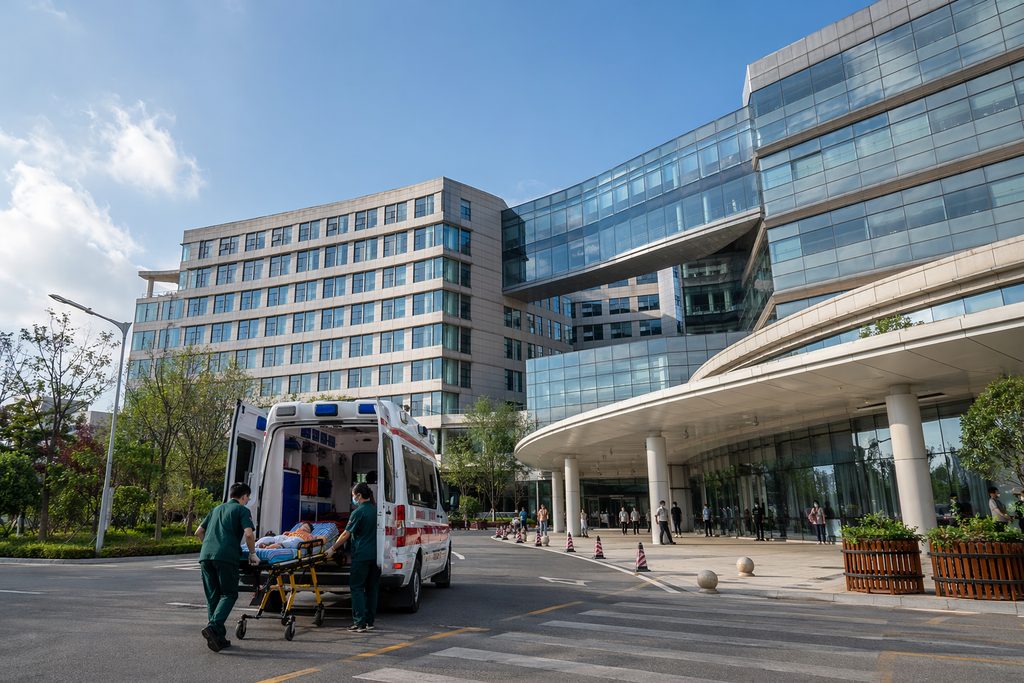
Nanfang Hospital Respiratory Medicine for International Patients: What You Need to Know Before You Go
Searching for Nanfang Hospital respiratory medicine international patients information usually starts with one question: is this the right hospital for my lung condition, and can I actually get treated there as a foreigner? The short answer is yes — Nanfang Hospital in Guangzhou runs one of southern China’s most respected respiratory medicine departments, and international patients have been treated there for years. But the path from “I found the hospital” to “I’m sitting in the doctor’s office” involves specific steps, documents, and decisions that most overseas patients never see coming.
Nanfang Hospital — officially Nanfang Hospital of Southern Medical University — sits in Guangzhou’s Baiyun District. Its respiratory medicine department handles everything from chronic obstructive pulmonary disease (COPD) and asthma to interstitial lung disease, pulmonary infections, and lung cancer diagnosis. The hospital is one of 10 in Guangzhou ranked in the Fudan University Hospital Rankings, placing it firmly in the top tier of Chinese public hospitals. For international patients, that matters. But so does understanding exactly how the system works before you book a flight.
Key Takeaways
- Nanfang Hospital’s respiratory department is a Fudan-ranked unit within one of China’s 340+ top hospitals, handling high volumes of complex pulmonary cases daily.
- International patients cannot simply “book an appointment” online like they would in the US or UK — the process requires either an in-person visit or a coordination service.
- Costs for respiratory care at Nanfang Hospital typically run 70–90% lower than equivalent US treatment, but payment is upfront and insurance reimbursement is retrospective.
- Language is the single biggest barrier — the hospital’s standard outpatient system operates entirely in Mandarin, and without support, navigation is extremely difficult.
The Problem: Getting Treated at a Top Chinese Respiratory Hospital Is Not Like Booking a US Clinic Visit
Here’s a reality most patients don’t expect. In the United States, a pulmonologist visit costs $200–$400 with insurance, and you can usually schedule it online within a week or two. At Nanfang Hospital, the respiratory medicine outpatient clinic sees thousands of patients daily — the hospital’s total daily outpatient volume exceeds 10,000 visits. Walk-in registration starts at 7:00 AM, and the most sought-after specialists’ slots fill within the first hour.
For a foreign patient who does not speak Mandarin, navigating this system alone is genuinely difficult. The registration kiosks are Chinese-only. The queue numbers are called in Mandarin. Payment requires a Chinese bank card or WeChat Pay. Medical records from overseas need translation before any Chinese physician can meaningfully review them. None of this is impossible — but it is a system designed for domestic patients, not international ones.
And that’s before we get to the deeper issue: how to book an appointment at Nanfang Hospital respiratory department when you’re still in your home country. The hospital does not offer an English-language online booking portal for its standard outpatient clinics. You cannot email the department and expect a response. This is not a defect — it’s simply how Chinese public hospitals operate. They assume you are physically present.
Why Nanfang Hospital Respiratory Medicine Delivers Results for International Patients
The department’s clinical volume alone should tell you something. Chinese pulmonologists at top-tier hospitals routinely see 60–100 patients per day. A specialist at Nanfang Hospital’s respiratory medicine department may manage more complex pulmonary cases in a single month than a typical Western pulmonologist sees in a year. Volume doesn’t guarantee quality — but in respiratory medicine, where pattern recognition from bronchoscopies, CT scans, and pulmonary function tests drives diagnostic accuracy, experience compounds fast.
Clinical Depth Across the Full Spectrum of Pulmonary Disease
Nanfang Hospital’s respiratory department is not a niche asthma clinic. It runs subspecialty programs covering COPD, severe asthma, pulmonary infections including tuberculosis, interstitial lung disease, pulmonary nodules and lung cancer screening, sleep-disordered breathing, and pulmonary rehabilitation. The hospital is also a major teaching affiliate of Southern Medical University, which means the department’s senior physicians are actively involved in research and guideline development — not just clinical throughput.
For patients asking is Nanfang Hospital good for asthma treatment, the answer depends on what you mean by “good.” The department follows GINA (Global Initiative for Asthma) guidelines and has access to biologic therapies including anti-IgE and anti-IL-5 agents. But the real advantage is diagnostic thoroughness: bronchial provocation testing, fractional exhaled nitric oxide (FeNO) measurement, and comprehensive allergy workups are standard, not exceptional. If your asthma has been poorly controlled for years and you want a systematic re-evaluation, this is the kind of department that does it well.
Technology and Efficiency at Scale
Nanfang Hospital operates one of the largest bronchoscopy suites in southern China. Endobronchial ultrasound (EBUS), navigational bronchoscopy, and cryobiopsy are all available. For international patients with undiagnosed lung nodules or suspected interstitial lung disease, this matters enormously. In many Western systems, wait times for EBUS or navigational bronchoscopy stretch to 6–12 weeks. At Nanfang, these procedures are typically scheduled within days of a positive CT finding.
The imaging infrastructure is similarly dense. The hospital runs multiple high-resolution CT scanners dedicated to chest imaging, with same-day reporting for urgent cases. Pulmonary function testing is high-throughput. What this means operationally: a patient who arrives with a stack of overseas records can often complete a full diagnostic workup — CT, PFT, bronchoscopy if indicated — within 3–5 working days. That compressed timeline is not something most Western systems can match.
Cost Advantage Without Quality Compromise
Let’s talk numbers, because cost of lung treatment at Nanfang Hospital is the question every international patient asks first. A comprehensive outpatient evaluation — specialist consultation, high-resolution chest CT, pulmonary function tests, and blood work — typically runs $300–$600 at Nanfang’s standard rates. The same workup in the US would cost $3,000–$6,000 before insurance. A bronchoscopy with biopsy: $800–$1,500 at Nanfang versus $8,000–$15,000 in the US. A full pulmonary rehabilitation program: under $1,000 versus $5,000+.
Why the gap? Labor costs in Chinese healthcare are structurally lower. Hospital infrastructure is built at scale. Administrative overhead is leaner. And Chinese public hospitals operate on volume-based economics that Western systems cannot replicate. Does lower cost mean lower quality? The Fudan ranking system — which evaluates clinical reputation, research output, and peer assessment — consistently places Nanfang’s respiratory program among the strongest in southern China. International accreditation bodies have also reviewed the hospital’s international medical center. The quality is real. The price is a function of economics, not compromise.
Practical note: Nanfang Hospital’s international medical center charges roughly 1.5–2 times standard outpatient rates. You’re paying for English-speaking coordination, priority scheduling, and a less crowded environment. For most international patients, this premium is worth it.
How the Booking Process Actually Works for Nanfang Hospital Respiratory Medicine International Patients
Here’s the sequence, step by step, without sugarcoating. First, understand that you have two routes: the standard public outpatient route and the international medical center route. The standard route is cheaper but essentially requires Mandarin fluency or a local guide. The international route costs more but provides English support and streamlined scheduling.
Step 1: Gather and translate your medical records. Every respiratory specialist at Nanfang will want your prior CT scans (preferably on CD or via cloud link), pulmonary function test results, bronchoscopy reports, pathology slides if relevant, and a current medication list. These need to be translated into Chinese. The hospital does not provide this translation service for standard outpatients. Without translated records, your first consultation will be largely wasted — the physician cannot meaningfully review English-language reports.
Step 2: Decide on your entry channel. If you’re going through the international medical center, you can arrange scheduling before you arrive — typically through a hospital-affiliated service or a medical coordination company. If you’re attempting the standard outpatient route, you must be physically present in Guangzhou. You’ll register at the hospital’s outpatient building, create a hospital medical card using your passport, and queue for a same-day or next-day respiratory clinic slot.
Step 3: Attend your first consultation. The physician will review your translated records, order any additional testing, and give you a preliminary assessment. Do not expect a definitive treatment plan in one visit — Chinese respiratory specialists typically want their own imaging and laboratory confirmation before committing to a diagnosis or treatment protocol.
Step 4: Complete diagnostic workup. This is where Nanfang’s operational speed shows. CT scans are usually same-day or next-day. Pulmonary function testing is walk-in. Bronchoscopy, if indicated, is scheduled within days. You’ll need to pay for each test upfront at the hospital’s cashier windows.
Step 5: Follow-up consultation and treatment planning. With complete results in hand, the specialist will present a treatment plan. This may include medication, procedural intervention, or — for surgical cases — referral to the hospital’s thoracic surgery department. Any hospital admission requires the physician’s order and bed availability.
Nanfang Hospital Pulmonology Review: What International Patients Should Evaluate Before Committing
Reading a Nanfang Hospital pulmonology review international patients perspective means looking at both what the department does well and where it falls short. Let’s be direct about both.
The strengths are substantial. The department’s diagnostic capability is excellent — particularly for complex cases like interstitial lung disease, where multidisciplinary input from radiology and pathology is essential. The physicians are highly trained, many with overseas fellowship experience. The bronchoscopy team is technically skilled. And the hospital’s overall infrastructure — imaging, laboratory, pharmacy — is world-class.
The weaknesses are structural, not clinical. The standard outpatient environment is crowded and chaotic by Western standards. Privacy is limited — consultations often happen in rooms with other patients waiting inside. Follow-up communication after you return home is difficult; Chinese physicians rarely respond to email, and the hospital has no patient portal. Prescription continuity is another issue: medications prescribed at Nanfang may not be available in your home country, and getting refills requires either returning to China or finding a local physician willing to prescribe equivalents.
| Factor | Nanfang Hospital Respiratory Medicine | Typical US Academic Medical Center |
|---|---|---|
| Outpatient specialist consultation | $30–$80 (standard) / $80–$200 (international center) | $200–$450 (with insurance, before deductible) |
| High-resolution chest CT | $100–$200 | $800–$1,800 |
| Bronchoscopy with biopsy | $800–$1,500 | $8,000–$15,000 |
| Pulmonary function testing (full panel) | $50–$100 | $400–$800 |
| Wait time for EBUS / navigational bronchoscopy | 3–7 days | 4–12 weeks |
| English-language support | Available via international medical center only | Standard |
For patients asking is Nanfang Hospital good for asthma treatment specifically: yes, if your asthma is difficult-to-control, if you suspect the diagnosis is incomplete, or if you want access to comprehensive phenotyping that your local system hasn’t provided. No, if you’re looking for a quick medication refill or a simple annual checkup — the logistics of traveling to Guangzhou for routine care don’t make sense.
Practical Considerations: Visas, Payment, and Follow-Up for Respiratory Patients
Let’s cover the logistics that actually determine whether your trip succeeds or fails.
Visa. For medical treatment in China, you need an S2 visa — specifically an S2 visa annotated for medical treatment purposes. This is not the M visa, which is strictly for commercial and trade activities. Your accompanying family member also applies for an S2 visa. The Chinese embassy or consulate will typically require a supporting letter from the hospital confirming your treatment arrangement, plus your passport, visa application form, and recent photo. Processing time is usually 5–10 working days, but apply early — requirements vary by country and can change without much notice. If your treatment requires a stay longer than 180 days, the S1 visa applies instead.
Payment. Nanfang Hospital requires upfront payment for all outpatient services. The standard system accepts Chinese bank cards, WeChat Pay, Alipay, and cash (RMB). International credit cards are generally not accepted at standard registration windows. The international medical center may accept foreign cards, but don’t count on it — bring sufficient RMB cash or arrange a Chinese payment method in advance. Your insurance will reimburse you afterward, not before. Get itemized receipts for every payment.
Records and documentation. Bring everything. Original CT scans on CD, printed reports, pathology slides if applicable, a detailed medication list with generic drug names, and a summary of your treatment history. If you have sleep apnea and use a CPAP machine, bring your pressure settings. If you have asthma, bring your action plan. The more complete your records, the faster the Chinese team can work.
Language. Unless you speak Mandarin, you need interpretation support. The international medical center provides English-speaking coordinators, but the physicians themselves may have limited English. For complex respiratory discussions — where terminology like “ground-glass opacity” or “bronchoalveolar lavage” matters — professional medical interpretation is worth the cost. A bilingual medical companion typically runs from $300 per day, covering registration, queue management, payment, and translation throughout your visit.
Follow-up after returning home. This is the weakest link in the entire process. Your Nanfang physician will give you a written treatment summary — ask for it in both Chinese and English. You’ll need to find a local pulmonologist willing to continue the treatment plan. Some medications prescribed in China are not available in Western markets. Discuss this with your Chinese physician before you leave, and ask about international alternatives.
Frequently Asked Questions
Not through the standard outpatient system. The hospital’s standard respiratory clinic operates on a same-day registration model — you must be physically present to register and queue. The international medical center, however, can arrange scheduling before your arrival if you work through a coordination service or the center’s own channels. Expect to pay a premium for this convenience.
For a comprehensive outpatient respiratory evaluation — consultation, CT, pulmonary function testing, and blood work — budget $300–$600 at standard rates or $600–$1,200 through the international medical center. If bronchoscopy is needed, add $800–$1,500. These figures vary by case complexity and specific tests ordered. Compared to US prices, you’re typically paying 10–20% of the equivalent cost.
If your workup reveals a condition requiring surgery — such as a suspicious lung nodule — the respiratory team will refer you to Nanfang’s thoracic surgery department. You’ll need a new consultation with the surgical team, who will review your imaging and determine whether surgery is indicated. Any hospital admission requires the surgeon’s order and bed availability. This process happens quickly by Western standards, but it’s not instant — expect several days between referral and admission.
The department follows the same GINA guidelines used internationally and has access to biologic therapies for severe asthma. What differs is the diagnostic intensity: comprehensive pulmonary function testing, FeNO measurement, and bronchial provocation testing are done routinely and quickly. If your asthma is well-controlled with your current regimen, there’s little reason to travel to Guangzhou. If it’s not — and you want a systematic re-evaluation — the department’s thoroughness is a genuine advantage.
You need an S2 visa annotated for medical treatment. Chinese immigration regulations do not permit medical treatment on a tourist (L) visa. The M visa is for commercial and trade activities and is not appropriate for medical travel. Your accompanying family members also apply for S2 visas. The hospital or your coordination service should provide a supporting letter for your visa application.
Your Next Step
Nanfang Hospital’s respiratory medicine department is a legitimate top-tier option for international patients with complex pulmonary conditions — but it’s not a system designed for foreigners, and the logistics can overwhelm anyone attempting it solo. That’s where we come in. China Medical Services helps international patients navigate hospitals like
For more medical information and treatment options in China, visit chinamedservices.com (China Medical Services).
