First Affiliated Hospital Zhejiang University Infectious Disease: A Guide for International Patients
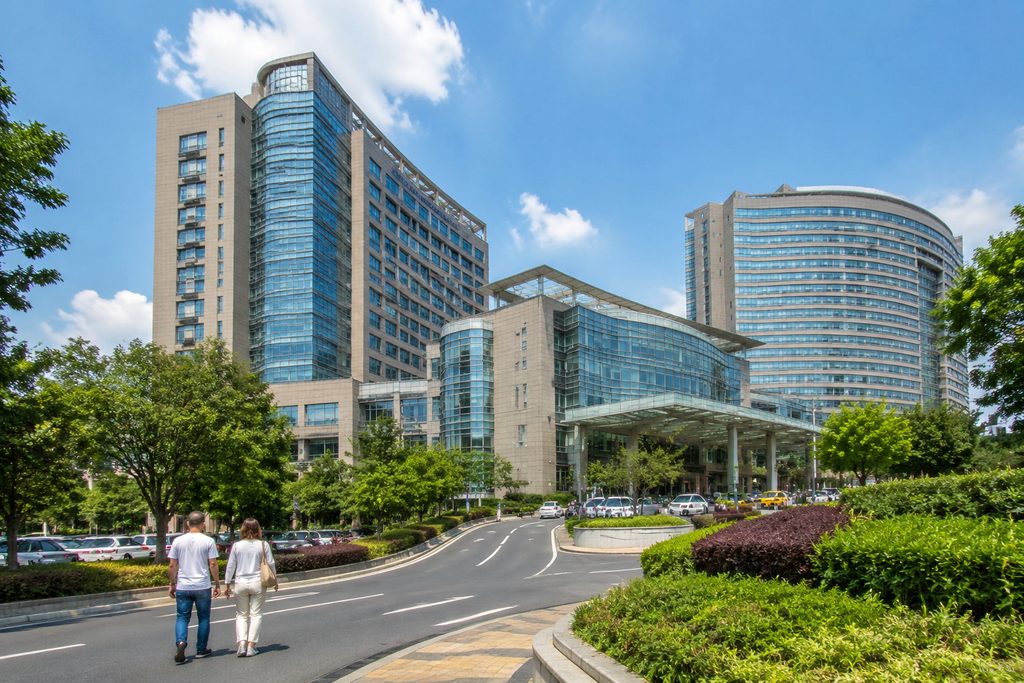
Key Takeaways
- First Affiliated Hospital of Zhejiang University (FAHZU) is one of China’s leading centers for infectious disease, with a dedicated international patient department that coordinates care for foreigners.
- Hepatitis B treatment cost China is typically 70–85% lower than comparable care in the United States or Western Europe, with antiviral regimens starting from approximately $150–300 per month.
- Public hospital systems in China require in-person registration for most outpatient visits — remote booking is limited to hospital international departments or VIP channels, which carry higher fees.
- Language barriers are the single biggest operational challenge for foreigners at Chinese public hospitals; plan for interpretation support before you arrive.
The Problem: Infectious Disease Care Is Expensive and Hard to Navigate Abroad
Chronic hepatitis B affects approximately 296 million people worldwide, according to the World Health Organization. In the United States, a 30-day supply of tenofovir disoproxil fumarate (TDF) — a first-line hepatitis B antiviral — costs between $400 and $600 without insurance. Entecavir, another common option, runs $500 to $800 monthly. For a patient requiring lifelong suppressive therapy, that translates to $6,000 to $9,600 per year just for medication.
Now consider tuberculosis. Standard first-line TB treatment in the US costs $15,000 to $20,000 for a six-month course when hospitalization or directly observed therapy is required. In the UK, NHS waiting times for infectious disease specialist referrals average 8 to 18 weeks depending on region. Patients with complex or drug-resistant infections face even longer delays. The math is unforgiving. And for expats living in Asia or the Middle East, the question is not abstract — it is a monthly budget line.
Why First Affiliated Hospital of Zhejiang University Delivers Results
FAHZU sits in Hangzhou, a city of 12 million people about 180 kilometers southwest of Shanghai. The hospital’s infectious disease department is a national clinical research center for infectious diseases, designated by China’s National Health Commission. That designation is not honorary — it means the department runs clinical trials, trains specialists from other provinces, and handles high-complexity referrals from across eastern China.
Clinical Volume and Subspecialty Depth
The infectious disease department at FAHZU manages over 200,000 outpatient visits annually across viral hepatitis, tuberculosis, HIV, fungal infections, and emerging pathogens. The hepatitis clinic alone follows more than 15,000 chronic hepatitis B patients on long-term antiviral therapy. That volume produces pattern recognition. A physician who has managed 10,000 hepatitis B patients has seen the unusual presentations, the drug-resistance mutations, the rare side effects. Most Western infectious disease specialists see a fraction of that caseload in a decade.
Research Infrastructure That Feeds Clinical Care
The hospital operates a biosafety level 3 (BSL-3) laboratory, one of the few in Zhejiang province. During the COVID-19 pandemic, FAHZU researchers published extensively on viral dynamics and treatment protocols in leading journals. For international patients, this means the treatment protocols used are current and evidence-based. The hospital participates in international clinical trials for hepatitis B cure research, including combination therapies targeting HBsAg loss — the functional cure that remains the field’s holy grail.
Cost Advantage Without Quality Compromise
Why is hepatitis B treatment cost China so much lower than in the US? Three structural reasons. First, generic antiviral manufacturing: China produces most of the world’s active pharmaceutical ingredients for tenofovir and entecavir, which drives domestic prices down. Second, physician salaries in Chinese public hospitals are fixed by government pay scales, not market rates. Third, hospital infrastructure is state-subsidized. None of these factors affect drug quality — Chinese generic manufacturers must meet bioequivalence standards enforced by the National Medical Products Administration. The same tenofovir molecule costs $25–50 per month in China versus $400–600 in the US.
What the International Patient Department Actually Does
The First Affiliated Hospital Zhejiang University international patient department functions as a coordination layer between foreign patients and the hospital’s clinical departments. In practice, that means English-speaking staff who handle appointment scheduling, fee estimation, and navigation. But expectations matter. This is not a Western-style concierge clinic. The international department at FAHZU can arrange consultations with infectious disease specialists, but it does not bypass the hospital’s registration system.
How the process works for a foreign patient seeking infectious disease care:
- You contact the international patient department by email or phone with your medical records and a summary of your condition.
- Staff review your case and recommend a department or specialist. For infectious disease, this is typically the hepatology clinic, TB clinic, or general infectious disease outpatient unit.
- You receive a quote for consultation fees, which vary by specialist seniority. A standard specialist consultation costs 100–300 RMB ($14–42). A senior expert consultation through the international channel runs 300–800 RMB ($42–112).
- You travel to Hangzhou, register at the international patient department, and are escorted to your appointment.
- After consultation, any prescribed medications are dispensed from the hospital pharmacy. You pay out of pocket.
Public hospitals in China do not allow remote booking of ordinary outpatient appointments. If you are not physically in Hangzhou, you cannot reserve a standard clinic slot. The international patient department is the only reliable pathway for advance scheduling — and even then, some departments require in-person registration on the day of the visit.
Hepatitis B Treatment Cost China: What to Budget
Let us put concrete numbers on the table. These figures reflect FAHZU and comparable top-tier Chinese public hospitals in 2025, based on published price lists and patient-reported data. They vary by hospital and case complexity.
| Item | China (USD) | United States (USD) | United Kingdom (USD) |
|---|---|---|---|
| Specialist consultation (initial) | $15–45 | $250–500 | $200–350 (private) |
| Specialist consultation (follow-up) | $10–30 | $150–300 | $150–250 (private) |
| Hepatitis B viral load (HBV DNA PCR) | $40–80 | $150–300 | $120–250 |
| Liver function panel + HBsAg/HBeAg | $20–50 | $100–250 | $80–200 |
| Abdominal ultrasound | $30–60 | $200–400 | $150–300 |
| Tenofovir (TDF), 30-day supply | $25–50 | $400–600 | $300–500 (NHS private) |
| Entecavir, 30-day supply | $30–60 | $500–800 | $350–600 (NHS private) |
| FibroScan liver stiffness assessment | $50–100 | $300–500 | $200–400 |
A full initial workup for chronic hepatitis B — consultation, blood panels, viral load, ultrasound, and FibroScan — totals roughly $200–350 in China. The same workup in the US runs $1,000–2,000. That is the structural cost difference, and it holds across nearly every infectious disease category.
Is It Safe to Get TB Treatment in China?
This question comes up frequently from expats and travelers diagnosed with latent or active tuberculosis. The short answer: yes, with caveats. China’s National Tuberculosis Program is one of the largest in the world, and the country has reduced TB incidence by approximately 30% over the past two decades, according to WHO data. First-line TB drugs — isoniazid, rifampicin, ethambutol, pyrazinamide — are manufactured domestically and cost a fraction of Western prices. A full six-month course of first-line TB treatment in China costs $200–500 in drug costs, compared to $15,000–20,000 in the US.
But drug-resistant TB is a different story. MDR-TB treatment requires second-line drugs, longer regimens, and careful monitoring. FAHZU’s infectious disease department has a dedicated TB unit with experience managing MDR-TB, but treatment duration stretches to 18–24 months and costs rise to $5,000–15,000. That is still far below US costs for MDR-TB, which commonly exceed $100,000. The key safety consideration is not drug quality — it is adherence and follow-up. If you start TB treatment in China and return to your home country mid-course, you need a clear handoff plan. Interrupted TB treatment breeds resistance.
How Much Does HIV Treatment Cost in China for Expats?
China’s national HIV program provides free first-line antiretroviral therapy (ART) to Chinese citizens. Foreigners are not eligible for the free national program. That means expats pay out of pocket or through private insurance. First-line ART regimens in China — typically tenofovir + lamivudine + efavirenz or dolutegravir — cost $100–250 per month at hospital pharmacies. Newer integrase inhibitor-based regimens run $200–400 monthly. By comparison, the same regimens in the US cost $2,000–4,000 per month without insurance.
FAHZU’s infectious disease department operates an HIV clinic that follows international treatment guidelines. Viral load testing costs $40–80 per test, CD4 counts $20–40. The hospital does not require disclosure of HIV status to employers or insurers, and patient confidentiality is protected under Chinese medical privacy regulations. For expats living in China long-term, these price points make ongoing HIV management financially sustainable in a way that US pricing does not.
Book Infectious Disease Consultation China Online: What Is Actually Possible
You cannot book a standard public hospital outpatient appointment online from overseas. That is the hard truth. What you can do is arrange a remote consultation through the hospital’s international department or through a coordination service. Remote options include:
- Written second opinion: You submit your medical records — lab results, imaging, treatment history. A specialist reviews them and provides a written analysis with treatment recommendations. Cost: $300–500 at top-tier hospitals.
- Video consultation: A live online session with the specialist to discuss your case. Cost: $100–300 for standard specialists, $500–800 for senior experts.
- Proxy consultation: A representative physically visits the hospital with your records, registers on your behalf, and presents your case to the specialist. Cost: from $300 plus consultation fees.
Any remote consultation fee paid through China Medical Services is credited in full toward on-the-ground coordination if you later travel to China for treatment within 90 days. That credit applies to our coordination fee only — never to hospital treatment charges.
Practical Considerations: Records, Visa, Payment, and Follow-Up
Before you contact any Chinese hospital about infectious disease care, assemble your records. You need: all relevant lab results (hepatitis B serology, HBV DNA, liver function, TB sputum cultures, HIV viral load and CD4 counts), imaging reports (ultrasound, CT, FibroScan), a summary of your treatment history including current medications and any drug resistance testing, and a letter from your current physician outlining the clinical question you want answered. Translate key documents into Chinese or English. FAHZU’s international department can assist with translation, but having clean records upfront saves days.
For visa purposes, medical treatment in China falls under the S2 visa category, which covers short-term private affairs including medical treatment. The S2 visa requires supporting documentation from the hospital — typically an invitation letter or treatment confirmation from the international patient department. Family members accompanying you apply for S2 visas under the same category. Processing time is typically 4–10 business days at Chinese embassies and consulates, but varies by country. Apply early. The S2 visa does not guarantee entry; border officials may ask for proof of hospital appointment and financial means.
Payment at Chinese public hospitals is almost universally prepaid. You deposit funds at registration, and services are deducted from your balance. International credit cards are accepted at FAHZU’s international department, but hospital pharmacies and some diagnostic departments may require cash or Chinese mobile payment (Alipay, WeChat Pay). Bring a debit card that works in China or arrange a local bank transfer. Insurance reimbursement is retrospective — you pay upfront, then file claims with your insurer. Private international hospitals in China offer direct billing with some insurers, but FAHZU is a public hospital and does not.
After you return home, continuity of care depends on clear documentation. Request a discharge summary and medication list in English before leaving. FAHZU’s international department can provide translated summaries for a fee. Schedule a follow-up with your home physician within 4–6 weeks of returning, and bring all Chinese medical records with you.
Frequently Asked Questions
Yes, through a remote written second opinion or video consultation. You submit your records, a specialist reviews them, and you receive a written analysis or have a live discussion. This does not replace an in-person visit for treatment initiation, but it can clarify whether traveling to China is worthwhile for your case.
Most international health insurance plans cover medically necessary treatment abroad, but reimbursement is retrospective. You pay the hospital upfront and submit claims afterward. Check with your insurer before traveling — some plans exclude treatment for pre-existing conditions or require pre-authorization for international care. FAHZU does not bill insurers directly.
Chinese public hospitals are equipped to handle incidental findings. If a liver ultrasound reveals a suspicious lesion, the infectious disease department will refer you to hepatobiliary surgery or oncology within the same hospital. You will not be left to navigate a new system alone — the international department coordinates internal referrals. Additional costs apply, but they remain far below Western prices.
Chinese generic manufacturers must pass bioequivalence testing enforced by the National Medical Products Administration. Major manufacturers like Chia Tai Tianqing and BrightGene produce tenofovir and entecavir that meet international quality standards. Many of these same manufacturers export to Europe and Southeast Asia. If you have concerns, ask the pharmacist to show you the NMPA approval number on the packaging.
For a standard hepatitis B evaluation — consultation, blood work, ultrasound, FibroScan — plan for 3 to 5 business days in Hangzhou. Results for routine labs return within 24–48 hours. HBV DNA viral load testing takes 3–5 days. If you need a liver biopsy, add another 3–5 days for the procedure and pathology report. TB and HIV evaluations follow similar timelines. The international department can help you plan the sequence to minimize your stay.
Your Next Step
Infectious disease care in China is not a mystery — it is a system with clear rules, real cost advantages, and world-class clinical expertise at hospitals like First Affiliated Hospital of Zhejiang University. The challenge is operational: records, scheduling, language, payment. That is where we come in. China Medical Services helps international patients coordinate care at top-ranked Chinese hospitals. We are not a hospital and we do not provide diagnoses. We handle the logistics — hospital matching, appointment coordination, bilingual accompaniment, and visa guidance — so you can focus on your health.
If you are considering infectious disease evaluation or treatment in China, start with a conversation. Request a free consultation and tell us about your situation. We will give you an honest assessment of whether China makes sense for your case, and what it would take to make it happen.
For more medical information and treatment options in China, visit chinamedservices.com (China Medical Services).
