Off-Pump CABG Surgery Cost China: Beating Heart Bypass Full Pricing with Your Care Guide
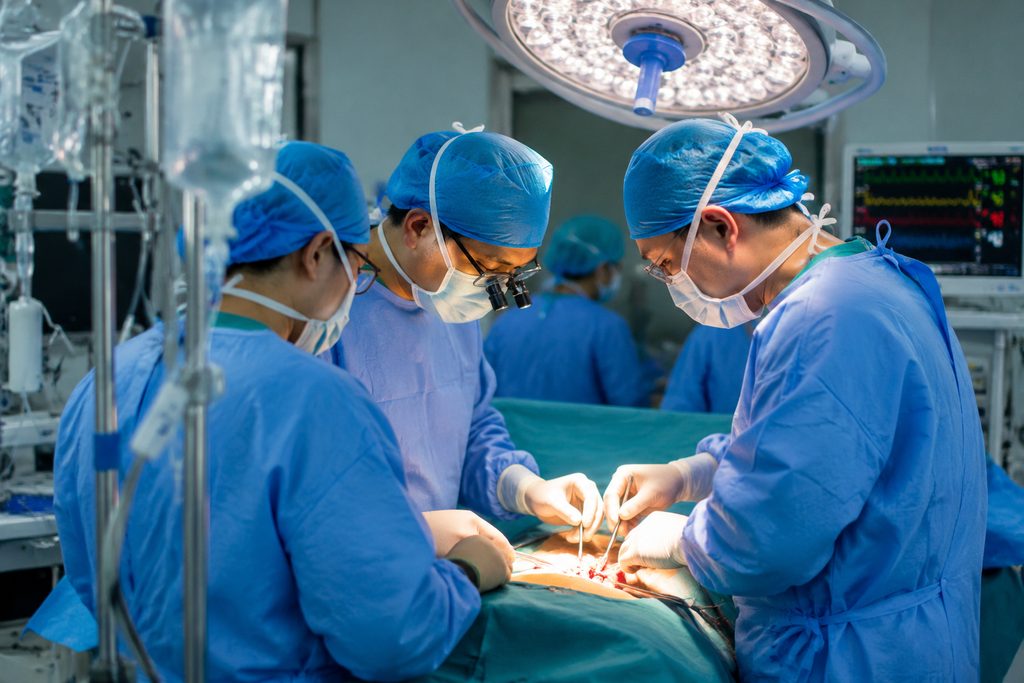
Off-Pump CABG Surgery Cost China: The Short Answer
Patients traveling to China for an off-pump coronary artery bypass graft can expect to pay between $12,000 and $20,000 at a top-tier public hospital. That figure covers the surgeon’s fee, anesthesia, operating room, and a standard inpatient stay. The same procedure performed on a stopped heart in the United States routinely exceeds $120,000. The gap is real.
But a single number never tells the whole story. The final cost shifts with the number of grafts, the hospital tier you choose, and whether you go through a standard public channel or a hospital’s international VIP department. A three-vessel bypass with a longer ICU stay will land at the upper end. A straightforward two-vessel case, closer to the floor. We see patients save 80% or more compared to Western bills, even after adding travel and lodging. That math changes lives.
What this guide gives you is not a quote. It is a map. We walk through exactly what off-pump CABG is, which hospitals in China lead the field, what drives the price up or down, and the practical steps from your first inquiry to your flight home. No vague promises. Just the numbers, the names, and the process, laid out so you can make a clear-eyed decision.
Who This Is Right For — and Who It Isn’t
Off-pump CABG is a specific tool, not a universal upgrade. It suits some patients beautifully. For others, the conventional on-pump approach remains the safer, more proven path. Knowing which group you fall into is the first filter.
You are typically a good candidate if:
- You have a heavily calcified aorta, where clamping and cannulating for a heart-lung machine would pose a high stroke risk.
- You carry significant kidney or lung disease and your surgical team wants to avoid the systemic inflammatory response triggered by the cardiopulmonary bypass circuit.
- Your coronary anatomy is accessible — meaning the diseased segments sit on the front or underside of the heart where a surgeon can stabilize the tissue without flipping the organ around excessively.
- You are older and frailer, and your doctors judge that the physiological stress of the bypass machine outweighs its convenience.
The procedure is not for everyone. You should think twice — or expect your surgeon to steer you toward conventional CABG — if:
- You need grafts to vessels on the back wall of the heart. Accessing those branches off-pump can compromise hemodynamic stability.
- You have diffuse, small-vessel disease where the target coronary arteries are less than 1.5 mm in diameter. Precision suturing on a moving field demands a still, bloodless target.
- You are in cardiogenic shock or require an emergency operation. On-pump CABG is faster to establish and gives the team full control.
- Your surgeon does not perform a high volume of off-pump cases. This is the quiet truth: the technique’s success correlates tightly with the operator’s annual case count. A master of on-pump surgery who does ten off-pump procedures a year is not the right pair of hands.
If you check the boxes in that second list, the cost advantage of China disappears behind a more urgent priority: getting the right operation for your anatomy, wherever you are. We tell patients this directly during initial consultations. The goal is the right surgery, not the cheapest flight.
The Options, Compared
When international patients research “off-pump cabg surgery cost China,” they are usually weighing three parallel decisions: the surgical technique, the country, and the hospital tier within China. The table below lays out the realistic choices side by side.
| Option | Typical All-In Cost (USD) | Hospital Stay | Key Trade-Off |
|---|---|---|---|
| Off-Pump CABG, China — Top Public Hospital (Standard Ward) | $12,000 – $16,000 | 7–10 days | Lower cost; limited English support; shared rooms; family must handle logistics |
| Off-Pump CABG, China — Top Public Hospital (International VIP Wing) | $18,000 – $25,000 | 7–10 days | Private room; English-speaking coordinators; faster admission; roughly 1.5× standard price |
| Off-Pump CABG, China — Private International Hospital | $30,000 – $45,000 | 5–8 days | Western-style amenities; direct insurance billing; JCI accreditation; lower surgical volume for CABG specifically |
| Off-Pump CABG, USA | $70,000 – $150,000+ | 5–7 days | Highest cost; familiar system; no travel logistics; insurance complexity |
| Off-Pump CABG, Thailand / India | $10,000 – $18,000 | 7–12 days | Established medical tourism infrastructure; variable quality control across centers |
| Conventional On-Pump CABG, China — Top Public Hospital | $10,000 – $15,000 | 8–12 days | Lower cost than off-pump; longer recovery; higher stroke risk in calcified-aorta patients |
The international VIP wing at a top Chinese public hospital hits a sweet spot for many of the patients we work with. You get the surgical volume and expertise of a center that performs thousands of CABGs annually, paired with the language support and private recovery environment that make a foreign hospital stay manageable. The private international hospitals excel at comfort and insurance compatibility, but their cardiac surgery programs are smaller. For a complex off-pump case, the surgeon’s weekly case count matters more than the thread count of the sheets.
How Is Off-Pump Heart Bypass Done: The Procedure Step by Step
Understanding the mechanics of off-pump CABG helps you grasp why surgeon volume and hospital infrastructure matter so much. The operation is a feat of controlled precision on a moving target.
The surgeon opens the chest through a median sternotomy — the same vertical incision used in conventional bypass. No way around that. Once the pericardium is opened, the team places a specialized suction stabilizer directly on the beating heart, anchoring a small island of tissue around the target coronary artery. The device uses negative pressure to hold that one patch of myocardium nearly still while the rest of the heart pumps on. Think of it as a local anesthetic for motion, not for sensation.
Next, the surgeon temporarily occludes the target vessel with tiny silastic loops or a shunt to create a bloodless field. The artery is opened with a fine blade. Under magnification loupes, the surgeon sews a saphenous vein graft or internal mammary artery graft to the coronary artery — running sutures of 7-0 or 8-0 polypropylene, thinner than a human hair — while the heart continues to supply blood to the rest of the body. The stabilizer platform absorbs the surface motion. The surgeon’s hands absorb the rhythm.
This is repeated for each graft. A three-vessel bypass means three separate anastomoses, each on a different region of the heart. The posterior vessels are the challenge. To reach them, the team may need to lift the heart out of the pericardial sac, which drops the blood pressure. An experienced off-pump anesthesiologist manages this with fluid, positioning, and pharmacology. In less experienced hands, the blood pressure drop forces a crash conversion to on-pump — exactly what the patient hoped to avoid.
Graft flow is checked with a transit-time flow meter before closing. The chest is wired shut, and the patient moves to the ICU awake and breathing on their own, usually within hours. No heart-lung machine. No aortic cross-clamp. No cooling and rewarming. The recovery trajectory is different — faster in the first 48 hours, but still a major operation that demands respect.
Is Beating Heart Bypass Safer Than Traditional CABG: What the Data Shows
The question of safety has been debated in cardiac surgery circles for three decades, and the answer is nuanced. Off-pump CABG is not universally safer. It is safer for specific patients in specific hands. The largest randomized controlled trial, the ROOBY trial from the Veterans Affairs system, initially reported worse one-year outcomes with off-pump CABG — higher rates of the composite endpoint of death, myocardial infarction, or repeat revascularization. That finding shook the field. But subsequent analysis revealed the surgeons in the trial had relatively low off-pump volumes, and graft patency rates suffered accordingly.
Later studies, including the CORONARY trial with 4,752 patients across 19 countries, showed no significant difference in the primary composite outcome at five years between off-pump and on-pump CABG. The off-pump group had fewer transfusions, less acute kidney injury, and shorter ventilation times. The on-pump group had slightly higher graft patency rates at one year. Stroke rates were not statistically different overall, but subgroup analyses consistently show a stroke reduction with off-pump in patients with severe aortic atherosclerosis.
The Chinese clinical experience adds another layer. At Fuwai Hospital in Beijing — the highest-volume cardiac surgery center in the world, performing over 14,000 cardiac operations annually — off-pump CABG accounts for a significant share of isolated bypass cases. Surgeons there routinely perform six to eight off-pump cases per week. That volume breeds a level of technical fluency that the clinical trial literature, weighted toward lower-volume Western centers, may not fully capture. When an international patient asks us “is beating heart bypass safer than traditional CABG,” our answer is: it depends on your aorta, your kidneys, and your surgeon’s weekly off-pump case count. Get those three variables right, and the safety equation tilts in your favor.
Best Cardiac Surgery Hospitals China JCI: Where Volume Meets Standards
Selecting a hospital for off-pump CABG in China means looking at two overlapping credentials: domestic clinical reputation and international quality accreditation. The hospitals below consistently rank among China’s top cardiac surgery programs on the Fudan University hospital rankings while maintaining either JCI accreditation or equivalent international patient pathways.
Fuwai Hospital, Beijing. The National Center for Cardiovascular Diseases. Over 14,000 cardiac surgeries per year. Off-pump CABG is a core competency here, not an occasional alternative. The hospital runs a dedicated international medical service with English-speaking coordinators. For a patient whose primary concern is surgical volume and technical mastery, Fuwai is the reference point. We have coordinated care here for patients from over a dozen countries. The standard ward is functional but basic. The international wing adds comfort and language support at roughly 1.5 times the base price.
Zhongshan Hospital, Fudan University, Shanghai. Another cardiac surgery powerhouse, ranked among the top programs nationally. Shanghai’s international infrastructure — direct flights, Western restaurants, English-friendly hotels — makes the recovery period easier for accompanying family. The cardiac surgery department handles a high proportion of complex referrals. Off-pump CABG is routine here. The hospital’s international medical center manages admission, billing, and interpreter services for foreign patients.
West China Hospital, Sichuan University, Chengdu. One of the largest hospital campuses in the world by patient volume. The cardiac surgery program is ranked in the top tier nationally. Chengdu’s cost of living is lower than Beijing or Shanghai, which reduces the non-medical expenses for patients who stay for extended recovery. The international medical center here is well-established, though English proficiency among ward nurses is less consistent than in Shanghai.
For patients who prioritize JCI accreditation above all else, private international hospitals like United Family Healthcare (Beijing, Shanghai) offer off-pump CABG with full Western-style amenities and direct insurance billing. The trade-off is surgical volume — these centers perform dozens of CABGs annually, not thousands. For a straightforward case in a patient with good anatomy, that may be perfectly adequate. For a complex reoperation or a heavily calcified aorta, we typically recommend the high-volume public centers with international wings instead.
Our cardiac surgery hospital database includes detailed profiles of each center, including Fudan ranking tier, JCI status, and international patient services. We also maintain city-specific guides for Beijing and Shanghai that cover logistics beyond the hospital walls.
What Drives the Final Price: A Line-by-Line Breakdown
The headline number — $12,000 to $20,000 — is a real range, but it assumes a standard case. Here is what pushes the bill toward the upper or lower boundary, and what is typically included or excluded.
What the surgical package usually includes:
- Surgeon’s professional fee
- Anesthesiologist’s fee
- Operating room and equipment charges
- Stabilizer device and disposables
- Graft harvesting (saphenous vein and/or internal mammary artery)
- Standard ICU stay (typically 2–3 days)
- Standard ward stay (typically 5–7 additional days)
- Routine post-operative medications during admission
- Basic pre-operative testing (chest X-ray, standard blood work, ECG)
What often costs extra:
- Advanced pre-operative imaging: coronary CT angiography with calcium scoring ($300–$600) or cardiac MRI if needed
- Carotid Doppler ultrasound or peripheral vascular studies to assess conduit quality
- Extended ICU stay beyond the standard package (roughly $800–$1,200 per additional day in a public hospital international wing)
- Blood products beyond a routine threshold
- Treatment of post-operative atrial fibrillation or other complications
- Private room upgrade in a standard ward setting
- Inpatient interpreter services if not using the international wing
Factors that push the base price higher:
- Number of grafts: a four-vessel bypass costs more than a two-vessel bypass — more OR time, more disposables, more surgeon effort
- Hospital tier: Fuwai or Zhongshan international wing charges more than a provincial cardiac center, reflecting the seniority of the surgical team and the overhead of the VIP infrastructure
- Patient comorbidities: poorly controlled diabetes, CKD stage 3 or 4, or severe COPD extend pre-op optimization and post-op recovery, adding days and pharmacy costs
- Redo surgery: a second or third sternotomy is technically harder, takes longer, and carries higher risk — the price reflects that
We encourage patients to budget $18,000 to $25,000 all-in for a complex off-pump case at a top-tier international wing, including travel, lodging for a companion, and a buffer for the unexpected. That number still represents a fraction of the US cash price, but it is honest. A medical trip built on a best-case budget is a fragile plan.
Practical Considerations: Records, Visa, and Follow-Up Care
The surgery itself is the centerpiece, but the logistics around it determine whether the experience is manageable or miserable. Here is what we walk every cardiac patient through before they book a flight.
Medical records you will need. Chinese cardiac surgeons will not schedule surgery based on a brief email. They need to see the data. At minimum: a coronary angiogram report with images (CD or DICOM files), a recent echocardiogram with ejection fraction and valve assessment, a full blood panel including renal function and coagulation profile, a carotid Doppler if you have a history of stroke or TIA, and a detailed medical history summary in English (which we translate into clinical Chinese). Missing records cause delays. We tell patients: gather everything before you make first contact. It saves weeks.
Visa. Medical treatment in China falls under the S2 visa category — a short-term private affairs visa. Your accompanying family member applies for the same category. You will need an invitation letter from the hospital, which the international medical center provides once your case is accepted. Processing time is typically one to two weeks at your local Chinese embassy or consulate. Do not book a non-refundable flight until the visa is in your passport. We have seen processing delays. They are rare but real.
Payment. Chinese public hospitals require pre-payment before admission. A deposit — usually 50% to 100% of the estimated surgical package — must be wired or paid via credit card upon registration. International insurance is rarely accepted for direct billing at public hospitals, even the international wings. You pay upfront and seek reimbursement from your insurer afterward. Private international hospitals like United Family do offer direct billing with many global insurers. If insurance compatibility is non-negotiable for you, that narrows the hospital choice considerably.
Language. The surgical team at a top center will have English-proficient senior surgeons — they present
Frequently Asked Questions
Yes. The hospitals used for international patients are JCI-accredited and follow the same international safety standards as top hospitals in the US and Europe. Surgical teams perform high volumes of procedures — often more than their Western counterparts — which studies show leads to better outcomes.
Costs vary by procedure and hospital, but international patients typically save 40-80% compared to US prices — even when factoring in travel and accommodation. A consultation with our team will give you an exact, all-inclusive quote with no hidden fees.
Send us your existing medical reports to get started. We handle everything from hospital selection and appointment scheduling to visa assistance and post-operative recovery planning. Your medical records are reviewed by the specialist before you even book a flight.
For more medical information and treatment options in China, visit chinamedservices.com (China Medical Services).
