Pediatric Liver Transplant China: Shanghai Renji Hospital Living Donor for Biliary Atresia
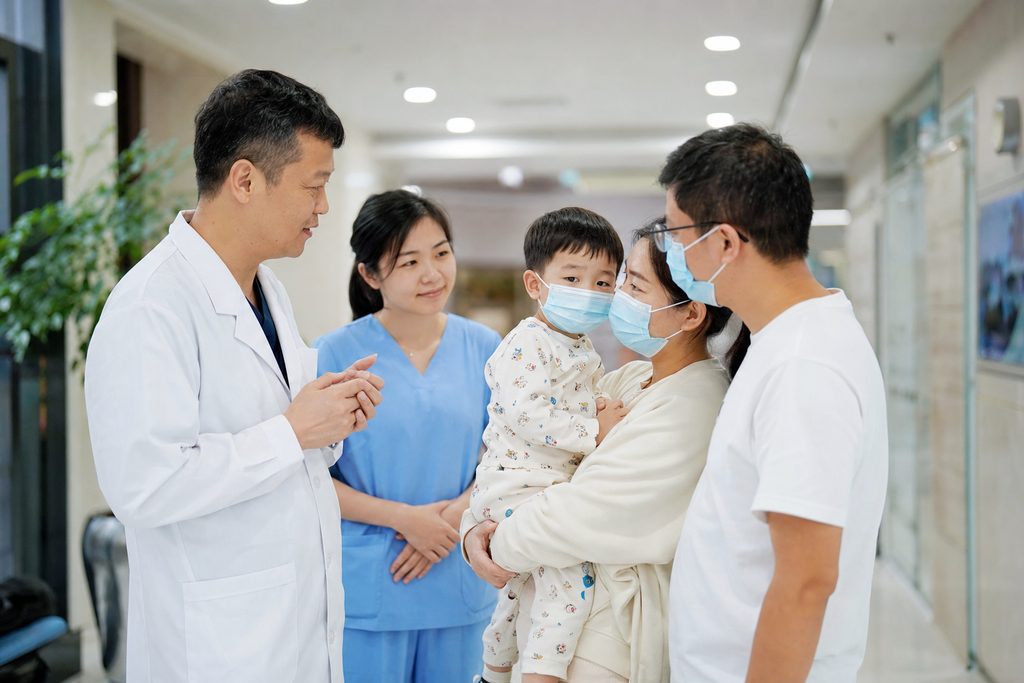
What if your child’s only shot at a healthy life was a surgery that costs $400,000 in the United States, but you could access one of the world’s most experienced surgical teams for a fraction of that price?
For parents of children diagnosed with biliary atresia, this is not a hypothetical question. It is the terrifying math you do at 3 a.m. while your infant’s bilirubin levels climb and the Kasai procedure has already failed. You start searching. You find Shanghai Renji Hospital. And suddenly, the numbers start looking different.
Key Takeaways
- Renji Hospital performs over 800 liver transplants annually, with its pediatric program ranking among the largest in the world by surgical volume.
- Living donor liver transplantation for biliary atresia at Renji typically costs between $35,000 and $55,000 USD — roughly one-tenth of the US price — with one-year survival rates exceeding 90%.
- Navigating the process as an international family requires S2 medical visa documentation, hospital pre-approval, and on-the-ground logistical support — language barriers in Chinese public hospitals are real and significant.
- Living donor evaluation, surgical scheduling, and post-operative recovery planning should be coordinated before travel; walk-in appointments for major transplant surgery do not exist in the Chinese public hospital system.
The Problem: Biliary Atresia Does Not Wait for Waitlists
Biliary atresia strikes roughly 1 in 15,000 live births in Western countries. It is a rare disease. But for the families it touches, rarity offers zero comfort. The bile ducts become inflamed and blocked within weeks of birth. The Kasai hepatoportoenterostomy — a surgical bypass — can buy time if performed early. When it fails, the liver fibroses. Cirrhosis sets in. The clock starts ticking.
In the United States, the median wait time for a pediatric deceased donor liver is approximately 2 to 4 months for the sickest children listed at Status 1A. That sounds manageable until you learn that approximately 10% of children on the liver transplant waiting list die before an organ becomes available. The math is brutal. A living donor — usually a parent — eliminates the wait entirely.
But living donor liver transplantation in the US is expensive. The total cost, including donor evaluation, surgery, hospitalization, and first-year follow-up, routinely exceeds $400,000. Even with insurance, out-of-pocket costs can devastate a family. Some parents sell their homes. Others simply cannot proceed.
This is the moment when families begin searching for alternatives. And Shanghai Renji Hospital appears.
Who We Are
We are China Medical Services. We are not a hospital. We do not provide medical treatment or clinical diagnoses. Our team acts as the logistical bridge between international families and China’s top-tier medical institutions. We handle hospital matching, appointment coordination, bilingual medical companion services, visa guidance, and accommodation planning. We translate medical records, arrange video consultations with specialists, and ensure that when you land in Shanghai, someone is waiting at the airport who speaks your language and knows exactly where to take you. We exist because China’s best hospitals deliver extraordinary clinical outcomes at remarkable prices — but navigating them without local expertise is, frankly, nearly impossible for a foreign family.
Why Shanghai Renji Hospital Delivers Results for Pediatric Living Donor Liver Transplants
Surgical Volume That Creates Unmatched Experience
Renji Hospital, affiliated with Shanghai Jiao Tong University School of Medicine, is not simply “a good hospital.” Its liver transplantation program, led by the Department of Liver Surgery, has been the highest-volume transplant center in China for multiple consecutive years. In 2023, the program completed over 800 liver transplants. The pediatric component is substantial — Renji has performed thousands of pediatric living donor liver transplants since the program’s inception, with biliary atresia representing the single most common indication.
Volume matters in transplant surgery. A lot. Studies published in the American Journal of Transplantation and Annals of Surgery have consistently demonstrated that centers performing more than 50 pediatric liver transplants annually achieve significantly lower complication rates and higher graft survival compared to lower-volume centers. Renji operates at a scale that very few centers in North America or Europe can match. The surgical teams perform these procedures multiple times per week. The anesthesiologists specialize in pediatric transplant cases. The ICU nurses have seen every post-operative scenario. This institutional familiarity translates directly into better outcomes.
And the one-year patient survival rate for pediatric living donor liver transplantation at Renji consistently exceeds 90%, comparable to the best-reported outcomes from leading Western transplant centers. The data has been published in peer-reviewed journals including Liver Transplantation and Transplantation Proceedings.
Living Donor Expertise: The Standard of Care, Not the Exception
In China, living donor liver transplantation is not a last resort. It is the dominant model. Deceased organ donation infrastructure has developed significantly in the past decade, but cultural factors and historical practices mean that living donation — typically from parent to child — remains the primary pathway for pediatric patients.
This has a profound clinical consequence. The surgeons at Renji have refined the living donor hepatectomy and implantation to an extraordinary degree. The standard procedure for a pediatric recipient involves transplanting the left lateral segment (approximately 20-25% of the donor’s liver volume). Donor safety is paramount. The mortality risk for a healthy adult undergoing left lateral segmentectomy is below 0.1% at experienced centers. Both donor and recipient livers regenerate to near-full volume within 6 to 12 weeks.
For a parent, this means you are not asking a surgeon to perform a procedure they do once a month. You are asking a team that does this multiple times weekly. The difference in technical proficiency is tangible.
The Pediatric Liver Transplant Cost Shanghai Reality
Let us address the question every family asks first. The pediatric liver transplant cost Shanghai — specifically for a living donor procedure at Renji Hospital — typically ranges from $35,000 to $55,000 USD. That is the all-in figure for the recipient’s surgery and hospitalization. The donor’s evaluation and hepatectomy adds approximately $10,000 to $15,000 USD.
These numbers are not fixed quotes. They vary by case complexity, length of ICU stay, and whether any complications arise. But as a benchmark, a family should budget approximately $50,000 to $70,000 USD total for both donor and recipient procedures, including a standard post-operative hospital stay of 2 to 4 weeks for the recipient.
Compare this to the United States, where the same procedures cost $400,000 to $600,000. Or to private hospitals in Singapore or South Korea, where costs often exceed $100,000 to $150,000. The structural reasons for China’s cost advantage are straightforward: lower labor costs for hospital staff, lower pharmaceutical pricing, and the sheer efficiency of high-volume centers. Quality does not suffer. The immunosuppression protocols, surgical techniques, and post-operative monitoring at Renji align with international standards. The hospital’s liver transplant program holds accreditation and collaborates with transplant centers in Japan, Europe, and the United States.
The Renji Hospital liver transplant price for child recipients makes this option viable for families who would otherwise face impossible financial choices. That is not marketing language. That is the reality we see when families contact us after being quoted six-figure sums in their home countries.
What You Need to Know Before Going Alone
The clinical case for Renji is strong. The logistical barriers are real. We say this not to discourage you but because families who underestimate these challenges end up stranded, frustrated, and sometimes unable to proceed with surgery. Here is what you will face if you attempt to arrange this independently.
- Visa Requirements Are Specific and Non-Negotiable: Medical treatment in China requires an S2 visa with a notation specifying the medical purpose. This is not the same as an M business visa or an L tourist visa. The Chinese embassy or consulate will require an invitation letter from the treating hospital, medical records confirming the diagnosis, and proof of sufficient funds. Obtaining the hospital invitation letter without a local contact inside the hospital’s international department is, in practice, extremely difficult. The public-facing registration desks cannot issue these documents.
- Language Barriers Are Absolute: Renji Hospital is a Chinese public hospital. The surgeons may speak some English. The nursing staff, administrative personnel, billing department, pharmacy, and laboratory technicians almost certainly do not. Medical records, consent forms, and discharge instructions are in Chinese. A single missed instruction about immunosuppression timing or wound care can lead to serious complications. You cannot rely on translation apps for this.
- Payment Systems Do Not Work Like Home: Chinese public hospitals operate on a prepaid deposit system. You deposit funds at admission, and the hospital deducts charges daily. International credit cards are not accepted at most public hospital counters. Wire transfers from foreign banks can take days to clear. You need a Chinese bank account or a local payment agent, and you need to understand the deposit top-up process to avoid treatment interruptions.
- Living Donor Evaluation Is a Separate Process: The donor — typically a parent — must undergo a comprehensive evaluation including blood typing, liver volumetry via CT, cardiac clearance, and psychological assessment. This takes 5 to 7 days and must be completed before the recipient’s surgery can be scheduled. The donor and recipient surgeries are then coordinated to occur simultaneously in adjacent operating rooms. Coordinating this sequence without a bilingual coordinator on the ground is exceptionally challenging.
Important: You cannot book a pediatric liver transplant at Renji Hospital Shanghai through email or an online form. The public hospital system requires an in-person specialist consultation before any surgery can be scheduled. International patients must work through the hospital’s official international medical center channel — there is no workaround for this.
How We Help You Navigate This
These barriers exist for structural reasons, not because anyone wants to make your life difficult. Chinese public hospitals serve massive domestic patient volumes. Renji’s outpatient clinics see over 10,000 patients daily. The system is not designed with international families in mind. That is where we fit.
Our process begins before you book a flight. You send us your child’s medical records — the Kasai operative note, recent liver function tests, imaging reports, and the hepatologist’s summary. Our team translates these documents into clinical Chinese and submits them through Renji’s international patient channel for specialist review. The transplant team evaluates whether your child is a suitable candidate and whether a living donor evaluation should proceed. This pre-screening step prevents families from traveling to Shanghai only to learn that contraindications exist.
If the team accepts the case, we coordinate the S2 visa invitation letter from the hospital. We arrange a video consultation with the transplant hepatologist and surgeon so you can ask your questions directly before committing to travel. The cost for this written second opinion and coordination typically starts from $300 USD, and our hospital appointment coordination service begins from $300 USD. If you proceed to on-the-ground coordination in Shanghai, any prior consultation fees are credited in full toward the coordination service — a one-time credit that applies to our coordination fee, never to hospital treatment charges.
When you arrive in Shanghai, a bilingual medical companion meets you at the airport. This person is not a translator on a phone. They are physically present with you at every step: the donor evaluation appointments, the pre-operative consultations, the admission process, the surgical waiting area, and the post-operative ICU updates. They handle deposit payments, interpret consent forms, relay nursing instructions, and ensure that nothing gets lost in translation.
The donor evaluation takes approximately one week. If approved, surgery is typically scheduled within days. The recipient’s hospital stay averages 3 to 4 weeks post-transplant, during which immunosuppression is initiated and stabilized. Our companion remains available throughout, and we assist with accommodation, local transportation, and follow-up appointment scheduling. Bilingual medical companion services start from $200 per day for an 8-hour shift.
We do not promise to secure a specific surgeon or an exact surgery date. That is not how public hospitals work, and any service claiming otherwise is misleading you. We promise to coordinate through the official international patient channel, to translate and submit your records accurately, to be physically present when you need interpretation, and to refund our coordination fee if we cannot secure the appointment we committed to arrange. That is what honest case management looks like.
Frequently Asked Questions
The one-year patient survival rate for pediatric living donor liver transplantation at Renji Hospital exceeds 90%, with five-year survival rates above 85%. These outcomes are consistent with data published in peer-reviewed transplant journals and are comparable to the best pediatric transplant centers in North America and Europe. Biliary atresia patients specifically have excellent outcomes because they are typically transplanted at a young age before developing severe multi-organ complications. The key variable is timing — children transplanted before significant malnutrition or infection set in do substantially better.
A realistic budget for a living donor liver transplant for a child at Renji Hospital is $50,000 to $70,000 USD all-inclusive for both donor and recipient procedures, assuming a standard hospital course without major complications. This covers the donor evaluation, donor hepatectomy, recipient transplant surgery, ICU stay, ward hospitalization, and initial immunosuppression. It does not include international airfare, accommodation for the accompanying family during the 1 to 3 month stay, or post-discharge immunosuppression medications which cost approximately $300 to $500 per month. Costs vary by case complexity and length of stay.
Yes. Renji Hospital evaluates international donors using the same medical criteria applied to Chinese donors. You must be a compatible blood type, in good general health, with acceptable liver anatomy on CT volumetry, and without significant medical or psychiatric contraindications. The evaluation is conducted in Shanghai over approximately 5 to 7 days. If you are approved, your surgery is scheduled simultaneously with your child’s. The donor typically stays in the hospital for 7 to 10 days post-hepatectomy and should plan for a total recovery period of 4 to 6 weeks before traveling internationally.
You cannot book directly. The process requires: (1) submission of medical records for specialist review, (2) hospital-issued invitation documentation for visa purposes, (3) an in-person consultation with the transplant team in Shanghai, and (4) donor evaluation before surgical scheduling. This sequence is coordinated through the hospital’s international medical center channel. Our team manages steps 1 through 4 on your behalf — we translate and submit records, coordinate the invitation letter, arrange the initial video consultation, and provide on-the-ground bilingual accompaniment throughout the evaluation and surgical process. Attempting to navigate this independently without Mandarin fluency and local hospital system knowledge is not recommended.
Renji’s transplant team provides a detailed discharge summary and immunosuppression protocol in both Chinese and English. They will coordinate with your home-country hepatologist for long-term follow-up. In the event of acute issues, our team can facilitate urgent video consultations with the Renji transplant team. However, families must establish a relationship with a local transplant center before traveling — no Chinese hospital can provide emergency care from 6,000 miles away. This is not a limitation unique to China. It is the reality of any cross-border medical travel, and it must be factored into your decision.
Your Next Step
The decision to travel internationally for your child’s liver transplant is among the hardest any parent will ever make. The clinical evidence supporting Renji Hospital’s pediatric living donor program is strong. The cost differential is substantial. The logistical complexity is real but entirely manageable with proper coordination. Your child does not need to wait on a list while a compatible organ sits inside you, ready to regenerate within weeks of donation.
If you are ready to explore whether Renji Hospital is a viable option for your family, contact our team for a free initial consultation. We will review your child’s situation, explain the likely pathway and costs, and help you decide whether to proceed — with no pressure and no obligation. You have enough weight on your shoulders already. Let us carry the logistics.
For more medical information and treatment options in China, visit chinamedservices.com (China Medical Services).
