Peking University Third Hospital IVF: A Guide for International Patients
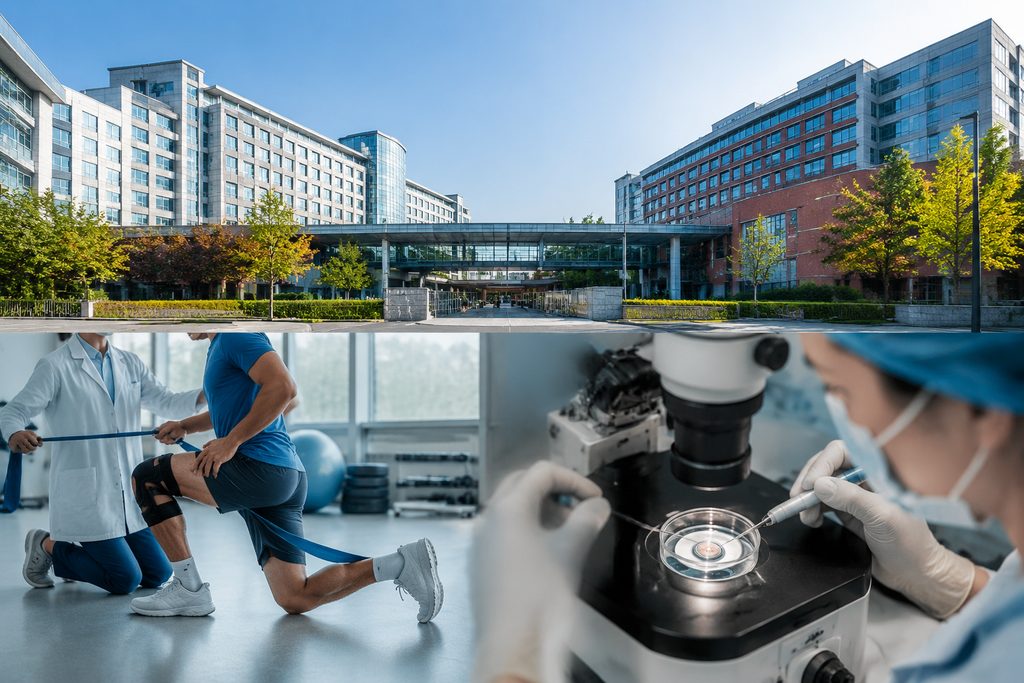
Peking University Third Hospital Reproductive Medicine for International Patients: The Short Answer
Peking University Third Hospital (PUTH) operates one of mainland China’s highest-volume reproductive medicine centers, performing over 20,000 IVF cycles annually. For international patients, the realistic path is through the hospital’s International Medical Center, where a single IVF cycle typically ranges from $6,000 to $12,000 USD — roughly one-third to one-half of comparable treatment in the United States. The Peking University Third Hospital IVF cost for foreigners depends heavily on protocol complexity, medication needs, and whether you require genetic testing.
But here’s the complication most websites skip: PUTH is a public hospital. That means its ordinary outpatient clinics do not accept advance bookings from overseas. You cannot email the reproductive department and lock in a consultation date. The workable route runs through the international department, which coordinates scheduling, translation, and billing for foreign patients — at a premium.
Who This Is Right For — and Who It Isn’t
PUTH reproductive medicine suits a specific profile of patient. Knowing whether you fit matters more than knowing the hospital’s reputation.
Typically a good candidate:
- You have a confirmed infertility diagnosis and completed preliminary testing in your home country.
- You have tried 1–2 failed IVF cycles elsewhere and are seeking a high-volume center with extensive experience in difficult cases, including advanced maternal age.
- You are comfortable traveling to Beijing for 3–6 weeks and can return for embryo transfer if using a frozen cycle.
- You have a realistic budget of $8,000–$20,000 for treatment plus travel and accommodation.
- You speak no Mandarin but are willing to pay for bilingual coordination.
Who should think twice:
- Patients requiring third-party reproduction (surrogacy or egg donation) face legal restrictions in China. Commercial surrogacy is not permitted, and egg donation is tightly regulated. If this is your need, PUTH is not your answer.
- Those with complex immune or genetic conditions requiring highly specialized Western protocols may find more tailored options at dedicated clinics in Spain, Greece, or the Czech Republic.
- Patients who cannot tolerate uncertainty. Public hospital systems in China operate differently from Western private clinics. Scheduling shifts happen. Flexibility is non-negotiable.
The Options, Compared
When international patients evaluate fertility treatment, the conversation usually narrows to three paths: China’s top public hospitals, China’s private international clinics, or staying in their home system. Here’s how they stack up for a standard IVF cycle.
| Factor | PUTH (Public, Top-Tier) | Private International Clinic in Beijing | United States (Average) |
|---|---|---|---|
| Cost per IVF cycle | $6,000–$12,000 | $10,000–$18,000 | $15,000–$30,000 |
| Annual IVF cycles | 20,000+ | 1,000–3,000 | Varies by clinic; large centers 3,000–8,000 |
| Advance booking from abroad | Via international department only | Yes, direct | Yes, direct |
| English-speaking staff | Limited; coordinator required | Standard | Standard |
| Regulatory environment | Strict; no commercial surrogacy | Same national rules | State-dependent; surrogacy legal in some states |
| Wait time to start cycle | 2–6 weeks after first consultation | 1–4 weeks | 2–8 weeks typical |
If your priority is clinical volume and cost efficiency, PUTH through its international channel is compelling. If you want a seamless English-first experience with direct booking, a private international clinic in Beijing may fit better — at roughly 40–60% higher cost. And if your treatment involves surrogacy or donor eggs, the US remains the practical choice despite the price.
What Makes PUTH Reproductive Medicine Different
PUTH is not just another hospital with an IVF lab. It is the teaching hospital of Peking University Health Science Center and one of only three hospitals in China authorized by the National Health Commission to perform preimplantation genetic testing (PGT) at scale. The reproductive medicine center was founded in 1984 — China’s first IVF baby was born from work connected to this institution’s lineage in 1988.
Volume matters in reproductive medicine. Clinicians who see thousands of cycles per year develop pattern recognition that smaller centers cannot match. PUTH’s embryology lab operates continuously, handling more cycles in a month than many Western clinics complete in a year. For patients with repeated implantation failure, thin endometrium, or severe male factor infertility, that case exposure translates into refined protocols.
But volume has a flip side. The outpatient halls are crowded. Wait times between appointment segments can stretch for hours. The experience is efficient in the medical sense, not the hospitality sense. International patients who expect a concierge-level experience at a public hospital will be disappointed. Those who come for clinical expertise and accept the operational friction will find what they came for.
Peking University Third Hospital IVF Cost for Foreigners: What You’ll Actually Pay
Let’s break down the numbers honestly. The Peking University Third Hospital IVF cost for foreigners is not a single figure. It is a range built from several components, and the international department pricing differs from domestic patient pricing.
Base IVF cycle (international department): $5,000–$8,000. This covers monitoring ultrasounds, blood work, egg retrieval, embryology lab fees, and fresh embryo transfer.
Medications: $1,500–$3,500. Gonadotropin dosages vary widely by age and ovarian reserve. Patients over 38 or with diminished reserve often need higher doses, pushing toward the upper end.
Preimplantation genetic testing (PGT-A): $2,000–$4,000 additional, depending on embryo count and whether biopsy is included.
Frozen embryo transfer (FET) cycle: $1,500–$2,500 if performed separately from the retrieval cycle.
International coordination and translation: $500–$1,500 depending on scope. This is separate from the hospital’s own charges and covers document translation, appointment scheduling, and on-site bilingual support.
What’s not included: flights, visa fees, accommodation (2–6 weeks in Beijing), meals, and any treatment for complications. A realistic all-in budget for one complete cycle including travel runs $10,000–$18,000.
Compare that with the fertility treatment China price comparison against Western benchmarks: the same full cycle in the US averages $20,000–$35,000 with medications. In the UK, private IVF runs £5,000–£8,000 per cycle but with far lower annual volumes per center. China’s advantage is structural: lower labor costs, centralized lab infrastructure, and enormous patient throughput.
One thing to know: PUTH’s international department requires payment at each stage of treatment. There is no bundled package where you pay one fee upfront and everything is included. Budget for staged payments across the consultation, stimulation, retrieval, and transfer phases.
How to Book IVF Treatment at Peking University Third Hospital
The mechanics of getting started are where most overseas patients stall. Here is the actual sequence.
First, gather your records. PUTH requires a complete medical file: previous fertility workups, semen analysis reports, HSG or saline sonogram results, ovarian reserve testing (AMH, AFC), and records of any prior IVF cycles including stimulation protocols and embryo quality reports. All documents must be translated into Chinese — the international department can arrange this, or you can use a certified translation service beforehand.
Second, initiate contact through the International Medical Center. This is the only channel that accepts overseas patients for reproductive medicine. Expect a response window of 3–7 business days. You will submit your translated records for preliminary review. A reproductive specialist then determines whether your case is appropriate for treatment at PUTH.
Third, schedule a video consultation. This typically costs $100–$300 and serves as the bridge between remote evaluation and in-person treatment. The specialist reviews your history, explains the recommended protocol, and sets expectations for timeline and success probability. This consultation does not guarantee treatment — it is an evaluation step.
Fourth, travel to Beijing for the initial in-person consultation and baseline testing. You will need an S2 visa, which is the appropriate category for short-term private affairs including medical treatment. The hospital provides a supporting invitation letter once your case is accepted. Processing time varies by embassy; allow 2–4 weeks.
Fifth, begin the stimulation cycle. You will visit the hospital every 1–3 days for monitoring. Egg retrieval occurs roughly 12–14 days after stimulation starts. Fresh embryo transfer happens 3–5 days after retrieval, or you can freeze all embryos and return later for a FET cycle.
Reality check: Even with international department coordination, you will spend significant time in waiting areas. Chinese public hospitals operate on high volume. A monitoring visit that takes 20 minutes clinically may consume 2–3 hours of your day. Plan your schedule accordingly.
IVF Success Rates in Beijing for Foreign Patients
Let’s talk about the number everyone actually cares about. IVF success rates Beijing for foreign patients are not published in a single standardized format the way the CDC reports US clinic data. China does not mandate public reporting of clinic-level live birth rates in the same way. What we know comes from published institutional studies and registry data.
For women under 35, clinical pregnancy rates per embryo transfer at top Chinese centers like PUTH generally fall in the 50–60% range. For women 35–37, expect 40–50%. For 38–40, the range drops to 25–35%. Over 40, rates fall below 20% per transfer. These figures align with top-tier Western clinic benchmarks.
But here’s what matters more than any single number: PUTH’s cumulative live birth rate across multiple transfers is competitive because the lab handles such high volume. Embryology is a craft. Labs that freeze and thaw thousands of embryos annually develop technical consistency that smaller operations cannot replicate.
For foreign patients specifically, success rates are not meaningfully different from domestic patients when protocols are followed correctly. The variables that affect your outcome are the same ones that matter everywhere: age, ovarian reserve, embryo quality, and uterine receptivity. No hospital in the world can overcome poor embryo quality with better branding.
Practical Considerations: Records, Visas, and Follow-Up
Three logistical realities shape the international patient experience at PUTH.
Documentation. China’s medical system runs on paper and digital records that are not interoperable with Western systems. Bring physical copies of everything. Bring a USB drive with digital scans. Bring more than you think you need. The international department will create a Chinese medical file for you, but the translation process works best when your source documents are complete and legible.
Visa. The S2 visa is your category. It allows short stays for private affairs including medical treatment. The hospital’s invitation letter is essential — without it, your visa application lacks the documentation Chinese consulates expect for medical travel. Family members accompanying you apply for their own S2 visas with the same supporting documents. No visa category guarantees approval; processing depends on your nationality and the discretion of the consular officer.
Payment. Public hospitals in China operate on prepayment. You deposit funds at admission or before each treatment phase, and charges are deducted against that balance. International credit cards are accepted at the international department payment window, but notify your bank before traveling to avoid fraud blocks. Wire transfers are possible but slower. Insurance rarely covers treatment at Chinese public hospitals directly — you pay upfront and seek reimbursement from your insurer afterward.
Follow-up after returning home. If you complete a fresh transfer in Beijing, your pregnancy test happens 10–14 days later — often after you have flown home. Your home OB-GYN takes over monitoring. PUTH can provide translated treatment summaries and medication instructions, but ongoing care transfers to your local provider. If you froze embryos for a future FET, you will return to Beijing for the transfer cycle, which is shorter — typically 10–14 days on the ground.
Frequently Asked Questions
Yes, by any objective measure. It is one of China’s highest-volume reproductive centers, with over 20,000 cycles annually and authorization for advanced preimplantation genetic testing. The clinical expertise is world-class. The patient experience, however, is not Western-style. You trade hospitality for volume and cost efficiency. If you can tolerate the operational friction, the medical quality is not the limiting factor.
Foreigners can receive treatment, but not through the standard public registration system. The International Medical Center is the designated channel for overseas patients. It handles scheduling, translation, and billing. Expect to pay higher fees than domestic patients — typically 1.5 to 2 times the standard rate. This is not a surcharge for being foreign; it reflects the additional staffing and coordination the international department provides.
No. IVF is a medical treatment, not a product with a guarantee. You pay for the medical services rendered — consultations, medications, lab work, retrieval, transfer — regardless of outcome. Some international clinics offer multi-cycle packages with partial refunds if pregnancy does not occur, but PUTH’s public hospital structure does not operate that way. Budget for the possibility of needing more than one cycle.
For standard IVF with autologous eggs, outcomes are comparable across top-tier centers globally. Spain and the Czech Republic publish clinic-level data more transparently and offer donor egg programs that China restricts. If your treatment requires donor eggs, Europe is the better destination. If you are using your own eggs and seeking high-volume clinical expertise at lower cost, PUTH is competitive. The honest answer is that no destination is universally better — it depends on your specific medical situation.
Not if you use the international department and bring or hire bilingual support. The doctors may speak some English, but nursing staff, lab technicians, and administrative personnel generally do not. Navigating the hospital without Mandarin is possible but frustrating. A bilingual medical companion who handles registration, queues, payment, and translation removes most of the friction. This is a service cost to factor into your budget, not an optional luxury.
Your Next Step
Peking University Third Hospital offers something rare: top-tier reproductive medicine at a price point that makes treatment accessible to patients priced out of Western clinics. The trade-off is operational complexity — you need records translated, a visa processed, an international department engaged, and on-the-ground support during treatment. None of this is impossible. All of it requires planning.
We help international patients navigate exactly this process. We are not a hospital and we do not provide medical advice or diagnoses. What we do is coordinate the logistics — connecting you with the right department, arranging document translation, scheduling consultations, and providing bilingual support on the ground in Beijing. If you are considering fertility treatment at Peking University Third Hospital, start with a conversation about your situation. From there, we can help you understand whether PUTH is the right fit and what the path forward looks like. Explore our reproductive medicine hospital rankings to compare options, or review other top hospitals in Beijing before deciding.
For more medical information and treatment options in China, visit chinamedservices.com (China Medical Services).
