Peking University First Hospital Urology: International Patient Costs and Access
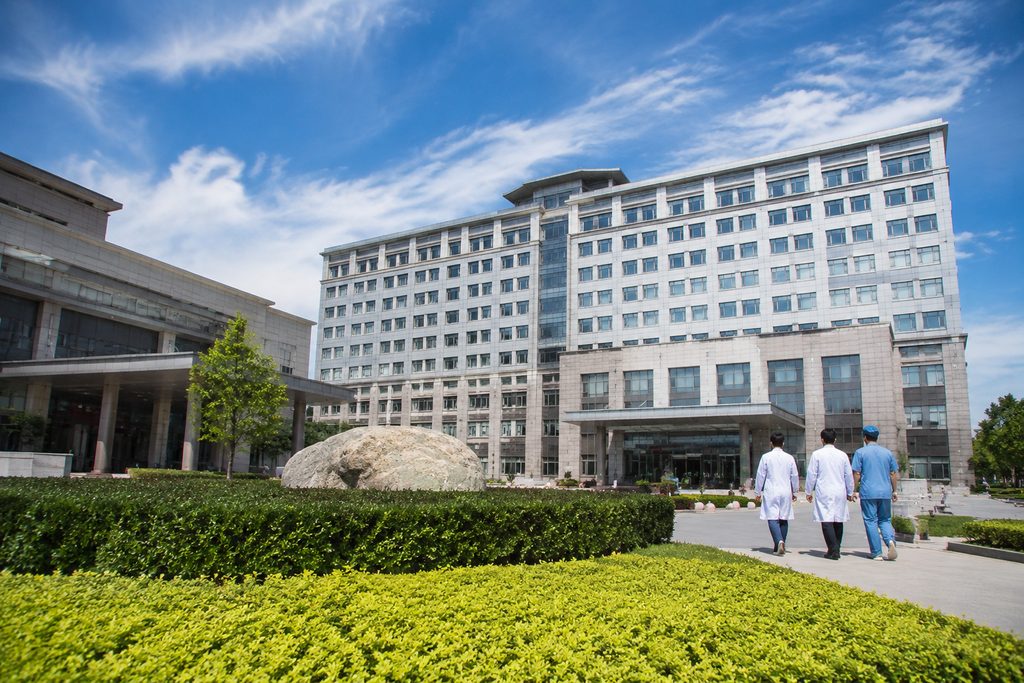
While a patient in the UK can wait 18 weeks just for an initial urology consultation under the NHS, the Department of Urology at Peking University First Hospital (PKUFH) performs over 6,000 major surgical procedures annually. The contrast is not just about speed. It is about volume. China’s top-tier hospitals run on operational scales that most Western systems simply cannot match, and PKUFH has been the undisputed leader in urology and nephrology in China for decades. Our team connects international patients directly with this depth of expertise. We navigate the logistics so you can focus on the decision that matters most: getting the right care.
Key Takeaways
- The Peking University First Hospital urology price for complex procedures typically ranges from 40% to 70% less than equivalent private care in the United States or Western Europe, even when using the VIP International Department.
- PKUFH is the birthplace of urology in China and houses the national Urology and Nephrology Research Center, making it the definitive “best nephrology hospital Beijing for foreigners” seeking high-volume, research-backed care.
- You cannot directly book an outpatient appointment from overseas through the public system; you must use the hospital’s International Medical Services gateway, which requires a local coordinator to secure a specialist slot.
- For non-citizens, organ transplantation in China is governed by strict ethical and legal regulations that make the process fundamentally different from other surgical procedures.
The Problem: The Crushing Wait and Cost of Urological Care at Home
Kidney stone disease affects approximately 1 in 11 people in the United States. For those who need surgical intervention, the sticker price can be paralyzing. A standard percutaneous nephrolithotomy (PCNL) for a complex staghorn calculus in a US hospital routinely bills between $30,000 and $55,000. Even with insurance, a high-deductible plan can leave a patient with a $10,000 out-of-pocket gap. Now add the wait. In Canada, the median wait time to see a urologist after a general practitioner referral stretches to 15.3 weeks, with another 8 weeks for surgery. A stone does not wait. It grows. It obstructs. It infects.
For chronic kidney disease (CKD) patients, the situation is starker. Dialysis dependency rises while sitting on a transplant list that can stretch for 5 to 10 years in countries like Australia or the UK. The search for alternatives is not about medical tourism for the sake of a holiday. It is about survival and quality of life. That search often leads to Beijing.
Who We Are
We are not a hospital. We do not provide medical treatment or clinical diagnoses. Our team is your logistical architecture on the ground in China. We bridge the gap between your local diagnosis and the clinical firepower of China’s top 5% of hospitals—institutions ranked by the Fudan University Hospital Ranking and accredited by JCI. We handle the friction that stops most foreigners cold: the language barrier, the visa documentation, the hospital registration maze, and the interpretation of complex billing. We are your international patient coordinator in Beijing for urology, but we never pretend to be your doctor.
Why Peking University First Hospital Delivers Distinctive Results
The Birthplace of Chinese Urology and a Nephrology Powerhouse
It is impossible to talk about urology in China without starting at PKUFH. The department was founded in 1946 by Dr. Wu Jieping, the father of modern Chinese urology. That legacy is not just a historical footnote. It translates into a clinical infrastructure that has trained a vast network of the country’s leading specialists. The hospital’s Institute of Urology is the national center for research. For a foreign patient, this means you are not just buying a surgery. You are accessing a team that writes the clinical guidelines for a population of 1.4 billion people. When our clients ask for the best nephrology hospital Beijing for foreigners, the conversation almost always begins here because the nephrology division operates in lockstep with urology, managing complex stone disease, renal failure, and transplant workups under one integrated roof.
Clinical Volume That Reshapes Surgical Intuition
Volume is a proxy for safety in surgery. The data backs this up. A study published in the New England Journal of Medicine demonstrated a clear inverse relationship between surgical volume and operative mortality for complex procedures. At PKUFH, the urology team handles a caseload that is difficult to visualize from a Western private practice setting. They perform over 6,000 inpatient surgeries a year. The endoscopy center alone processes tens of thousands of minimally invasive stone removals. A surgeon here sees more rare stone compositions, more anatomical anomalies, and more advanced tumor resections in a single quarter than a typical regional US surgeon sees in several years. That pattern recognition matters. It reduces intraoperative surprises.
Cost Structure Without the Middlemen
Let us talk about the Peking University First Hospital urology price directly. The structural reasons costs are lower have nothing to do with lower quality. They hinge on labor economics, the absence of a multi-layered private insurance billing bureaucracy, and high patient throughput. A ureteroscopy with laser lithotripsy at the International Department typically lands between $4,000 and $7,000 USD. A radical nephrectomy for a renal tumor, performed robotically, often falls in the $18,000 to $25,000 range. These are all-inclusive figures for the hospital stay, surgeon fees, and standard consumables. Compare that to the $50,000 to $80,000 bill for the same robotic procedure in a major US metropolitan area. The savings are structural. They are permanent. And they do not come from cutting corners on the laser fiber or the robotic platform.
What You Need to Know Before Going Alone
Beijing’s public hospital system was not designed with a solo international traveler in mind. We have seen patients arrive with a stack of imaging and a list of phone numbers, only to stall at the front gate. Here is what waits for you.
- Visa Specifics: You cannot enter China for treatment on a standard tourist (L) visa. The correct visa is an S2 visa with a medical purpose annotation. This requires a formal invitation letter from the hospital and a treatment plan confirmation. Without a coordinator pushing this through the hospital’s international affairs office, the paperwork loop can take weeks.
- The Registration Wall: PKUFH sees over 10,000 outpatient visits daily across its campuses. The public registration system is a WeChat-based digital battlefield that requires a Chinese ID or a foreign passport verified in person. You cannot book a urology specialist slot online from New York or London without a verified account. The International Department operates separately, but it is not a walk-in service. You need a confirmed appointment.
- Payment Rails: The International Department accepts UnionPay, major credit cards, and wire transfers. But the standard public hospital side is a cash-and-local-bank-card universe. If you try to pay a public-side deposit with a foreign Visa card, the transaction will likely fail. We have seen it happen. You need to know exactly which counter accepts what, and you need enough RMB liquidity on arrival day.
How We Help You Navigate This
These barriers exist for structural reasons, not because the system is hostile. It is simply built for a domestic population. Our job is to retrofit the pathway for you. The process starts with your medical records. You send us your CT scans, lab reports, and a brief history. Our bilingual case managers translate the clinical summary into Chinese medical terminology—not just language, but the specific diagnostic codes the hospital uses.
We then route your case to the International Medical Services office at PKUFH. We secure a specific appointment slot with a senior urologist in the International Department. We communicate the Peking University First Hospital urology price estimate before you book a flight. No surprises. Once you land, a bilingual medical companion meets you. This person handles the registration queue, pays the deposit at the correct window, translates the surgeon’s pre-operative briefing in real time, and sits with you in the recovery ward until you are cleared. After discharge, we manage the follow-up imaging scheduling and ensure your home physician receives a fully translated discharge summary. We also coordinate the visa extension if your recovery requires a longer stay.
For those still deciding, a video consultation with the specialist is often the most logical first step. You can discuss your kidney stone surgery cost China options directly with the surgeon who would hold the scope. Our remote consultation service starts at $500, and if you proceed to on-the-ground care within 90 days, that fee is credited in full toward our coordination service.
Frequently Asked Questions
This is the hardest question we field, and the answer requires blunt honesty. Yes, PKUFH has one of the most advanced transplant programs in Asia. But China strictly regulates organ transplantation for foreign nationals. The legal framework requires proof of a genuine biological or spousal relationship with a living donor, or placement on the national deceased-donor list under specific criteria. This is not a commercial transaction. We cannot and will not facilitate any process that bypasses the China Organ Transplant Response System (COTRS). If you are seeking a transplant, we require extensive documentation and a direct ethical review by the hospital’s transplant committee. This is not a fast track. It is a highly scrutinized medical pathway.
You cannot do it by calling the main hospital switchboard. The International Department operates a separate patient gateway. You need a referral packet: passport copy, recent imaging (DICOM format preferred), and a summary of your condition. We submit this on your behalf. The department reviews the case and confirms whether your condition falls within their scope of international care. Once accepted, we lock a date. The lead time is typically 10 to 14 business days for a specialist appointment. It is not instant, but it is guaranteed once confirmed.
For a foreign patient using the International Department at PKUFH, a standard flexible ureteroscopy with laser lithotripsy costs between $4,000 and $7,000 USD. A more invasive PCNL for a large stone runs from $7,000 to $10,000 USD. These ranges include the hospital bed, operating theater, anesthesia, and surgeon’s professional fee. They exclude travel and accommodation. The final figure varies by stone burden and comorbidity. But it is a single-digit-thousands proposition, not a five-figure one.
You do not need one in the sense of a legal requirement. But practically? Yes. The alternative is navigating a Mandarin-only hospital campus where 10,000 people a day are moving through a system that assumes you have a Chinese national ID. A coordinator translates your records, secures the appointment, and prevents you from paying the wrong deposit at the wrong window. For a surgery that impacts your kidneys, the stakes are too high to risk a paperwork error.
Your Next Step
You have seen the numbers. You know the waiting times at home and the surgical volumes in Beijing. The decision to travel for urological care is deeply personal. It weighs the comfort of home against the clinical depth and cost advantage of a system built at massive scale. Our role is to give you a clear, unpressured path to evaluate that choice. Send us your latest CT scan and a brief note on your diagnosis. We will return a detailed feasibility assessment and a transparent price estimate for Peking University First Hospital. No obligation. Just the facts you need to make a rational decision.
For more medical information and treatment options in China, visit chinamedservices.com (China Medical Services).
